White Necklaces: Platinum vs White Gold vs Silver Guide
Compare platinum, white gold, palladium, and silver for your next white necklace. Expert analysis on hardness, plating, and long-term wear.
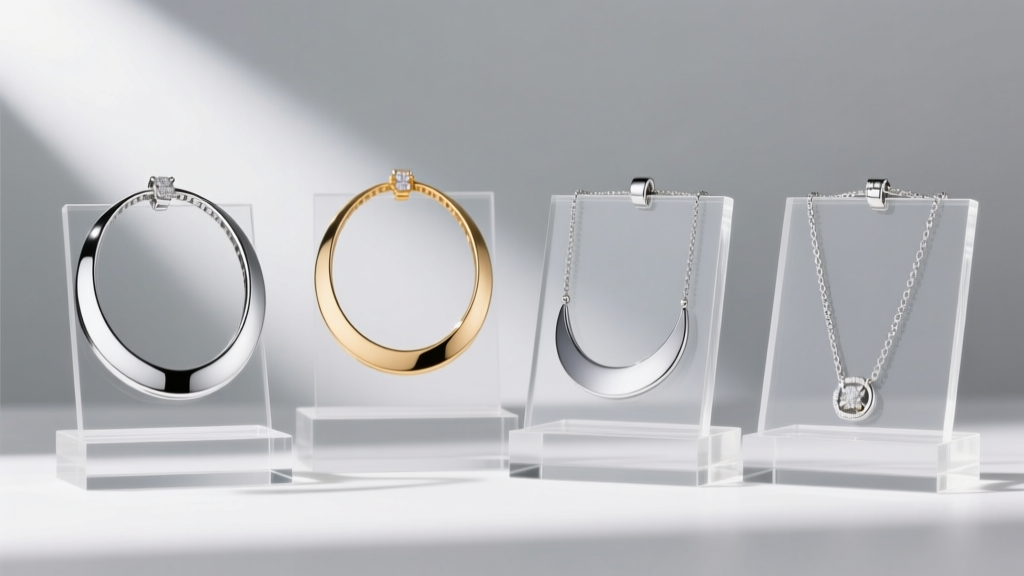
The Anatomy of 'White' in Fine Jewelry
When building a curated jewelry collection, the search for 'white necklaces' often leads to a complex crossroads of metallurgy. Unlike yellow gold, which exists in its natural elemental hue, white metals in jewelry are almost always the result of careful alloying or surface treatments. Understanding the fundamental properties of these materials is critical for making an informed investment, especially when considering how a chain or pendant will interact with your skin chemistry, daily wear habits, and long-term maintenance budget.
In this comprehensive guide, we deconstruct the four primary metals used to create white necklaces: Platinum, White Gold, Palladium, and Silver. We will analyze their Vickers hardness, specific gravity, alloy compositions, and real-world failure modes to help you select the perfect material for your lifestyle.
Platinum (950): The Heavyweight Champion
Platinum is the undisputed king of white metals, prized for its natural, cool-grey undertone and exceptional durability. In fine jewelry, platinum is typically stamped '950', meaning it consists of 95% pure platinum and 5% alloy metals. However, not all 950 platinum is created equal. The specific alloying agents drastically alter the metal's workability and wear properties.
Ruthenium vs. Iridium Alloys
For necklace chains, which require high tensile strength to resist stretching and snapping, 950 Pt/Ru (Ruthenium) is the superior choice. Ruthenium increases the Vickers hardness (HV) to approximately 130-140 HV, making the chain highly resistant to abrasion. Conversely, 950 Pt/Ir (Iridium) is softer (around 80-90 HV) and more malleable, making it ideal for casting intricate pendant settings but less optimal for heavy, load-bearing chains.
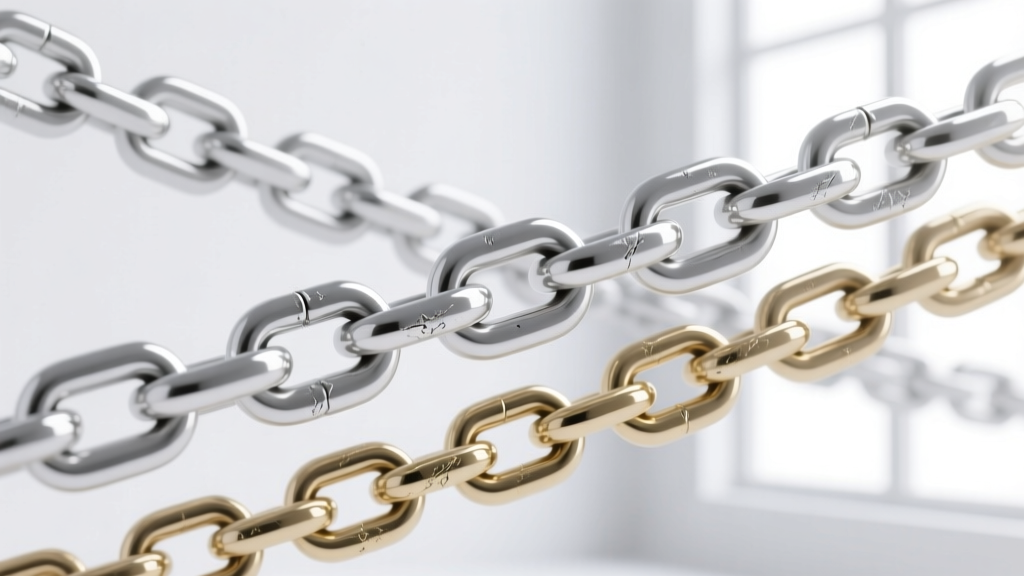
One of platinum's most unique properties is its displacement behavior. When a platinum chain is scratched, the metal is not lost; it is merely displaced across the surface. Over time, this creates a soft, matte finish known as a 'patina'. While some collectors despise the patina, others view it as a hallmark of authenticity. A quick polish by a jeweler will restore the original high-gloss mirror finish, but doing so removes a microscopic layer of metal.
White Gold (14k vs 18k): The Rhodium Illusion
White gold is not naturally white. Pure gold (24k) is intensely yellow. To create white gold, jewelers alloy pure gold with white metals like palladium, silver, zinc, or nickel. The resulting alloy still retains a faint yellowish or brownish-grey tint. To achieve the brilliant, icy-white finish consumers expect, white gold necklaces are electroplated with a microscopic layer of rhodium, a rare and extremely hard platinum group metal.
The Nickel Allergy Factor and EU Regulations
Historically, nickel was the primary bleaching agent used in white gold due to its low cost and high efficacy. However, nickel is a potent sensitizer. According to the Gemological Institute of America (GIA), a significant percentage of the population develops contact dermatitis from prolonged skin contact with nickel alloys. Consequently, the European Union's REACH regulation strictly limits nickel release from jewelry to 0.5 micrograms per square centimeter per week. Today, premium white gold necklaces are often alloyed with palladium instead of nickel, creating a hypoallergenic, albeit more expensive, 'white' base.
Rhodium Plating Thickness and Maintenance
The rhodium plating on a white gold necklace typically ranges from 0.75 to 1.5 microns in thickness. Because necklaces experience constant friction against the skin and clothing, this plating will inevitably wear away, particularly around the clasp and the lower links resting against the collarbone. When the rhodium wears thin, the underlying yellowish-grey alloy becomes visible. Re-plating a white gold chain costs between $45 and $85 and must be repeated every 1 to 3 years, depending on the wearer's body chemistry and friction levels.
Palladium (950): The Lightweight Alternative
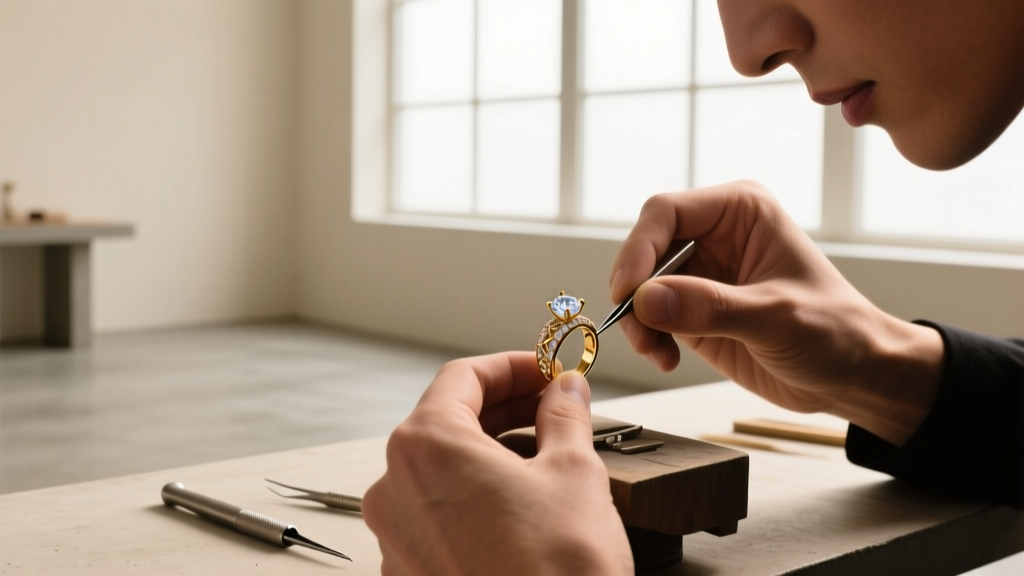
Palladium is a platinum group metal that offers a naturally bright white color without the need for rhodium plating. Stamped as 950 Pd, it is typically alloyed with 5% ruthenium. Palladium's most distinct advantage is its specific gravity. At 12.02 g/cm³, palladium is nearly half as dense as platinum (21.45 g/cm³). This makes palladium an exceptional choice for large, statement-making pendant necklaces or heavy chain links that would be uncomfortably heavy or prohibitively expensive if crafted in solid platinum.
However, palladium presents unique challenges in manufacturing. It is highly reactive to oxygen and nitrogen when molten, requiring specialized casting equipment and inert gas environments. Furthermore, palladium is 'dead soft' when annealed but work-hardens extremely rapidly. If a palladium chain link is bent or stressed, it becomes brittle and can snap if not properly annealed by a master jeweler. Finding a bench jeweler skilled in palladium repairs can be difficult outside of major metropolitan areas.
Sterling & Argentium Silver: Tarnish and Passivation
Sterling silver (925 Ag) remains the most accessible white metal, composed of 92.5% silver and 7.5% copper. The copper provides necessary structural integrity but introduces a major flaw: tarnishing. Copper reacts with hydrogen sulfide and moisture in the air to form silver sulfide, the black film that ruins the appearance of neglected silver chains.
The Argentium Silver Revolution
For buyers seeking a low-maintenance silver necklace, Argentium Silver is a game-changer. Developed in the 1990s, Argentium replaces a portion of the copper alloy with metalloid germanium. When exposed to oxygen, the germanium forms a transparent, passivating layer of germanium dioxide on the surface of the metal. This layer acts as an impermeable shield against sulfur, making Argentium highly resistant to tarnish. According to data from Rio Grande's metal properties charts, Argentium also boasts a higher fusion-welding capability, allowing for seamless chain links without the visible solder lines common in traditional sterling silver.
Material Showdown: Data & Specifications Table
To synthesize the metallurgical data, refer to the comparison table below. This framework highlights the objective differences in density, hardness, and long-term maintenance requirements for white necklace metals.
| Metal / Alloy | Specific Gravity | Vickers Hardness (HV) | Rhodium Plating? | Tarnish Risk | Avg. 18" Chain Price |
|---|---|---|---|---|---|
| 950 Platinum (Ru) | 21.45 | 135 | No (Optional) | None (Patina only) | $1,200 - $4,500+ |
| 18k White Gold (Pd alloy) | 15.20 | 125 | Yes (0.75 - 1.5µm) | None (Alloy may yellow) | $600 - $1,800 |
| 14k White Gold (Ni alloy) | 13.50 | 140 | Yes (0.75 - 1.5µm) | None (Alloy may yellow) | $350 - $900 |
| 950 Palladium (Ru) | 12.02 | 120 (Work-hardens) | No | None | $800 - $2,200 |
| 925 Sterling Silver | 10.36 | 65 | Optional (E-coat) | High (Sulfide reaction) | $40 - $250 |
| 935 Argentium Silver | 10.40 | 75 | No | Extremely Low | $80 - $350 |
How to Choose Based on Lifestyle and Budget
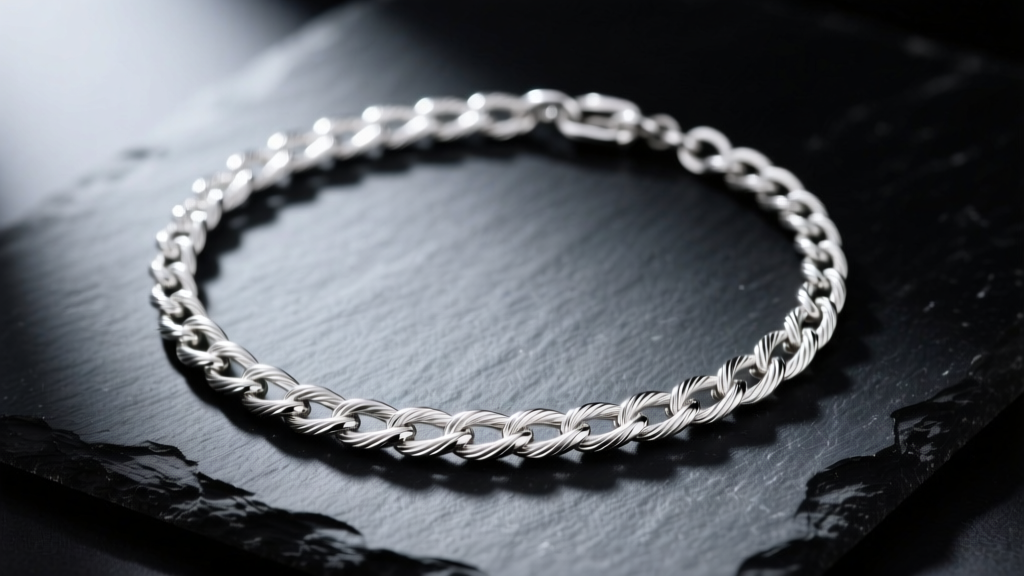
Selecting the right white necklace requires aligning the material's physical properties with your daily routine. Use this decision framework to guide your purchase:
- The 'Wear It in the Ocean' Profile: If you never take your necklace off, avoid silver and plated white gold. Saltwater accelerates silver tarnishing and can degrade rhodium plating over time. Choose 950 Platinum or Palladium. Both are highly resistant to chloride corrosion and will survive decades of continuous wear, including exposure to sweat, chlorine, and seawater.
- The High-Friction Professional: If your necklace rubs constantly against a silk blouse, wool suit, or safety gear, the rhodium on a white gold chain will wear off rapidly, leaving you with a yellowish chain and a recurring maintenance bill. Opt for Argentium Silver for a budget-friendly, tarnish-resistant option, or invest in Platinum for a permanent, unplated white metal.
- The Statement Pendant Wearer: If you are buying a heavy, oversized pendant or a thick Cuban link chain, the weight of platinum can cause neck strain, and the cost will be astronomical. Palladium offers the exact visual aesthetic and hypoallergenic properties of platinum at roughly half the weight and a lower price point per gram.
Expert Verdict: Which White Metal Reigns Supreme?
There is no single 'best' white metal; there is only the right metal for the specific application. For delicate, diamond-set pendant necklaces where prong security is paramount, Platinum is unmatched due to its malleability and lack of metal memory. For traditional, brilliant-white chains that will be worn occasionally and maintained regularly, 18k Palladium-alloyed White Gold offers a beautiful, albeit high-maintenance, luxury experience. However, for the modern consumer seeking an everyday, low-maintenance white necklace that bridges the gap between affordability and durability, Argentium Silver represents the most significant metallurgical advancement in accessible white jewelry of the 21st century.
Ultimately, understanding the hidden alloys, plating thicknesses, and work-hardening properties of these metals transforms you from a passive shopper into an informed collector. Whether you choose the dense permanence of platinum or the innovative passivation of Argentium, your white necklace will be chosen with absolute metallurgical confidence.


