Necklace Dress Care: Cleaning Integrated Jewelry & Silk
Learn expert techniques for cleaning a necklace dress. Discover how to safely wash integrated rhinestones, beaded collars, and delicate silk fabrics.

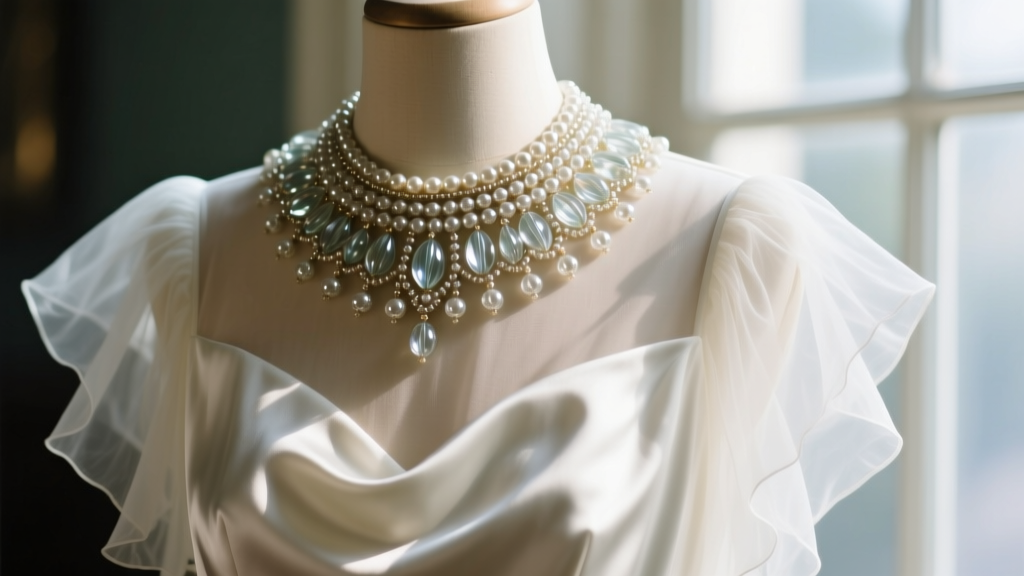
The 'necklace dress' represents one of the most breathtaking intersections of haute couture and fine jewelry. Whether it is a 1920s flapper gown with a cascading glass-bead collar, a modern chainmail-halter silhouette, or a contemporary silk crepe dress featuring an integrated crystal-embellished neckline, these garments require highly specialized care. In 2026, as archival vintage fashion and heavy embellishment continue to dominate runways and red carpets, understanding how to maintain the structural integrity of both the textile and the integrated jewelry is essential for collectors, stylists, and fashion archivists.
Unlike a standard pendant or choker that can be removed and soaked in a cleaning solution, a necklace dress fuses heavy, rigid materials (glass, metal, crystal) with delicate, flexible fibers (silk, chiffon, velvet). This guide provides a masterclass in the conservation, cleaning, and archival storage of these complex hybrid garments.
The Anatomy of a Necklace Dress: Where Textile Meets Jewelry
To properly care for a necklace dress, you must first understand the physical stress points inherent in its design. A heavily beaded collar or integrated metal bib can weigh anywhere from 300 to 800 grams. When this weight is suspended from a delicate bias-cut silk charmeuse or a fragile polyester chiffon, the tensile strength of the warp and weft threads is pushed to its absolute limit.
The primary failure mode in these garments is not necessarily tarnished metal or dull stones, but 'gravity tearing.' Over time, the sheer weight of the integrated necklace pulls the needle holes through the fabric, causing micro-tears that eventually lead to catastrophic neckline ripping. Therefore, any cleaning or maintenance protocol must prioritize weight distribution and stress reduction alongside surface-level aesthetics.
Pre-Cleaning Diagnostics: Identifying Bead and Fabric Types
Before introducing any moisture or cleaning agents to your necklace dress, a thorough diagnostic assessment is mandatory. The Victoria and Albert Museum emphasizes that misidentifying a bead's composition can lead to irreversible melting or clouding.
Foil-Backed vs. Solid Glass Rhinestones
Many vintage necklace dresses utilize foil-backed rhinestones to maximize light refraction. If the metal bezel holding the stone is compromised, even a single drop of water will seep behind the glass, oxidize the foil, and turn the stone permanently black. Use a jeweler's loupe to inspect the edges of the stones. If you see a metallic backing visible through the side of the glass, the dress must never be submerged or steamed.
UV Flashlight Testing for Adhesive Degradation
Shine a 365nm UV flashlight over the embellished neckline. Degrading synthetic glues (often used in mid-century and fast-fashion embellished dresses) will fluoresce brightly. If you spot glowing residue around the base of the crystals, the structural adhesive is failing, and the garment requires professional conservation rather than at-home cleaning.
The Chemistry of Bead and Fabric Cleaning
When spot-cleaning the integrated jewelry elements of a necklace dress, you must navigate the chemical sensitivities of both the gems and the underlying fabric. According to the Gemological Institute of America (GIA), porous gems and organic materials require vastly different care than hard stones.
- Glass and Lead Crystal: Safe to clean with a 50/50 mixture of distilled water and 90% isopropyl alcohol. Never use tap water, as mineral deposits will leave a white film in the crevices of the metal settings.
- Faux Pearls and Opalite: These are often coated with a delicate pearlescent lacquer. Alcohol and ammonia will strip this coating instantly. Use only a dry, soft-bristled makeup brush to remove dust.
- Silk and Chiffon Bases: Avoid standard laundry detergents, which contain enzymes and optical brighteners that degrade protein-based fibers like silk. Instead, use a non-ionic surfactant like Orvus WA Paste, diluted to a 1% solution in distilled water.
Step-by-Step Surface Cleaning Protocol
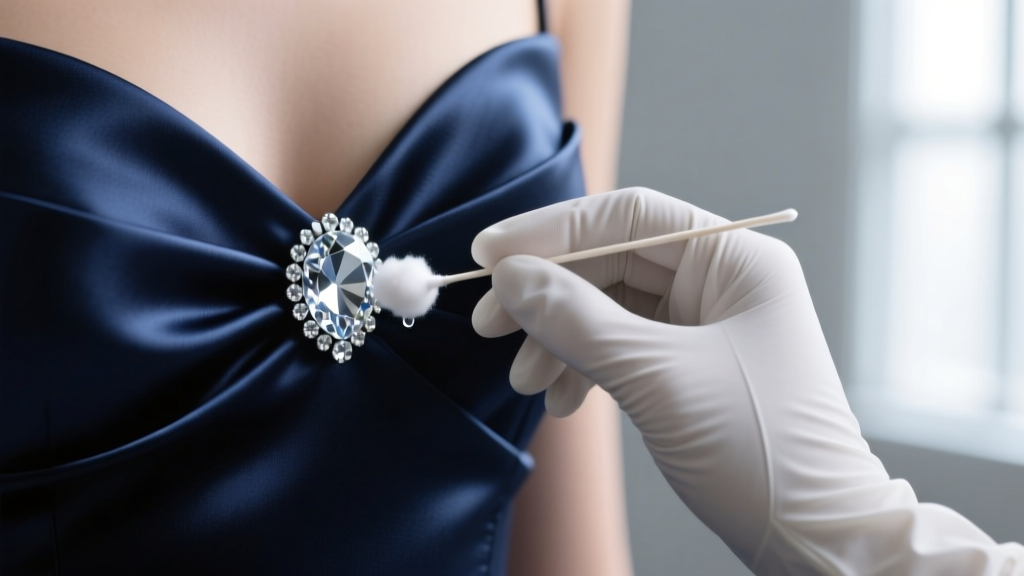
Because submersion is almost always fatal to a necklace dress, surface cleaning via micro-swabbing is the gold standard for maintenance.
- Preparation: Lay the dress completely flat on a clean, padded surface. Place a layer of unbuffered, acid-free tissue paper beneath the embellished neckline to absorb any stray moisture and prevent the heavy beads from pressing into the fabric below.
- Dust Removal: Use a soft goat-hair brush to gently sweep away loose particulate matter from both the beads and the fabric. Do not use compressed air, as the force can snap delicate glass bead threads.
- Swabbing the Stones: Dip a cotton micro-swab into your chosen cleaning solution (distilled water for organics, alcohol mix for glass). Wring it out until it is merely damp, never wet. Roll the swab gently over the surface of each stone, avoiding the metal prongs.
- Treating the Fabric: For localized stains on the silk near the collar, use a separate swab dampened with the 1% Orvus solution. Blot—do not rub—the stain, working from the outside in to prevent water rings.
Drying, Reshaping, and Rust Prevention
Moisture trapped in the metal crimps, jump rings, or wire-wrapping of an integrated necklace collar will quickly lead to iron oxide (rust) or copper carbonate (verdigris). This corrosion will bleed into the surrounding fabric, leaving permanent brown or green stains.
After spot cleaning, immediately use a hair dryer on the 'cool' and 'low' setting to blow air across the metal findings. This forces trapped moisture out of the microscopic gaps between the metal and the fabric. Once the garment is dry, apply a micro-thin layer of Renaissance Wax to any exposed brass, copper, or silver metalwork using a soft cloth. This museum-grade microcrystalline wax creates an oxygen barrier, preventing future tarnish without leaving a sticky residue that could attract dust.
Archival Storage for Heavy Collars
How you store a necklace dress is just as critical as how you clean it. The Smithsonian Institution warns against hanging heavy garments, as gravity will permanently distort the shoulder seams and warp the bias cut of the skirt.
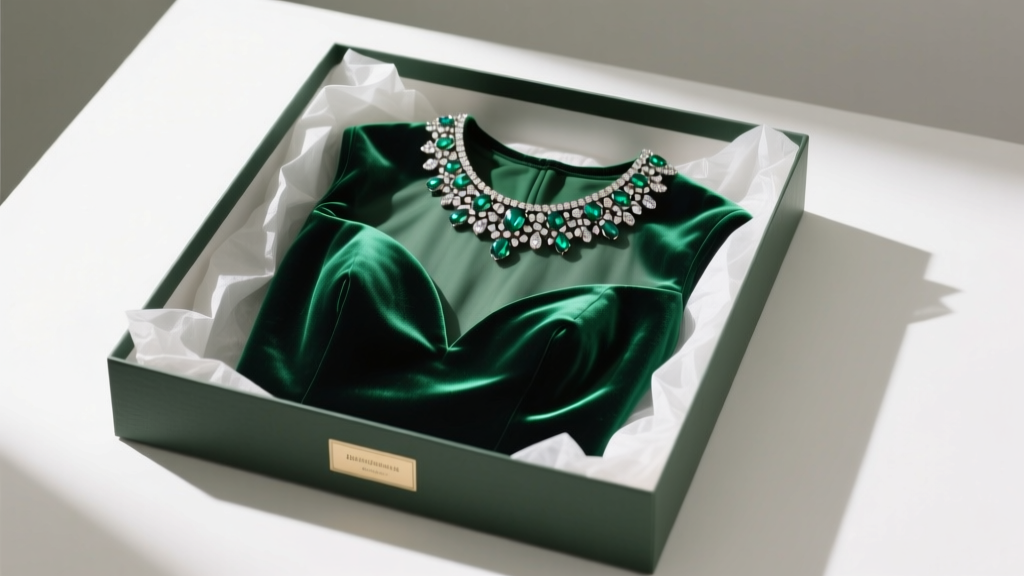
Never hang a necklace dress on a standard velvet or wire hanger. Instead, store the garment flat in an archival polyethylene or polypropylene storage box. Line the bottom of the box with unbuffered, acid-free tissue paper. Gently fold the dress, but never fold directly across the embellished neckline. Instead, create a 'pillow' of crumpled acid-free tissue to support the hollow space beneath the collar, ensuring the heavy jewelry elements do not crush the beads below them. Avoid PVC plastic garment bags entirely; PVC off-gases hydrochloric acid over time, which will rapidly corrode metal findings and degrade silk fibers.
Troubleshooting Common Necklace Dress Failures
Even with meticulous care, the friction between heavy jewelry and delicate textiles inevitably leads to specific maintenance issues. Below is a diagnostic table for troubleshooting the most common problems encountered with necklace dresses.
| Issue | Root Cause | Expert Solution |
|---|---|---|
| Green Verdigris on Fabric | Copper/brass findings reacting to ambient humidity and skin oils. | Isolate the stain. Use a wooden skewer dipped in a tiny amount of conservation-grade solvent to gently lift the crust. Seal the metal with Renaissance Wax. |
| Micro-Tears at Neckline | Weight of the integrated collar exceeding the tensile strength of the silk. | Have a professional conservator stitch a sheer silk organza 'stay' or underlay behind the neckline to redistribute the weight across a wider surface area. |
| Cloudy or Milky Rhinestones | Moisture breach in foil-backed stones or chemical etching from perfume. | Unfortunately, foil oxidation is irreversible. For surface etching, a jeweler can sometimes polish the glass, but replacement of the stone is often required. |
| Snagged Silk Threads | Rough metal prongs or broken bead edges catching on the fabric weave. | Do not pull the snag. Use a fine needle to gently work the thread back to the underside of the fabric. File down the offending metal prong with a micro-jeweler's file. |
Final Thoughts on Preservation
A necklace dress is more than a garment; it is a wearable piece of sculpture. By respecting the distinct chemical and physical properties of both the jewelry and the textile, you can ensure that these breathtaking pieces survive for decades. Whether you are maintaining a contemporary crystal-encrusted halter or preserving a century-old beaded flapper dress, the principles of gentle surface cleaning, rust prevention, and flat archival storage remain your most vital tools in the pursuit of sartorial longevity.


