Hematite Heart Necklace Trends and Styling for 2026
Discover 2026 trends for the hematite heart necklace. Learn how to style, layer, and care for genuine vs. synthetic iron oxide pendants.

The 2026 Trend Shift: Dark Romanticism and Grounding Stones
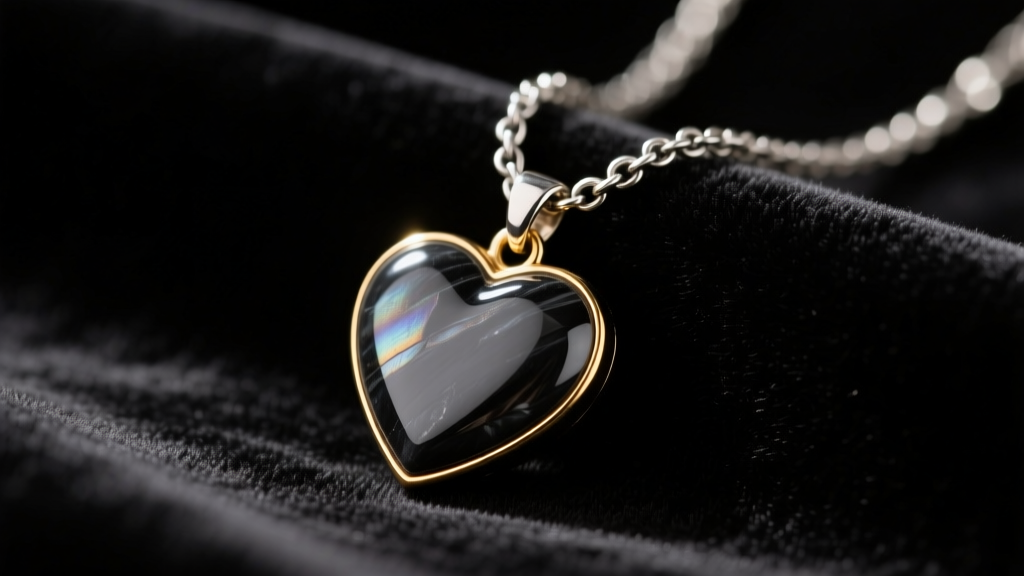
The jewelry landscape in 2026 has decisively pivoted away from the hyper-minimalist, barely-there chains of the early 2020s. In its place, a movement dubbed 'dark romanticism' or 'elevated grunge' has taken over, bringing heavy, opaque, and historically loaded materials back to the forefront. At the center of this revival is the hematite heart necklace. Once relegated to early-2000s mall kiosks and basic magnetic therapy bracelets, hematite has been reclaimed by independent jewelers and high-fashion houses alike. The heart motif, traditionally associated with delicate golds and bright rubies, gains an entirely new edge when carved from the dense, gunmetal-gray iron oxide. It speaks to a desire for jewelry that feels physically weighty and emotionally grounding.
According to recent style analyses from Vogue, consumers are increasingly seeking out 'bruised' or 'lived-in' aesthetics. A polished hematite heart pendant offers a mirror-like, almost liquid-metal finish that contrasts beautifully with the skin, while raw or matte-finish hematite leans heavily into the dark academia and gothic revival aesthetics that continue to dominate 2026 street style.
Material Forensics: Natural Hematite vs. Synthetic Alternatives
To truly appreciate and shop for a hematite heart necklace, one must understand the material science behind the stone. Hematite is an iron oxide mineral (Fe2O3). According to the Mindat.org mineral database, natural hematite boasts a remarkable specific gravity of 5.12 to 5.28, making it significantly heavier than quartz or glass of the same size. It sits at a 5.5 to 6.5 on the Mohs hardness scale, meaning it is durable enough for daily wear but susceptible to scratching from harder materials like diamonds or sapphires.
The 'Magnetic Hematite' Misconception
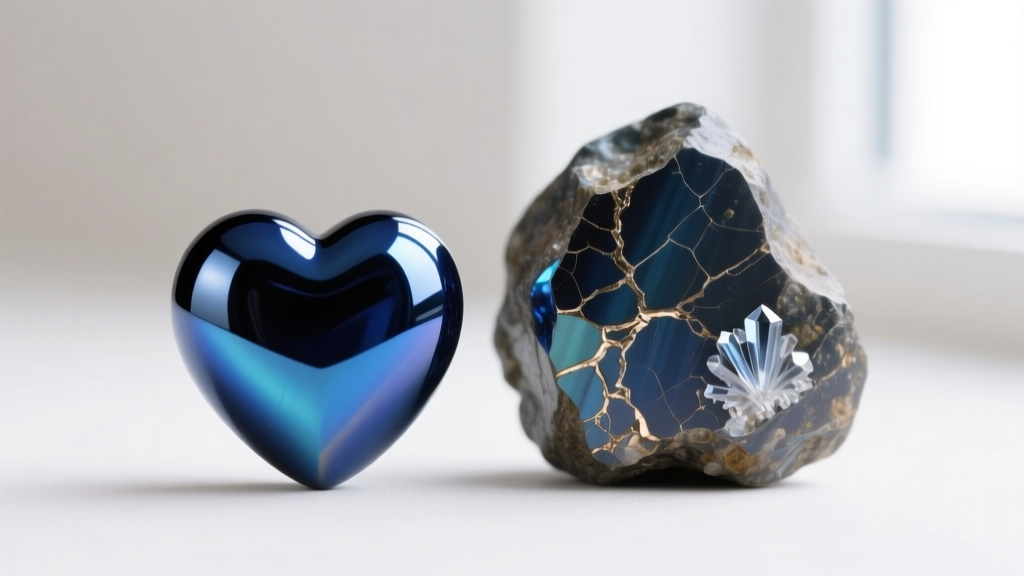
A critical point of confusion in the market is 'magnetic hematite.' Genuine, natural hematite is only very weakly magnetic. The highly magnetic, perfectly uniform heart beads sold in commercial markets are almost always Hemalyke—a synthetic composite made from pulverized iron oxide dust mixed with a resin binder and artificially magnetized. While Hemalyke is highly durable and perfectly shaped, it lacks the natural micro-striations, crystalline structures, and organic weight variations of genuine mined hematite. In 2026, collectors and style enthusiasts heavily favor genuine, unpolished, or hand-carved natural hematite for its unique imperfections.
Structural Vulnerabilities: The Heart Cleft Failure Mode
When designing or purchasing a hematite heart pendant, the method of attachment is the single most important factor in its longevity. Because hematite is brittle and lacks cleavage planes, it does not bend; it chips or snaps.
- Top-Drilled Beads: The most common and most fragile setting. A hole is drilled through the top cleft of the heart. If the cleft is carved too deeply, the remaining 'bridge' of stone above the drill hole is paper-thin. A heavy chain or a sudden tug will snap this bridge instantly.
- Bezel Settings: The superior choice for 2026. A custom-cut cabochon of hematite is wrapped in oxidized sterling silver or 14k yellow gold. This protects the brittle edges from impact and eliminates the need for structural drilling.
- Prong Settings: Generally discouraged for hematite. The pressure required to push metal prongs over the stone can easily fracture the iron oxide, especially if the lapidary cut has any internal micro-fissures.
The 2026 Layering Matrix: Chain Gauges and Weight Limits
Because genuine hematite is exceptionally dense, pairing it with the correct chain gauge is a matter of physics, not just aesthetics. A 25mm natural hematite heart can easily weigh 20-30 grams. Hanging this on a delicate 0.9mm cable chain will result in chain stretch, clasp failure, or breakage. Below is the definitive 2026 pairing matrix for balancing weight and style.
| Chain Style | Recommended Gauge | Max Pendant Weight | Aesthetic Vibe |
|---|---|---|---|
| Box Chain | 1.5mm - 2.0mm | 25 grams | Sleek, modern, industrial |
| Paperclip Chain | 2.5mm - 3.5mm | 45 grams | Edgy, streetwear, layered |
| Rope Chain | 2.0mm | 30 grams | Classic, vintage romantic |
| Wheat Chain | 1.2mm - 1.5mm | 15 grams | Delicate, dark academia |
Styling Frameworks: Necklines and Occasions
The visual weight of a hematite heart necklace demands strategic styling. Its dark, light-absorbing surface acts as a visual anchor, drawing the eye directly to the center of the chest.
The Plunging V-Neck and Wrap Dresses
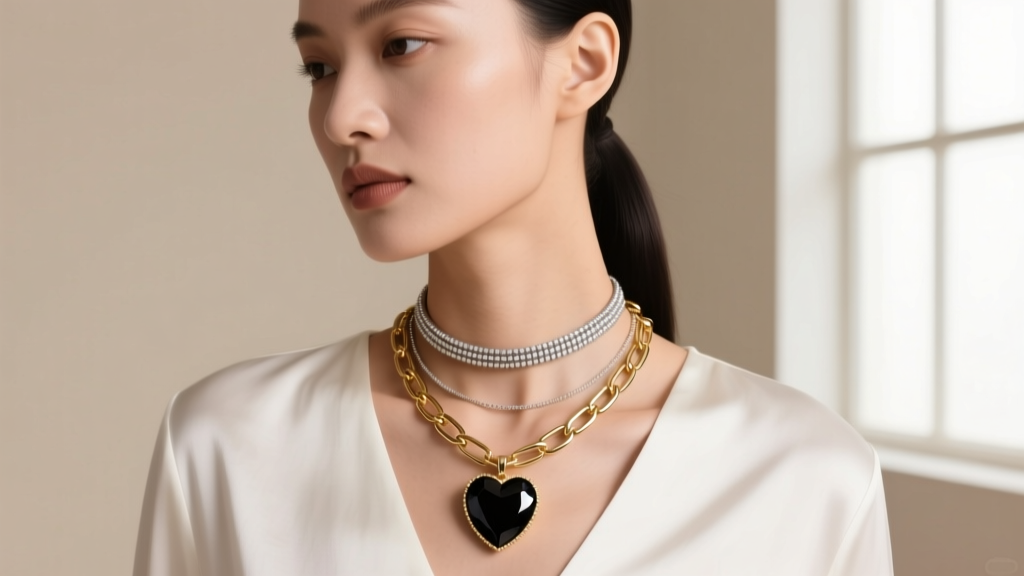
For evening wear or elevated office attire, a single, large bezel-set hematite heart on a 24-inch oxidized silver chain resting against a deep V-neckline creates a striking, authoritative silhouette. The dark stone contrasts sharply against bare skin or pale silk, offering a sophisticated alternative to traditional black onyx.
The Crew Neck and 'Elevated Grunge' Layering
For casual, daytime styling, the 2026 approach relies on extreme textural contrast. Pair a heavy, matte-finish hematite heart on a thick paperclip chain with a delicate 14k gold-filled pearl choker. The juxtaposition of the dark, heavy iron oxide against bright, luminous gold and organic pearls perfectly captures the current 'tough-romantic' zeitgeist.
Care Protocols: Preventing Hydration and Rust
The most common failure mode for genuine hematite jewelry is not physical breakage, but chemical degradation. Because hematite is fundamentally iron oxide, prolonged exposure to moisture, sweat, and oxygen can cause it to further hydrate, resulting in actual red rust (Fe2O3·nH2O) forming on the surface or around the drill holes. The Gemological Institute of America (GIA) notes that while hematite is stable in dry conditions, it requires specific care to maintain its luster.
- The Renaissance Wax Protocol: Upon purchasing a natural hematite heart pendant, lightly buff it with a microfiber cloth and a thin layer of Renaissance Wax. This museum-grade microcrystalline wax seals the porous surface, preventing moisture ingress without altering the stone's natural metallic sheen.
- Post-Wear Wiping: Human sweat is mildly acidic and highly saline. Always wipe your hematite necklace with a dry, soft cloth immediately after taking it off, especially during summer months.
- Storage Separation: Store your hematite heart necklace in an anti-tarnish pouch, separate from harder gemstones. Because it sits at a 5.5 on the Mohs scale, tossing it into a communal jewelry box with diamonds or quartz will result in deep, permanent surface scratches that ruin the mirror-like polish.
By understanding the material reality, structural limits, and styling potential of the hematite heart necklace, you can elevate this historically misunderstood stone into the centerpiece of your 2026 wardrobe.


