Material Guide to Choosing a Jehovah Witness Necklace
Discover the best metals for a Jehovah Witness necklace. Compare titanium, 14k gold, and silver for modest, durable, and hypoallergenic everyday wear.

Understanding Modesty and Material Choice
When selecting a Jehovah Witness necklace, it is essential to understand the intersection of personal adornment and biblical principles. Jehovah’s Witnesses adhere closely to scriptures such as 1 Timothy 2:9, which encourages modesty and soundness of mind in dress and grooming. Unlike many other Christian denominations, Jehovah’s Witnesses do not wear the cross or other religious iconography, viewing such symbols as violations of the biblical commandment against idolatry. Therefore, a necklace chosen for or by a member of this faith focuses entirely on high-quality, modest materials, avoiding ostentatious displays while prioritizing durability, neatness, and skin safety.
In 2026, the jewelry market offers a vast array of alloys and finishes, but not all are suitable for everyday, modest wear. Flashy, overly reflective metals or cheap alloys that oxidize and turn the skin green contradict the principle of being "well-arranged" and dignified. This guide provides a deep metallurgical comparison of the best materials for a Jehovah Witness necklace, ensuring the piece remains elegant, hypoallergenic, and structurally sound for decades.
Top Metal Comparisons for Everyday Wear
The foundation of any modest necklace is its metal. The choice of material dictates the chain's drape, its resistance to environmental factors, and its biocompatibility with the skin. Below, we analyze the top four metals used in fine and fashion jewelry, evaluating their specific properties and failure modes.
Implant-Grade Titanium (ASTM F136)
For individuals with severe metal sensitivities or those seeking an ultra-lightweight, modern aesthetic, ASTM F136 implant-grade titanium is the pinnacle of biocompatibility. This specific alloy (Ti-6Al-4V ELI) contains absolutely no nickel, completely eliminating the risk of contact dermatitis. Titanium boasts an exceptional strength-to-weight ratio, meaning a 1.2mm titanium box chain will feel nearly weightless on the neck while possessing a tensile strength that far exceeds traditional precious metals. Furthermore, titanium is entirely immune to tarnish and corrosion from sweat, chlorine, or saltwater. The primary drawback is its lack of traditional "precious" prestige and the fact that it cannot be easily resized or soldered by standard jewelers if the chain breaks.
14k Solid Gold (Yellow, White, and Rose)
According to the Gemological Institute of America (GIA), 14k gold remains the global standard for everyday fine jewelry. Comprising 58.5% pure gold and 41.5% alloy metals (typically copper, silver, and zinc), 14k gold achieves a Vickers hardness of approximately 140-160 HV. This makes it highly resistant to the micro-scratches and deformation that plague softer 18k or 22k gold chains. For a Jehovah Witness necklace, a delicate 14k yellow gold cable chain offers a timeless, modest elegance that does not draw undue attention. White gold is typically alloyed with nickel or palladium and plated with rhodium; however, for those avoiding nickel, palladium-based white gold is a superior, albeit more expensive, choice.
316L Surgical Stainless Steel
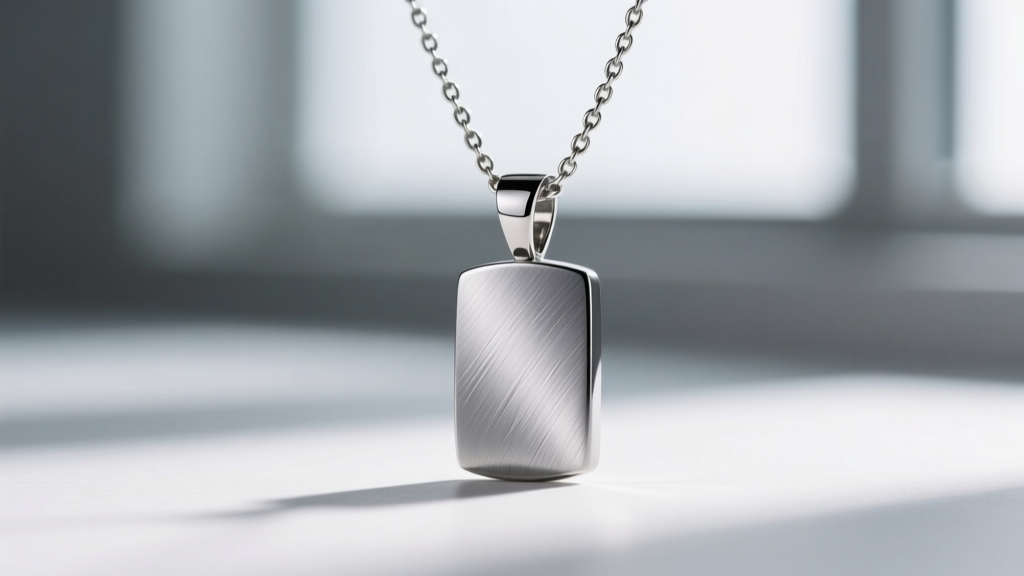
316L stainless steel is a budget-friendly, highly durable option favored for its bright, silvery finish and high scratch resistance. The "L" stands for low carbon, which prevents carbide precipitation during welding, ensuring the chain's structural integrity. However, 316L steel does contain trace amounts of nickel (usually between 8% and 12%). While the nickel is tightly bound within the crystalline structure and rarely causes issues for the average wearer, individuals with severe nickel allergies may experience localized irritation after prolonged exposure to sweat. It is an excellent choice for modest pendants and thicker chains, provided the wearer does not have a known nickel hypersensitivity.
925 Sterling Silver (and Rhodium Plating)
Sterling silver is an alloy of 92.5% pure silver and 7.5% copper. The copper is necessary to give the soft silver enough rigidity to be drawn into wire for chains. However, this copper content is also the root of silver's primary failure mode: tarnishing. When exposed to sulfur compounds in the air, sweat, or cosmetics, the copper reacts to form copper sulfide, resulting in a dark, dull patina. To combat this, many modern 925 silver chains are flash-plated with rhodium or platinum. While this provides a temporary, brilliant white finish and tarnish barrier, the plating will eventually wear away on high-friction areas (like the clasp and the back of the neck), requiring periodic re-plating or rigorous polishing.
Material Properties Comparison Chart
To help you make an informed decision based on your budget, lifestyle, and skin sensitivity, refer to the comparative data table below. Pricing reflects average 2026 market rates for a standard 16-inch to 18-inch modest chain (1.0mm - 1.5mm gauge) with a simple pendant.
| Metal Type | Hypoallergenic Rating | Tarnish Risk | Scratch Resistance | Est. Price Range (USD) |
|---|---|---|---|---|
| ASTM F136 Titanium | 100% (Nickel-Free) | None | Very High | $35 - $85 |
| 14k Solid Gold | High (Palladium alloy) | Very Low | High (140-160 HV) | $180 - $450 |
| 316L Surgical Steel | Moderate (Trace Nickel) | Low | High | $25 - $60 |
| 925 Sterling Silver | High (if Rhodium plated) | High (if unplated) | Low (Soft metal) | $45 - $120 |
Chain Styles and Gauge Thicknesses for Modesty
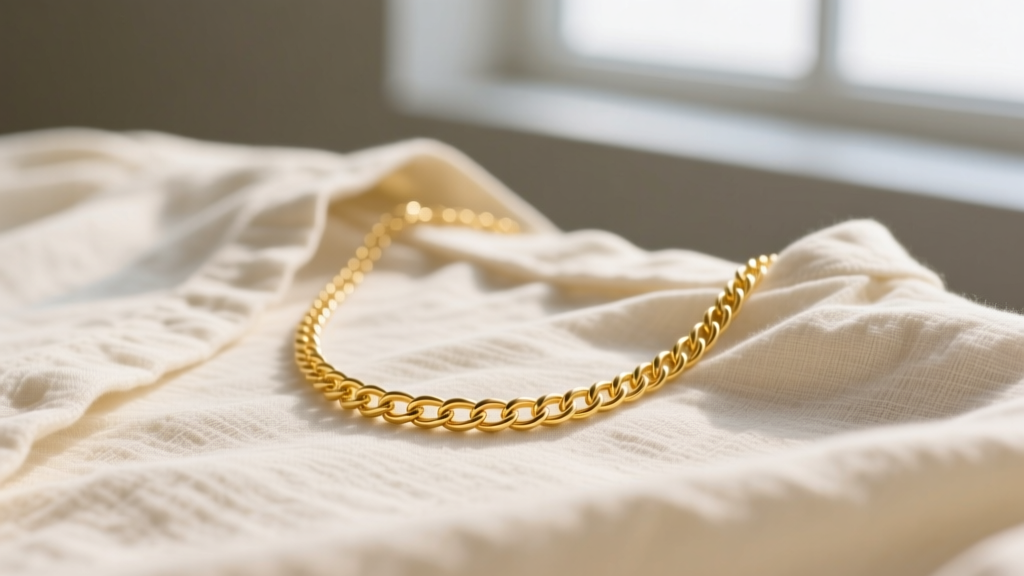
Modesty in jewelry is largely dictated by scale and reflectivity. A chain that is too thick or features overly complex, light-catching weaves can appear ostentatious. For a Jehovah Witness necklace, the goal is a neat, refined appearance that complements the wearer's attire without dominating it.
- Optimal Gauge Thickness: Stick to chains between 1.0mm and 1.5mm in diameter. Anything exceeding 2.0mm begins to look like statement or streetwear jewelry, which conflicts with the principle of modesty. A 1.2mm chain provides the perfect balance of delicate aesthetics and structural durability.
- Recommended Weaves: The Cable chain is the most traditional and understated, featuring uniform oval links. The Box chain offers a slightly more modern, geometric look with excellent tensile strength. The Rope chain is beautiful but can sometimes be too reflective; if choosing a rope weave, opt for a matte or brushed finish to tone down the glare.
- Weaves to Avoid: Heavy Cuban links, thick Figaro chains, and highly textured herringbone chains (which are also prone to kinking and permanent deformation) should generally be avoided for modest, everyday wear.
Pendants: Meaningful but Non-Iconographic
Because Jehovah's Witnesses abstain from wearing crosses, crucifixes, or statues of saints, the pendants they choose often carry personal, familial, or subtle spiritual significance without crossing into idolatry. According to resources on metal education and jewelry styling, personalization is a major trend that aligns perfectly with modest, non-religious adornment.
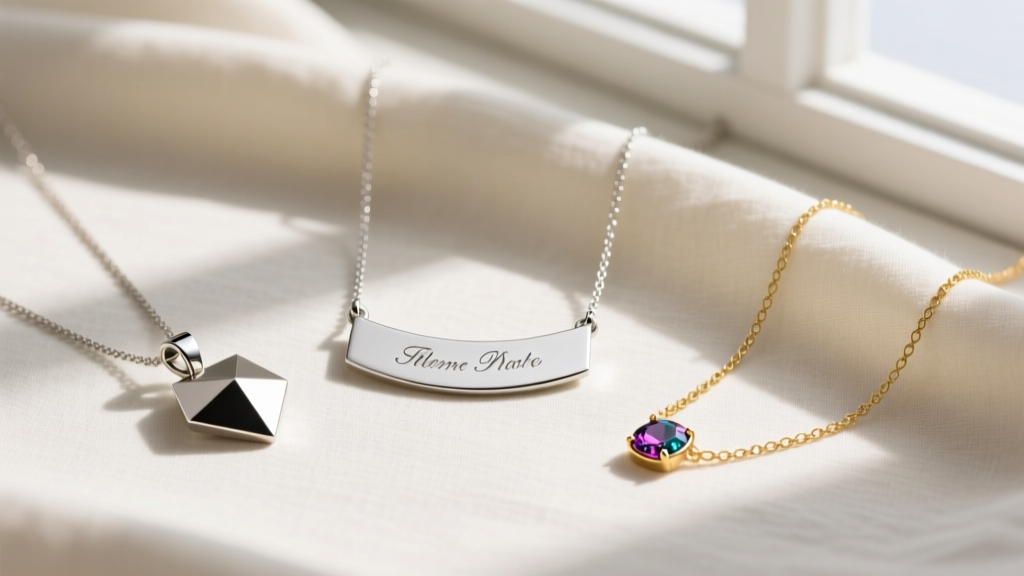
Popular pendant choices include birthstone solitaires set in bezel settings (which prevent the stone from snagging on clothing), engraved nameplates or initial discs, and simple geometric shapes like a brushed titanium bar or a small, polished silver sphere. Some may also choose to wear subtle, engraved coordinates of a meaningful location, or a small pendant featuring a favorite, non-iconographic nature motif, such as a leaf or a dove, crafted in a minimalist style.
Care, Maintenance, and Clasp Failure Modes
Even the highest quality metals require basic maintenance to retain their dignified appearance. Furthermore, the clasp is often the weakest point of any delicate necklace.
Clasp Mechanics: Many lightweight chains come with spring-ring clasps. These contain a tiny internal steel spring that is highly susceptible to rust and tension loss, especially when exposed to sweat or humidity. When the spring fails, the clasp snaps open, leading to lost jewelry. For a modest 1.2mm chain, upgrading to a 5mm or 6mm lobster clasp is highly recommended. Lobster clasps use a solid metal lever mechanism that is far more durable and secure, without adding excessive bulk to the neckline.
Cleaning Routines:
- Titanium & Steel: Simply wash with warm water, a drop of mild dish soap, and a soft microfiber cloth. Avoid abrasive brushes that can ruin brushed finishes.
- 14k Gold: Soak in a solution of warm water and ammonia-free glass cleaner for 10 minutes, then gently brush with an extra-soft baby toothbrush to remove sebum and lotion buildup from the links.
- Sterling Silver: Use a dedicated silver polishing cloth impregnated with anti-tarnish compounds. Never use liquid silver dips on chains with porous gemstones (like pearls or opals), as the harsh chemicals will destroy the stone's nacre or internal structure.
Final Thoughts on Gifting and Selection
Choosing a Jehovah Witness necklace is an exercise in balancing aesthetic beauty with deeply held principles of modesty and practicality. By prioritizing high-integrity materials like ASTM F136 titanium or 14k solid gold, and selecting refined, lightweight weaves in the 1.0mm to 1.5mm range, you ensure the jewelry remains a dignified, long-lasting accessory. Whether you are purchasing a piece for yourself or selecting a thoughtful, respectful gift for a loved one, focusing on metallurgical quality and non-iconographic, personalized pendants will result in a necklace that is both beautiful and entirely appropriate for everyday wear.


