Collier Necklace Materials: Gold vs Platinum vs Titanium
Discover the best metals for a collier necklace. We compare 18k gold, platinum 950, and titanium for hardness, weight, and long-term durability.

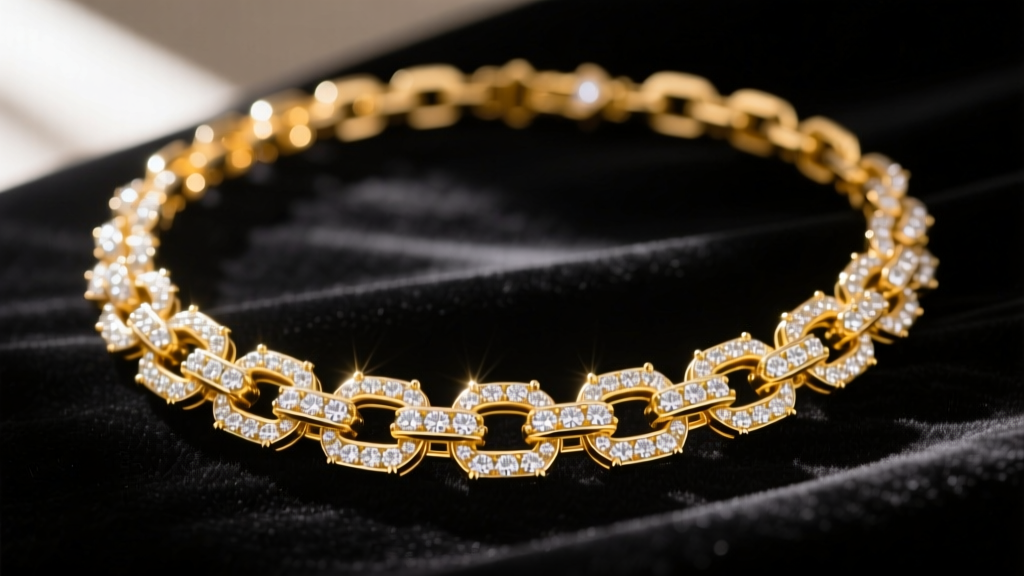
In the 2026 haute joaillerie landscape, the term collier transcends the simple French translation for 'necklace.' In high jewelry, a collier specifically denotes a substantial, often rigid or heavily articulated collar necklace that sits flush against the neck and clavicle. Unlike a delicate pendant chain, a true collier—whether it is a flexible mesh, a rigid torque, or an articulated link design—requires immense structural integrity. The sheer volume of metal required to craft these statement pieces means that material selection dictates not only the price point but also the ergonomics, wearability, and multi-generational lifespan of the jewelry.
Choosing the right metal for a collier necklace is an exercise in applied metallurgy. A material must possess the tensile strength to support heavy gemstone settings, the malleability to conform to the human neck, and the surface hardness to resist daily abrasion. Below, we conduct a deep-dive comparison into the three dominant materials used in modern collier fabrication: 18k Gold, Platinum 950, and Grade 5 Titanium.
The Metallurgical Baseline: 18k Gold Alloys
For over a century, 18k gold (75% pure gold, 25% alloy metals) has been the undisputed standard for high jewelry colliers. However, pure gold is far too soft (Vickers hardness of ~25 HV) to support the structural demands of a heavy collar. The 25% alloy mixture is where the true engineering lies.
Yellow Gold vs. White Gold Structural Differences
An 18k yellow gold collier is typically alloyed with a precise ratio of copper and silver. This yields a Vickers hardness (HV) of approximately 125 to 135 HV. While this provides a warm, traditional aesthetic, yellow gold is susceptible to gradual metal loss over decades of wear—a phenomenon known as 'gold wear.' The friction against the skin and clothing slowly ablates the metal, meaning the links of a yellow gold collier will physically thin over a 50-year period.
Conversely, an 18k white gold collier is alloyed with palladium or nickel (where legally permitted) and often zinc. Palladium-based white gold alloys are significantly stiffer, boasting a hardness of up to 140 HV. This makes white gold an excellent choice for rigid torque colliers or designs featuring complex micro-pavé diamond settings, as the stiffer alloy resists the bending and warping that can cause gemstones to pop from their prongs.
According to the World Gold Council, the density of 18k gold sits at roughly 15.6 g/cm³. For a wide, articulated collier, this density provides a reassuring, luxurious weight without crossing the threshold into neck strain.
Platinum 950: Density, Displacement, and Patina
Platinum is the premier choice for heirloom-quality colliers, particularly those heavily encrusted with high-clarity diamonds. A standard platinum collier is stamped 'Pt950', meaning it contains 95% pure platinum and 5% alloying metals, usually ruthenium (Ru) or iridium (Ir).
The Ruthenium Advantage
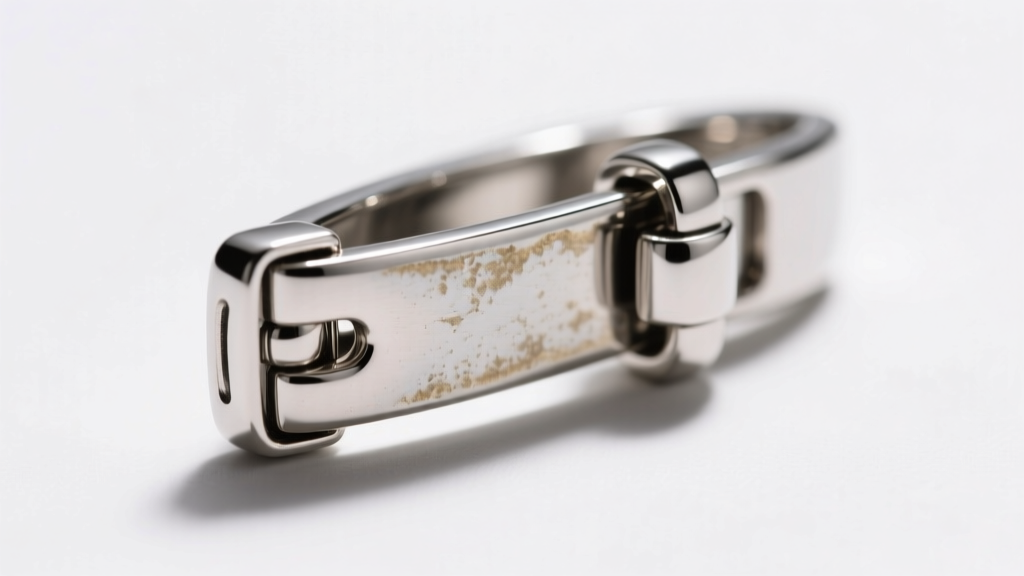
The choice of the 5% alloy radically alters the working properties of the collier. Platinum alloyed with iridium is softer and highly malleable, making it ideal for intricate, lace-like filigree collars. However, platinum alloyed with ruthenium is significantly harder (approx. 135 HV) and possesses a higher tensile strength. For a heavy, geometric link collier, Pt950/Ru is vastly superior as it resists the stretching and deformation that heavy links endure under their own weight.
The Ergonomic Reality of Platinum Density
The most critical factor when commissioning or purchasing a platinum collier is its density. Platinum is extraordinarily dense at 21.45 g/cm³—nearly 40% heavier than 18k gold. A voluminous, wide-link collier that weighs a comfortable 80 grams in 18k gold will weigh over 110 grams in platinum. While this provides an unmatched feeling of luxury and substance, it requires careful ergonomic design. Jewelers must engineer the posterior links to be slightly wider and flatter to distribute the increased mass across the cervical spine and prevent the necklace from sliding backward.
Furthermore, platinum does not experience 'gold wear.' When scratched, the metal is merely displaced, not lost. Over time, a platinum collier develops a soft, satiny patina. As noted by the Gemological Institute of America (GIA), this patina is highly sought after by collectors, though it can be polished back to a high mirror finish if desired.
The Modern Challenger: Grade 5 Titanium
As high jewelry embraces avant-garde architecture in 2026, Grade 5 Titanium (Ti-6Al-4V) has emerged as a revolutionary material for oversized collier designs. An aerospace-grade alloy containing 6% aluminum and 4% vanadium, Grade 5 titanium offers a metallurgical profile that completely upends traditional jewelry norms.
Extreme Hardness and Featherweight Ergonomics
With a Vickers hardness of roughly 350 HV, Grade 5 titanium is more than twice as hard as 18k gold and platinum. It is virtually impervious to scratching and will never deform under the weight of heavy gemstones. Yet, paradoxically, its density is a mere 4.43 g/cm³. This allows master jewelers to craft massive, shoulder-spanning colliers that weigh less than a standard gold pendant chain. For clients who desire dramatic, high-impact volume without the physical fatigue of heavy metals, titanium is the ultimate solution.
Anodization and the Color Spectrum
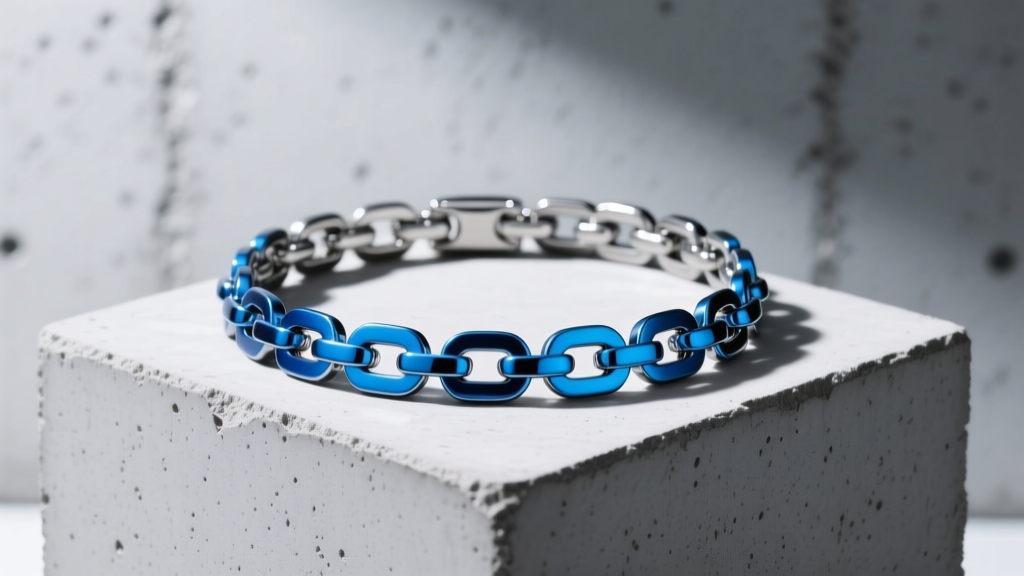
Unlike gold, which requires rhodium plating to appear white, or copper alloys to appear rose, titanium can be electrochemically anodized to produce a permanent, vibrant spectrum of colors without the use of dyes or coatings. By manipulating the voltage during the anodization process, jewelers can create colliers that shift from deep violet to iridescent magenta, providing a striking backdrop for colored gemstones like Paraíba tourmalines or black opals.
Comparative Data: Material Properties at a Glance
When evaluating materials for a structural piece like a collier, raw data provides the clearest picture of how the metal will perform over decades of wear. The table below synthesizes the critical metallurgical and ergonomic metrics for high jewelry fabrication.
| Material | Composition | Density (g/cm³) | Vickers Hardness (HV) | Ergonomic Weight Factor | Long-Term Maintenance |
|---|---|---|---|---|---|
| 18k Yellow Gold | 75% Au, Cu/Ag | 15.6 | 125 - 135 | Moderate / Balanced | Requires polishing; gradual metal loss over 50+ years. |
| 18k White Gold | 75% Au, Pd/Ni | 15.8 | 135 - 140 | Moderate / Balanced | Requires rhodium replating every 3-5 years for stark white color. |
| Platinum 950 (Ru) | 95% Pt, 5% Ru | 21.45 | 130 - 140 | Very Heavy / Substantial | Develops patina; zero metal loss; excellent for prong security. |
| Grade 5 Titanium | Ti-6Al-4V | 4.43 | 330 - 350 | Extremely Light | Zero maintenance; cannot be traditionally soldered or resized. |
Failure Modes and Long-Term Maintenance
A collier necklace is subjected to unique mechanical stresses. Because it wraps tightly around the neck, it endures constant torsion, pulling, and compression as the wearer moves. Understanding how different metals fail under these specific stresses is crucial for long-term preservation.
Link Stretching and Clasp Stress
In 18k gold colliers, the most common failure mode is link elongation. The repetitive tension of putting on and taking off a heavy collar can cause the oval links near the clasp to slowly stretch into ovals, eventually compromising the structural integrity of the chain. Platinum resists this stretching far better due to its higher tensile strength, though its softer yield point means that if a platinum link is bent out of shape, it will stay bent rather than snapping.
Titanium, while immune to stretching, presents a different challenge: repairability. Because Grade 5 titanium requires an inert argon atmosphere to weld and cannot be soldered with traditional jeweler's torches, a broken titanium link often cannot be repaired by a standard bench jeweler. It must be returned to the original manufacturer or a specialist equipped with laser-welding technology.
Prong Wear in Gem-Set Colliers
For diamond-encrusted colliers, the metal holding the stones is just as important as the stones themselves. Platinum is universally favored for gem-set colliers because of its 'displacement' property. If a platinum prong is snagged on clothing, the metal bends, securing the stone. If an 18k gold prong is snagged, the softer alloy can wear thin or snap off entirely, leading to stone loss. Consequently, many master jewelers utilize a hybrid approach: crafting the main body and links of the collier in 18k gold for weight management, while executing the gemstone settings in platinum for maximum security.
Final Verdict: Choosing Your Collier Material
The ideal material for your collier necklace depends entirely on the design's architecture and your personal ergonomic preferences. If you are investing in a classic, flexible, diamond-heavy articulated collar intended to become a multi-generational heirloom, Platinum 950 is the unmatched standard, provided you are comfortable with its substantial weight and higher initial cost.
If you prefer a warmer aesthetic, a more moderate weight, and a highly traditional jewelry profile, an 18k Gold collier—particularly in a stiffer white or rose gold alloy—offers the perfect balance of luxury and wearability. Finally, for the avant-garde collector seeking massive, sculptural volume without physical fatigue, a Grade 5 Titanium collier represents the cutting edge of 2026 high jewelry engineering, offering vibrant anodized colors and featherweight ergonomics that precious metals simply cannot replicate.


