Troubleshooting Your Sephora Necklace: Tangles, Tarnish, and Breaks
Learn how to fix, clean, and maintain your Sephora necklace. Expert troubleshooting for tarnish, tangled micro-chains, and broken fashion jewelry clasps.

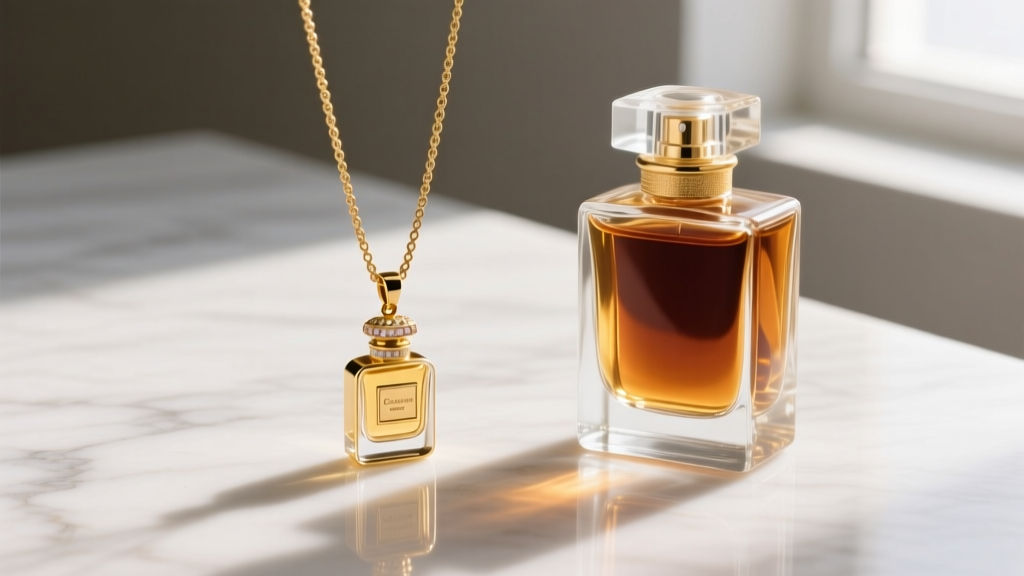
Sephora necklaces—whether they are limited-edition holiday collaborations, beauty-brand merchandise like Fenty or Rare Beauty pendants, or cosmetic-themed charms—hold a special place in our jewelry boxes. They are fun, highly thematic, and often serve as conversation starters. However, because they are primarily classified as fashion jewelry, they present a unique set of maintenance challenges. Unlike fine jewelry crafted from solid 14k gold or platinum, beauty-brand necklaces are typically constructed from brass or zinc alloy bases with a thin veneer of gold or silver plating. When you combine these delicate materials with the harsh chemical environment of a daily beauty routine, problems like rapid tarnishing, chain tangling, and clasp failures are inevitable.
If your favorite piece has lost its luster or snapped at the clasp, do not throw it away. This comprehensive troubleshooting guide will walk you through the exact material science behind these failures and provide actionable, professional-grade repair techniques to restore your Sephora necklace to its former glory.
The Material Reality: Flash Plating vs. Cosmetic Chemicals
To effectively troubleshoot your necklace, you must first understand its metallurgical composition. Most fashion jewelry sold at beauty retailers utilizes 'flash plating.' This means the gold or silver finish is applied via electroplating at a thickness of just 0.1 to 0.5 microns. To put that in perspective, a human hair is roughly 70 microns thick.
This ultra-thin plating is highly porous and vulnerable to the chemicals in your daily regimen. Ethanol (the primary alcohol in perfumes and setting sprays), aerosol propellants, and the acidic pH of active skincare ingredients like AHAs, BHAs, and Vitamin C serums can rapidly break down the metallic bonds of the plating. Once the plating is compromised, the underlying brass or copper alloy is exposed to oxygen and moisture, leading to the dreaded 'green skin' effect and dark, stubborn tarnish.
Troubleshooting Tarnish and Cosmetic Chemical Reactions
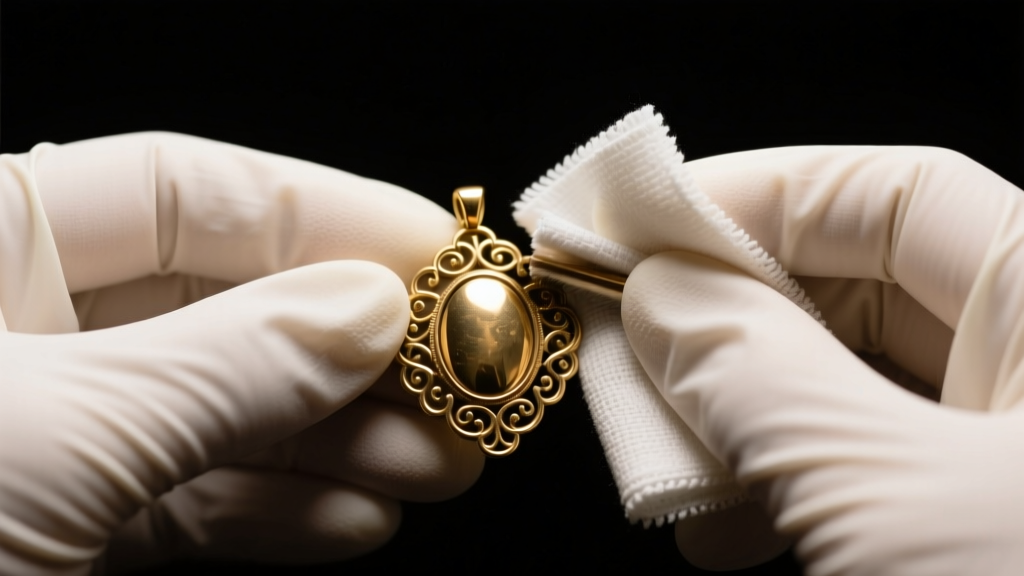
When your necklace turns dark or leaves a green residue on your collarbone, the base metal is oxidizing. Many well-meaning DIY guides suggest using baking soda and aluminum foil baths or harsh silver polishes. Do not use these methods on a Sephora necklace. Baking soda is highly abrasive and will strip the remaining 0.2 microns of gold plating right off the brass base, leaving you with a dull, raw metal pendant.
The Safe Cleaning Protocol
- The Solution: Mix three drops of mild, phosphate-free dish soap (like Dawn) into a bowl of lukewarm distilled water. Tap water contains chlorine and trace minerals that can accelerate oxidation.
- The Agitation: Submerge the necklace for exactly 3 to 5 minutes. Do not soak it longer, as water can seep into the microscopic crevices of the pendant settings and weaken adhesive bonds.
- The Scrub: Use an ultra-soft baby toothbrush or a cotton swab to gently dislodge lotion and sebum buildup from the chain links and pendant bail.
- The Dry: Pat dry with a lint-free microfiber cloth and use a hair dryer on the 'cool' setting to blow out any trapped moisture from the clasp mechanism.
For a deeper understanding of how different metals react to environmental factors, the Jewelers of America provides excellent guidelines on maintaining plated and alloy-based fashion jewelry.
Untangling Micro-Cable Chains Without Snapping
Sephora necklaces frequently feature delicate cable or rope chains ranging from 0.8mm to 1.2mm in thickness. When stored improperly, these micro-chains tie themselves into complex slipknots. Pulling on them will stretch the links, causing permanent deformation and eventual snapping.
The Cornstarch and Needle Technique
- Lay the tangled necklace flat on a dark, non-porous surface (like a slate coaster or dark cutting mat) so you can easily see the fine gold or silver links.
- Dust the knot generously with cornstarch or unscented baby powder. This acts as a dry lubricant, reducing the friction between the microscopic metal links.
- Take two standard sewing needles. Insert the tips of both needles into the exact center of the knot.
- Gently wiggle the needles in opposite directions to loosen the core of the knot. Never pull the outer ends of the chain, as this tightens the center.
- Once the core is loose, use the needles to tease the individual links apart one by one.
Repairing Enamel Chips and Missing Rhinestones
Many beauty-themed pendants feature cold enamel fills (like a lipstick bullet or compact mirror) or pave-set cubic zirconia rhinestones. Dropping these pendants on a hard bathroom tile floor often results in chipped enamel or lost stones. You can repair these at home, but choosing the wrong adhesive will ruin the piece.
| Adhesive Type | Best Used For | Cure Time | Pros & Cons |
|---|---|---|---|
| GS Hypo Cement | Tiny rhinestones (1mm-2mm), delicate foil backs | 10-15 minutes | Pros: Precision needle tip, dries clear, won't cloud stones. Cons: Weak bond for heavy wear. |
| E6000 Jewelry & Bead | Enamel chips, larger cabochons, metal-to-metal | 24 hours | Pros: Flexible, waterproof, extremely strong. Cons: Toxic fumes, thick viscosity can cause messy overflow. |
| Gem-Tac | Porous surfaces, fabric-backed jewelry, light gems | 1-2 hours | Pros: Non-toxic, washable. Cons: Poor adhesion to smooth metal or glass. |
Expert Tip: If you are replacing a missing rhinestone, use a piece of kneaded eraser to pick up the tiny stone. Press the eraser onto the stone, dip the flat base of the stone into a microscopic drop of GS Hypo Cement on a piece of wax paper, and transfer it to the pendant setting. The Gemological Institute of America (GIA) recommends avoiding any adhesives containing acetone or cyanoacrylate (Super Glue), as the fumes will permanently cloud cubic zirconia and acrylic stones.
Clasp and Jump Ring Failures: When to DIY and When to Replace
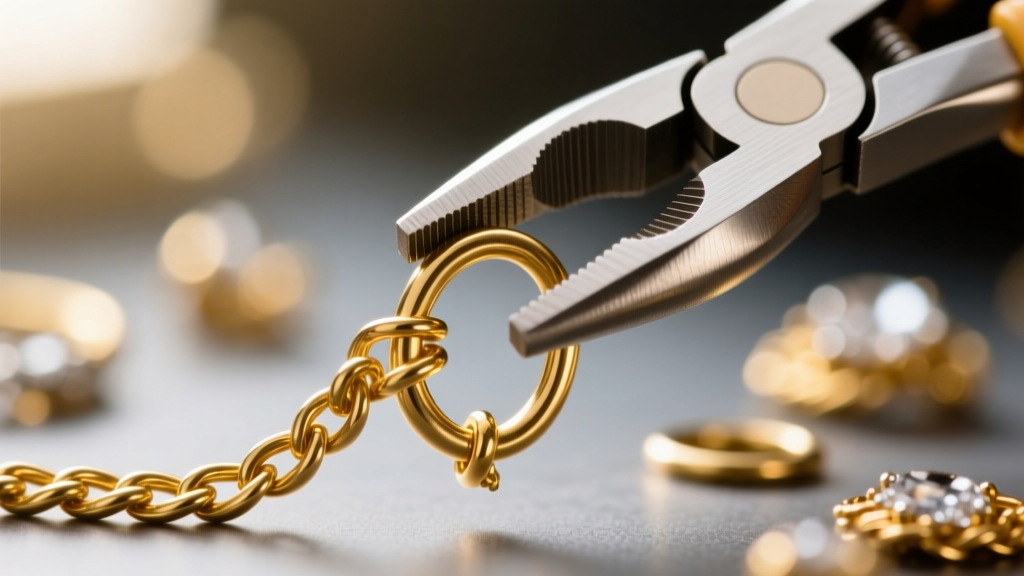
The most common point of failure on any Sephora necklace is the clasp assembly. Fashion jewelry typically uses 5mm or 6mm spring-ring clasps. These fail when the internal tension spring snaps or the tiny lever gets bent backward. Attempting to pry open a broken spring ring will only destroy it. The most permanent fix is to upgrade the hardware.
Upgrading to a Lobster Claw
Replace the failed spring ring with a 6mm or 8mm gold-plated lobster claw clasp. Lobster claws are vastly superior for fine chains because they feature a solid internal mechanism and a larger thumb trigger, making them easier to operate and less prone to accidental unhooking.
- Tools Required: Two pairs of flat-nose or chain-nose pliers (never use serrated jewelry pliers, as they will gouge the soft brass plating), and a package of 18-gauge, 4mm or 5mm jump rings.
- The Technique: Grip the jump ring with both pliers. Twist one hand toward you and the other away from you to open the ring laterally. Never pull the ring apart outward, as it will lose its perfect circle shape and weaken the metal.
- The Assembly: Thread the open jump ring through the last link of the chain and the loop of the new lobster clasp. Twist the jump ring closed until you hear a subtle 'click' or feel the ends flush against each other.
Preventative Maintenance: The 'Get Dressed Last' Protocol
Troubleshooting is only half the battle; preventing the damage in the first place will extend the life of your Sephora necklace by years. Adopt the 'Get Dressed Last' protocol. Your necklace should be the absolute final step in your morning routine. Apply your moisturizers, serums, perfumes, and hairsprays, and wait a full 5 to 10 minutes for the volatile organic compounds (VOCs) and alcohols to evaporate and absorb into your skin before putting on your jewelry.
When storing the necklace, avoid tossing it into a communal jewelry box where it can be scratched by harder gemstones or tangled with heavier chains. Store it in an individual anti-tarnish ziplock bag with a small silica gel packet to control ambient humidity. By understanding the specific vulnerabilities of beauty-brand fashion jewelry and applying these targeted repair techniques, you can keep your favorite thematic pieces looking pristine and ready to wear.


