Ultimate Care Guide for Your Rose Quartz and Pearl Necklace
Learn the exact science and safe steps to clean, store, and maintain your rose quartz and pearl necklace without damaging the nacre.

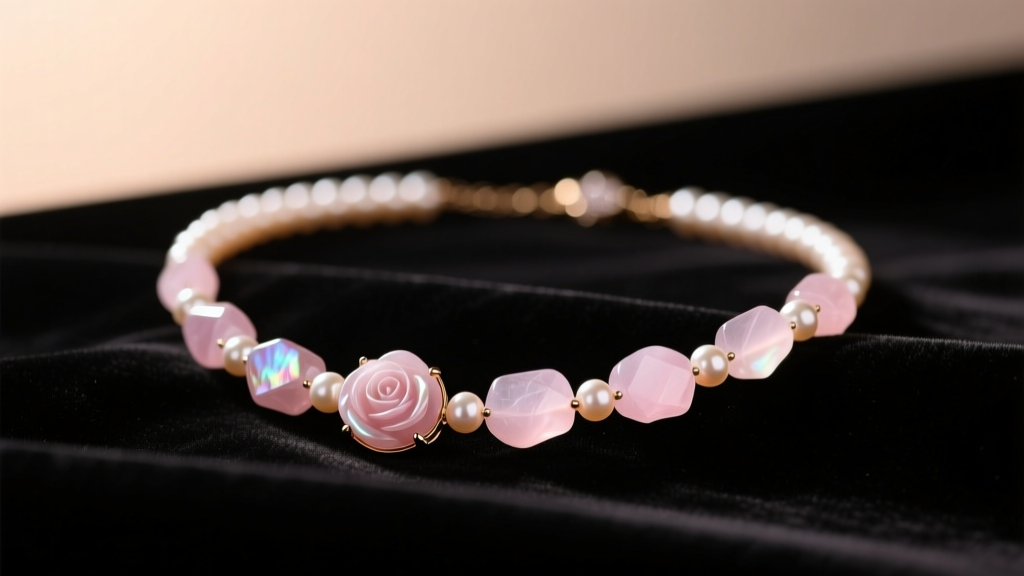
The Material Clash: Why Standard Cleaning Fails
A rose quartz and pearl necklace is a masterclass in textural contrast. The soft, luminous luster of organic pearls paired with the translucent, cloudy pink of crystalline quartz creates a breathtaking aesthetic. However, from a gemological perspective, this pairing is a maintenance minefield. When it comes to cleaning and care, you are dealing with two fundamentally incompatible materials. What safely cleans a quartz crystal can permanently destroy a pearl's delicate nacre.
Most commercial jewelry cleaners are formulated for hard, non-porous stones and precious metals. Using these on a mixed-media piece like a rose quartz and pearl necklace will strip the pearl of its natural oils, dull its orient, and potentially crack the nacre layers. To properly maintain this specific necklace, we must look at the mineralogy and organic chemistry of both components and develop a targeted, safe cleaning protocol.
The Material Science: Understanding Your Necklace
Before reaching for a cleaning cloth, it is vital to understand the physical properties of the materials resting against your skin. According to the Mindat.org mineralogy database, rose quartz is a macrocrystalline variety of silicon dioxide with a Mohs hardness of 7. It is non-porous and highly resistant to scratching from everyday dust (which contains quartz particles of hardness 7). Pearls, conversely, are organic gemstones primarily composed of aragonite (a calcium carbonate crystal) and conchiolin (an organic protein). They rank a mere 2.5 to 4.5 on the Mohs scale and are highly porous.
| Property | Freshwater / Akoya Pearl | Rose Quartz |
|---|---|---|
| Mohs Hardness | 2.5 - 4.5 | 7.0 |
| Composition | Organic (Aragonite & Conchiolin) | Crystalline (Silicon Dioxide) |
| Porosity | High (Absorbs liquids & oils) | None (Non-porous) |
| UV Sensitivity | Low | High (Prolonged UV fades pink hue) |
| Chemical Weakness | Acids, Ammonia, Perfumes, Sweat | Hydrofluoric acid (irrelevant for home care) |
Because pearls contain conchiolin, they are deeply vulnerable to the lactic acid present in human sweat, as well as the acids in cosmetics and perfumes. Rose quartz, while chemically stable, derives its pink color from trace amounts of titanium, iron, or manganese inclusions. Prolonged exposure to direct ultraviolet light can cause these inclusions to oxidize or fade, turning your vibrant pink stones into a dull, chalky white.
Step-by-Step Cleaning Protocol (The Safe Method)
To clean a rose quartz and pearl necklace without causing micro-abrasions or chemical burns to the nacre, you must abandon ultrasonic machines and harsh liquid dips. The Gemological Institute of America (GIA) strongly recommends gentle, manual cleaning for all organic gems. Follow this exact protocol after every 3 to 4 wears.
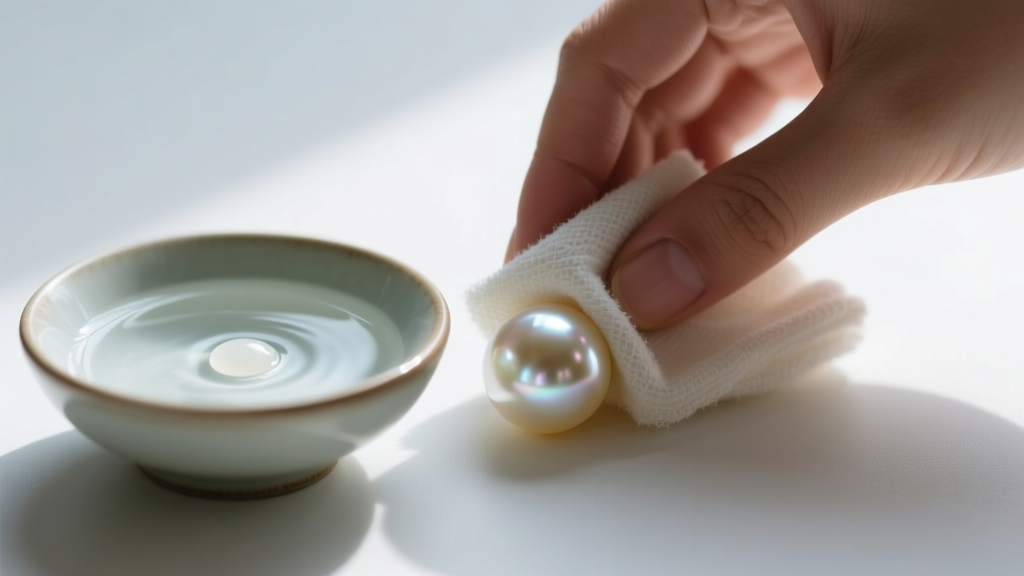
1. Prepare Your Cleaning Station
Never clean your necklace over an open sink drain. Lay down a soft, lint-free towel on a flat surface. Fill a small glass bowl with distilled water. Tap water contains chlorine and trace minerals that can leave microscopic deposits on the porous pearls. Add a single drop of pH-neutral liquid soap (such as unscented baby shampoo or a dedicated pearl-cleaning solution) to the water.
2. The Damp Wipe Technique
Do not submerge the necklace. If your pearls are strung on silk thread—a standard practice for high-quality pearl necklaces—submerging them will cause the silk to absorb water, stretch, and eventually rot from the inside out. Instead, dip a clean, ultra-fine microfiber cloth into the distilled water solution and wring it out until it is barely damp.
3. Targeted Stone Cleaning
Gently wipe each pearl individually, applying zero pressure. Let the moisture lift the surface oils and cosmetic residue. For the rose quartz beads, you can apply slightly more pressure to remove stubborn sebum buildup, but ensure you do not drag the harder quartz across the softer pearls, which will result in permanent scratching.
4. The Drying Phase
Use a second, completely dry microfiber cloth to buff the hardware (clasp and jump rings) and gently pat the stones dry. Lay the necklace flat on the towel in a cool, shaded room. Never hang a wet pearl necklace to dry, as the weight of the water will stretch the wet silk thread, causing permanent gaps between the knots.
The "Never Do This" List: Fatal Cleaning Mistakes
When caring for a rose quartz and pearl necklace, avoidance is just as critical as active cleaning. The following practices will cause irreversible damage:
- Ultrasonic Cleaners: The high-frequency sound waves create microscopic cavitation bubbles that implode against the jewelry. While safe for diamonds, this process will literally shatter the nacre layers of a pearl and can fracture internal inclusions within the rose quartz.
- Steam Cleaners: The intense heat and pressure of steam will cook the organic conchiolin in the pearl, causing it to crack, peel, and lose its luster permanently.
- Commercial Silver Dips: If your necklace features sterling silver hardware, resist the urge to use liquid tarnish removers. These contain thiourea and strong acids that will dissolve the aragonite in your pearls upon contact.
- Toothbrushes: Even an "extra-soft" bristled toothbrush is far too abrasive for pearls. The bristles will create micro-scratches that dull the surface luster over time.
Pro-Tip: Always apply your perfume, hairspray, and lotions at least 15 minutes before putting on your rose quartz and pearl necklace. The alcohol and chemical propellants in aerosol cosmetics are highly corrosive to organic gemstones.
Storage and Environmental Maintenance
How you store your necklace when it is not being worn dictates its lifespan. Pearls require a specific level of ambient humidity to maintain their structural integrity. If stored in an overly dry environment, such as a safety deposit box or near a heating vent, the moisture in the conchiolin evaporates, leading to a phenomenon known as "crazing," where the surface of the pearl develops a network of fine cracks.
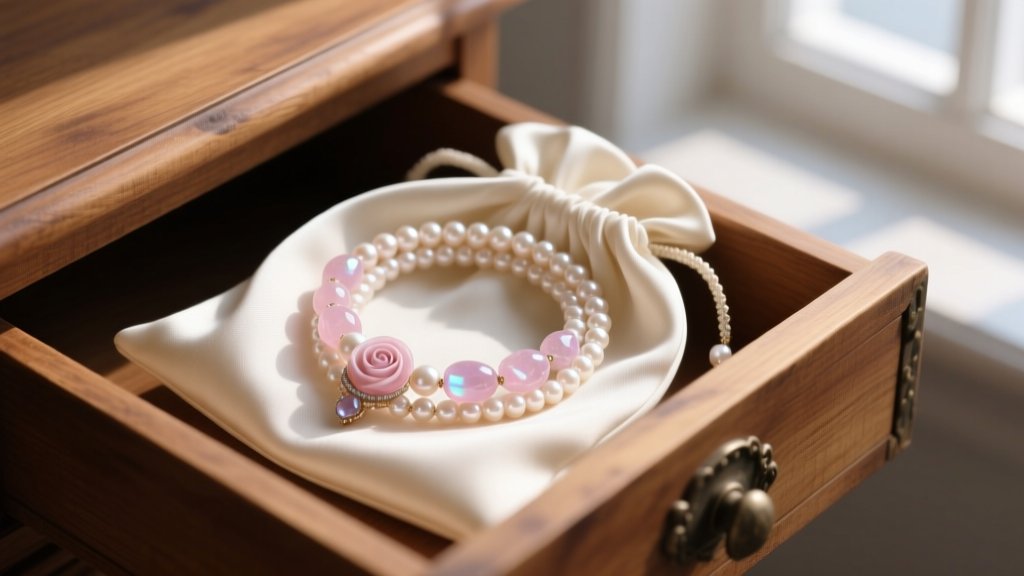
Conversely, storing the necklace in a humid bathroom encourages the growth of mold on the silk stringing thread and can cause silver hardware to tarnish rapidly. The ideal storage environment is a breathable, natural fabric pouch (like untreated silk or unbleached cotton) kept in a standard bedroom drawer where the humidity hovers between 40% and 60%.
Never toss your rose quartz and pearl necklace into a communal jewelry box. The Mohs 7 hardness of the quartz, combined with any diamond or sapphire pieces in the box, will act like sandpaper against the pearls. Always store it isolated in its own soft pouch, laid flat to prevent the silk thread from becoming permanently kinked or stretched.
Restringing and Hardware Checks
The structural integrity of your necklace relies entirely on the stringing material and the clasp hardware. High-end pearl and quartz necklaces are traditionally strung on 100% silk thread (usually Size F or G, depending on the drill hole diameter) with individual knots placed between every single stone. These knots serve two purposes: they prevent all the beads from spilling if the thread snaps, and they prevent the hard quartz from grinding against the soft pearls.
Over time, silk degrades. It absorbs microscopic skin cells, sweat, and environmental pollutants, which act as an abrasive paste inside the drill holes, eventually fraying the thread from the inside. You should gently tug the necklace near the clasp; if you see gaps between the knots and the stones, or if the thread appears dark and stiff, it is time for a professional restringing. As a general rule, a frequently worn necklace should be restrung every 18 to 24 months, while an occasionally worn piece can go 3 to 5 years. Always ensure your jeweler uses French wire (gimp) at the clasp to protect the silk from fraying against the metal hardware.


