Caring for Your 10 Grams Necklace Japan: Expert Cleaning Guide
Learn expert care, cleaning, and maintenance tips for a 10 grams necklace Japan gold or platinum chain to preserve its craftsmanship.

The Unique Metallurgy of Japanese Heavyweight Chains
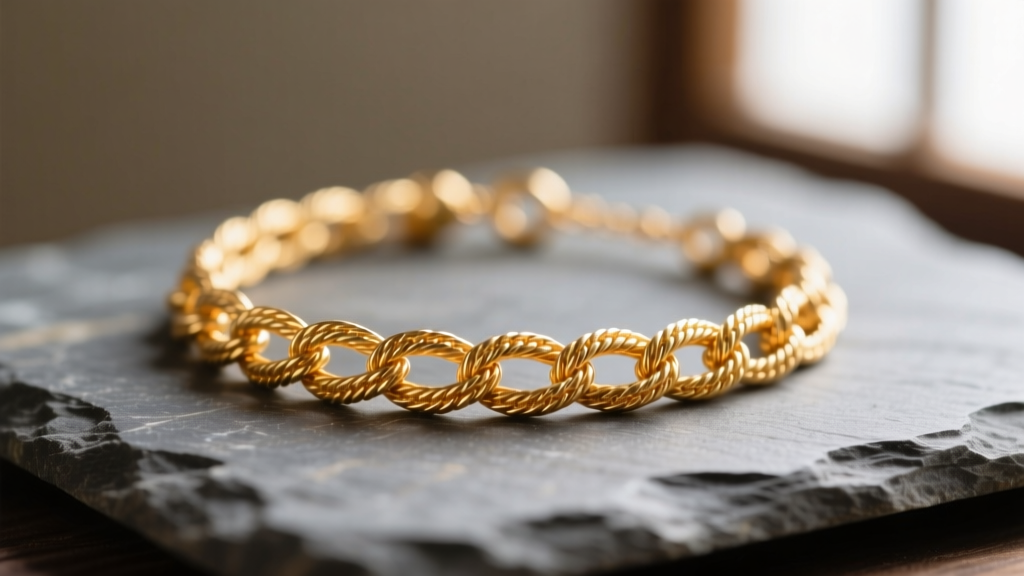
A 10 grams necklace Japan gold or platinum chain represents a perfect intersection of substantial weight, investment value, and meticulous craftsmanship. Unlike mass-produced Western jewelry, Japanese goldsmiths—particularly those operating out of historic districts like Tokyo's Ueno or Ginza—adhere to strict metallurgical standards. Understanding these specific alloy compositions is the first step in proper maintenance, as the wrong cleaning agent can permanently alter the metal's surface tension and luster.
Japanese jewelry predominantly features three distinct metal profiles in the 10-gram weight class:
- K18 (18K) Yellow Gold: The Japanese standard for K18 typically utilizes a specific 75% gold, 12.5% silver, and 12.5% copper ratio. This creates a warmer, slightly more rose-tinted hue than European 18K gold. It is highly durable but prone to trapping sebum in intricate links.
- K24 (24K) Pure Gold: At 99.99% purity, a 10-gram K24 chain is a serious investment piece. Pure gold is exceptionally soft; a 10-gram chain has enough mass that its own weight can cause stretching if subjected to kinetic shock.
- Pt900 Platinum: While Europe favors Pt950, Japan's standard is Pt900 (90% platinum, 10% palladium or ruthenium). This specific alloy is harder and more resistant to micro-scratches, making it ideal for heavy, daily-wear chains.
The Physics of a 10g Chain: Clasp and Link Stress
When maintaining a heavy chain, care extends beyond simple polishing. A 10-gram necklace exerts significant dynamic tension on its clasp and terminal links. Japanese chains frequently utilize precision-engineered spring rings or compact lobster clasps. While elegant, the internal spring mechanism of a Japanese spring ring is delicate. If a 10-gram chain is allowed to 'snap' back against the clasp when removed, the repetitive kinetic shock will eventually fatigue the internal spring or warp the terminal jump ring.
Mottainai, the Japanese philosophy of avoiding waste and respecting the inherent value of objects, applies directly to jewelry care. Preventative maintenance of the clasp mechanism honors the goldsmith's labor and prevents catastrophic loss of a heavy investment piece.
To prevent clasp failure, always support the 10-gram weight of the chain in your palm when unfastening it. Never let the chain drop freely, as the 10-gram mass generates enough momentum to bend the tiny wire of the terminal jump ring, creating a gap where the chain can slip off.
Step-by-Step Cleaning Protocols by Material
Dirt accumulation in a 10-gram chain is compounded by the sheer surface area of the links. Styles popular in Japan, such as the Azuki (bean chain) or Kame (turtle shell chain), feature flat or interlocking surfaces that easily trap dead skin cells, cosmetic powders, and environmental sulfur. According to the Gemological Institute of America (GIA), regular removal of these contaminants prevents long-term chemical degradation of the alloy metals.
Protocol for K18 Gold and Pt900 Platinum
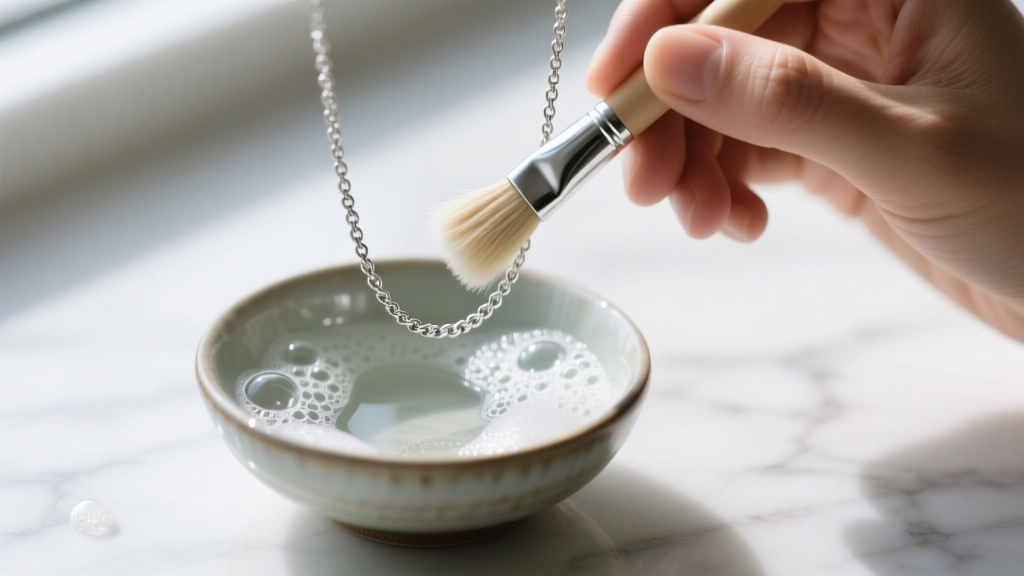
- Preparation: Fill a ceramic bowl with distilled water heated to exactly 38°C (100°F). Tap water contains chlorine and trace minerals that can leave microscopic deposits on Japanese high-polish finishes.
- Surfactant: Add three drops of pH-neutral, non-citrus dish soap. Citrus additives contain d-limonene, which can degrade certain polishing compounds left in the crevices of the chain.
- Agitation: Submerge the 10-gram necklace and let it soak for 15 minutes to loosen sebum.
- Brushing: Use an ultra-soft baby toothbrush (bristle diameter of 0.1mm or less). Gently sweep along the grain of the chain links. For Azuki chains, brush perpendicular to the oval links to dislodge trapped debris.
- Rinsing & Drying: Rinse under a gentle stream of lukewarm distilled water. Pat dry with a lint-free microfiber cloth. Never air-dry, as water spots will form on the high-karat gold.
Protocol for K24 (24K) Pure Gold
Pure gold is too soft for mechanical brushing. Even the softest bristles can induce micro-scratches that dull the mirror finish of a K24 chain over time. Instead, rely on a prolonged soak (30 minutes) in a specialized, ammonia-free gold cleaning solution, followed by a gentle swishing motion. Dry by pressing the chain between two layers of high-GSM microfiber towels without rubbing.
Advanced Maintenance: Ultrasonic and Steam Cleaning
For deep-set grime in complex Japanese rope chains or diamond-cut Figaro chains, ultrasonic cleaners are highly effective—but they carry risks. The Jewelers of America organization notes that improper ultrasonic frequencies can cause cavitation damage to jewelry. Cavitation creates microscopic vacuum bubbles that implode, generating intense localized heat and shockwaves.
| Metal / Chain Type | Recommended Frequency | Risk Level | Notes |
|---|---|---|---|
| Solid Pt900 Figaro | 40kHz - 42kHz | Low | Standard frequency safely removes heavy grime from solid platinum links. |
| Solid K18 Rope | 42kHz | Low-Medium | Ensure rope twists are solid; hollow ropes can trap water and warp. |
| K24 Pure Gold | Do Not Use | High | Shockwaves can stretch pure gold links and weaken the 10g structural integrity. |
| Delicate Azuki (Bean) | 80kHz+ | Medium | Higher frequency creates smaller bubbles, reducing the violent implosion force on thin solder joints. |
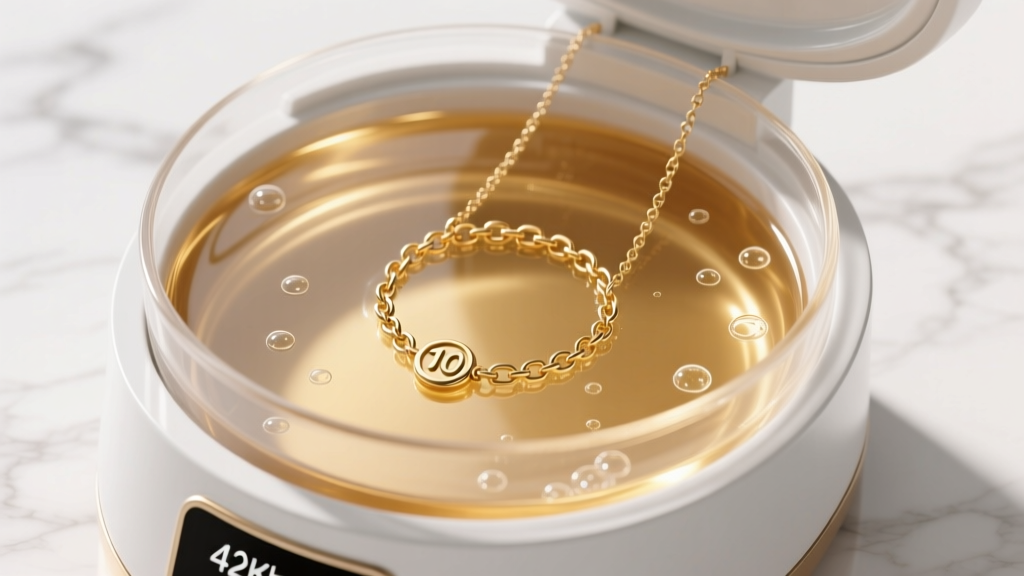
If you must use an ultrasonic cleaner on a 10-gram Japanese chain, ensure the machine operates at a minimum of 42kHz. Avoid cheap, generic 35kHz models, as the larger cavitation bubbles produced at lower frequencies can literally crack the delicate laser-welded solder joints that Japanese goldsmiths use to assemble fine chains.
Proper Storage to Prevent Micro-Scratches and Tarnish
Storing a 10-gram chain requires isolating it from other jewelry. The sheer mass of a 10-gram necklace means that if it shifts in a jewelry box, it will easily crush softer gemstones or scratch adjacent silver pieces. Furthermore, Japanese K18 gold, due to its specific copper content, is slightly more susceptible to surface oxidation (tarnish) when exposed to atmospheric sulfur than Western alloys.
The Ideal Storage Framework:
- Coiling Technique: Never store a 10-gram chain in a crumpled pile. Lay it flat on a microfiber pad, or loosely coil it in a figure-eight pattern to prevent the links from kinking.
- Barrier Protection: Place the coiled chain inside a high-density polyethylene (HDPE) ziplock bag. Avoid PVC plastics, which emit plasticizers that can react with the copper in K18 gold, causing a stubborn greenish film.
- Active Tarnish Prevention: Include a 3M Anti-Tarnish strip inside the bag. These strips absorb sulfur compounds and hydrogen sulfide from the trapped air, keeping the Japanese gold bright for up to 12 months without the need for chemical polishing.
When to Seek Professional Japanese Goldsmith Services
While home maintenance is sufficient for cleaning, structural issues require professional intervention. If the clasp of your 10-gram necklace begins to stick, or if you notice a slight 'clicking' sound when the links move against one another, the chain requires professional servicing.
Japanese goldsmiths frequently utilize laser welding for repairs. Unlike traditional torch soldering, which requires heating a large section of the chain and potentially altering the temper of the surrounding K18 or Pt900 links, laser welding targets a microscopic area with intense heat. This is crucial for maintaining the structural integrity of a heavy 10-gram chain where a weakened link could lead to a catastrophic snap. Seek out a jeweler certified in laser micro-welding to ensure your Japanese import retains its original metallurgical strength and aesthetic precision for decades to come.


