How to Clean and Care for a White Gold Necklace and Cross Pendant
Learn expert tips to clean, maintain, and restore the rhodium plating on your white gold necklace and cross pendant to keep it brilliantly shining.


A white gold necklace and cross pendant is a timeless piece of jewelry that carries deep personal, spiritual, and aesthetic significance. However, unlike platinum or yellow gold, white gold requires a highly specific maintenance regimen to preserve its brilliant, mirror-like finish. The secret to white gold’s icy hue is not the gold itself, but a microscopic layer of rhodium plating that eventually wears away, revealing the naturally yellowish-gray alloy beneath. When paired with the intricate crevices and high-relief edges of a cross pendant, maintaining this piece requires more than a simple wipe-down. In this comprehensive 2026 guide, we break down the exact metallurgy, daily threat factors, and professional-grade cleaning protocols necessary to keep your jewelry looking flawless.
Understanding Your White Gold Necklace and Cross Alloy
Before applying any cleaning agents, it is crucial to understand what your jewelry is actually made of. Pure 24k gold is naturally yellow and too soft for daily wear. To create white gold, jewelers alloy pure gold with white metals. According to the Gemological Institute of America (GIA), the two most common white gold alloys are nickel-based and palladium-based.
- 14k Nickel-Alloyed White Gold: Contains 58.3% pure gold, mixed with nickel, zinc, and copper. This alloy is exceptionally hard and durable, making it ideal for the thin chains and delicate jump rings of a necklace. However, the nickel can cause contact dermatitis in sensitive individuals, and the underlying metal has a distinctly yellowish tint.
- 18k Palladium-Alloyed White Gold: Contains 75% pure gold and 25% palladium. This creates a naturally whiter, hypoallergenic metal that requires less rhodium plating. However, palladium alloys are softer, meaning the high-friction areas of your cross pendant (where it rubs against your skin or clothing) are more prone to micro-scratches.
To achieve the bright, chrome-like finish, the finished white gold necklace and cross are electroplated with rhodium, a rare platinum-group metal. The plating on necklaces and pendants is typically applied at a thickness of 0.5 to 0.75 microns—thinner than the 1.0+ microns used on rings—because necklaces experience less direct impact. Over time, the raised edges of the cross design will be the first to show signs of 'brassing' or yellowing as the rhodium wears thin.
The Daily Wear Threat Matrix: What Damages White Gold?
Maintaining your jewelry means understanding the environmental and chemical threats it faces daily. The combination of body chemistry, cosmetics, and physical friction creates a hostile environment for rhodium plating and diamond settings. Below is a breakdown of the primary threats to your white gold necklace and cross.
| Threat Factor | Impact on White Gold Chain | Impact on Cross Pendant Details |
|---|---|---|
| Sebum & Dead Skin | Accumulates inside cable or box links, dulling the reflection and causing chain stiffness. | Traps in the filigree and back-castings of the cross, creating a breeding ground for bacteria. |
| Chlorine (Pools/Spas) | Can cause stress corrosion cracking in the alloy, leading to sudden chain snaps at the jump ring. | Degrades the prong tips holding accent diamonds or gemstones in the cross design. |
| Cosmetics & Perfumes | Leaves a microscopic film that blocks light return, making the chain look gray and lifeless. | Alcohol and oils break down the rhodium plating on the high-relief edges of the cross prematurely. |
| Physical Friction | Minimal impact unless layered with harder chains (like tungsten or steel). | Constant rubbing against the sternum wears away rhodium on the center face and lower tip of the cross. |
Step-by-Step Manual Cleaning Protocol
For routine maintenance, manual cleaning is the safest and most effective method to restore brilliance without risking damage to the rhodium layer or gemstone settings. The Jewelers of America recommends gentle, non-abrasive cleaning solutions for plated jewelry.
Preparing the Cleaning Solution
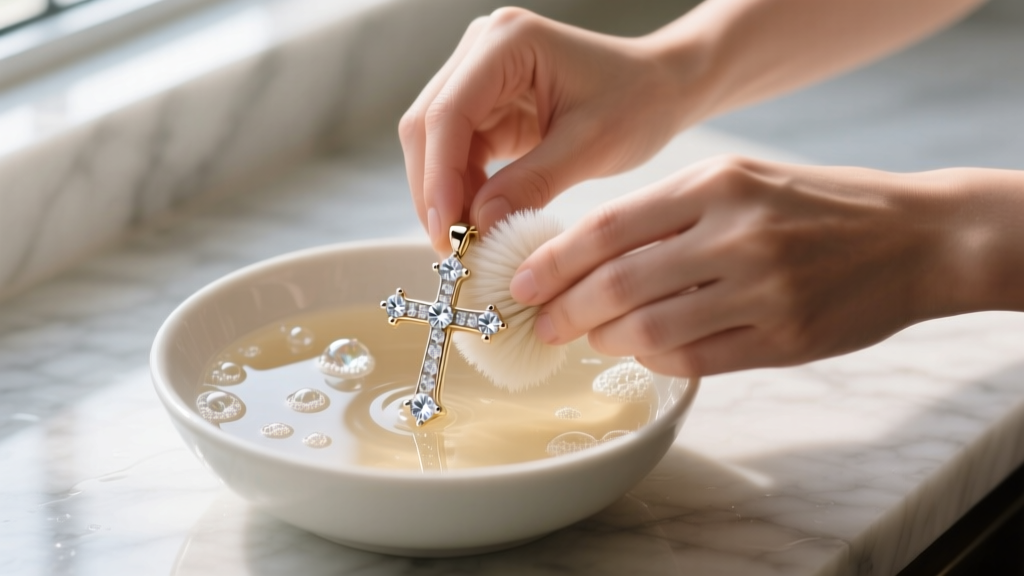
Never use tap water, as the chlorine and dissolved minerals can leave hard water spots on the white gold. Instead, mix 1 part ammonia-free, phosphate-free dish soap (such as original blue Dawn) with 10 parts warm distilled water in a glass bowl. Avoid any soaps containing moisturizers or citrus extracts, as these leave a cloudy residue on the metal and diamonds.
Soaking and Agitation
Submerge your white gold necklace and cross pendant in the solution for exactly 15 to 20 minutes. This allows the surfactants in the soap to break down the lipid bonds of the skin oils trapped in the chain links and the intricate crevices of the cross. Do not exceed 30 minutes, as prolonged soaking can loosen the adhesives used in certain gemstone settings (like black onyx or mother-of-pearl inlays often found in modern cross designs).
Detailing with the Right Tools
Remove the piece from the bath and use an extra-soft baby toothbrush or a dedicated jewelry brush with fine nylon bristles. Never use boar-hair or stiff bristle brushes, as they can trap microscopic oils and scratch the rhodium plating. Gently brush the front and back of the cross pendant using small, circular motions. Pay special attention to the bail (the loop connecting the cross to the chain), as this area collects the most dirt. For the chain, lay it flat on your palm and brush longitudinally to avoid bending or kinking the delicate links.
Rinsing and Drying
Rinse the necklace under a gentle stream of lukewarm distilled water. To dry, do not rub the piece with a paper towel or tissue, as wood fibers can cause micro-scratches. Instead, pat it dry with a lint-free microfiber cloth, and use a hairdryer on the 'cool' setting to blow water out of the tiny crevices of the cross pendant.
Ultrasonic Cleaners: A Word of Caution
While ultrasonic jewelry cleaners are incredibly effective at blasting dirt out of chain links using high-frequency sound waves (typically 42 kHz), they must be used with extreme caution on a white gold necklace and cross. If your cross pendant features fracture-filled diamonds, tension settings, or soft gemstones like opals, emeralds, or pearls, the cavitation bubbles created by the ultrasonic waves can shatter the stones or strip the fracture-fillings. Furthermore, aggressive ultrasonic cycles can accelerate the peeling of degraded rhodium plating. If you must use an ultrasonic cleaner, limit the cycle to 3 minutes and ensure the cross is suspended in the basket so it does not vibrate against the metal walls of the tank.
Rhodium Re-Plating: When and How Much?
No matter how carefully you clean your white gold necklace and cross, the rhodium plating will eventually wear off. When the raised edges of the cross and the clasp of the chain begin to show a warm, yellowish-gray hue, it is time for a professional re-dip.

As of 2026, the average cost for professional rhodium plating ranges from $65 to $150, depending on the intricacy of the cross design and the current market price of platinum-group metals. The process involves polishing out micro-scratches, electro-cleaning the piece to strip away all oils, and submerging it in a heated rhodium sulfate bath while applying a precise electrical current. It is highly recommended to have your necklace and cross re-plated every 18 to 24 months, depending on your body chemistry and wear habits. Individuals with highly acidic skin pH may find they need re-plating annually.
Proper Storage to Prevent Micro-Scratches
How you store your white gold necklace and cross pendant when it is not being worn is just as critical as how you clean it. White gold, particularly 18k palladium alloys, is susceptible to scratching when it comes into contact with harder metals or even itself.
- Individual Polyethylene Bags: Store the necklace in a soft, anti-tarnish polyethylene ziplock bag. This prevents the chain from tangling and scratching the face of the cross pendant.
- Anti-Tarnish Strips: While white gold itself does not tarnish in the same way silver does, the alloy metals (like copper or zinc) can oxidize. Including a 3M anti-tarnish strip in your jewelry box will absorb airborne sulfur compounds.
- Avoid Open Air Racks: Hanging your necklace on an open-air metal rack exposes it to dust, humidity, and accidental bumps against other jewelry. Always store it flat or hanging inside a soft, microfiber-lined compartment.
By understanding the unique metallurgical properties of white gold and adhering to these meticulous cleaning and storage protocols, your white gold necklace and cross pendant will remain a brilliant, immaculate symbol of faith and style for generations to come.


