Christus Necklace Guide: Metallurgy, Chains & Authentication
Explore the technical details of the Christus necklace. Learn about casting methods, precious metal hallmarks, and ideal chain pairings for sacred pendants.

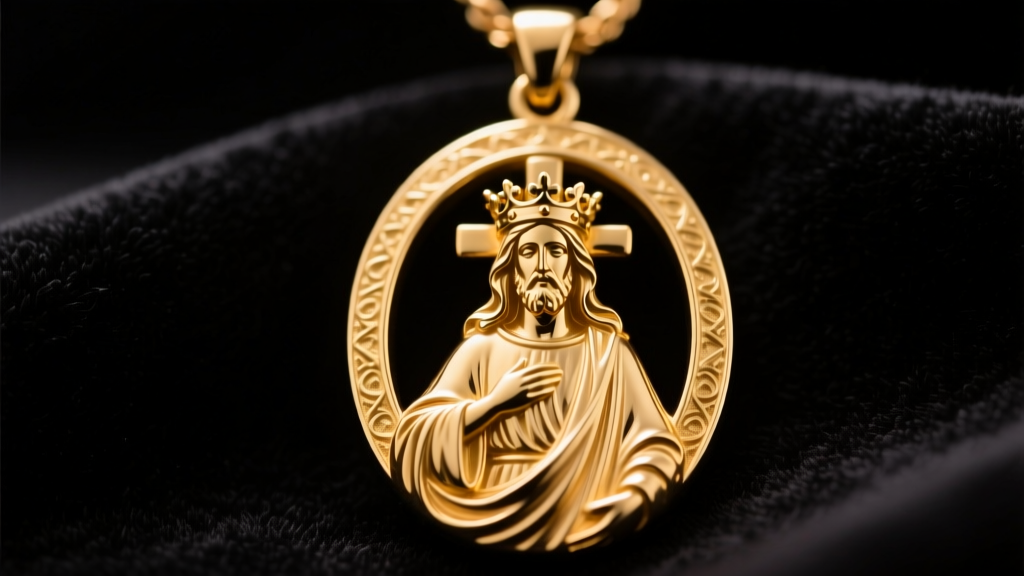
The Christus necklace represents a profound intersection of sacred iconography and fine jewelry craftsmanship. While modern jewelry markets are saturated with mass-produced, lightweight crucifixes, the true Christus pendant—specifically the Christus Rex (Christ the King) variant—demands a rigorous understanding of casting techniques, precious metal alloys, and structural chain engineering. For collectors, horologists, and jewelry archivists, evaluating these pieces requires looking past the surface and examining the microscopic details of the artisan's craft. This technical deep dive explores the metallurgical and structural realities of acquiring and maintaining a high-grade Christus necklace.
Iconographic Distinctions: The Christus Rex
To accurately appraise a Christus necklace, one must first distinguish its specific iconography. Unlike the traditional Corpus Christi crucifix, which emphasizes the physical suffering of the crucifixion with a crown of thorns and a draped loincloth, the Christus Rex depicts triumph. According to The Metropolitan Museum of Art, this iconography emerged prominently in early medieval and Romanesque art. The figure is characterized by open eyes, a regal crown (often featuring fleur-de-lis or gemstone settings), and a colobium (a long, sleeveless tunic) or flowing royal robes.
From a manufacturing perspective, this distinction drastically alters the casting requirements. The intricate folds of the royal robes, the detailed filigree of the crown, and the serene facial expressions require a much higher degree of precision in the wax model phase. Artisans must account for the fluid dynamics of molten gold or silver to ensure these deep reliefs do not suffer from incomplete fills, cold shuts, or surface porosity.
Metallurgical Breakdown: Casting and Alloys
The structural integrity and visual depth of a vintage Christus necklace are dictated by its manufacturing method and alloy composition. High-end antique pieces are typically produced via lost-wax casting, a method that allows for three-dimensional, fully rounded figures. During this process, the jeweler must account for the volumetric shrinkage of the metal as it cools. For 18k yellow gold (75% pure gold, alloyed with copper and silver), the shrinkage rate is approximately 1.25% to 1.5%. If the original wax model is not scaled correctly by the caster, the final bail loop may be too small for standard chains, or the facial features of the figure may distort.
Conversely, mid-century and contemporary pieces are often die-struck. This involves stamping a sheet of metal between hardened steel dies under immense hydraulic pressure (often exceeding 50 tons). Die-struck Christus pendants are generally flat or feature a shallow bas-relief. While they lack the three-dimensional presence of a cast piece, the compression of the metal grains during striking results in a denser, more durable pendant that highly resists denting and everyday wear.
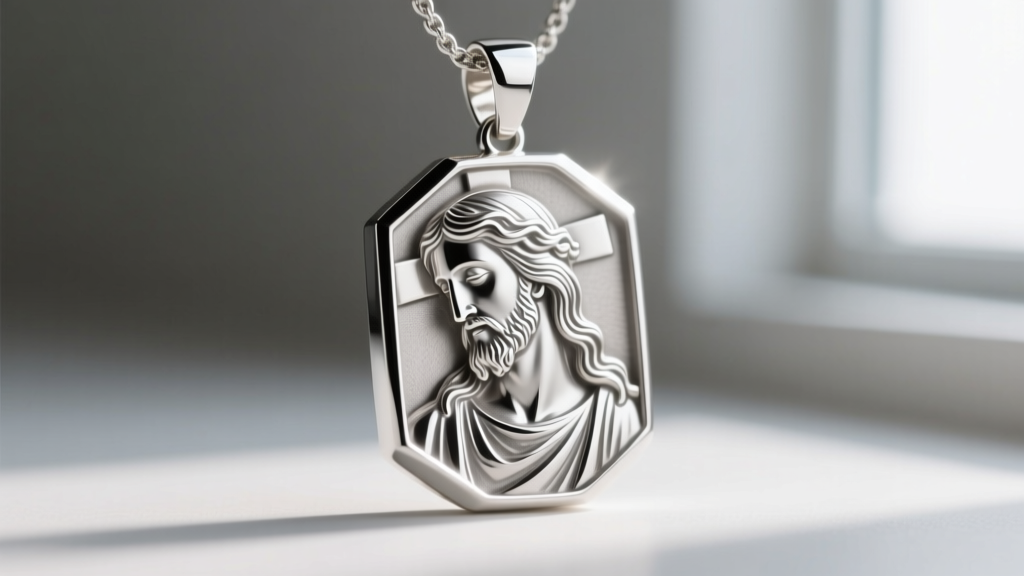
When evaluating sterling silver variants (92.5% silver, 7.5% copper), the copper content plays a critical role in the necklace's aging process. The copper oxidizes when exposed to atmospheric sulfur, creating a dark patina. In a Christus pendant, this oxidation naturally settles into the recessed areas of the robes and the cross's beveled edges, providing a natural contrast that highlights the artisan's engraving. Stripping this patina entirely destroys the visual depth and historical character of the piece.
Chain Engineering and Bail Mechanics
A common failure point in heavy religious pendants is the bail—the loop that connects the pendant to the chain. Because a solid cast 18k gold Christus Rex pendant can easily weigh between 8 and 15 grams, the bail is subjected to continuous shear stress and friction. Master jewelers often solder the bail using a lower-karat gold alloy (such as 14k or 10k) which has a lower melting point. This prevents the main 18k body from warping or melting during the soldering process. When inspecting a vintage piece, look for the subtle color variation at the solder joint as a sign of traditional bench work.
Selecting the correct chain is not merely an aesthetic choice; it is a structural necessity. The chain must distribute the pendant's weight evenly to prevent premature wear on the bail's interior curve.
| Chain Type | Recommended Gauge | Bail Compatibility | Shear Stress Rating |
|---|---|---|---|
| Solid Box Chain | 1.2mm - 1.5mm | Standard 4x6mm Bail | High (Excellent for heavy casts) |
| Rope Chain | 1.5mm - 2.0mm | Large 5x8mm Bail | Medium (Prone to snagging on detailed reliefs) |
| Cable Chain | 1.0mm - 1.2mm | Standard 4x6mm Bail | Low (Best for lightweight, die-struck pieces) |
For pendants exceeding 10 grams, a solid box chain or a reinforced wheat chain in a minimum 1.5mm gauge is mandatory. Hollow-core chains, regardless of their outer diameter, will eventually kink and snap under the pendulum-like motion of a heavy Christus pendant. Furthermore, rope chains, while visually striking, possess a high surface-area texture that can act like a file against the interior of a soft gold bail over decades of wear.
Authenticating Vintage European Pieces
The secondary market for antique Christus necklaces is fraught with misattributed pieces and modern reproductions. Authenticating a vintage European pendant requires a jeweler's loupe (minimum 10x magnification) and a thorough understanding of international hallmarking laws. According to The London Assay Office, a legal hallmark in the UK consists of a sponsor's mark, a fineness mark, and an assay office mark. However, continental European pieces operate under entirely different systems.
- French Eagle Head: Indicates a minimum of 18k (750) gold. On smaller Christus pendants, this stamp is often located on the exterior of the bail or the lower edge of the cross.
- Italian 750 & Maker's Mark: Post-1968 Italian pieces will feature a lozenge-shaped stamp containing a number and a provincial code (e.g., '123 VI' for Vicenza). This is crucial for tracing the pendant back to specific Italian goldsmithing houses.
- The 'Boar's Head' (Tête de Sanglier): A French mark used for 14k gold, often found on mid-19th-century pieces imported into France.
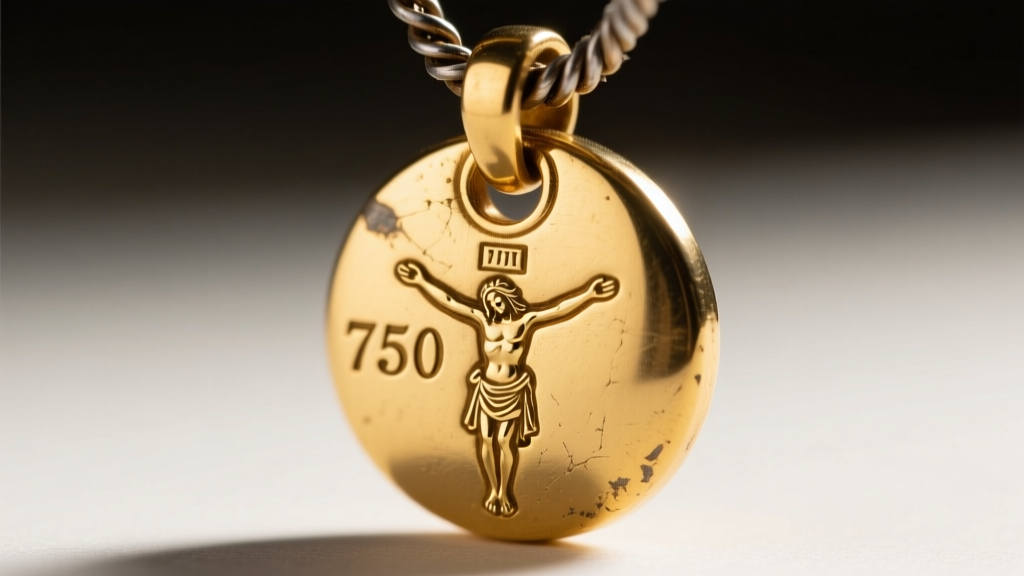
When hallmarks are worn away due to decades of friction against the chain, expert appraisers rely on non-destructive X-ray fluorescence (XRF) testing or careful acid testing on a discreet area of the bail to verify the karat weight. Buyers should also examine the solder joints where the bail meets the cross. Vintage pieces will often show a slight discoloration or a 'ghost line' where the lower-karat solder flowed. A completely uniform color with laser-perfect joints on a piece claiming to be from the 1920s is a massive red flag for a modern CAD/CAM reproduction.
Conservation and Patina Preservation
Maintaining a vintage Christus necklace requires a strict departure from standard jewelry cleaning protocols. The Gemological Institute of America (GIA) frequently warns against the indiscriminate use of ultrasonic cleaners and harsh chemical dips on antique religious jewelry.
Ultrasonic cavitation can easily fracture internal fault lines in older, die-struck silver pieces, and chemical silver dips will strip the vital sulfur-oxidation from the deep crevices of the Christus figure's robes, leaving the pendant looking flat, artificially bright, and historically compromised.
The correct conservation method involves using a mild, phosphate-free dish soap and a soft-bristled infant toothbrush to gently remove sebum and environmental grime from the surface. The recessed areas should be left alone to preserve the antique contrast. For 18k gold pieces, a gentle polish with a treated jeweler's cloth on the high-relief areas (the crown, the face, and the edges of the cross) is sufficient to restore the original luster. For sterling silver pieces intended for long-term archival storage, a micro-crystalline wax (such as Renaissance Wax) can be applied to seal the metal from atmospheric sulfur without altering the visual depth of the patina. Ultimately, the Christus necklace is a testament to the enduring marriage of faith and horological-level craftsmanship, requiring an informed steward to preserve its legacy.