How to Choose a Ruby Cross Necklace: 2026 Buying Guide
Discover how to choose the perfect ruby cross necklace. Learn about ruby grades, treatments, cross styles, and 2026 pricing in our expert guide.

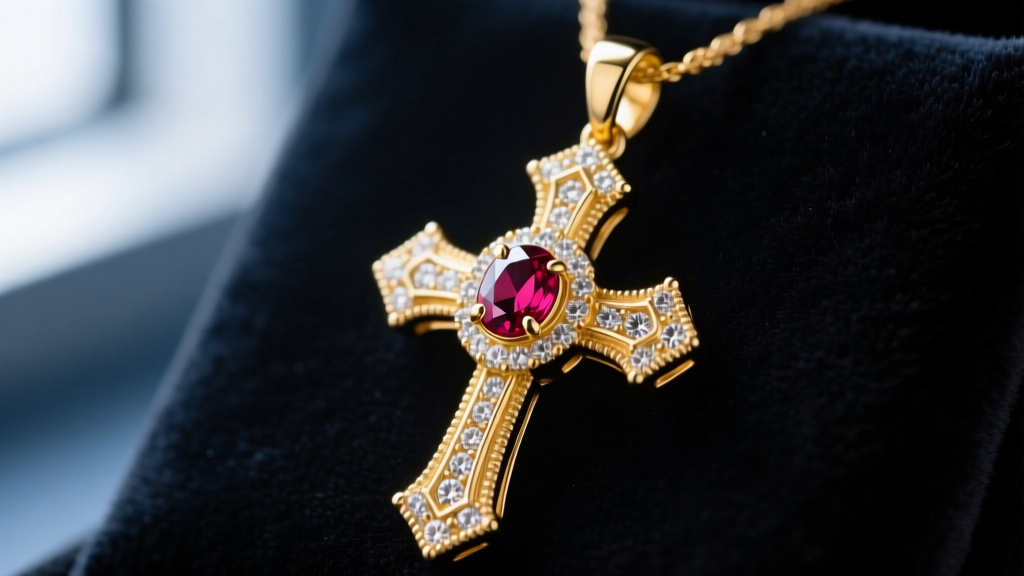
The Enduring Allure of the Ruby Cross Necklace
A ruby cross necklace is more than just a piece of jewelry; it is a profound intersection of faith, heritage, and high gemology. The deep crimson hue of a ruby has symbolized passion, protection, and divine love for centuries, making it an unparalleled choice for a cross pendant. However, navigating the market for ruby jewelry requires a discerning eye. Unlike diamonds, where the grading system is universally standardized and rigid, colored gemstones present a complex matrix of origins, treatments, and visual characteristics. Whether you are seeking a delicate everyday piece or a high-carat investment pendant, understanding the gemological and structural nuances is critical. This comprehensive 2026 buying guide will equip you with the exact specifications, material grades, and pricing frameworks needed to make an informed purchase.
Decoding Ruby Quality: The 4 Cs and Treatments
When evaluating a ruby cross necklace, the gemological profile of the stones dictates both the aesthetic impact and the long-term value. Rubies are the red variety of the mineral corundum, boasting a Mohs hardness of 9, which makes them exceptionally durable for daily wear pendants. However, not all rubies are created equal.
Color: Chasing the Pigeon's Blood Standard
Color is the single most important value factor for rubies. The most coveted hue is historically referred to as 'pigeon's blood'—a vivid, highly saturated medium-dark red with a subtle purplish secondary hue and strong red fluorescence under UV light. When inspecting a cross pendant, look for stones that maintain their red saturation in both natural daylight and warm indoor lighting. Avoid stones that appear overly dark (which can make the cross look black in low light) or overly light (which may technically be classified as pink sapphires by strict gemological standards).
Clarity and the 'Silk' Factor
Unlike diamonds, where flawless clarity is paramount, rubies are expected to have inclusions. In fact, microscopic rutile needles, known as 'silk,' are highly desirable. Silk scatters light across the stone, giving it a velvety glow and proving its natural origin. A ruby cross pendant with completely flawless stones should immediately raise suspicion of synthetic origin unless accompanied by a premium laboratory certificate. Avoid stones with surface-reaching fractures or large black carbon spots directly under the table facet, as these compromise both brilliance and structural integrity.
Treatments: What You Must Know
The vast majority of natural rubies on the market are heat-treated to improve color and clarity. This is a stable, universally accepted practice. However, you must be vigilant against fracture-filled or glass-filled rubies, which are heavily discounted and lack durability. According to the Gemological Institute of America (GIA), lead-glass filled rubies can be damaged by mild acids like lemon juice or household cleaners.
| Treatment Type | Code | Stability | Market Value Impact |
|---|---|---|---|
| Unheated / Untreated | N | Excellent | Premium (Commands highest auction prices) |
| Traditional Heat Only | H | Excellent | Standard (Widely accepted, good value) |
| Flux Healing | H(F) | Good | Moderate Discount (Minor clarity enhancement) |
| Lead-Glass Filled | F | Poor | Severe Discount (Avoid for fine jewelry) |
| Beryllium Diffusion | BE | Good | Severe Discount (Artificial color alteration) |
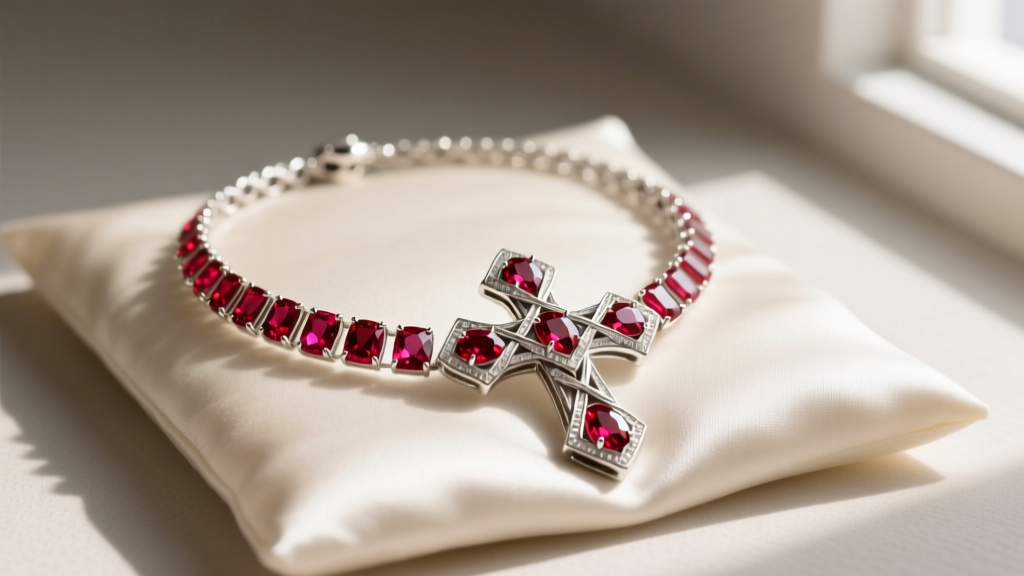
Choosing the Right Cross Silhouette
The architecture of the cross pendant dictates how the rubies are set and how the piece drapes on the neckline. Selecting the right silhouette ensures the necklace aligns with your personal style and religious traditions.
The Latin Cross
The most recognizable and widely worn silhouette, featuring a longer vertical beam and a shorter horizontal crossbar. For a ruby Latin cross, a five-stone or seven-stone layout is classic. Look for a drop length between 15mm and 25mm for a subtle, everyday piece, or 30mm to 45mm for a bold statement pendant.
The Byzantine Cross
Characterized by its intricate, flared arms and often ornate metalwork, the Byzantine (or Eastern Orthodox) cross provides a larger canvas for gem setters. Rubies in Byzantine crosses are frequently channel-set or surrounded by elaborate filigree. This style pairs beautifully with yellow gold, which accentuates the historical, regal aesthetic of the design.
The Crucifix
A cross that includes the corpus (the figure of Christ). In ruby crucifix pendants, the gemstones are typically used as accent stones on the crossbar or the base, rather than the central focus, ensuring respect for the traditional iconography while adding a touch of color and brilliance.
Metal Pairings and Chain Mechanics
The metal you choose for your ruby cross necklace dramatically alters the visual temperature of the rubies and the overall durability of the piece.
Metal Alloys and Color Contrast
18k Yellow Gold: The traditional choice. The warm, rich tones of 18k gold (75% pure gold) create a striking, vintage contrast with the cool red of the ruby. However, 18k gold is softer, so ensure the prongs holding the rubies are adequately thick. 14k White Gold / Platinum: Platinum is the ultimate choice for security. Its density and natural white color provide a neutral backdrop that makes the red saturation of the rubies pop. Platinum prongs are highly resistant to wear and tear, ensuring your stones remain secure for decades. If opting for white gold, ensure it has a fresh rhodium plating for maximum brightness.
Chain Gauge and Clasp Engineering
A common failure point in pendant necklaces is the chain. For a solid gold or platinum ruby cross pendant weighing between 3 to 8 grams, avoid delicate chains under 1.0mm. Optimal Chains: A 1.2mm to 1.5mm box chain or a 1.5mm rope chain offers the perfect balance of fluid drape and tensile strength. Clasps: Always insist on a lobster clasp rather than a spring ring. Lobster clasps feature a solid internal spring mechanism and a larger soldered jump ring, drastically reducing the risk of the chain unfastening and losing your valuable pendant.
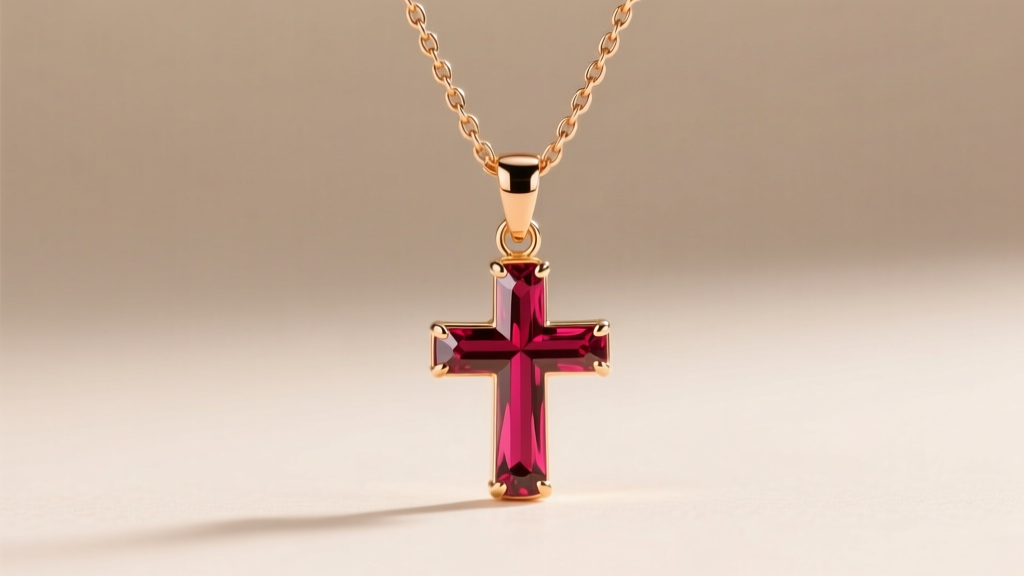
2026 Pricing Tiers and Authentication
Understanding the pricing landscape prevents overpaying for treated stones or underestimating the value of natural gems. Here is a realistic breakdown of what to expect in the current market for a standard 15mm-20mm ruby cross pendant (approx. 1.00 to 2.00 carats total gem weight).
- Lab-Created Rubies ($200 - $800): Lab-grown rubies (created via the Verneuil flame-fusion or flux-growth methods) possess the exact same chemical and physical properties as natural rubies. Flux-grown stones offer better clarity and are an excellent, ethical choice for budget-conscious buyers who want high visual impact without the natural premium.
- Natural Heated Mozambique Rubies ($1,200 - $4,500): Mozambique has become the primary source for high-quality natural rubies in the 21st century. A cross pendant featuring well-matched, heat-treated Mozambique rubies with vivid saturation will sit comfortably in this mid-tier investment range.
- Natural Untreated Burmese Rubies ($15,000 - $50,000+): Untreated rubies from the Mogok region of Myanmar with 'pigeon's blood' certification are exceptionally rare. These are investment-grade assets. Purchasing in this tier strictly requires documentation from top-tier labs.
Authentication Rule: For any natural ruby cross necklace priced over $2,000, demand an origin and treatment report from a respected, independent laboratory. The Federal Trade Commission (FTC) mandates that sellers disclose treatments that significantly affect value, but a third-party lab report (from GIA, AGL, or GRS) is your only true protection against misrepresentation.
Final Pre-Purchase Checklist
Before finalizing your ruby cross necklace purchase, run through this expert checklist to ensure structural and gemological integrity:
- Prong Inspection: Are the prongs holding the rubies flush against the stone? Rubies have a brittle tenacity; exposed or snagging prongs can lead to chipping.
- Bail Proportion: Does the bail (the loop the chain threads through) have enough interior clearance for your preferred chain gauge? A heavy cross requires a sturdy, soldered bail.
- Color Matching: If the cross features multiple rubies, do they exhibit uniform saturation and tone? Mismatched stones in a multi-gem cross severely diminish the piece's aesthetic value.
- Treatment Disclosure: Is the heat or filling treatment explicitly stated on the invoice? Never rely solely on verbal assurances.
By prioritizing gemological transparency, precise metal engineering, and timeless silhouettes, you will secure a ruby cross necklace that serves as both a beautiful expression of faith and a lasting heirloom.


