Expert Guide: Pairing a Carved Bear with Necklace Hardware
Discover how to pair an artisan carved bear with necklace chains and cords. Explore material grades, bail sizes, and layering techniques.

The Anatomy of Bear Pendants: Carving vs. Casting
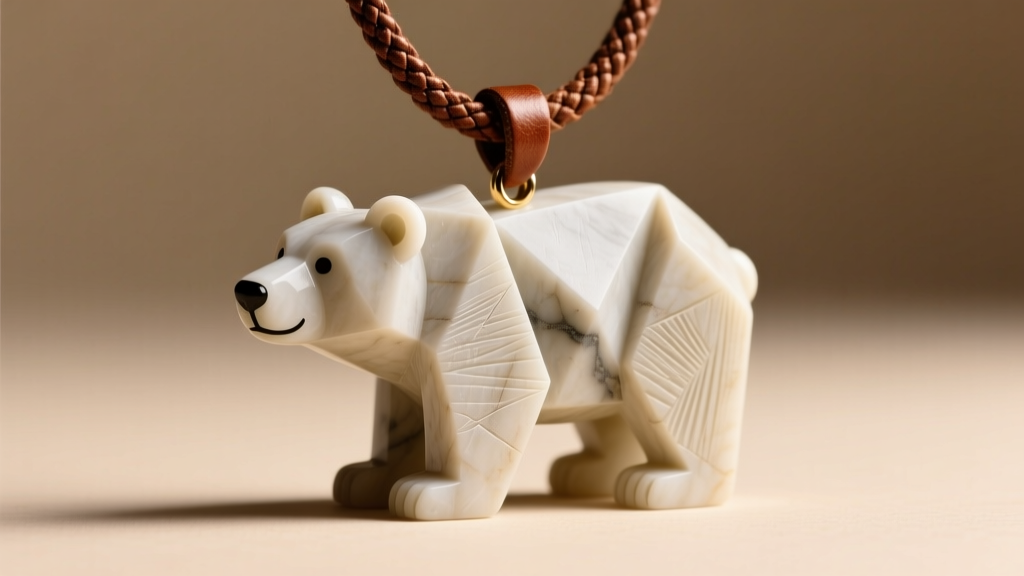
The bear motif has long been a staple in artisanal jewelry, symbolizing strength, introspection, and grounding. However, from a technical jewelry design perspective, a bear pendant presents unique structural challenges. The irregular weight distribution of a four-legged animal silhouette and the varying densities of carving materials dictate how the piece must be suspended. When styling a carved bear with necklace chains, understanding the manufacturing origin—whether hand-carved stone or lost-wax cast metal—is the first step in selecting the appropriate hardware.
Zuni-Style Stone Carvings
Authentic Zuni bear fetishes and artisanal stone carvings are typically shaped from Picasso Marble, Sleeping Beauty Turquoise, or Jet. According to the Indian Arts and Crafts Association, verifying the provenance of these materials is critical, especially in 2026, where synthetic stabilized turquoise frequently floods the market. Turquoise ranks at 5 to 6 on the Mohs hardness scale, while Jet is remarkably soft at 2.5 to 4. Because of this fragility, stone bears are rarely fitted with glued-on metal bails. Instead, artisans drill horizontal channels directly through the stone's back or upper shoulders. This horizontal drill requires a flexible suspension method, such as a 2.0mm leather cord or a highly articulated snake chain, to prevent stress fractures at the drill site.
Lost-Wax Cast Metal Bears
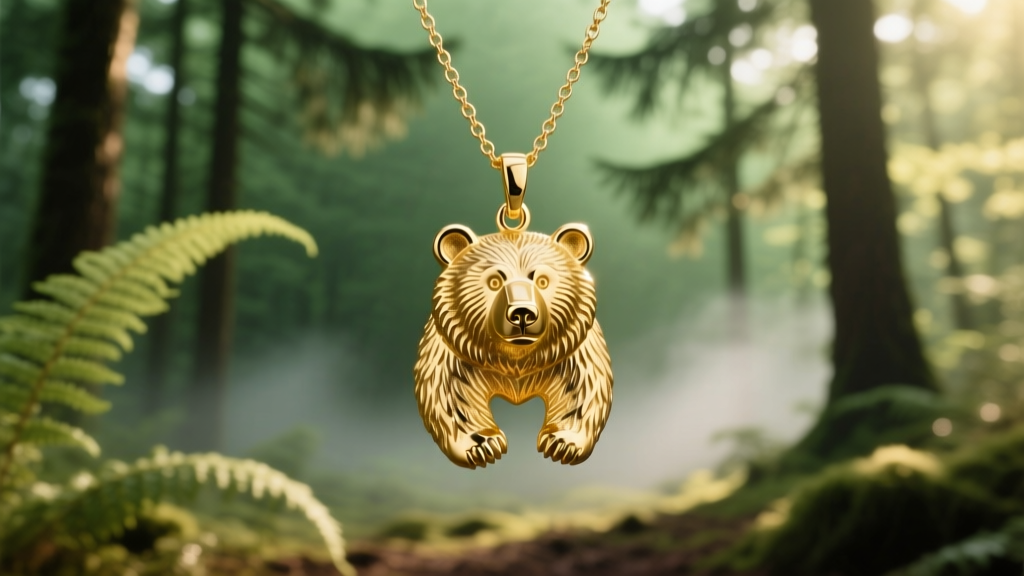
Metal bear pendants are generally produced via lost-wax casting. A 14k yellow gold bear pendant (58.5% pure gold alloyed with copper and silver for tensile strength) offers excellent durability and weighs significantly less than its stone counterparts. A standard 15mm solid 14k gold bear charm will weigh approximately 3.5 to 5 grams. These pieces usually feature a soldered jump ring or a hidden tube bail integrated into the wax model before casting. The Gemological Institute of America (GIA) notes that modern alloy mixes in 14k and 18k gold provide superior resistance to deformation, making cast metal bears ideal for delicate chain pairings.
Bail Mechanics and Failure Points
The bail—the finding that connects the pendant to the chain—is the most common point of structural failure in animal motif jewelry. Because a bear pendant is often wider than it is tall, it can swing and torque against the bail during wear.
- Glue-On Bails: Frequently used in mass-produced silver pendants. The adhesive (often cyanoacrylate or two-part epoxy) degrades over time when exposed to skin oils and temperature fluctuations. Avoid glue-on bails for any stone bear exceeding 15 grams.
- Soldered Loop Bails: The industry standard for cast metal bears. Ensure the solder joint is flush and that the wire gauge of the loop is at least 0.8mm to prevent pulling apart under the pendant's dynamic weight.
- Wire-Wrapped Bails: Common in bespoke artisanal pieces. A 20-gauge or 22-gauge dead-soft sterling silver wire wrap provides a secure, adjustable basket that cradles the stone without requiring invasive drilling.
Chain Selection: Matching the Bear with Necklace Hardware
Selecting the correct chain requires balancing the pendant's weight, bail aperture, and aesthetic profile. When matching a heavy stone bear with necklace chains, the tensile strength of the metal links must be prioritized over delicate aesthetics. Below is a technical framework for pairing chains with bear pendants, based on standard jewelry supply specifications from distributors like Rio Grande.
| Chain Type | Gauge / Thickness | Max Pendant Weight | Best Bear Pendant Application |
|---|---|---|---|
| Box Chain | 1.2mm - 1.5mm | 15g | Small 14k/18k gold cast bear charms (under 12mm) |
| Rolo Chain | 2.5mm - 3.5mm | 45g | Medium sterling silver casts and small stone carvings |
| Snake Chain | 1.5mm - 2.0mm | 25g | Bears with horizontal drill channels (smooth glide) |
| Leather Cord | 2.0mm - 3.0mm | 60g+ | Large Zuni Picasso Marble fetishes and heavy jet carvings |
For heavy stone bears suspended on leather cords, always utilize a sterling silver or gold-filled toggle clasp rather than a standard lobster claw. Toggle clasps distribute the tensile load across a wider surface area, preventing the cord from fraying at the attachment loop.
Layering Techniques and Proportions
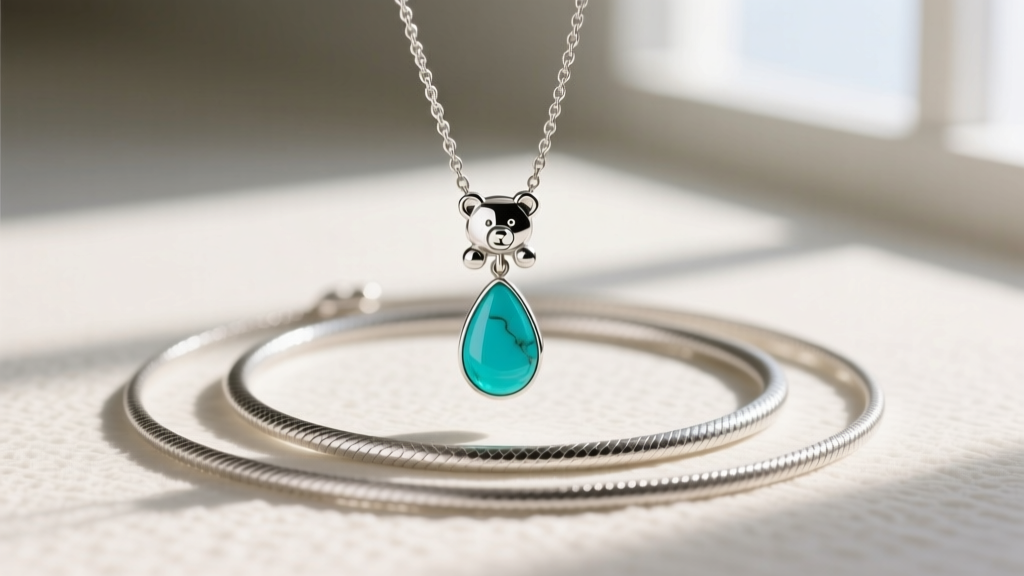
Layering a bear pendant requires strict adherence to the rule of proportions to prevent the pieces from tangling and scratching one another. The bear motif is visually dense; therefore, it should act as the anchor piece in a layered stack.
The Rule of Lengths and Textures
To achieve a balanced stack, maintain a minimum 4-inch gap between necklaces. If your bear pendant hangs on a 20-inch matinee-length rolo chain, pair it with a 16-inch choker-length rope chain featuring a minimalist geometric pendant. The contrasting textures—the organic, heavy links of the rolo chain against the tight, twisted weave of the rope chain—create visual depth without competing for attention. Furthermore, ensure that the metal hardness of the chains matches. Pairing a soft 24k gold chain with a rigid sterling silver bear pendant will result in the silver rapidly abrading the gold links.
Care and Maintenance of Mixed-Material Pieces
Maintaining a bear pendant depends entirely on its material composition. The cleaning protocols for cast metals and porous stones are diametrically opposed.
- Solid Gold and Sterling Silver Casts: These can be safely cleaned in an ultrasonic jewelry cleaner using a mild alkaline solution. Follow up with a steam cleaner to restore the high-polish finish on the bear's detailed fur textures.
- Turquoise and Jet Carvings: Never place these stones in an ultrasonic cleaner. The high-frequency vibrations will cause micro-fractures, and the liquid solutions will strip the natural oils from the turquoise, leading to severe discoloration. Clean these pieces using only a dry, untreated microfiber cloth and a soft-bristled brush to remove debris from the carved crevices.
- Leather Cords: Remove the leather cord before swimming or showering. Moisture causes the leather to stretch and eventually snap. Condition the cord bi-annually with a specialized leather balm to maintain its structural integrity and prevent dry rot.
By understanding the material science and structural mechanics behind these pieces, you can ensure that your artisanal bear jewelry remains both secure and visually striking for decades to come.


