Chain Link Gold Necklace Troubleshooting: Repairs & Care
Learn how to troubleshoot, repair, and maintain your chain link gold necklace. Expert fixes for broken clasps, stretched links, and snagging.

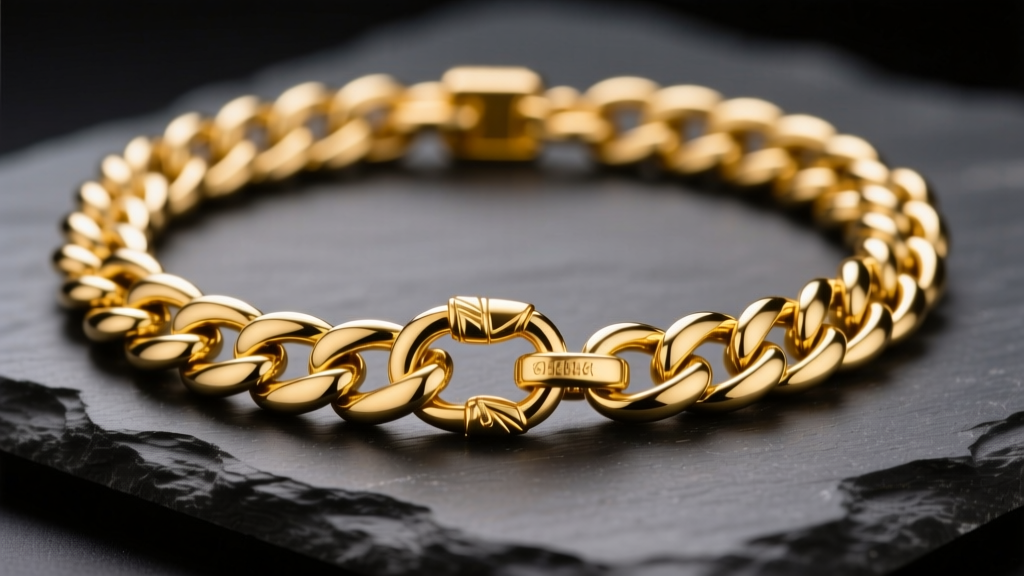
A chain link gold necklace is a cornerstone of fine jewelry, but beneath its elegant exterior lies a complex mechanical system under constant physical stress. Every time you put it on, take it off, or move while wearing it, the individual links, jump rings, and clasps endure tensile strain, friction, and environmental exposure. When a beloved chain snaps or a clasp fails, it is rarely a random accident; it is usually the result of cumulative metal fatigue, improper alloy selection, or a manufacturing flaw.
As a senior jewelry analyst, I see countless gold chains brought into repair shops for preventable issues. In this comprehensive troubleshooting guide, we will dissect the failure points of gold chain necklaces, explore the metallurgical realities of gold karats, and provide actionable repair frameworks to restore your jewelry to its former glory.
The Anatomy of Chain Link Failure
To effectively troubleshoot a broken chain, you must first understand where and why they fail. The structural integrity of any chain relies on its weakest connection point. According to the Jewelers of America, over 70% of chain repairs involve the clasp assembly or the jump rings immediately adjacent to it.
The Clasp Disconnect
Spring ring clasps are standard on lightweight chains (under 5 grams), but they are notorious for failure. The internal tension spring is often made of steel or a lower-karat gold alloy to maintain its bounce. Over time, sweat, lotions, and microscopic debris infiltrate the tiny seam of the spring ring, causing the internal spring to corrode or lose tension. If your spring ring no longer 'snaps' back flush against the tab, it requires immediate replacement. For any chain link gold necklace weighing over 10 grams, upgrading to a solid 14k or 18k lobster clasp is a mandatory preventative measure.
Link Stretching and Metal Fatigue
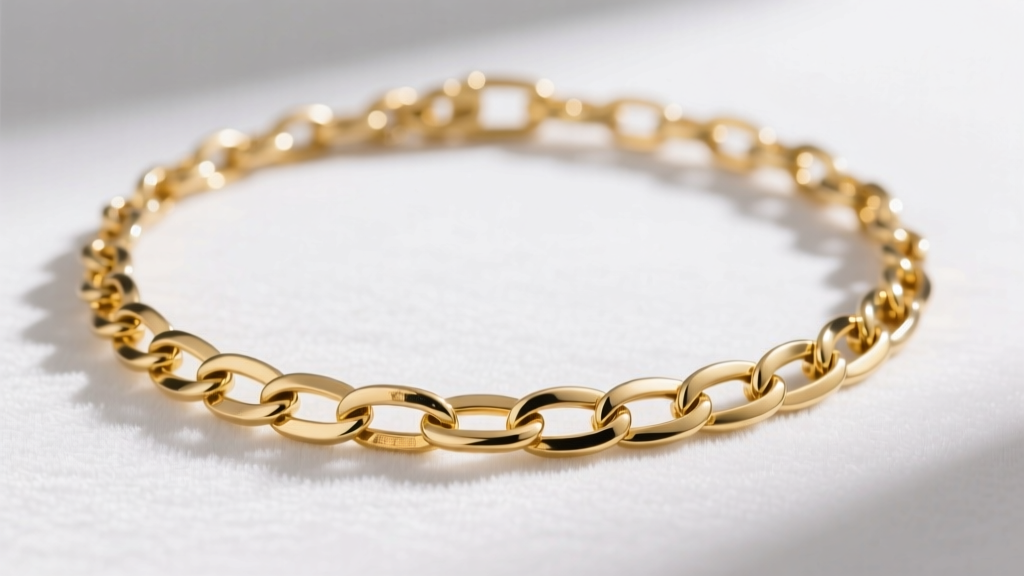
Gold is inherently malleable. When a heavy pendant is suspended from a delicate chain, the links at the nape of the neck and the bottom center bear the brunt of the gravitational load. Over months of wear, these oval or circular links slowly elongate. Once a link stretches beyond its yield point, the metal thins, creating a microscopic stress fracture that eventually snaps under sudden movement.
The Karat Factor: Metallurgy and Tensile Strength
One of the most common troubleshooting mistakes consumers make is assuming that higher purity gold equates to better jewelry. In the context of chain links, this is fundamentally false. Pure 24k gold has a Mohs hardness of just 2.5 to 3—roughly the hardness of a fingernail. To create a durable chain, gold must be alloyed with metals like copper, silver, and zinc to increase its tensile strength.
| Gold Karat | Purity | Alloy Composition | Chain Link Durability | Best Use Case |
|---|---|---|---|---|
| 10k Gold | 41.7% | High copper/silver/zinc | Extremely High | Heavy daily wear, thick Cuban links |
| 14k Gold | 58.5% | Balanced copper/silver | High (Industry Standard) | Everyday chains, pendant holders |
| 18k Gold | 75.0% | Higher gold, softer matrix | Moderate | Lightweight chains, luxury pieces |
| 22k Gold | 91.6% | Minimal alloy | Low | Decorative, pendant-free wear |
| 24k Gold | 99.9% | None (Pure Gold) | Very Low | Investment bullion, not for chains |
If you are troubleshooting a chain that constantly stretches or warps out of shape, check the hallmark. If it is stamped 18k, 22k, or higher, the chain is simply too soft to support the weight of your pendant. The Gemological Institute of America (GIA) notes that 14k gold offers the optimal balance of rich color and structural resilience for mechanical jewelry components.
Step-by-Step Troubleshooting & DIY Fixes
Not every issue requires a trip to the jeweler. Here is how to troubleshoot common problems safely at home.
Problem: Severe Tangling and Snagging
Pulling at a tangled chain link gold necklace will permanently warp the links. Instead, lay the chain flat on a glass or smooth stone surface. Apply a single drop of baby oil or specialized jewelry detangler to the knot. Using two fine sewing needles, gently work the center of the knot outward. The oil reduces surface friction, allowing the microscopic links to slide past one another without bending.
Problem: Discoloration and Tarnish on Lower Karats
If your 10k or 14k chain is developing a dark, coppery film, this is not a defect; it is oxidation of the copper alloy. Create a gentle cleaning bath using warm distilled water, a few drops of phosphate-free dish soap, and a soft-bristled baby toothbrush. Warning: Never use harsh chemical dips or abrasive polishing cloths on chain links, as these will strip the factory finish and thin the metal at the solder joints.
Problem: Reattaching a Loose Jump Ring
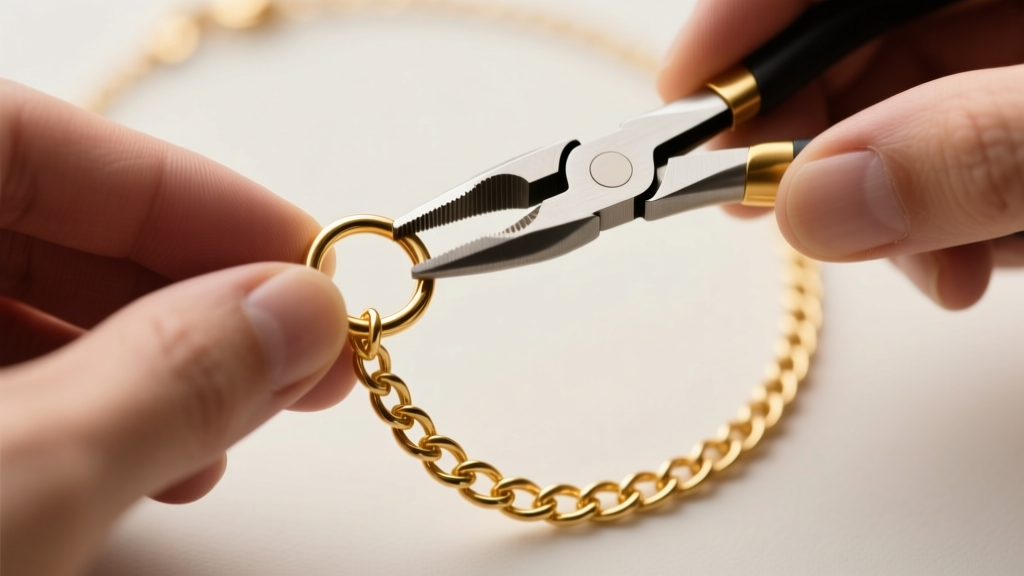
If the jump ring connecting your clasp to the chain has pulled apart, you can temporarily fix it using jewelry pliers. Never pull the ring open by widening the circle (this weakens the metal). Instead, use two pairs of flat-nose pliers to grip the jump ring on either side of the split, and twist one hand toward you and the other away. This lateral twist preserves the structural integrity of the ring. Once the chain is re-threaded, twist it back flush and ensure the ends meet perfectly.
When to Call a Professional: Advanced Repair Techniques
While DIY fixes are great for maintenance, structural breaks require professional intervention. Modern jewelry repair has evolved significantly, and understanding these techniques will help you advocate for your piece at the repair bench.
"Traditional torch soldering on fine chain links often results in 'fire scale' and can melt adjacent delicate links due to widespread heat transfer. For high-end chain link gold necklace repairs, laser welding is the superior standard."
Laser Welding vs. Torch Soldering
If your chain has snapped at a link, ask your jeweler if they use a laser welder. Laser welding uses a highly concentrated beam of light to fuse the gold back together without the need for harsh fluxes or secondary solder metals. The heat-affected zone is microscopic, meaning the links immediately to the left and right of the break remain entirely unaffected. This results in a stronger, cleaner, and virtually invisible repair.
2026 Professional Repair Cost Guide
Pricing for jewelry repairs has shifted with the rising cost of precious metals and specialized labor. Below is a realistic estimate of what you should expect to pay for professional troubleshooting and repair of a gold chain in 2026:
- Jump Ring Replacement (14k/18k): $35 - $55
- Laser Welding a Single Broken Link: $65 - $110 (depending on link thickness)
- Lobster Clasp Upgrade (including labor): $85 - $150
- Chain Shortening/Lengthening: $40 - $75 (plus the cost of added gold if lengthening)
- Rebuilding a Severely Stretched Section: $150 - $300+ (often requires custom link fabrication)
Preventative Maintenance Routine
The best troubleshooting strategy is prevention. Implement this routine to extend the lifespan of your chain link gold necklace by decades:
- The Clasp Check: Once a month, test your clasp. If a lobster clasp feels stiff or a spring ring doesn't close flush, have it serviced immediately before it fails and drops your chain.
- Pendant Proportion: Ensure your pendant weighs no more than 25% of the total weight of the chain. A heavy pendant on a lightweight 20-gauge chain guarantees premature link stretching.
- Nighttime Removal: Never sleep in your gold chain. The friction against cotton sheets and the tossing and turning create micro-abrasions on the links, acting like fine sandpaper over time.
- Chemical Avoidance: Chlorine is the ultimate enemy of gold alloys. It reacts with the copper and silver in 14k and 18k gold, causing a phenomenon called 'stress corrosion cracking,' which makes the links brittle and prone to shattering.
By understanding the mechanical and metallurgical realities of your jewelry, you transition from a passive wearer to an informed custodian. Treat your chain link gold necklace with the respect its engineering demands, and it will remain a flawless staple in your collection for a lifetime.


