Anatomy of a Clasp on Necklace: Engineering, Metals & Repairs
Discover the engineering behind every clasp on necklace chains. Learn about metallurgy, failure modes, gauge tolerances, and expert repair techniques.


When evaluating the structural integrity of fine jewelry, the clasp on necklace designs is universally recognized as the single most critical point of failure. While collectors and designers often obsess over gemstone clarity or chain link weaving, the fastener dictates the actual lifespan and security of the piece. A heavy 50-gram 18k gold Cuban link chain is only as secure as the 2-gram mechanism holding it together. In this technical deep dive, we bypass basic styling advice to explore the metallurgy, mechanical engineering, failure diagnostics, and professional repair protocols of modern necklace fasteners.
The Metallurgy of Necklace Fasteners
The fundamental challenge in manufacturing a clasp on necklace chains is balancing malleability with elastic memory. Precious metals like 24k or even 18k gold are inherently too soft to function as spring mechanisms. If a solid 18k gold wire is used for the internal spring of a lobster clasp, it will suffer from plastic deformation after fewer than 50 compression cycles, permanently taking a 'set' and failing to close.
To solve this, manufacturers utilize bimetallic engineering and specialized alloys. According to data from the World Gold Council, the external body of a high-end lobster clasp may be cast in 14k or 18k gold, but the internal spring wire is almost exclusively manufactured from 304 or 316L stainless steel, or occasionally beryllium copper. These alloys possess a high yield strength (often exceeding 150 ksi), allowing them to endure tens of thousands of compression cycles without losing their temper. The trigger mechanism, which requires complex geometry, is typically investment cast in the same karat gold as the body, then work-hardened via tumbling to increase surface durability.
Mechanical Failure Modes and Diagnostics
Understanding why a clasp fails requires analyzing the specific mechanical stresses applied during daily wear. A necklace is subjected to sudden tensile shocks (snagging on clothing) and constant low-level friction. Below is a diagnostic matrix detailing the primary failure modes across standard clasp types.
| Clasp Type | Primary Failure Mode | Mean Time to Failure | Professional Repair Method |
|---|---|---|---|
| Lobster Clasp | Trigger pin shear / Spring fatigue | 3-5 Years (Daily Wear) | Complete component replacement |
| Spring Ring | Unsoldered jump ring pull-apart | 1-2 Years | Laser weld jump ring; replace clasp |
| Box Clasp | Tongue tension loss / Groove wear | 5-10 Years | Re-tension tongue; rebuild groove |
| Toggle Clasp | T-bar deformation / Ring stretching | Rare (if sized correctly) | Work-harden T-bar; replace ring |
As noted by master jewelers, the most common catastrophic failure is not the clasp itself breaking, but the jump ring connecting the clasp to the chain pulling apart. A standard 5mm, 20-gauge unsoldered jump ring will yield under approximately 4 pounds of tensile pressure. Soldering that same jump ring increases its yield strength to over 15 pounds, which is why high-end manufacturers mandate soldered jump rings on all precious metal chains.
Engineering the Box Clasp: Tongue and Groove Tolerances
The box clasp is the standard for heavy tennis bracelets and multi-strand pearl necklaces due to its low profile and high security. However, its engineering requires extreme precision. The 'tongue' of the clasp must be stamped from spring-tempered beryllium copper or nickel silver, then heavily rhodium or gold plated. A solid gold tongue would bend permanently upon the first forceful insertion.
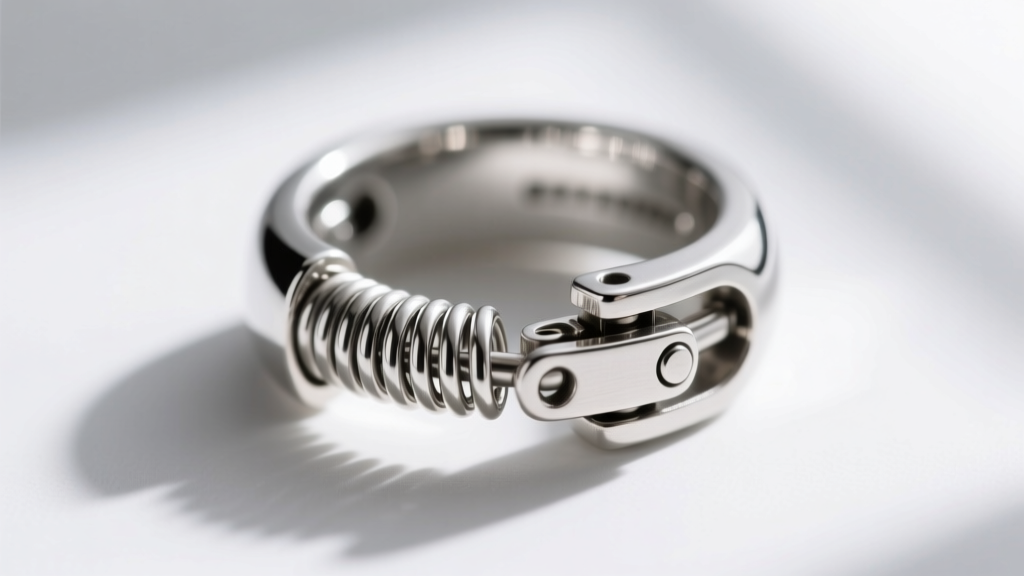
The tolerances between the tongue and the interior groove are measured in hundredths of a millimeter. If the groove is too wide, the tongue will slip out under lateral tension. If it is too narrow, the friction will wear away the plating on the tongue, leading to rapid oxidation and eventual mechanical binding. Furthermore, a properly engineered box clasp on necklace or bracelet designs must include a secondary safety catch—typically a figure-eight wire loop that snaps over a button on the opposite side of the clasp to prevent total loss if the primary tongue mechanism fails.
Toggle Clasps and the Physics of Center of Mass
Toggle clasps rely entirely on gravity and geometric interference rather than spring tension. The engineering principle here is the center of mass. For a toggle to remain secure, the T-bar must be significantly longer than the inner diameter of the receiving ring. The industry standard dictates that the T-bar length must be at least 1.5 times the inner diameter of the ring.
Expert Insight: If a heavy pendant pulls the chain taut, the T-bar will align parallel to the ring. If the T-bar is only marginally longer than the ring's inner diameter, a simple rotational twist will slip the bar through the ring, dropping the necklace. Always verify the T-bar to ring ratio before finalizing a heavy chain design.
Additionally, the T-bar must be cast thick enough to resist bending. A 14k gold T-bar that is too thin will slowly bend into a 'U' shape over years of wear, eventually compromising its geometric lock.
Magnetic Clasps: Neodymium Grades and Shielding
Magnetic clasps have surged in popularity for accessibility and ease of use. However, not all magnets are created equal. High-quality magnetic clasps utilize N42 to N52 grade neodymium magnets (NdFeB). The 'N' rating indicates the maximum energy product; an N52 magnet is roughly 20% stronger than an N42 of the same volume. The critical engineering flaw in cheap magnetic clasps is poor flux containment. Without a steel or iron cup to shield and direct the magnetic field, the neodymium magnet will attract stray metallic particles (like iron dust or makeup containing iron oxides), eventually gumming up the mechanism and reducing its holding force.
Advanced Repair: Laser Welding vs. Torch Soldering
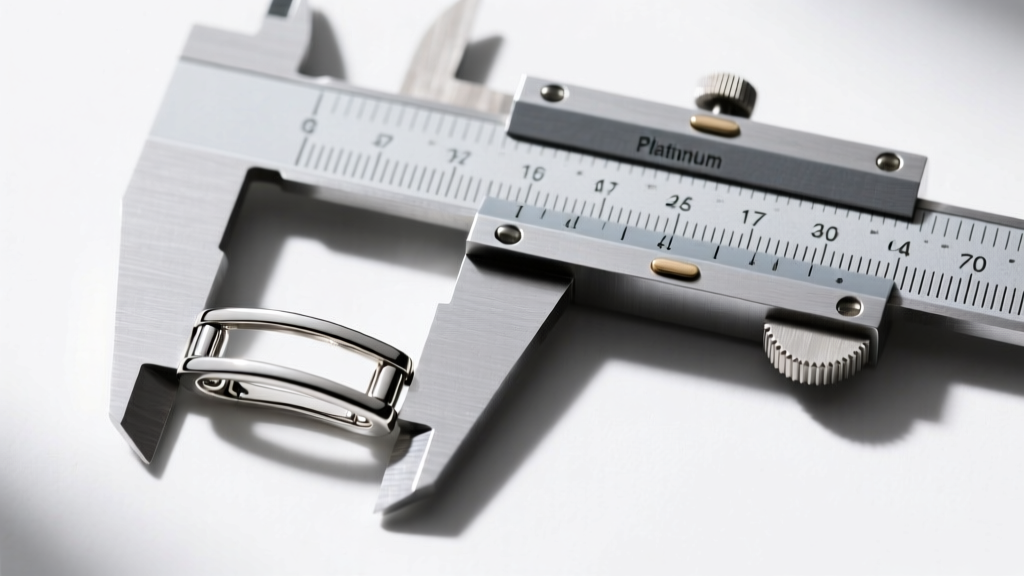
When a clasp on necklace chains requires repair, the methodology has shifted dramatically. As of 2026, laser welding has largely superseded traditional torch soldering for fastener repairs. The Gemological Institute of America (GIA) highlights that torch soldering a broken jump ring near a lobster clasp risks annealing the work-hardened spring inside the clasp due to heat transfer. Once the internal spring is annealed, it loses its temper and elastic memory, rendering the clasp useless.
Laser welding, conversely, operates in milliseconds. The highly focused beam melts the metal at the exact point of the break without raising the ambient temperature of the surrounding clasp body. This allows a jeweler to weld a new jump ring directly to the loop of a lobster clasp without damaging the internal stainless steel spring or the delicate cast trigger mechanism. For high-karat gold and platinum chains, laser welding also eliminates the need for color-matching solder alloys, as the base metal itself is fused together, creating a seamless and structurally superior joint.
Ultimately, the longevity of any fine jewelry piece relies on respecting the mechanical limits of its findings. By understanding the metallurgy, geometric tolerances, and proper repair techniques of fasteners, jewelers and collectors can ensure that their most cherished pieces remain secure for generations.


