Chain Necklace Chain Link Styles & Layering Trends 2026
Discover the top chain necklace chain link styles for 2026. Learn about gauges, metals, tensile strength, and layering techniques for flawless styling.

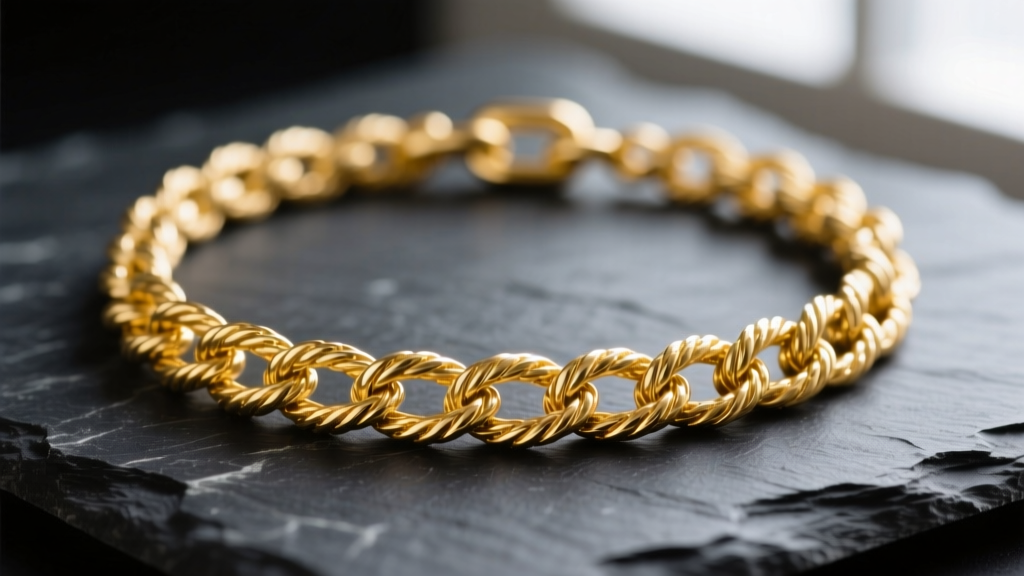
The Architecture of the Modern Chain Necklace
In the realm of fine jewelry, the chain necklace chain link profile dictates not only the aesthetic drape but also the structural integrity and tensile strength of the piece. As we navigate the style landscape of 2026, the industry has seen a definitive shift away from the ultra-minimalist, barely-there threads of the early 2020s. Today, collectors and stylists are prioritizing architectural volume, mixed-metal bicolor designs, and mechanically complex link structures. Understanding the metallurgy and engineering behind these pieces is essential for making informed investments.
According to industry analysis from JCK Online, the demand for heavy-weight, solid-link chains has surged by 34% year-over-year, driven by a consumer preference for gender-fluid, statement-making staples that hold intrinsic metal value. However, not all links are created equal. The method of manufacturing—whether machine-woven, laser-soldered, or hand-forged—drastically alters the failure modes and longevity of the jewelry.
2026 Trend Report: Dominant Link Profiles
The current market is dominated by three distinct chain necklace chain architectures, each offering unique visual textures and structural properties.
1. The Resurgent Rope Chain (Torsion Mechanics)
Rope chains are experiencing a massive resurgence in 2026, particularly in 18k yellow gold. Constructed by twisting multiple rows of small oval links into a helical pattern, rope chains reflect light from multiple angles, creating a high-luster, diamond-cut effect. From an engineering standpoint, the torsion mechanics of a rope chain distribute tensile stress evenly across the spiral. However, if a single solder joint fails, the chain can rapidly unravel. High-end manufacturers now utilize laser welding rather than traditional torch soldering to reinforce these micro-joints, significantly increasing the yield strength.
2. Elongated Paperclip & Capsule Links
The paperclip chain trend has evolved. While standard rectangular links remain popular, 2026 has introduced the "capsule" link—an elongated oval with softened, pill-shaped edges. Typically stamped from a single sheet of 14k gold and diamond-cut for added brilliance, these links offer a lightweight, hollow-core construction that provides maximum visual width (often 5mm to 8mm) without the prohibitive cost of solid gold. The trade-off is a lower crush resistance; hollow capsule links are prone to denting if subjected to blunt force.
3. The Bicolor Curb and Cuban Variations
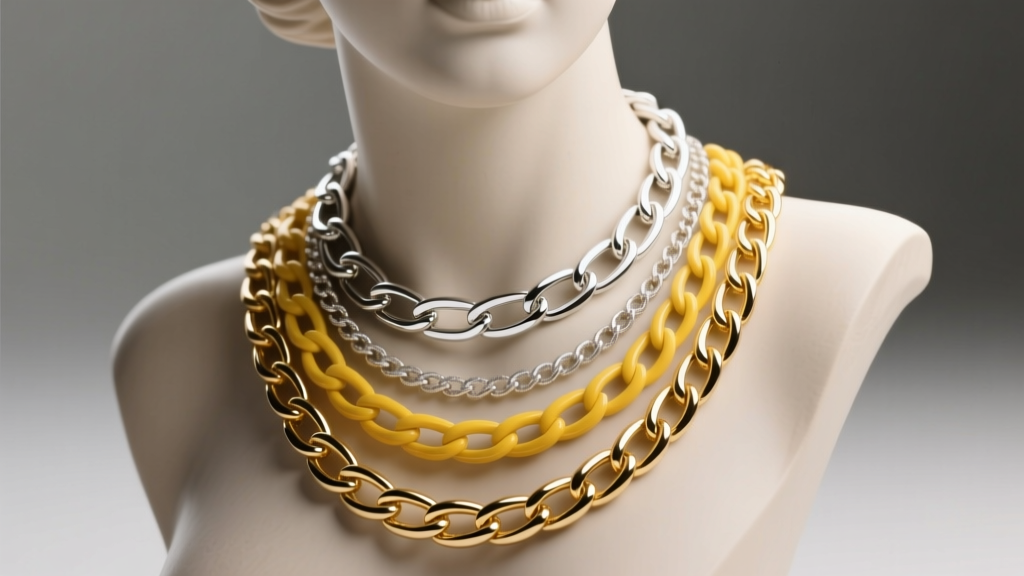
Mixed-metal jewelry is a cornerstone of 2026 styling. Bicolor curb chains, which alternate between 14k white gold and 18k yellow gold links, offer a striking visual contrast. Curb chains are manufactured by twisting and flattening oval links so they interlock tightly and lay flush against the skin. This flat profile makes them exceptionally resistant to kinking, though the high-polish flat surfaces are susceptible to micro-scratches over time. According to the Gemological Institute of America (GIA), the differing hardness levels between white gold (often alloyed with nickel or palladium) and yellow gold (alloyed with copper and silver) means that the softer yellow links will wear down slightly faster at the friction points where the metals interlock.
Technical Specifications: Gauge, Strength, and Clasps
Selecting the right chain requires a deep understanding of gauge thickness and its correlation to tensile strength. Below is a technical breakdown of standard chain necklace chain specifications for everyday wear.
| Link Style | Standard Gauge (mm) | Tensile Yield Point | Recommended Clasp | 2026 Avg. Price (18k, 16") |
|---|---|---|---|---|
| Cable | 1.2mm - 2.0mm | Low (5-10 lbs) | Spring Ring | $650 - $900 |
| Paperclip (Solid) | 2.5mm - 4.0mm | Medium (15-25 lbs) | Small Lobster | $1,200 - $1,800 |
| Curb (Flat) | 3.0mm - 5.0mm | High (30-45 lbs) | Large Lobster | $2,500 - $4,000 |
| Cuban (Rounded) | 5.0mm - 10.0mm | Very High (50+ lbs) | Box Clasp w/ Safety | $5,500 - $12,000+ |
| Herringbone | 2.0mm - 4.0mm | Extremely Low (Kinks easily) | Magnetic or Toggle | $900 - $1,500 |
Layering Framework: The Mathematics of Texture
Layering multiple chains is an exercise in spatial geometry and weight distribution. The most common mistake in layering is clustering chain lengths too closely, which leads to friction, metal-on-metal wear, and tangling. For 2026, the industry standard follows the "Two-Inch Rule" combined with contrasting link textures.
"A successful layered look requires a minimum two-inch drop between each chain, paired with alternating link geometries. Pairing a fluid, snake-like herringbone with a rigid, geometric paperclip chain prevents tangling while maximizing visual depth." — Master Bench Jeweler & Stylist
- The Base (14" - 16"): Start with a delicate 1.5mm cable or box chain. This acts as the foundational anchor, sitting close to the collarbone.
- The Midpoint (18" - 20"): Introduce volume with a 3.0mm to 4.0mm paperclip or figaro chain. This length should rest on the upper sternum and serve as the visual focal point.
- The Anchor (22" - 24"): Finish with a heavy, structured link like a 5.0mm rounded Cuban or a thick rope chain. The weight of this bottom layer acts as a pendulum, keeping the lighter upper chains pulled taut and preventing them from sliding sideways.

Maintenance and Failure Modes: What Breaks First?
Even the most meticulously crafted chain necklace chain will eventually succumb to mechanical fatigue if not properly maintained. Understanding the specific failure modes of different links can save you from catastrophic loss.
Clasp Fatigue and Spring Failure
The weakest point on 80% of necklaces is the clasp. Spring ring clasps, commonly used on chains under 2.0mm, rely on a microscopic internal steel spring. Over time, exposure to cosmetic chemicals, sweat, and repeated mechanical cycling causes this spring to lose its temper, resulting in a clasp that fails to snap shut. Upgrading to a solid-cast lobster clasp eliminates the internal spring mechanism, relying instead on the tension of the cast metal lever, which is vastly superior for longevity.
Work Hardening and Kinking
Fluid chains like Herringbone, Omega, and Snake chains are notoriously fragile. They are constructed from tightly interlocking, flat-flush links that lack a true pivot point. If bent past a 45-degree angle, the metal undergoes "work hardening," becoming brittle and permanently kinked. Once a herringbone chain kinks, the structural integrity is compromised, and it cannot be fully repaired. These chains must always be stored completely flat and never worn to sleep.
Solder Point Porosity
In machine-made chains, each link is cut, interlocked, and then soldered shut. If the soldering process is rushed, microscopic air pockets (porosity) can form within the joint. Under sudden tension—such as the chain catching on a garment—these porous joints will snap cleanly. When having a chain repaired, always request laser welding. Laser welders concentrate intense heat into a microscopic focal point, allowing the jeweler to fuse the metal with minimal thermal distortion to the surrounding links, resulting in a repair that is often stronger than the original factory joint.
Final Thoughts on Chain Selection
The evolution of the chain necklace chain from a simple pendant holder to a standalone architectural statement piece reflects a broader shift in jewelry design toward bold, structural aesthetics. By prioritizing high-quality manufacturing techniques, understanding the mechanical limits of specific link styles, and applying mathematical precision to layering, you can curate a collection that is both visually striking and engineered to last a lifetime.


