Expert Guide to Choosing a Freshwater Pearls Necklace
Master the technical grading of a freshwater pearls necklace. Learn about luster, nacre thickness, AAA standards, and stringing methods before you buy.

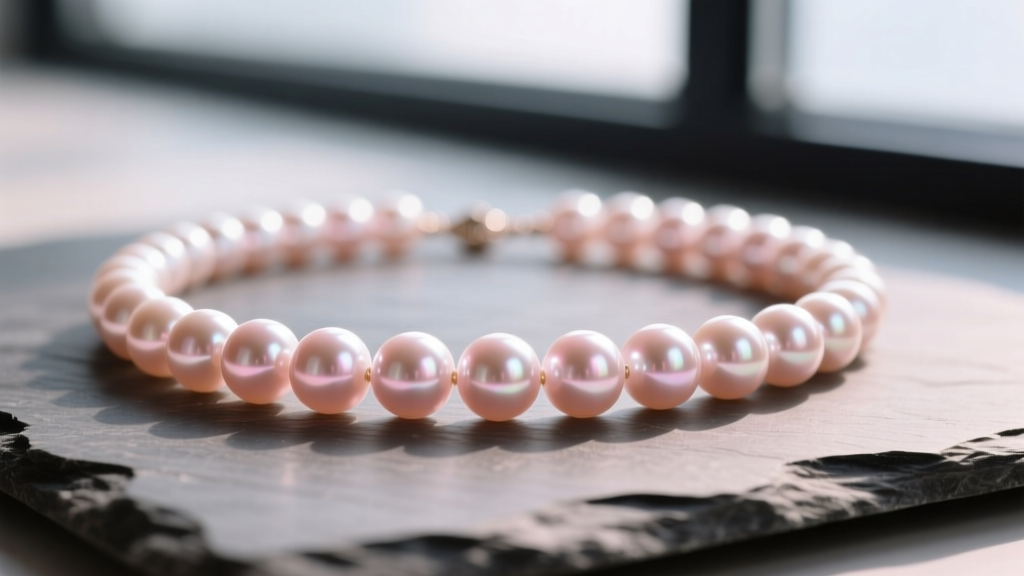
The market for pearl jewelry has evolved dramatically, and finding a high-quality freshwater pearls necklace requires looking far beyond the basic strand found in department stores. As we navigate the 2026 jewelry landscape, the gap between commercial-grade accessories and gem-quality investments has widened. Cultivation techniques, specifically the rise of bead-nucleated Edison pearls, have completely redefined what is possible in freshwater mollusks. However, this abundance of inventory means buyers must be equipped with technical knowledge to separate exceptional nacre from chalky, over-processed imitations.
This expert deep dive bypasses the marketing fluff to examine the exact structural, gemological, and stringing specifications that dictate the true value, longevity, and beauty of a freshwater pearls necklace.
The Anatomy of a High-Quality Freshwater Pearls Necklace
To understand value, you must first understand the cultivation method. Historically, freshwater pearls were tissue-nucleated. A tiny piece of mantle tissue was inserted into the host mussel, resulting in a pearl composed of 100% solid nacre. While incredibly durable, these pearls rarely achieved perfect spherical shapes, often exhibiting rice-like or button-like forms.
Today, the upper echelon of the market is dominated by bead-nucleated freshwater pearls, commonly known as Edison pearls. A spherical shell bead is implanted alongside the mantle tissue. This technique forces the mussel to deposit nacre over a perfectly round core, yielding large (10mm to 16mm), highly spherical pearls with intense, metallic luster. When evaluating a premium freshwater pearls necklace, you are generally looking for either top-tier tissue-nucleated rounds (rare and highly prized in the 7mm–9mm range) or thick-nacred Edison pearls in larger sizes.
Expert Insight: Nacre thickness is the ultimate failure point. In bead-nucleated freshwater pearls, the nacre layer should be a minimum of 2.0mm thick. Anything less risks 'peeling' or chipping over a decade of wear, exposing the shell bead underneath. Always request X-ray verification or optical coherence tomography (OCT) data for high-ticket strands.
Decoding the Grading Systems: A, AA, AAA, and Gem
Unlike diamonds, there is no single, globally mandated grading authority for pearls. However, the Gemological Institute of America (GIA) outlines specific quality factors—luster, surface, shape, color, and size—that the industry has synthesized into a standardized A-AAA scale. When shopping for a freshwater pearls necklace, here is how the technical grading breaks down in practice.
Luster and Surface Evaluation
Luster is the most critical value factor. It is not merely 'shine'; it is the sharpness of light reflection off the microscopic aragonite platelets within the nacre.
- AAA Grade (Top 1-5%): Mirror-like luster. You can clearly see the reflection of a light source or your own eye on the pearl's surface. The surface is 95% to 99% free of blemishes (no chalky spots, cracks, or deep pits).
- AA+ Grade: High luster, but reflections are slightly softer or blurred. Surface is 85% to 90% clean, with minor pin-pricks or growth rings visible only upon close inspection.
- AA Grade: Medium to good luster. Reflections are diffuse. Surface blemishes are visible to the naked eye, and the strand may feature slight variations in shape (near-round rather than perfectly round).
- A Grade (Commercial): Chalky, dull appearance with heavy blemishing. These pearls are often heavily bleached and polished to compensate for poor natural nacre quality.
Technical Specifications: Drill Holes, Knotting, and Clasps
The physical assembly of a freshwater pearls necklace is where many commercial manufacturers cut corners, leading to premature structural failure. A true gem-quality strand requires precision engineering at every junction.
Drill Hole Precision
The diameter of the drill hole directly impacts the structural integrity of the nacre. Standard commercial strands often use 1.0mm to 1.2mm drill bits to speed up production and accommodate cheap, thick synthetic cords. However, a premium freshwater pearls necklace will feature precision-drilled holes measuring between 0.6mm and 0.8mm. Smaller drill holes preserve the maximum amount of nacre, particularly around the drill channel where the pearl is most vulnerable to stress fractures.
Stringing Materials and Techniques
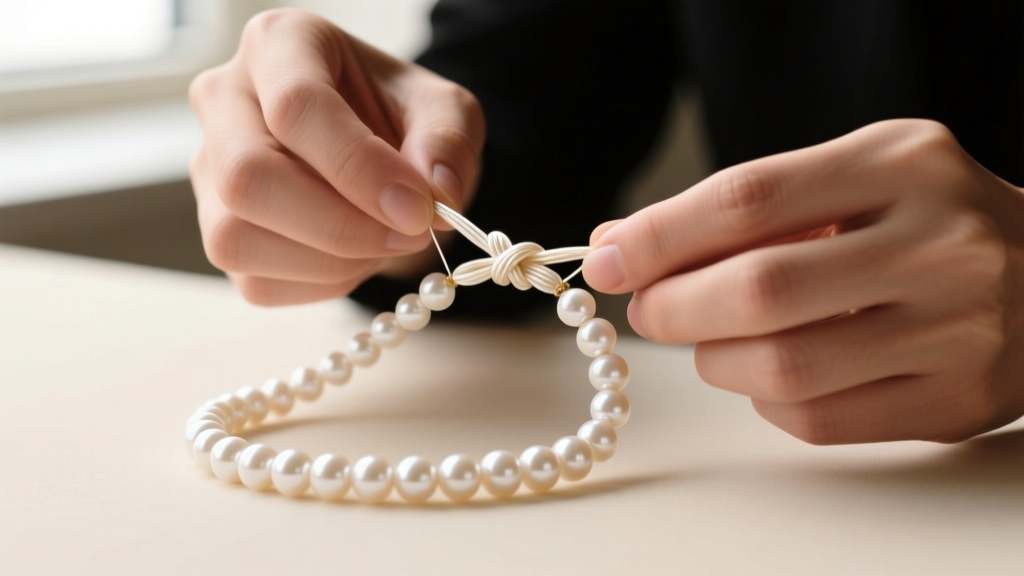
Never accept a knotted necklace strung on nylon or polyester monofilament if it claims to be high-end. The gold standard is 100% natural silk thread, specifically brands like Griffin, sized appropriately to the drill hole. For 7mm to 8mm pearls, a Size 0 or Size 1 silk thread is optimal; for 9mm and above, a Size 2 or Size 3 is required to ensure the knot is larger than the drill hole, preventing the pearls from rubbing together.
Furthermore, the knots must be tight half-hitch knots pulled flush against the pearl. Gapping (where the silk is visible between the knot and the pearl) is a sign of poor craftsmanship and will lead to a stretched, sloppy appearance within months of wear.
Clasp Hardware and French Wire Guards
The point where the clasp meets the silk is a critical friction zone. A properly constructed necklace will utilize French wire (also known as bullion or gimp)—a tiny, flexible coil of fine silver or gold. The silk loops through this wire guard before attaching to the clasp ring. This prevents the metal clasp from sawing through the silk thread over time. The clasps themselves should be solid 14k or 18k gold with secure safety catches, not hollow-cast or gold-plated base metals.
Pricing Matrix by Size and Grade (2026 Market Data)
Pricing for a freshwater pearls necklace fluctuates based on cultivation yields, but the following matrix provides a realistic baseline for retail pricing of properly knotted, gem-quality strands. According to the American Gem Society, matching is also a massive price driver; a perfectly matched strand commands a premium over a graduated or poorly matched one.
| Pearl Size (mm) | Cultivation Type | Grade (AAA) | Estimated Retail Price (USD) |
|---|---|---|---|
| 6.0 - 7.0 | Tissue-Nucleated | AAA (Near-Round) | $250 - $450 |
| 7.0 - 8.0 | Tissue-Nucleated | AAA (Perfect Round) | $500 - $850 |
| 8.0 - 9.0 | Tissue-Nucleated | AAA (Perfect Round) | $900 - $1,400 |
| 10.0 - 11.0 | Bead-Nucleated (Edison) | AAA (Metallic Luster) | $600 - $1,100 |
| 11.0 - 13.0 | Bead-Nucleated (Edison) | Gem (Flawless) | $1,500 - $3,500+ |
Maintenance and Nacre Preservation
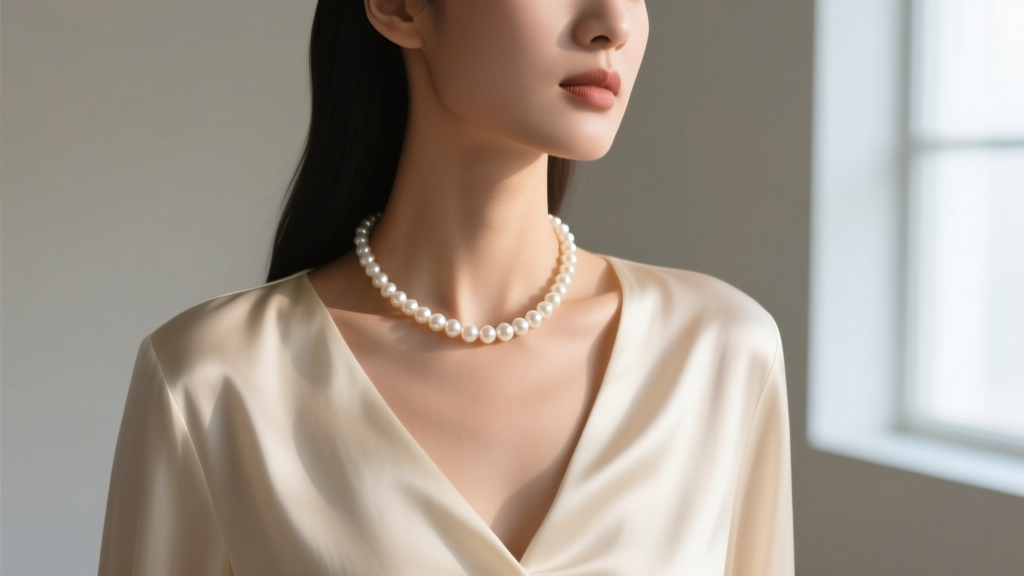
Pearls are organic gemstones with a Mohs hardness of only 2.5 to 3.0, making them highly susceptible to chemical and physical degradation. To protect the nacre of your freshwater pearls necklace, strict adherence to a maintenance protocol is non-negotiable.
- The Cosmetics Rule: Pearls must be the last thing you put on and the first thing you take off. Hairsprays, perfumes, and lotions contain alcohols and volatile organic compounds (VOCs) that will strip the nacre's natural orient and leave a permanent chalky film.
- Acid Degradation: Human perspiration is mildly acidic. Over time, this acid eats into the calcium carbonate structure of the pearl. Always wipe your necklace down with a soft, damp microfiber cloth immediately after wearing it.
- Ultrasonic Warning: Never, under any circumstances, place a pearl necklace in an ultrasonic cleaner or use commercial jewelry dips. The high-frequency vibrations will shatter the nacre layers, and the chemicals will dissolve the pearl.
- Restringing Intervals: If worn weekly, a silk-strung necklace must be professionally restrung every 12 to 18 months. If you notice the silk looking gray, frayed, or if there is visible movement between the knots, the structural integrity is already compromised.
Investing in a premium freshwater pearls necklace is an exercise in appreciating organic artistry. By demanding precise drill holes, verifying AAA luster standards, and ensuring traditional silk-knotting techniques, you secure a piece of jewelry that will maintain its structural integrity and radiant luster for generations.


