The Guatemalan Wedding Necklace: Artisan Materials & Construction
Explore the technical construction, jade grading, and beadwork techniques behind the traditional Guatemalan wedding necklace for collectors.

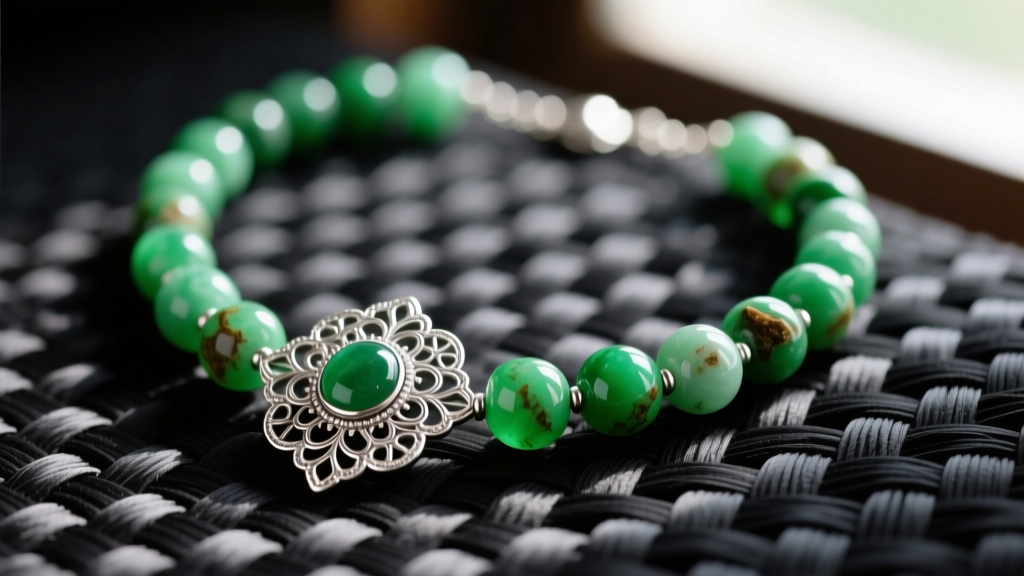
The Anatomy of a Traditional Guatemalan Wedding Necklace
The traditional Guatemalan wedding necklace is not a single, monolithic design, but rather a highly specialized category of ceremonial neckwear that merges pre-Columbian Mayan lapidary traditions with colonial Spanish metalworking. For jewelry collectors and technical appraisers, understanding the anatomy of these pieces requires looking past the vibrant aesthetics and examining the structural engineering. A genuine artisan-crafted piece relies on a tripartite material foundation: high-tensile thread bases, Grade-A jadeite or Czech glass beadwork, and sterling silver filigree hardware.
Unlike mass-produced fashion jewelry that utilizes stamped base metals and glued settings, authentic highland Guatemalan necklaces are constructed using tension-based knotting and cold-connection techniques. The structural integrity of the necklace depends entirely on the warp and weft of the threading and the precise calibration of the bead holes. When evaluating these pieces for wearability and archival preservation, one must analyze the thread gauge, the knotting interval, and the metallurgical purity of the clasp assemblies.
Material Deep Dive: Jadeite and Silver Filigree
Guatemalan Jadeite Grading and Mineralogy
At the core of the most valuable Guatemalan wedding necklace variations is Guatemalan jadeite. Unlike the nephrite commonly found in other global markets, Mesoamerican jade is strictly jadeite pyroxene. According to the Gemological Institute of America (GIA), natural, untreated jadeite is classified as Type A. Guatemalan jadeite typically exhibits a specific gravity of 3.30 to 3.38 and a refractive index of 1.66. The most prized coloration for wedding and ceremonial pieces is "Maya Green," a vivid, semi-translucent emerald hue caused by trace amounts of chromium.
In technical terms, the cabochons used in these necklaces are rarely perfectly uniform. Artisans often hand-polish the beads using progressive grits of silicon carbide, finishing with a diamond paste of 100,000 grit to achieve a vitreous luster. The drill holes in authentic jadeite beads are typically ultrasonically drilled from both sides to prevent blowout, resulting in a slight hourglass profile inside the bead channel. This requires the use of flexible, abrasion-resistant threading to prevent premature fraying.
Antigua Silver Filigree Specifications
The metalwork accompanying the jade or glass beadwork is predominantly sourced from the silversmithing guilds of Antigua Guatemala. The structural frames of the pendants and clasps are forged from 925 sterling silver. Filigree elements are constructed by twisting 28-gauge and 30-gauge silver wires into microscopic lace-like patterns, which are then flux-soldered into a rigid 20-gauge or 18-gauge outer bezel. This contrast in wire gauges ensures that the delicate internal lattice remains protected by a robust outer boundary capable of withstanding the lateral torque applied when the necklace is clasped.
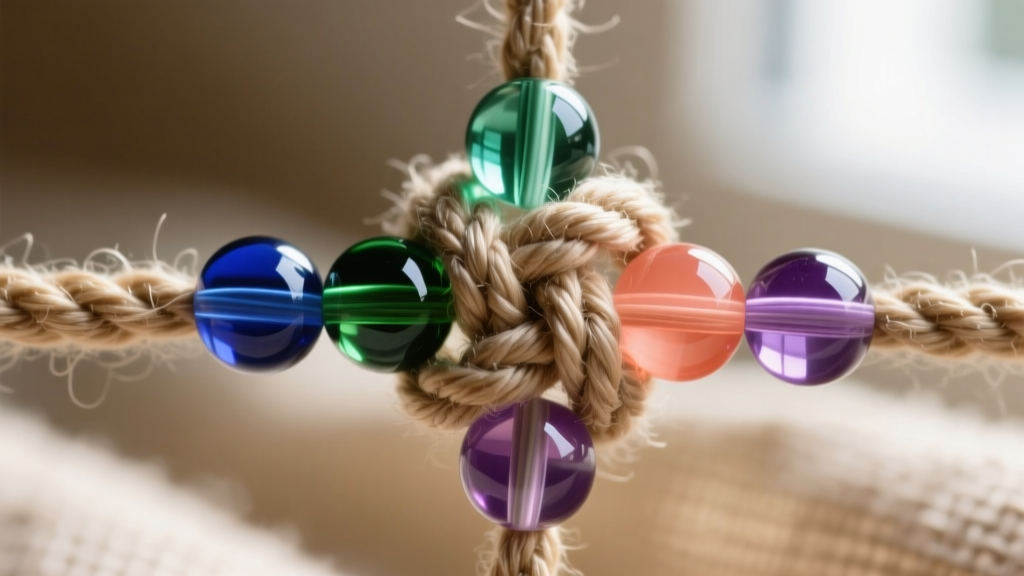
Beadwork and Knotting Techniques
The beadwork in a Guatemalan wedding necklace often incorporates intricate right-angle weave (RAW) or modified peyote stitch patterns, especially when utilizing size 8/0 or 11/0 Czech glass seed beads alongside larger jade focal stones. The choice of thread is a critical technical decision that dictates the drape, tension, and longevity of the piece.
| Thread Material | Diameter (mm) | Tensile Strength | Best Application |
|---|---|---|---|
| C-Lon (Nylon) | 0.09mm | 11 lbs | Multi-pass seed bead weaving (11/0) |
| Silamide (Waxed) | 0.12mm | 14 lbs | Fringe work and tension knotting |
| Waxed Linen | 0.20mm | 18 lbs | Heavy jadeite cabochon stringing |
| FireLine (Fused) | 0.15mm | 20 lbs | Abrasion-resistant structural weaves |
Master artisans in the Sololá and Quiché regions frequently employ a double-needle right-angle weave technique. This creates a tubular, rope-like structure that possesses high lateral flexibility but immense longitudinal tensile strength. The tension applied during knotting must be perfectly calibrated; too loose, and the beadwork will gap and snag; too tight, and the thread will warp, causing the necklace to curl inward upon itself.
Sizing, Weight, and Wearability Metrics
A fully realized ceremonial Guatemalan wedding necklace is a substantial piece of jewelry. A standard 18-inch collar featuring a heavy jadeite pectoral and dense seed-bead collars can weigh anywhere from 180 to 350 grams. To manage this weight distribution, the structural engineering of the necklace must incorporate a graduated bead profile. The beads at the nape of the neck are typically sized at 4mm to 6mm, gradually stepping up to 12mm or 14mm at the center front. This graduation not only creates a visually pleasing parabolic drape but also shifts the center of gravity lower, preventing the heavy clasp from pulling backward against the cervical spine.
Proper weight distribution in artisan beadwork is not merely an aesthetic choice; it is a biomechanical necessity. A poorly balanced 300-gram necklace will cause chronic tension on the trapezius muscles, whereas a graduated profile rests securely on the clavicle.
Furthermore, the clasps on these pieces are rarely standard lobster claws. Instead, they utilize custom-forged silver toggle clasps or traditional macramé sliding knot closures. The sliding knot, tied using a double half-hitch technique over a waxed linen core, allows for micro-adjustments in length (typically a 3-inch variance), accommodating different necklines and traditional huipil collars.
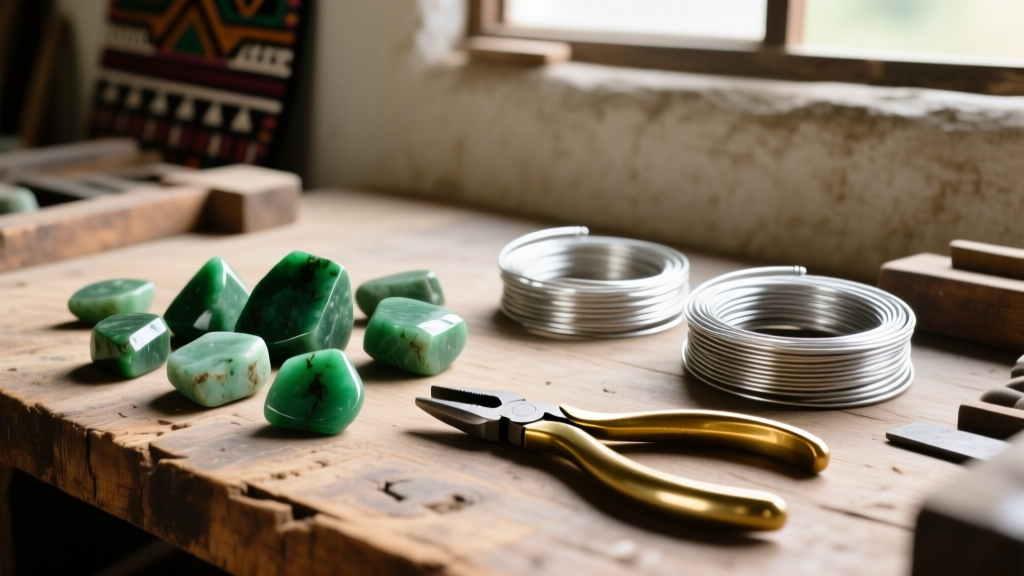
Authentication and Pricing Framework
As the global market for indigenous and artisan jewelry expands, the authentication of a Guatemalan wedding necklace has become a vital skill for collectors. The market is currently saturated with dyed quartz masquerading as jadeite, and cast white metal posing as hand-drawn filigree. When conducting a technical appraisal, rely on the following diagnostic framework:
- Thermal Conductivity: Genuine jadeite has a high thermal mass. When pressed against the skin or the lower lip, it should feel distinctly cold and take several seconds to warm up. Glass or plastic imitations will warm almost instantly.
- Chelseas Filter Test: Under a Chelsea color filter, natural chromium-rich Maya Green jadeite will often show a faint pink or red reaction, whereas dyed green quartz or serpentine will remain green or inert. For definitive proof, a spectroscopic analysis by a certified gemologist is recommended to detect polymer impregnation (Type B jade).
- Filigree Microscopy: Examine the silver lattice under a 10x loupe. Hand-drawn filigree will show microscopic tool marks, slight asymmetries in the wire twists, and evidence of solder flow at the joints. Cast imitation filigree will appear perfectly uniform, with rounded, soft edges and a lack of crisp undercutting.
2026 Market Valuation Tiers
Pricing for these artifacts varies wildly based on material provenance and construction complexity. Entry-level pieces, featuring Czech glass beadwork and silver-plated hardware, typically range from $80 to $250. Mid-tier necklaces, incorporating genuine 925 silver filigree and treated (Type B) jadeite or high-grade chalcedony, command prices between $400 and $900. However, museum-quality, artisan-direct Guatemalan wedding necklaces featuring certified Type A Maya Green jadeite, hand-forged sterling silver, and traditional right-angle weave construction easily appraise between $2,500 and $8,000, reflecting the hundreds of hours of specialized lapidary and metalworking labor required for their creation.


