The Hand of Fatima Necklace: 2026 Trend & Style Guide
Explore 2026 trends for the hand of fatima necklace. Discover layering techniques, material grades, and styling tips for this timeless protective amulet.

The 2026 Evolution: From Boho Charm to Architectural Talisman
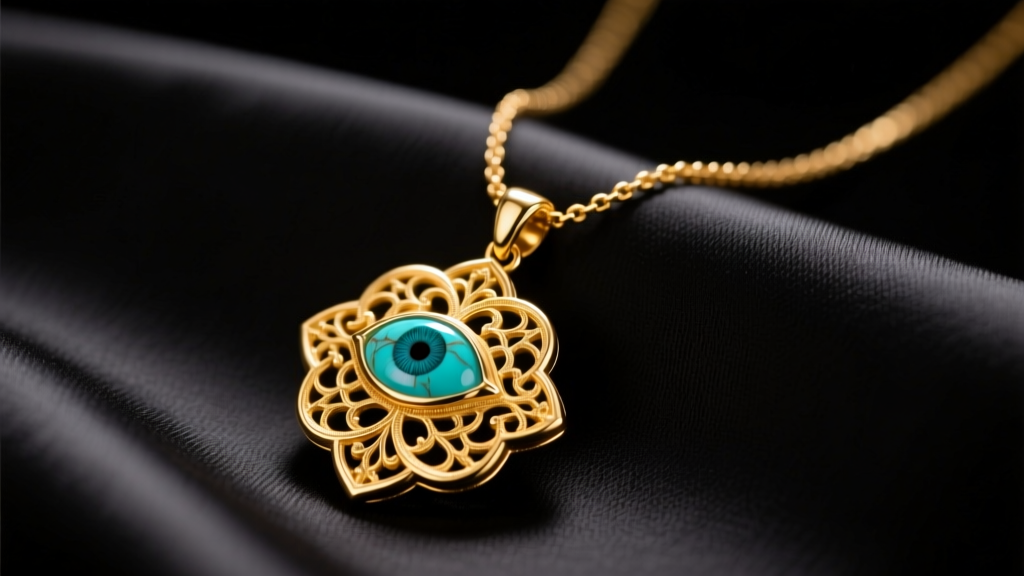
The hand of fatima necklace—widely recognized across global cultures as the Hamsa or Hand of Miriam—has undergone a radical design transformation as we navigate 2026. Gone are the days of flimsy, mass-produced stamped charms that dominated the boho-chic era of the early 2010s. Today, contemporary jewelers are treating this ancient Middle Eastern and North African protective amulet as a piece of architectural sculpture. The modern hand of fatima necklace features 3D-cast structures, articulated fingers, and micro-pavé gemstone settings that elevate it from a casual festival accessory to a refined, everyday talisman.
This shift reflects a broader consumer demand for jewelry that carries profound cultural weight while meeting the rigorous standards of fine jewelry craftsmanship. In 2026, the emphasis is heavily placed on heirloom-quality materials, precise gauge sizing, and a deep, educated respect for the symbol's historical origins. Collectors and everyday wearers alike are seeking out pieces that offer both metaphysical significance and structural longevity.
Decoding the Anatomy: Symmetrical vs. Asymmetrical Palms
When selecting a hand of fatima necklace, understanding the anatomical variations of the design is crucial for achieving your desired aesthetic and ensuring the piece hangs correctly. The pendant generally falls into two distinct categories:
- The Symmetrical Hamsa: Featuring a central palm with two mirrored thumbs extending outward. This is the most traditional iteration, often associated with the warding off of the 'evil eye' (Nazar). The fingers are typically kept close together or slightly splayed, creating a compact, geometric silhouette that sits perfectly flat against the sternum.
- The Asymmetrical Hand: Designed to mimic the natural proportions of a human hand, complete with a distinct thumb and four fingers of varying lengths. This 2026 trend leans heavily into organic, fluid lines, often incorporating textured metal finishes like hammered gold or brushed platinum to mimic the intricate lines of a real palm.
For layering purposes, the symmetrical design (typically measuring 15mm to 22mm in width) is vastly superior. Its balanced weight distribution prevents the pendant from flipping over on lighter chains, a common frustration with asymmetrical pieces that require heavier, wider chains to maintain their forward-facing orientation.
Material Grades and Gemstone Inlays
The eye motif at the center of the hand of fatima necklace is rarely left bare in high-end 2026 collections. Jewelers are increasingly utilizing specific gemstone inlays to enhance both the visual contrast and the metaphysical properties of the piece. However, material science must dictate the setting style to ensure longevity.
| Gemstone Inlay | Mohs Hardness | Recommended Setting | Maintenance Profile |
|---|---|---|---|
| Natural Turquoise | 5.0 - 6.0 | Bezel or Flush | High (Avoid ultrasonic cleaners, perfumes) |
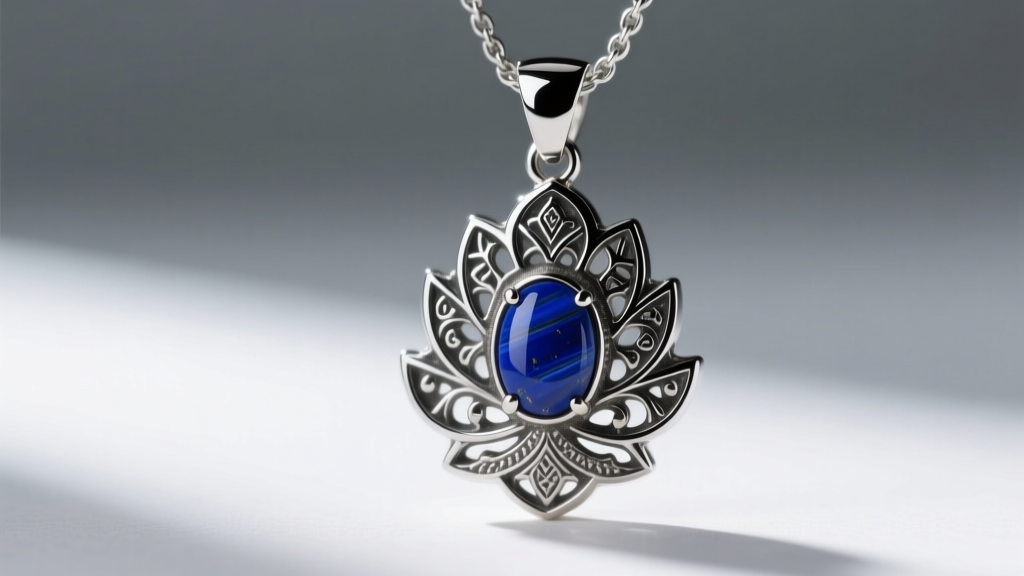
| Lapis Lazuli | 5.5 - 6.0 | Bezel | Medium (Protect from prolonged sun exposure) |
| Black Onyx | 6.5 - 7.0 | Prong or Bezel | Low (Highly durable for daily wear) |
| Lab-Grown Diamond | 10.0 | Micro-Pavé | Very Low (Requires occasional degreasing) |
According to the Gemological Institute of America (GIA), natural turquoise is a porous, relatively soft gemstone that requires strict bezel settings to prevent chipping at the girdle. When investing in a turquoise-inlaid hand of fatima necklace, ensure the metal rim completely encapsulates the stone's edge. Conversely, lapis lazuli offers a striking, deep celestial blue with pyrite flecks, but it can be damaged by harsh chemicals and prolonged heat. Always apply fragrances and lotions before donning your necklace to preserve the stone's natural luster and prevent the matrix from drying out.
The Layering Framework: Proportions and Chain Pairings
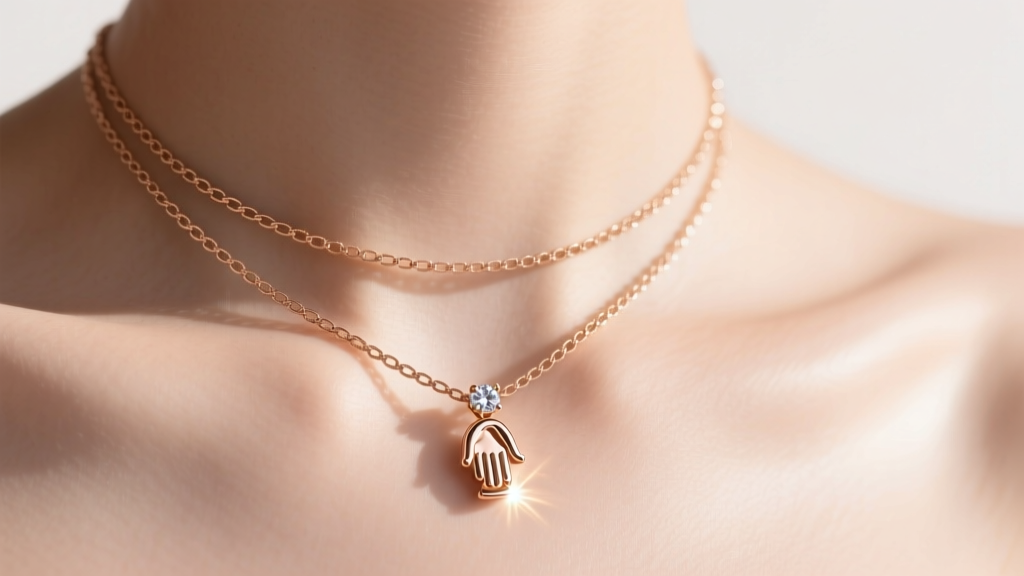
Styling a hand of fatima necklace in 2026 is all about intentional, structured layering. The chaotic 'more is more' approach has been replaced by a curated, three-piece maximum rule that allows each pendant's symbolism to breathe without tangling.
The 16-Inch Choker Base
Start with a 16-inch chain sitting close to the collarbone. A 0.9mm to 1.2mm solid cable chain in 14k or 18k gold provides enough tensile strength to hold a 15mm Hamsa pendant without snapping, while remaining delicate enough to serve as a foundational layer. Avoid hollow-core chains; the pendant's concentrated weight will easily kink hollow links over time.
The 18-Inch Focal Point
The hand of fatima necklace should serve as the anchor of your arrangement. Opt for an 18-inch length with a slightly heavier chain, such as a 1.5mm rope or a 2.0mm box chain. The structural rigidity of a box chain is particularly effective for asymmetrical Hamsa designs, as the flat links create friction that prevents the pendant from sliding sideways.
The 20-Inch Counterweight
Finish the stack with a 20-inch or 22-inch chain featuring a minimalist, non-competitive pendant—such as a simple 3mm diamond solitaire or a plain gold disc. This draws the eye downward, elongating the neck and framing the intricate details of the central Hamsa motif.
Cultural Reverence and Orientation in Modern Styling
As the hand of fatima necklace continues to permeate global fashion, the conversation around cultural appreciation versus appropriation remains vital. The Hamsa predates modern organized religion, serving as a universal symbol of protection, power, and strength across Middle Eastern and North African cultures. It is deeply intertwined with Islamic tradition (representing the Hand of Fatima, the daughter of the Prophet Muhammad) and Jewish tradition (the Hand of Miriam).
In 2026, leading ethical jewelry brands are moving away from stripping the symbol of its context to sell it as a mere trend. Instead, they are providing educational provenance cards with each purchase. Furthermore, discerning collectors are paying close attention to the orientation of the hand. A Hamsa facing upward is traditionally worn to ward off evil, set boundaries, and protect against negative energy. Conversely, a hand facing downward is an invitation for abundance, fertility, and grounding. Understanding these nuances transforms the necklace from a simple decorative object into a deeply personal talisman. The Responsible Jewellery Council emphasizes that ethical sourcing extends beyond environmental metrics to include the respectful treatment of cultural intellectual property and artisan heritage.
Investment Tiers: What to Expect in 2026
Navigating the market requires an understanding of pricing structures based on material integrity, clasp mechanics, and craftsmanship. Here is a realistic breakdown of what to expect when shopping for a hand of fatima necklace this year:
- Entry-Level ($45 - $120): Typically crafted from 925 sterling silver with gold vermeil plating. Ensure the plating is at least 2.5 microns thick for longevity; anything less will wear off rapidly. Gemstones are often dyed howlite masquerading as turquoise. Suitable for occasional wear, but expect the vermeil to degrade at the friction points within 12 to 18 months. These usually feature standard spring-ring clasps, which are prone to failure.
- Mid-Tier ($250 - $600): The sweet spot for daily wear. These pieces feature solid 14k gold (yellow, white, or rose) and genuine, ethically sourced gemstones like natural lapis lazuli or black onyx. Chains are solid-core, and the pendant bail is securely laser-welded rather than soldered with weak alloys. Look for upgraded lobster claw clasps that offer superior security.
- Luxury & Heirloom ($900 - $3,500+): Reserved for 18k or 22k gold castings featuring articulated, movable fingers set with micro-pavé diamonds or rare, untreated Persian turquoise. These pieces often feature custom-engineered hidden bails that allow the pendant to sit perfectly flush against the skin, paired with custom fold-over box clasps for seamless chain integration.
Ultimately, the hand of fatima necklace in 2026 is a masterclass in blending ancient protection with modern metallurgical precision. By prioritizing structural integrity, respecting cultural origins, and mastering the art of proportional layering, you can integrate this powerful symbol into your wardrobe as a timeless, sophisticated anchor piece.


