How to Clean and Care for Your Howl's Moving Castle Necklace
Learn expert cleaning and maintenance tips for your Howl's Moving Castle necklace. Protect brass, silver, and enamel Ghibli pendants from tarnish.


Whether you own an official Studio Ghibli piece from the Donguri Kyowakoku collection or a handcrafted artisan replica, a howl's moving castle necklace is a cherished keepsake that connects fans to the magical world of Hayao Miyazaki. However, the intricate details of Sophie's hat, the delicate enamel on Howl's heart pendant, and the textured crevices of a Turnip Head charm make these pieces uniquely susceptible to tarnish, dirt accumulation, and material degradation. Proper maintenance is not just about keeping your jewelry shiny; it is about preserving the structural integrity and sentimental value of your favorite anime memorabilia.
In this comprehensive guide, we will break down the exact material compositions of popular Ghibli necklaces, provide step-by-step cleaning protocols, and share professional storage techniques to ensure your magical pendants last a lifetime.
Understanding Your Pendant's Material Composition
Before applying any cleaning solution, you must accurately identify the materials used in your specific howl's moving castle necklace. Official merchandise and high-end artisan replicas typically fall into three main categories:
- Brass with Gold Plating: Most official Studio Ghibli heart pendants are cast from a brass alloy and finished with a thin layer of gold plating. This plating can wear away if subjected to harsh chemicals or abrasive friction.
- Sterling Silver (925): Many independent jewelers craft Turnip Head, Calcifer, and owl-motif pendants from solid sterling silver. While durable, silver is highly reactive to sulfur in the air, leading to black silver sulfide tarnish.
- Cold Enamel and Resin: Vibrant colors on official merchandise are often achieved using cold enamel (a pigmented epoxy resin) or kiln-fired vitreous enamel. Resin is highly sensitive to heat and alcohol-based solvents.
Step-by-Step Cleaning Guide by Material
According to the Gemological Institute of America (GIA), using the wrong cleaning agent on mixed-material jewelry can cause irreversible damage. Below are the safest, most effective methods for each material type.
1. Cleaning Brass and Gold-Plated Heart Pendants
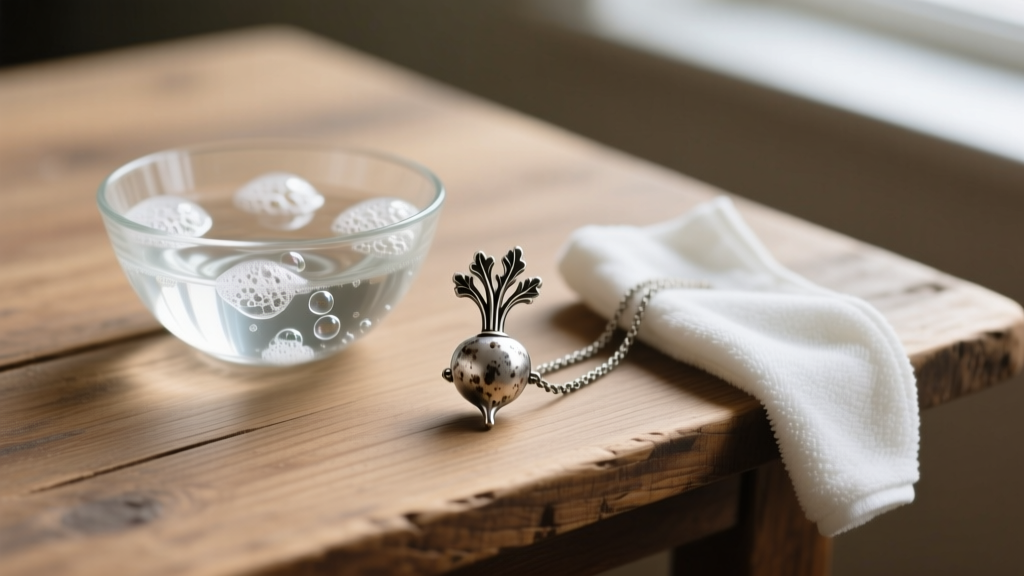
If your pendant is gold-plated brass, avoid commercial brass dips like Tarn-X, which will instantly strip the gold layer. Instead, create a mild cleaning bath using lukewarm water and a few drops of pH-neutral dish soap (such as Dawn). Submerge the pendant for no more than three minutes. Use a soft-bristled baby toothbrush to gently agitate the dirt trapped in the engraved grooves of the heart pendant. Rinse with distilled water to prevent hard water spots, and pat dry immediately with a lint-free microfiber cloth. If you own a raw, unplated brass artisan piece, you can use a specialized brass polish like Brasso, applying it with a cotton swab to avoid the chain.
2. Polishing Sterling Silver Charms
For sterling silver Calcifer or Turnip Head charms, skip the liquid polishes and toothpaste, as their micro-abrasives will scratch the high-polish finish. The gold standard for silver care is an impregnated jeweler's polishing cloth (often called a Sunshine cloth). Gently rub the cloth over the raised surfaces of the charm. Leave the dark oxidation in the recessed crevices; this contrast is intentional and adds depth to the character's design. For heavy tarnish, the Jewelers of America recommends a brief soak in a specialized, non-toxic silver cleaning foam, followed by a thorough distilled water rinse.
3. Wiping Down Enamel and Resin Accents
Enamel details, such as the pink and blue accents on Howl's bird form or Sophie's dress, are essentially glass or hardened resin. They are prone to 'crazing' (micro-cracking) if exposed to sudden temperature changes or ultrasonic cleaners. Never put an enameled pendant in an ultrasonic jewelry bath. Simply wipe the enamel surfaces with a slightly damp microfiber cloth and dry immediately.
Material-Specific Cleaning Matrix
Use this quick-reference table to ensure you never apply the wrong chemical to your anime jewelry.
| Material | Safe Cleaning Agent | Strictly Avoid |
|---|---|---|
| Gold-Plated Brass | Mild dish soap, distilled water, microfiber cloth | Brass dips, baking soda paste, ultrasonic cleaners |
| Sterling Silver (925) | Impregnated polishing cloth, silver foam | Toothpaste, bleach, chlorine, hard-bristled brushes |
| Cold Enamel / Resin | Damp microfiber cloth, mild soap | Alcohol, acetone, extreme heat, ultrasonic waves |
| Raw Cast Brass | Brasso, lemon juice and salt paste | Leaving wet (causes severe water spotting) |
Chain Maintenance and Clasp Troubleshooting
The chain and clasp of your howl's moving castle necklace endure the most mechanical stress. Most Ghibli necklaces feature delicate 1.0mm to 1.5mm cable chains paired with small lobster claw clasps. Over time, skin oils, lotions, and dead skin cells accumulate in the tiny hinges of the clasp, causing it to become sticky or fail to snap shut securely.
To troubleshoot a sticky lobster clasp, apply a microscopic drop of mineral oil or sewing machine oil directly into the hinge mechanism using a toothpick. Work the lever back and forth several times to distribute the lubricant, then wipe away all excess oil with a tissue. Never use WD-40, as it contains solvents that can degrade the metal alloy and leave a foul-smelling residue that transfers to your clothing.
Additionally, inspect the jump ring (the small circular loop connecting the pendant to the chain). If you notice a gap where the metal does not meet flush, gently push it closed using two pairs of flat-nose jewelry pliers. A loose jump ring is the number one cause of lost pendants.
Proper Storage to Prevent Tarnish and Scratching
How you store your necklace when you are not wandering through the Market Town of Porthaven is just as critical as how you clean it. Silver and brass tarnish when exposed to humidity and airborne sulfur compounds. Cardboard jewelry boxes are actually detrimental to long-term storage, as the paper pulp contains sulfur and acidic glues that accelerate oxidation.
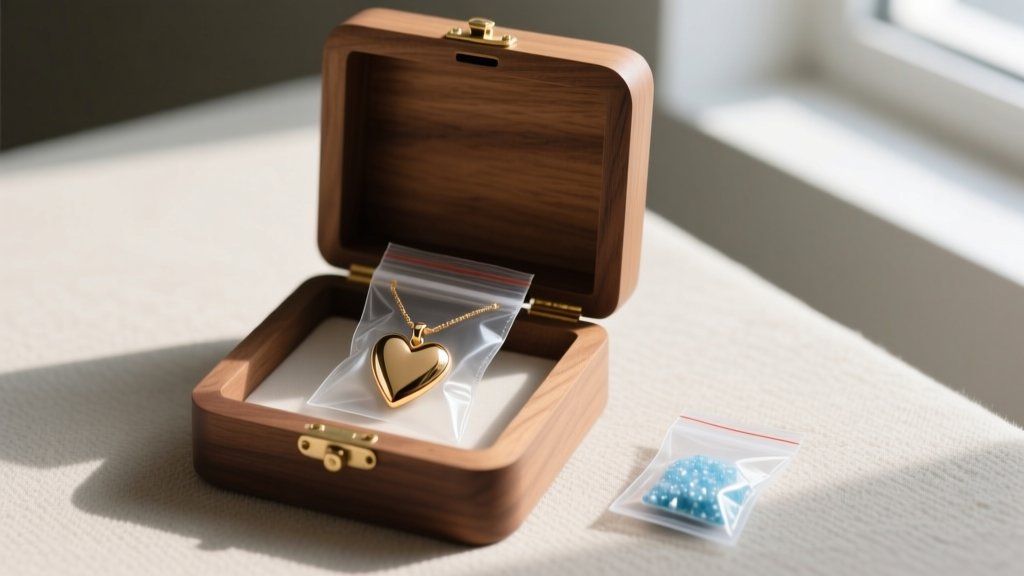
For optimal preservation, store your necklace in an airtight, zip-top polyethylene bag. Place a 3M anti-tarnish strip inside the bag; these strips absorb corrosive gases and remain effective for up to six months. If you live in a high-humidity climate, add a small silica gel desiccant packet to the bag to keep the relative humidity below 45%. Always store pendants separately to prevent the harder brass or silver edges from scratching the delicate enamel surfaces of adjacent pieces.
Common Mistakes That Ruin Ghibli Jewelry
Expert Warning: Never wear your howl's moving castle necklace while swimming in chlorinated pools or hot springs. Chlorine reacts violently with the copper and zinc alloys in brass, causing permanent structural weakening and a splotchy, irreversible discoloration known as 'dezincification'.
By understanding the specific metallurgy and enamel work of your jewelry, you can avoid these common pitfalls. Treat your necklace with the same care and respect that Howl treats his magical castle, and it will remain a beautiful, wearable piece of cinema history for years to come.