Choosing the Right Metal and Chain for a Train Necklace
Discover the best metals and chain gauges for a train necklace. We compare tensile strength, drape, and durability for lariat and Y-style drops.

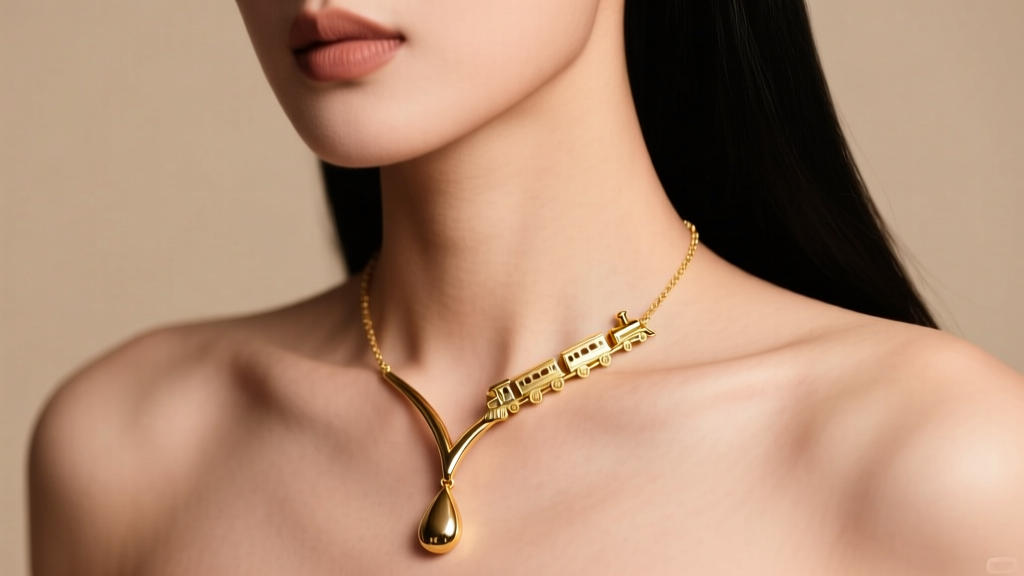
The Anatomy and Physics of a Train Necklace
A train necklace—often recognized as a Y-necklace, lariat, or cascading pendant style—is defined by its elongated drop that falls significantly below the main collar. While standard necklaces sit relatively static against the clavicle, the "train" (the dangling terminal drop) is subject to entirely different physical forces. Understanding these kinetic stresses is the first step in selecting the right materials, chain weaves, and gauge sizes for long-term durability.
When you walk, lean, or move, the train drop acts as a pendulum. This creates a "kinetic whip" effect, concentrating tensile stress on the topmost link and the jump ring connecting the drop to the main collar. Furthermore, the terminal end of the train is highly susceptible to catching on fabrics, hair, and environmental hazards. Therefore, choosing a metal and chain type for a train necklace requires balancing fluid drape with high tensile strength and resistance to structural deformation.
Tensile Strength and Failure Modes in Train Drops
The most common failure mode in poorly constructed train necklaces is link ovalization. This occurs when round chain links are repeatedly subjected to the pendulum stress of the drop, causing them to stretch into ovals and eventually pull apart. Another frequent failure point is the jump ring connecting the Y-split. If this jump ring is not soldered shut, the lateral swinging of the train will eventually pry the ring open, resulting in the loss of the entire drop.
To mitigate these risks, jewelers must look at the Vickers Hardness (HV) scale and the tensile strength of the chosen alloy. According to metallurgical data from Rio Grande, a leading jewelry supplier, the work-hardening properties of precious metals dictate how well they will withstand the repetitive micro-stresses of a swinging train drop.
Material Comparison: Gold, Silver, Platinum, and Titanium
Not all precious metals behave identically when drawn into wire and formed into chains. Below is a comparative analysis of the most common metals used for train necklaces, focusing on their structural integrity and drape quality.
| Metal / Alloy | Vickers Hardness (HV) | Tensile Strength | Drape Fluidity | Risk of Link Stretching |
|---|---|---|---|---|
| 14k Yellow Gold | ~170 HV | High | Excellent | Low |
| 18k Yellow Gold | ~135 HV | Medium-High | Superior | Low-Medium |
| 925 Sterling Silver | ~70-90 HV | Medium | Stiff | High |
| Platinum (950) | ~110-130 HV | Very High | Good | Very Low |
| Titanium (Grade 5) | ~350 HV | Extremely High | Poor | None |
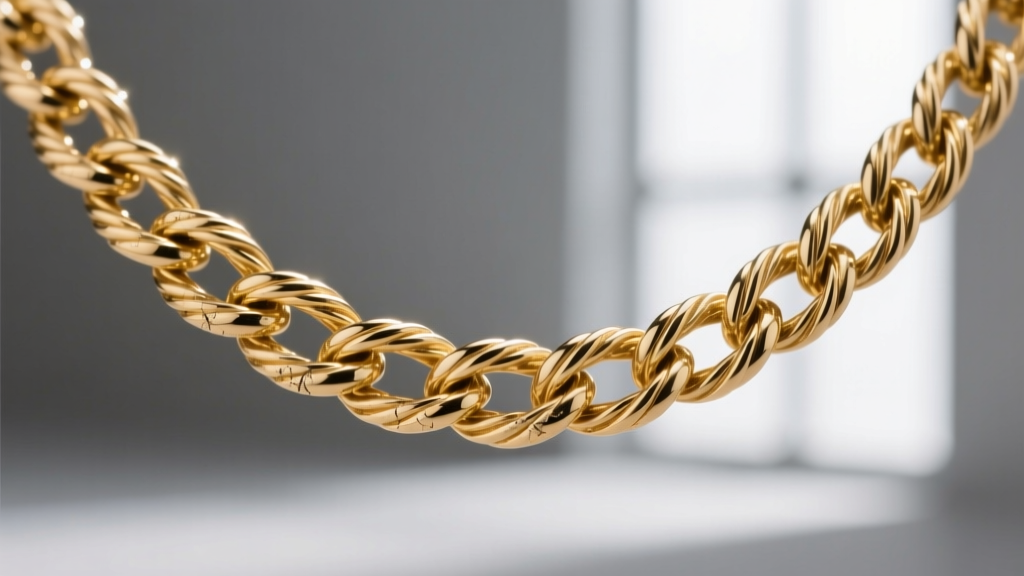
14k and 18k Gold: The Drape Standard
Gold alloys remain the industry standard for train necklaces due to their exceptional balance of weight, drape, and durability. 14k gold, alloyed with copper, silver, and zinc, offers a Vickers hardness of roughly 170 HV. This makes it rigid enough to resist ovalization in the train drop, yet malleable enough to maintain a fluid, liquid-like drape. 18k gold is softer and heavier; while it offers a richer color and superior fluidity, a thick 18k gold train drop can become surprisingly heavy, potentially pulling the back of the collar upward if the posterior chain is not properly counterweighted.
Sterling Silver: The Stretching Hazard
Sterling silver (925) is highly accessible but presents structural challenges for train necklaces. With a Vickers hardness of only 70 to 90 HV in its annealed state, silver is highly susceptible to work-hardening and subsequent stretching. If a sterling silver train necklace features a heavy terminal pendant or gemstone, the kinetic whip of the drop will rapidly stretch the links. If you must choose silver, opt for a thicker gauge (1.5mm or higher) and ensure the silver is work-hardened during the manufacturing process to increase its tensile resistance.
Platinum: Indestructible but Dense
The GIA Gem Encyclopedia notes platinum's unique malleability and durability; unlike gold, which wears away over time, platinum displaces. This makes it virtually indestructible against link stretching. However, platinum is exceptionally dense. A long platinum train drop will carry significant weight, which can cause the necklace to slide forward on the wearer's neck. Platinum is best reserved for delicate, finely drawn chains (0.8mm to 1.0mm) where the overall metal volume is kept low to manage the weight.
Selecting the Optimal Chain Weave for a Train Drop
The structural integrity of a train necklace is just as dependent on the chain weave as it is on the metal itself. The weave dictates how the chain handles lateral stress, hair-snagging, and bending.
Rope and Cable Chains (Highly Recommended)
For the train drop, rope chains are the undisputed champion. The twisted, multi-strand construction of a rope chain distributes kinetic stress across multiple vectors, making it highly resistant to snapping. Furthermore, rope chains possess a naturally fluid drape and are less prone to catching on body hair or fine knitwear. Standard cable chains (oval or round links linked at 90-degree angles) are also excellent, provided the jump rings are soldered.
Box and Snake Chains (Proceed with Caution)
Box chains and snake chains are generally poor choices for the train portion of a Y-necklace. Box chains feature square, interlocking links that are notorious for snagging hair and pulling threads from delicate clothing. When subjected to the swinging motion of a train drop, the rigid square links can torque and snap at their solder joints. Snake chains, composed of tightly wound metal rings, act like a spring. If a snake chain train drop is bent sharply or whipped during movement, it will permanently kink and lose its structural integrity.
Gauge Sizing and Terminal Hardware
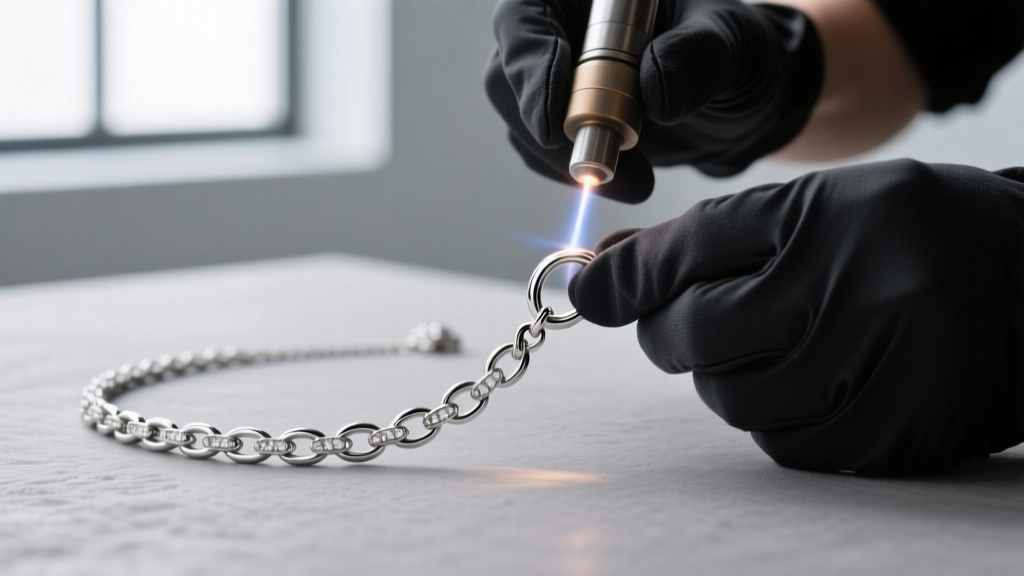
Gauge sizing for a train necklace requires finding the sweet spot between delicate aesthetics and structural survival. For the main collar, a gauge between 0.8mm and 1.2mm is standard. However, the train drop should ideally be slightly thicker or feature a more robust weave to handle the pendulum stress. A 1.0mm to 1.5mm rope or cable chain is optimal for the drop.
Hardware selection is equally critical. If your train necklace is a fixed Y-style, the jump ring where the collar splits into the drop must be soldered shut. An unsoldered jump ring will inevitably fail under the lateral torque of the drop. If you are designing a lariat-style train necklace where the chain slides through a decorative tube or ring, ensure the slide hardware features a silicone or Teflon insert. Metal-on-metal sliding will act like a file, shaving off microscopic layers of the chain and weakening it over time.
Maintenance and Long-Term Care
To maintain the structural integrity of your train necklace, perform a bi-annual inspection of the Y-split jump ring and the terminal clasp or end-cap. Hold the necklace up by the main collar and gently swing the train drop; listen for any clicking or rattling, which indicates loose links or failing solder joints. Store the necklace flat or hanging completely straight to prevent memory-kinking in the drop. By respecting the physics of the train drop and selecting the appropriate metal hardness and chain weave, you ensure the piece remains both a striking fashion statement and a durable heirloom.


