How to Clean and Maintain Your Favorite Puppy Dog Necklace
Learn expert cleaning and maintenance tips for your puppy dog necklace. Remove pet dander, tarnish, and grime safely from silver and gold pendants.

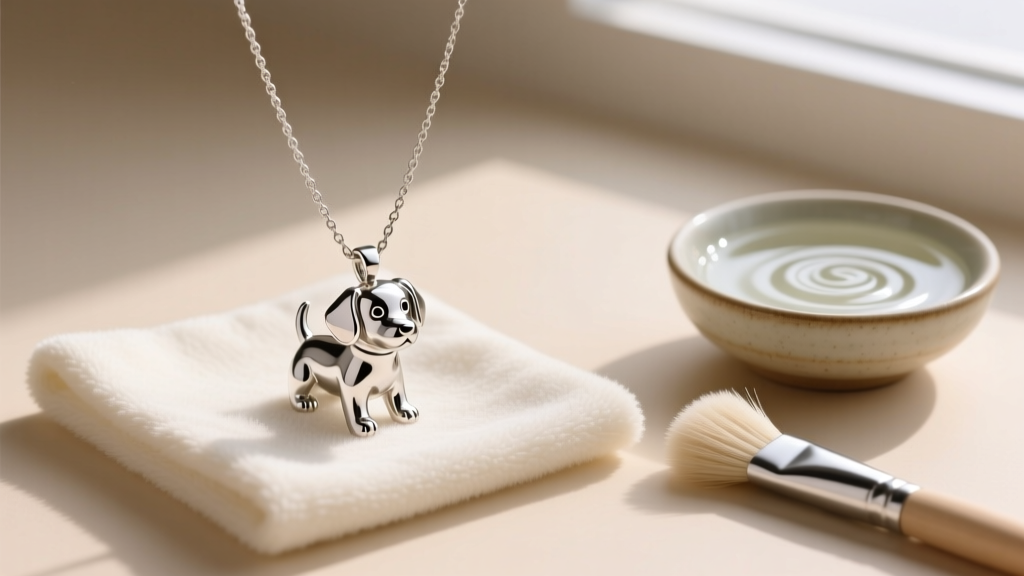
The Unique Environmental Challenges of Pet-Themed Jewelry
Wearing a puppy dog necklace is a beautiful way to keep your furry best friend close to your heart. However, as any devoted pet owner knows, sharing your life with a dog means sharing your environment with dander, sebum, saliva, and outdoor elements. When you wear a puppy dog necklace daily, it is exposed to a unique cocktail of environmental stressors that standard jewelry rarely encounters. Dog hair weaves itself into chain links, while natural pet oils and outdoor mud can quickly degrade the finish of your pendant.
According to the Gemological Institute of America (GIA), the accumulation of skin oils and environmental debris is the primary catalyst for gemstone dulling and metal tarnishing. For pet owners, this process is accelerated. The intricate crevices of a puppy-shaped pendant—such as the folds of a bulldog's face or the feathering on a golden retriever's ears—act as microscopic traps for pet dander and household dust. To preserve the sentimental and monetary value of your jewelry, a specialized, proactive maintenance routine is absolutely essential.
Material-Specific Cleaning Protocols
Before you reach for a generic jewelry cleaner, you must identify the exact materials used in your puppy dog necklace. Using the wrong chemical compound can permanently strip finishes or cloud decorative accents.
925 Sterling Silver Pendants
Sterling silver is highly susceptible to tarnishing, a chemical reaction where silver reacts with sulfur compounds in the air and pet dander to form silver sulfide. This manifests as a yellowish or black film. Never use baking soda paste or abrasive toothpaste on a detailed puppy pendant. These abrasives will scratch the high-polish areas and strip away intentional oxidation (the dark patina often used to highlight a puppy's eyes or nose). Instead, use a dedicated, treated silver polishing cloth, gently rubbing the high points while avoiding the recessed, oxidized details.
18k Gold Vermeil and Plated Pieces
Gold vermeil consists of a thick layer of gold (at least 2.5 microns) bonded to a sterling silver base. If your puppy dog necklace is vermeil, you must avoid ultrasonic cleaners and harsh chemical dips. The cavitation bubbles in an ultrasonic cleaner can literally peel the gold layer away from the silver base over time. Clean vermeil using only a few drops of pH-neutral dish detergent (like Dawn) mixed with lukewarm water, and gently wipe it with a lint-free microfiber cloth.
Enamel Accents (Noses, Collars, and Eyes)
Many puppy dog necklaces feature cold epoxy enamel or vitreous enamel to add a pop of color to a collar or a wet-looking nose. Epoxy resin is highly sensitive to alcohol and ammonia. Cleaning solutions containing these solvents will cause the epoxy to cloud, crack, or lift away from the metal setting. Stick to mild, non-detergent soap and water for any pendant featuring colored enamel.
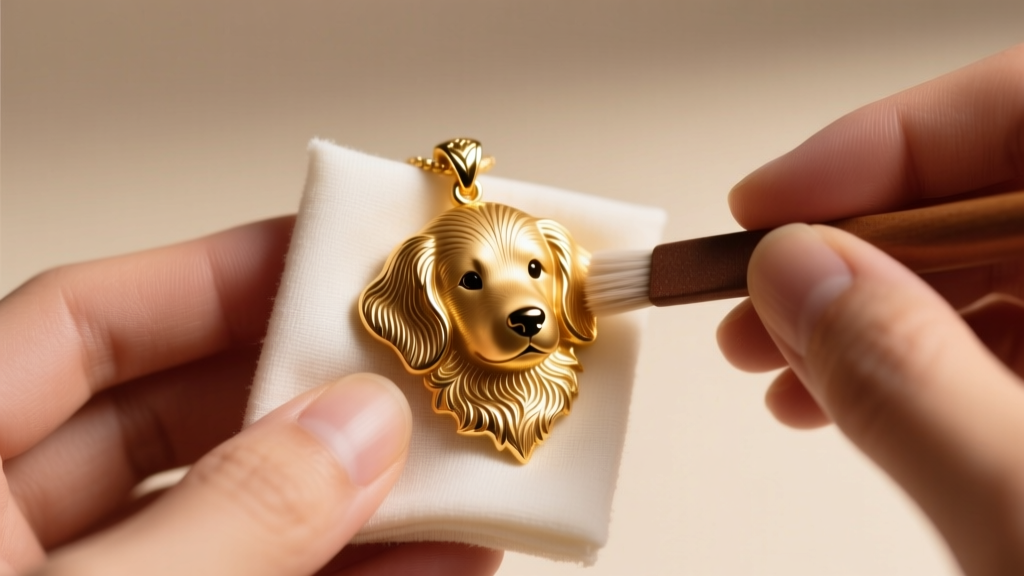
Step-by-Step Deep Cleaning Routine
For a thorough monthly deep clean that removes embedded pet oils and environmental grime, follow this expert-approved methodology:
- The Soak: Fill a small ceramic bowl with lukewarm water and three drops of pH-neutral liquid dish soap. Submerge your puppy dog necklace and let it soak for exactly 5 to 7 minutes. This loosens hardened sebum and dander without compromising the metal.
- The Agitation: Using an extra-soft, baby-bristle toothbrush, gently sweep the bristles across the pendant. Always brush in a single direction to avoid pushing debris deeper into the crevices. Pay special attention to the bail (the loop connecting the pendant to the chain), where friction and dirt accumulate heavily.
- The Rinse: Rinse the necklace under a gentle stream of lukewarm distilled water. Distilled water is preferred over tap water, as it lacks the chlorine and heavy minerals that can leave microscopic water spots on polished metals.
- The Dry: Do not air dry. Lay the necklace flat on a clean paper towel and use a microfiber cloth to pat it completely dry. Ensure no moisture remains trapped in the clasp mechanism.
Chain and Clasp Maintenance: Dealing with Pet Hair
The chain of a puppy dog necklace often suffers more abuse than the pendant itself. Cable chains, rolo chains, and box chains are notorious for catching and wrapping stray dog hairs. When hair becomes tightly wound around a jump ring or trapped inside a lobster clasp, it can prevent the mechanism from closing securely, leading to lost jewelry.
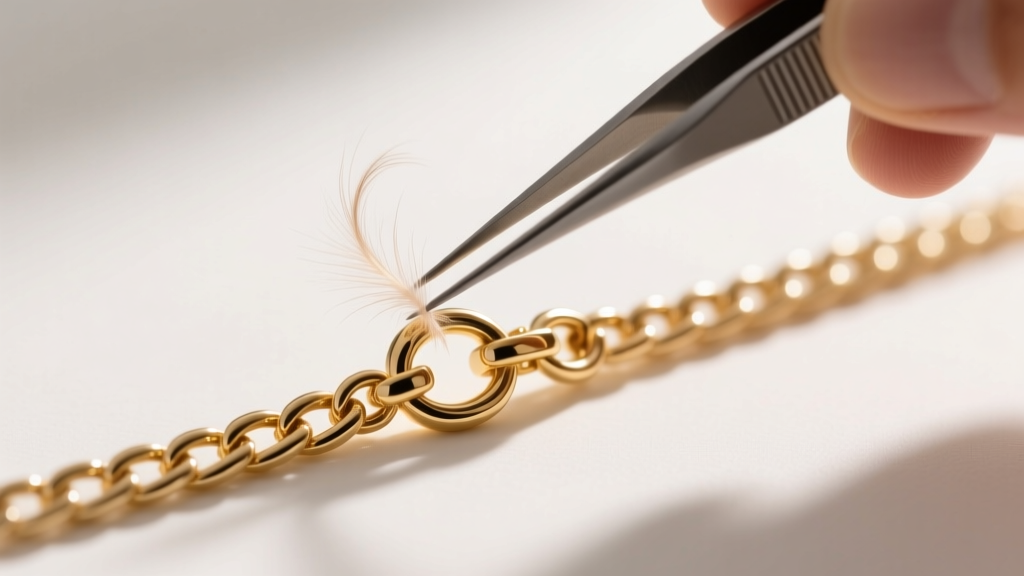
Extraction Technique: Never pull wet hair out of a chain, as it will snap and leave fragments behind. Wait until the chain is completely dry. Use a pair of fine-tipped, non-magnetic tweezers and a magnifying glass to carefully unspool the hair from the links. If the hair is stubbornly knotted inside the clasp spring, apply a microscopic drop of mineral oil using a sewing pin to lubricate the hinge, then gently work the lever back and forth until the hair releases.
The American Gem Society recommends having your jewelry clasps and jump rings professionally inspected every six months. For pet owners who frequently play tug-of-war or wrestle with their dogs while wearing their necklaces, this inspection interval should be reduced to every three months to check for metal fatigue and micro-fractures in the solder joints.
What to Avoid: Common Cleaning Mistakes
Well-intentioned cleaning attempts can cause irreversible damage to your puppy dog necklace. Review the table below to ensure you are not inadvertently destroying your jewelry.
| Cleaning Agent / Method | Material Impact | Verdict |
|---|---|---|
| Ultrasonic Cleaners | Strips gold vermeil; shatters porous gemstones; loosens enamel settings. | Avoid Completely |
| Baking Soda & Aluminum Foil | Removes tarnish but strips intentional oxidation (dark details on the puppy). | Use with Extreme Caution |
| Chlorine / Bleach | Causes catastrophic stress-corrosion cracking in sterling silver and gold alloys. | Avoid Completely |
| Commercial Silver Dips | Highly acidic; leaves microscopic pores in the silver, accelerating future tarnish. | Avoid for Detailed Pendants |
| Mild Dish Soap & Microfiber | Safe for all metals, gemstones, and enamel types; effectively lifts pet oils. | Highly Recommended |
Safe Storage Solutions for Pet Owners
Proper storage is the final pillar of jewelry maintenance. When you take off your puppy dog necklace, do not simply toss it onto a nightstand where it can be exposed to airborne dander or accidental knocks. Store the necklace in an airtight, anti-tarnish ziplock bag or a lined jewelry box equipped with 3M anti-tarnish strips. These strips absorb the sulfur compounds in the air, drastically slowing the oxidation process.
Crucially, pet owners must consider the physical safety of their jewelry. Teething puppies and curious cats are highly attracted to the metallic smell and dangling chains of necklaces. A single chew from a puppy can crush a delicate sterling silver pendant and destroy the chain links. Always store your puppy dog necklace in a closed drawer or on a high shelf, entirely out of reach of your pets. By combining mindful wearing habits with these rigorous, material-specific cleaning protocols, your puppy dog necklace will remain a brilliant, lasting tribute to your canine companion for decades to come.


