Chainsaw Man Necklace Value Guide: Materials & Pricing
Discover how to evaluate a Chainsaw Man necklace for true value. We compare materials, pricing tiers, and durability for anime jewelry collectors.

The Anime Jewelry Market: Hype vs. Actual Value
When it comes to anime merchandise, jewelry often occupies a strange middle ground between collectible art and disposable fast fashion. The release of the MAPPA-animated series triggered a massive influx of merchandise, and the chainsaw man necklace quickly became one of the most sought-after accessories for fans. However, the secondary market is currently saturated with low-quality dropshipped items disguised as premium collectibles. As a jewelry analyst, I frequently see fans overpaying for base metals that degrade within weeks, causing skin irritation and mechanical failure.
This guide provides a strict budget and value assessment for anime jewelry collectors. We will bypass the marketing fluff and evaluate the metallurgical composition, mechanical integrity, and enamel techniques used in modern anime pendants, ensuring you know exactly what you are paying for.
Material Breakdown: What Are You Actually Paying For?
The core value of any pendant lies in its metallurgical composition. The market is currently divided into three distinct material tiers, each with vastly different production costs and longevity profiles.
Zinc Alloy (Zamak) vs. 316L Surgical Steel
The vast majority of budget anime necklaces priced under $15 are cast from Zamak (a zinc alloy containing aluminum, magnesium, and copper). While Zamak allows for highly detailed, complex 3D molds—perfect for capturing Pochita’s facial features—it is inherently unstable. To make it look like silver or gold, manufacturers apply a microscopic flash plating of nickel or silver. Once this plating wears off (usually within 3 to 6 weeks of daily wear), the exposed zinc reacts with sweat and oxygen, resulting in a chalky white oxidation and frequent contact dermatitis.
In contrast, a high-value budget option utilizes 316L surgical stainless steel. The addition of molybdenum in 316L steel provides exceptional resistance to chloride corrosion, meaning it will not tarnish, rust, or turn your skin green, even when exposed to daily sweat and humidity. A genuine 316L steel chainsaw man necklace should weigh between 18 and 25 grams and possess a distinct, cool-to-the-touch thermal conductivity that cheap alloy lacks.
925 Sterling Silver & Hallmark Verification
For collectors seeking heirloom-quality anime jewelry, 925 sterling silver is the benchmark. According to the Gemological Institute of America (GIA), genuine sterling silver must contain exactly 92.5% pure silver and 7.5% alloy metals (usually copper) for structural integrity. When evaluating a premium silver Pochita or Denji pendant, always look for the laser-engraved '925' or 'S925' hallmark on the bail or the back of the pendant. If the hallmark is merely painted on or missing entirely, you are likely looking at silver-plated brass, which holds virtually no long-term intrinsic value.
The Ripcord Pendant: Mechanical Failure Modes
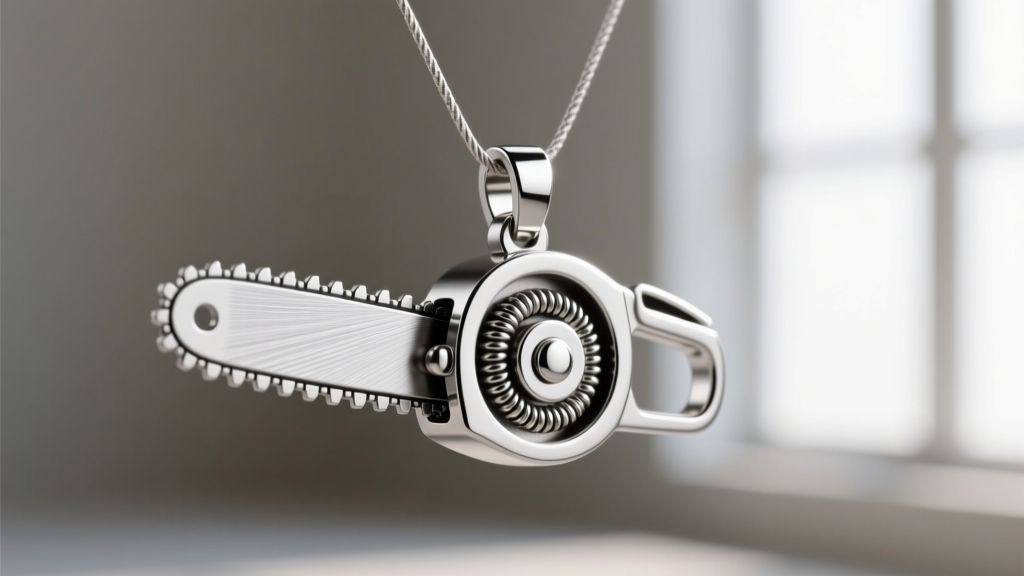
Perhaps the most iconic piece of merchandise is the replica of Denji’s chest ripcord. However, translating a functional mechanical pull-cord into a wearable necklace introduces significant engineering challenges that separate high-value artisans from mass-produced junk.
- The Spring Mechanism: Budget ripcord necklaces use cheap brass or plastic internal tension springs. These suffer from metal fatigue and typically snap after 15 to 20 pulls. High-end replicas utilize reinforced carbon steel tension springs housed in a CNC-machined steel barrel, rated for thousands of cycles.
- The O-Ring Gasket: The friction seal that keeps the ripcord from sliding out of the housing is usually a rubber O-ring. In cheap versions, this rubber dries out and cracks within months. Premium versions use silicone or Viton gaskets, which resist degradation from skin oils and UV exposure.
- The Chain Attachment: A critical failure point is the jump ring connecting the heavy steel barrel to the chain. Value assessment dictates that this jump ring must be soldered shut or constructed as a seamless welded loop; otherwise, the weight of the pendant will inevitably pry the ring open, resulting in a lost necklace.
Enamel Techniques: Cold Epoxy vs. Vitreous Glass
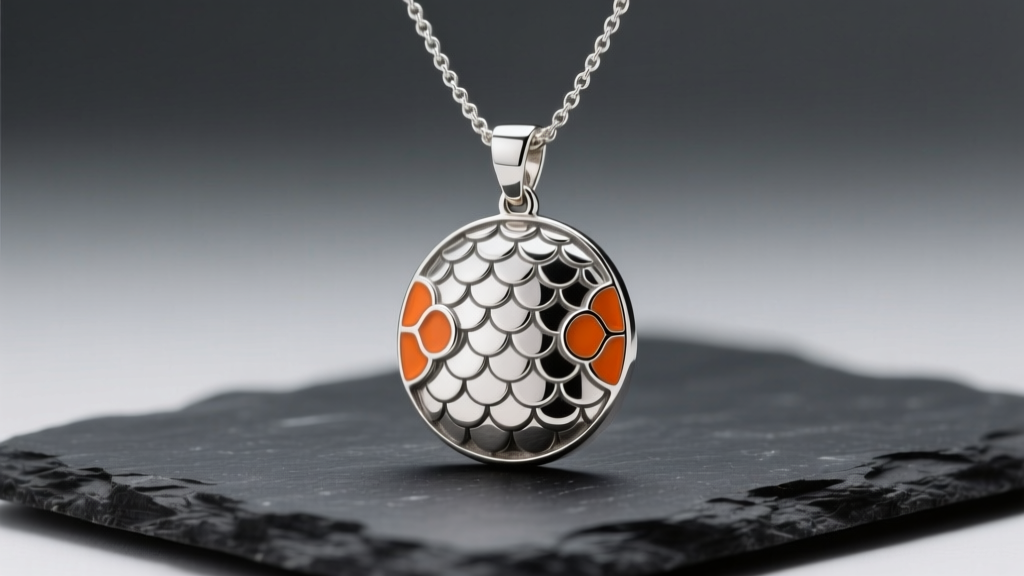
Pochita’s vibrant orange and black color blocking requires enamel work. The method used to apply this color drastically impacts both the visual depth and the durability of the piece.
Expert Insight: Cold enamel is essentially a two-part epoxy resin poured into metal recesses and cured with UV light. It is cheap, sits slightly above the metal line, and will yellow or chip over time. Vitreous enamel, however, is powdered glass fused to the metal at 800°C. It sits flush with the metal, possesses a glass-like luster, and is virtually impervious to fading.
When assessing the value of an enameled chainsaw man necklace, run your fingernail across the surface. If you feel a distinct ridge where the color meets the metal, it is cold enamel (lower value). If the transition is perfectly flush and smooth, it is vitreous enamel or high-grade hardened resin, commanding a higher price but offering vastly superior longevity.
Value Assessment Matrix & Pricing Tiers
To help you navigate the market, I have compiled a pricing and value matrix based on current secondary market data and direct artisan pricing. Use this chart to determine if a listing is fairly priced or artificially inflated.
| Tier | Primary Material | Enamel Type | Price Range (USD) | Durability | Value Verdict |
|---|---|---|---|---|---|
| Dropship / Budget | Zamak (Zinc Alloy) | Cold Epoxy (Resin) | $8 - $18 | Poor (Tarnishes, breaks easily) | Avoid for daily wear; okay for display only. |
| Mid-Tier / Fan Artisan | 316L Surgical Steel | Hardened Enamel | $25 - $55 | Excellent (Corrosion-proof) | Best value for everyday cosplay and streetwear. |
| Premium / Licensed | 925 Sterling Silver | Vitreous / Cloisonné | $85 - $160+ | Superior (Heirloom quality) | High intrinsic value; best for serious collectors. |
Sourcing: Licensed Merch vs. Independent Artisans
Where you buy your chainsaw man necklace is just as critical as what it is made of. Official merchandise produced by licensing partners (like MAPPA or Shueisha) guarantees design accuracy but often relies on mass-production techniques like zinc casting to keep retail prices accessible. While these are great for supporting the original creators, they do not always represent the pinnacle of jewelry craftsmanship.
Conversely, independent jewelry artisans on platforms like Etsy or specialized anime jewelry boutiques often charge a premium ($40-$70) for 316L steel or solid silver pieces. These artisans use lost-wax casting and hand-polishing techniques that result in sharper details, smoother bail loops, and superior chain pairings (such as 2.5mm cubic zirconia or rope chains, rather than the flimsy 1mm cable chains included with official budget merch). If your primary goal is a piece of jewelry that functions as a high-quality fashion accessory rather than just a piece of plasticized memorabilia, independent metalworkers offer a vastly superior return on investment.
Final Verdict: Maximizing Your Budget
The market for anime-inspired jewelry is vast, but true value requires looking past the character design and scrutinizing the physical construction. If you are buying a chainsaw man necklace strictly as a temporary convention accessory, a $12 zinc alloy pendant will suffice. However, if you intend to wear this piece as a staple of your daily wardrobe, bypass the alloy entirely. Allocate a budget of at least $35 to $50 for a 316L surgical steel pendant with hardened enamel, or invest $100+ in a hallmarked 925 sterling silver piece. By prioritizing metallurgical integrity and mechanical soundness over cheap hype, you secure a piece of fandom history that will actually survive the test of time.


