Gold Coin Necklaces: 2026 Trend Forecast & Styling Guide
Discover the 2026 trend forecast for gold coin necklaces. Explore motif analysis, karat comparisons, layering matrices, and expert styling advice.

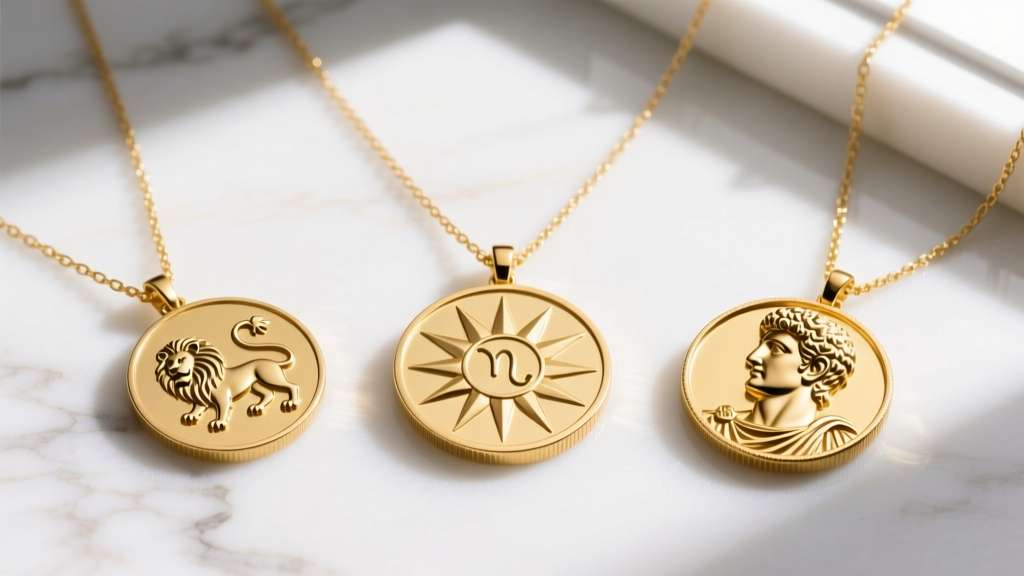
The jewelry landscape of 2026 has decisively shifted away from the ultra-minimalist, barely-there pendants of the early 2020s. In their place, gold coin necklaces have emerged as the definitive statement of personal narrative and talismanic styling. No longer relegated to vintage shops or inherited trinket boxes, the modern coin pendant is a masterclass in wearable art, blending historical weight with contemporary metallurgy. Whether you are drawn to the mystique of zodiac engravings, the historical gravity of Greco-Roman replicas, or the brutalist appeal of hammered abstract discs, understanding the technical and stylistic nuances of these pieces is essential for any serious collector or style enthusiast.
In this comprehensive trend analysis, we decode the anatomy of the perfect gold coin necklace, explore the dominant motifs shaping 2026, and provide a structural matrix for layering without the dreaded chain tangle.
The 2026 Resurgence: Why Gold Coin Necklaces Are Dominating
The resurgence of gold coin necklaces is deeply tied to the broader cultural pivot toward 'talismanic jewelry.' Consumers are no longer just buying accessories; they are investing in amulets that project identity, protection, and personal philosophy. According to industry analysts, the demand for narrative-driven jewelry has outpaced generic geometric pendants by over 40% in the luxury sector this year.
Furthermore, advancements in CAD (Computer-Aided Design) and precision laser engraving have allowed independent jewelers to recreate museum-grade ancient coin replicas with microscopic accuracy, making high-horology-level detail accessible in everyday necklaces. The coin pendant acts as a focal point—a heavy, light-catching anchor that grounds an entire outfit, whether paired with a structured blazer or a relaxed cashmere knit.
Decoding the Anatomy: Karats, Chains, and Clasps
A gold coin pendant is only as good as the chain that supports it. The physics of a coin necklace differ vastly from a standard gemstone drop. A solid 25mm coin pendant can weigh anywhere from 8 to 14 grams. This concentrated, swinging weight creates dynamic stress on the chain, particularly at the bail and the clasp.
Karat Selection and Hardness
Choosing the right gold purity is a balance between color saturation and structural integrity. The Gemological Institute of America (GIA) notes that as gold purity increases, so does its malleability and susceptibility to scratching.
| Karat | Gold Content | Vickers Hardness (Approx) | Best Use Case for Coins | Price Tier |
|---|---|---|---|---|
| 14k Gold | 58.3% | 130-160 HV | Everyday wear; highly resistant to bending and bail friction. | $$$ |
| 18k Gold | 75.0% | 110-130 HV | Rich, buttery color; ideal for special occasion pieces and heirlooms. | $$$$ |
| 22k Gold | 91.6% | 70-90 HV | Historical replicas and investment pieces; requires thick, protective bezels. | $$$$$ |
Chain Gauge and Tensile Strength
Never pair a heavy coin pendant with a delicate 0.9mm cable chain. The friction from the coin's bail will act like a saw, eventually cutting through the soft gold links. For coins weighing over 8 grams, opt for a 1.5mm to 2.0mm Rolo, Box, or Wheat chain. These weaves distribute the kinetic energy of the swinging pendant more evenly. Always ensure the jump ring connecting the clasp is soldered shut rather than simply pinched closed, preventing catastrophic chain failure.
Motif Analysis: From Ancient Replicas to Modern Zodiacs
The aesthetic direction of gold coin necklaces in 2026 can be categorized into three distinct stylistic pillars, each appealing to a different facet of modern personal style.
1. The Antiquarian Replicas
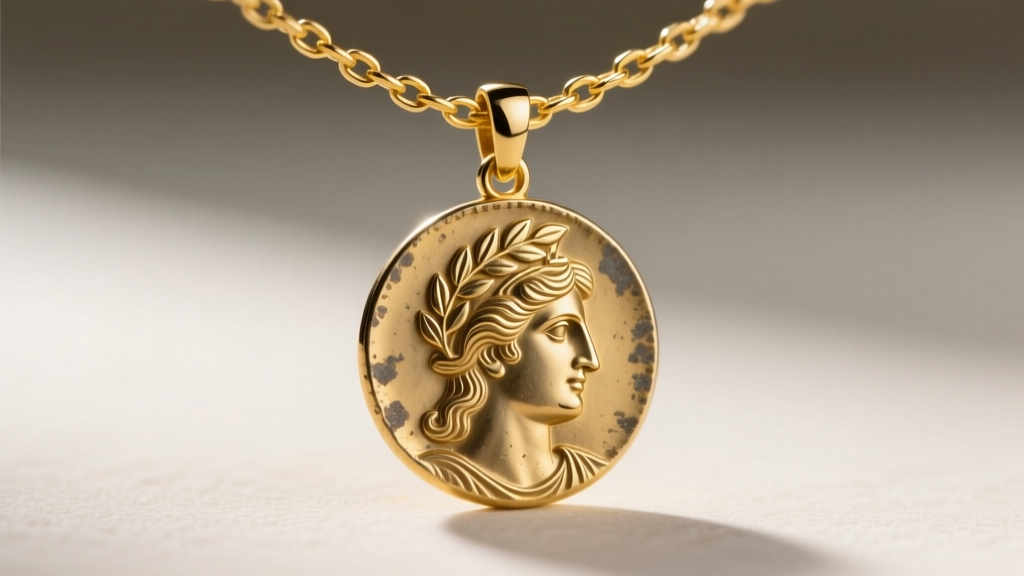
Leading the trend are hyper-detailed replicas of ancient Athenian owls, Roman denarii featuring Emperor Augustus, and Byzantine solidi. These pieces are often struck using traditional lost-wax casting and finished with hand-applied patinas to highlight the relief work. They appeal to the 'dark academia' and classicist aesthetics, offering a sense of permanence and historical weight.
2. The Celestial and Tarot Talismans
Zodiac coins and Tarot motifs (The Sun, The Star, The Moon) remain incredibly strong, but the 2026 iteration has moved away from flat, minimalist line engravings. Today's celestial coins feature deep, oxidized recesses, milgrain borders, and occasionally, flush-set diamond or sapphire accents to represent stars. They are deeply personal, often purchased as milestone gifts or self-purchased markers of astrological identity.
3. Brutalist and Abstract Discs
For the avant-garde minimalist, the 'coin' is deconstructed. These pieces feature hammered textures, asymmetric edges, and raw, unpolished finishes. They mimic the look of unearthed, degraded metal, offering an organic, sculptural vibe that pairs perfectly with modern, architectural fashion.
The Layering Matrix: How to Stack Coin Pendants
Layering multiple gold coin necklaces is a hallmark of current styling, but it presents a mechanical challenge: coins tangle. When multiple pendants slide along chains of similar textures, they knot at the clasp. To achieve a flawless, tangle-free stack, you must manipulate length, scale, and chain texture.
Expert Rule of Thumb: Never layer two chains of the exact same weave and gauge. The uniform friction coefficients will cause them to twist together instantly.
- The Base Layer (16-17 inches): Use a 1.5mm Snake or Herringbone chain. These flat, fluid chains lay flush against the collarbone and resist tangling. Pair with a small, lightweight 12mm coin (like a simple initial or tiny star).
- The Anchor Layer (18-20 inches): Use a 1.5mm Rolo or Box chain. The open links provide a different friction profile. This is where your primary 20mm-25mm statement coin lives (e.g., a zodiac or Roman replica).
- The Statement Layer (22-24 inches): Use a 2.0mm Rope or Wheat chain. The twisted texture catches the light and prevents the heavy chain from slipping through the bail too quickly. Suspend a large, 30mm+ medallion or a heavy, textured brutalist disc here.

Investment vs. Fashion: Pricing Tiers and Authenticity
When shopping for gold coin necklaces, understanding the terminology of gold plating and solid construction is vital to avoid overpaying for costume jewelry disguised as fine jewelry.
Vermeil and Heavy Gold Electroplate
For fashion-forward buyers, gold vermeil is the standard. However, not all vermeil is created equal. According to the FTC Jewelry Guides, true vermeil must consist of a sterling silver base plated with a minimum of 2.5 microns of gold (usually 14k or 18k). In 2026, premium brands are pushing this to 3.0 or 4.0 microns to increase the lifespan of the piece. Expect to pay between $90 and $250 for a high-quality vermeil coin necklace. Avoid 'gold-plated brass' if you have sensitive skin, as the copper and nickel alloys will cause rapid tarnishing and dermatitis.
Solid Gold Construction
Solid 14k or 18k gold coin necklaces are heirloom investments. Pricing is dictated by the gram weight of both the chain and the pendant. A solid 14k gold coin necklace with a 1.5mm chain and a 10-gram pendant will typically range from $800 to $1,600, depending on the brand's craftsmanship premium and the complexity of the engraving. Always look for the '14k' or '585' hallmark stamped near the clasp and, if applicable, on the bail of the pendant.
Care and Maintenance: Preventing Bail Friction and Metal Fatigue
The most common point of failure in a gold coin necklace is not the chain itself, but the bail—the loop at the top of the coin that connects it to the chain. Because coins are heavy and swing with every movement, the bail rubs continuously against the chain links.
Preventative Maintenance Steps:
- The Paperclip Test: Once a month, run a straightened paperclip through the bail of your coin pendant. If it catches on a groove or feels sharp, the metal is wearing thin and needs to be reinforced by a jeweler before it snaps.
- Ultrasonic Caution: Never put antiquarian replica coins with applied patinas or oxidized detailing into an ultrasonic cleaner. The high-frequency vibrations will strip the intentional darkening from the engravings, leaving the coin looking flat and washed out.
- Storage Protocol: Always store your coin necklaces hanging up, or laid perfectly flat in a velvet-lined box. Tossing a heavy coin pendant into a jewelry box will inevitably result in crushed chain links and deep scratches on the coin's relief.
By treating your gold coin necklace not just as an accessory, but as a mechanical system of weight, friction, and metallurgy, you ensure that your talismanic jewelry remains a staple of your wardrobe for decades to come. The 2026 trend is not just about wearing a coin; it is about wearing a piece of enduring, meticulously crafted history.


