Silver and Diamond Heart Necklace: A Technical Buying Guide
An expert technical guide to buying a silver and diamond heart necklace, covering sterling grades, melee diamond clarity, and setting durability.

The Metallurgy of Silver: Sterling vs. Argentium vs. Plated
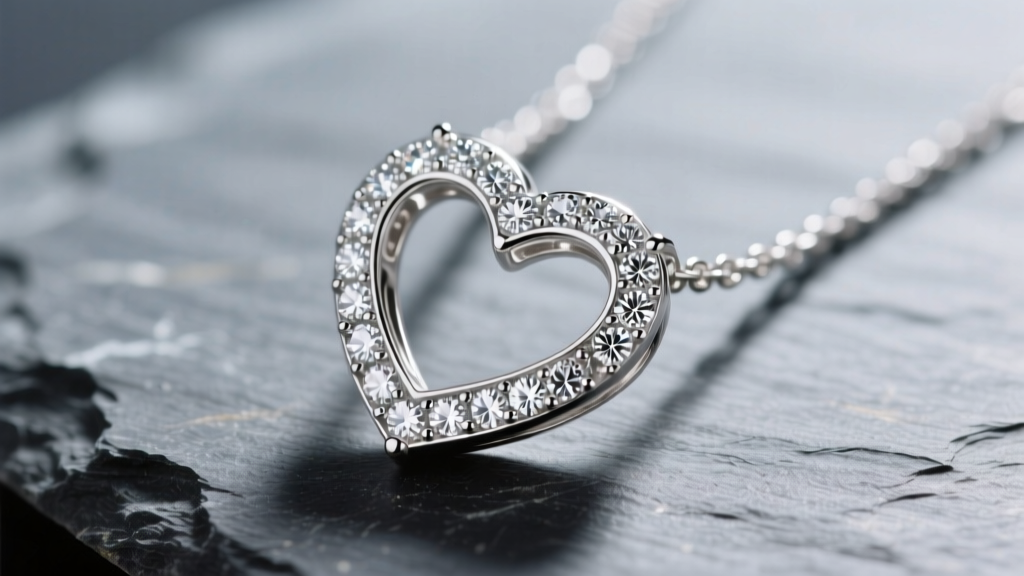
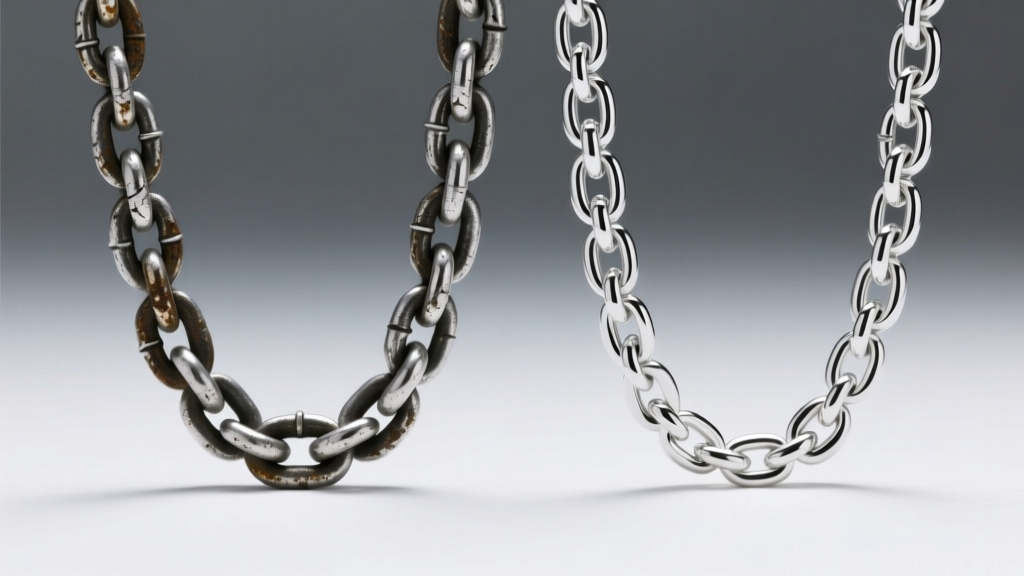
When evaluating a silver and diamond heart necklace, the foundational integrity of the piece begins with its metallurgical composition. The vast majority of fine jewelry is crafted from 925 Sterling Silver, an alloy consisting of 92.5% pure silver and 7.5% copper. While the copper provides necessary structural hardness, it is also the primary catalyst for oxidation. When exposed to atmospheric sulfur compounds, the copper reacts to form copper sulfide, manifesting as the black tarnish commonly seen on neglected silver jewelry.
For buyers seeking superior tarnish resistance without stepping into white gold territory, Argentium Silver is the premier technical upgrade. Argentium replaces a portion of the copper alloy with germanium. When exposed to oxygen, the germanium forms a transparent, self-healing layer of germanium dioxide on the surface, effectively blocking sulfur from reaching the copper. According to the GIA's comprehensive guide on silver alloys, Argentium is highly recommended for pieces that are difficult to polish, such as intricate pavé heart pendants where polishing compounds can become trapped beneath the diamonds.
Rhodium Plating Thickness and Longevity
To combat tarnish in standard 925 sterling silver, manufacturers frequently apply a rhodium flash. Rhodium, a platinum-group metal, provides a brilliant, untarnishable white finish. However, not all plating is created equal. A standard commercial "flash" plating is often a mere 0.1 to 0.25 microns thick, which will wear through to the underlying silver within months of daily friction. For a high-quality silver and diamond heart necklace intended for daily wear, you must look for a heavy electroplated rhodium layer measuring between 0.75 and 1.0 microns. This thickness ensures the barrier remains intact for years, protecting the copper alloy beneath from oxidizing.
Decoding Melee Diamonds in Heart Pendants
The visual impact of a silver and diamond heart necklace relies heavily on the quality of its melee diamonds. The Gemological Institute of America (GIA) defines melee as small diamonds, typically weighing less than 0.15 carats each, which are used to surround a center stone or create pavé designs. Because heart pendants in silver rarely feature large, expensive center stones, the overall brilliance of the piece is entirely dependent on the cut and clarity of these tiny accents.
Single Cut vs. Full Cut Melee
A critical technical distinction in the melee market is the facet count. "Single cut" melee diamonds possess only 17 or 18 facets. They are cheaper to produce and are often used in low-tier commercial silver jewelry. "Full cut" melee, however, features the standard 57 or 58 facets of a larger brilliant-cut diamond. Even in stones as small as 0.02 carats, full cut melee dramatically outperforms single cut in light return and scintillation. When inspecting a silver heart pendant, use a 10x jeweler's loupe to count the star and bezel facets; if the stone looks flat or glassy, it is likely single cut.
Clarity Grades and Structural Risks
Diamond clarity in silver jewelry typically ranges from SI1 (Slightly Included) to I3 (Included). While inclusions are less visible to the naked eye in tiny melee stones, they pose a severe structural risk. An I2 or I3 clarity diamond contains fractures that reach the surface. Because silver is a relatively soft metal, the prongs must be pushed tightly against the stone to secure it. If a setter applies too much pressure to an I3 diamond, the stone will cleave along its internal fracture lines. Therefore, always insist on SI1 or SI2 clarity melee for pavé silver settings to ensure the stones can withstand the mechanical pressure of the setting process.
| Specification | Commercial Grade (Avoid) | Fine Jewelry Grade (Recommended) |
|---|---|---|
| Cut Style | Single Cut (17-18 facets) | Full Cut (57-58 facets) |
| Clarity | I1 - I3 (Visible fractures) | SI1 - SI2 (Eye-clean, structurally sound) |
| Color | K - M (Faint yellow/brown) | G - J (Near colorless) |
| Diameter (approx.) | 0.8mm - 1.0mm (0.005ct) | 1.3mm - 1.7mm (0.01ct - 0.02ct) |
Setting Mechanics: The Vickers Hardness Problem
The most common failure point in a silver and diamond heart necklace is not the chain, but the setting. To understand why, we must look at the Vickers Hardness (HV) scale. Pure silver has a hardness of roughly 25 HV. 925 Sterling Silver is work-hardened to approximately 65 HV. By comparison, 14k white gold sits around 130 HV, and platinum is roughly 135 HV. This means silver prongs are exceptionally soft and highly susceptible to pulling back when snagged on clothing or towels.
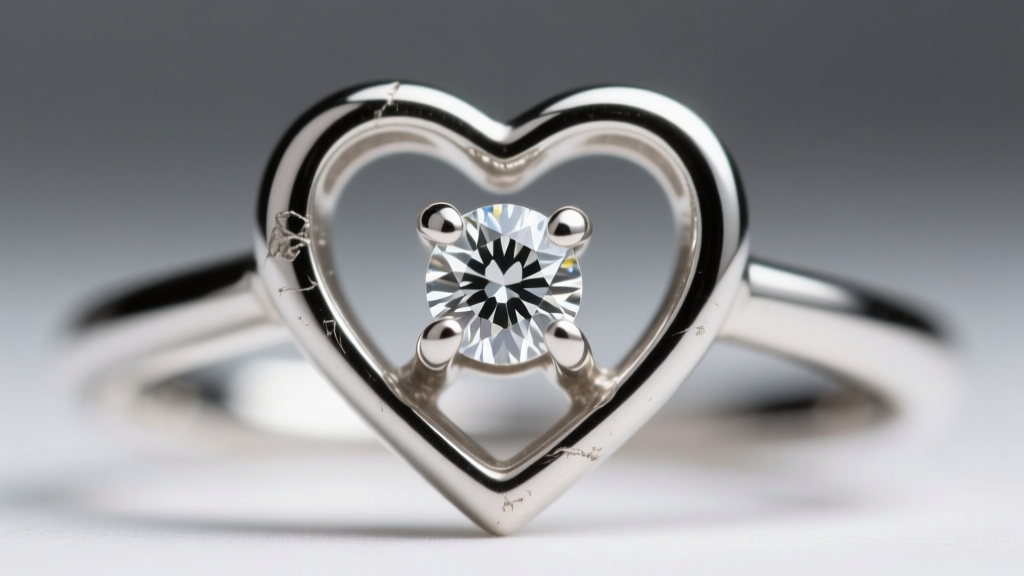
Because of this inherent softness, traditional four-prong or six-prong settings are technically inferior for silver pavé jewelry. Over time, the friction of daily wear will literally erode the silver prong tips, leading to catastrophic stone loss. For a silver heart pendant, bezel settings or channel settings are vastly superior from an engineering standpoint. A bezel setting completely encircles the diamond's girdle with a continuous rim of silver, distributing the mechanical stress and eliminating the risk of a single bent prong dropping a stone. If you must choose a prong-set silver heart pendant, ensure the prongs are double-galleried (supported by an underlying structural wire) to increase their rigidity.
Chain Tensile Strength and Jump Ring Integrity
A 5-gram silver heart pendant exerts a constant kinetic load on its chain, particularly at the point of connection. The weakest link in almost any necklace is the soldered jump ring that connects the pendant bail to the chain. In mass-produced silver jewelry, jump rings are often machine-stamped and poorly soldered, leaving a microscopic gap that will pull apart under a mere 2 to 3 pounds of tensile force.
When selecting a chain to support a diamond heart pendant, avoid delicate cable chains under 0.9mm in thickness. Instead, opt for a Box chain or a Wheat chain. Box chains, constructed from interlocking square links, offer superior structural rigidity and distribute the pendant's weight more evenly across the collarbone. Furthermore, ensure the pendant's bail (the loop that slides over the chain) is lined with a hard metal insert or features a rhodium-plated interior to prevent the silver-on-silver friction from wearing a groove through the chain links over time.
Maintenance Protocols and Ultrasonic Risks
Cleaning a silver and diamond heart necklace requires specific chemical and mechanical protocols. Many consumers mistakenly use ultrasonic cleaners to remove lotion and sebum buildup from pavé diamonds. This is a critical error when dealing with silver jewelry. The high-frequency acoustic cavitation generated by an ultrasonic cleaner can easily vibrate soft silver prongs loose, causing the melee diamonds to fall out into the cleaning tank.
Instead, utilize a chemical or gentle mechanical approach. For tarnish removal on un-plated 925 sterling silver, a thiourea-based dip will chemically reverse copper sulfide oxidation without abrasive scrubbing. However, thiourea is toxic and must be rinsed thoroughly. For routine cleaning of rhodium-plated silver heart pendants, a simple solution of warm water, a few drops of degreasing dish soap, and a soft-bristled baby toothbrush is the safest method. Brush gently from the back of the pendant (the pavilion side of the diamonds) outward to push dirt away from the settings, ensuring the silver and diamond heart necklace maintains its optical brilliance and structural integrity for decades.
"The longevity of pavé diamond jewelry is dictated not by the hardness of the stones, but by the tensile strength and wear-resistance of the metal securing them. In silver, setting design must compensate for the alloy's inherent softness."
— Principles of Jewelry Manufacturing and Metallurgy


