How to Tie Knots for Necklaces Adjustable Cords That Won't Slip
Learn the best knots for necklaces adjustable cords. Troubleshoot slipping, fraying, and bulky sliding knots with expert cord and friction tips.

The Physics of Friction: Why Adjustable Knots Fail
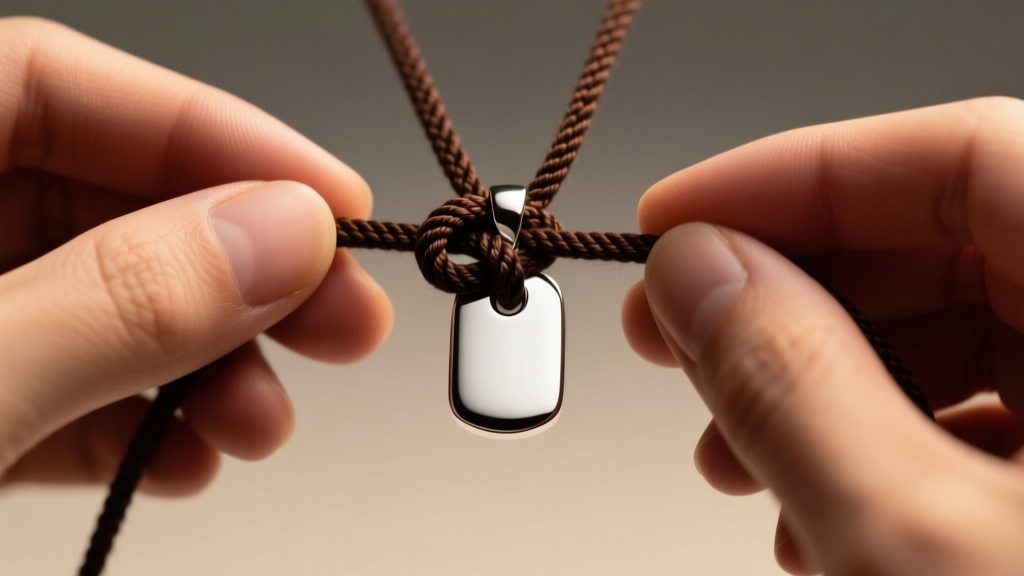
Adjustable necklaces are a staple in modern jewelry design, offering versatility and a custom fit without the need for clasps. However, the most common complaint among jewelers and wearers alike is the dreaded 'slip'—when the sliding knot loses its grip, causing the pendant to drop to the lowest point of the cord. To master knots for necklaces adjustable mechanisms, we must first understand the physics of cord friction.
A successful sliding knot relies on the differential between static and kinetic friction. When the necklace is resting on your chest, the static friction of the knot must exceed the gravitational pull of the pendant. When you intentionally pull the cord to adjust the length, you apply a kinetic force that temporarily overcomes this grip. Problems arise when the cord material degrades, stretches, or loses its surface texture, causing the static friction coefficient to plummet.
According to technical guides from Ganoksin, the leading jewelry-making network, using the wrong cord for a specific knot is the primary cause of failure. For instance, natural silk (like Griffin No. 8) is beautiful but stretches under the weight of heavy pendants, thinning the cord and reducing the friction surface area inside the knot. Conversely, synthetic cords like S-Lon nylon are incredibly strong but possess a naturally slick surface that requires specific knot structures to maintain grip.
Top 3 Knots for Necklaces Adjustable Cords
Not all sliding knots are created equal. The structure you choose must match the diameter and material of your cord. Here are the three most reliable knots for necklaces adjustable designs, ranked by their specific use cases.
1. The Double Macramé Sliding Knot (Best for Heavy Pendants)
The macramé sliding knot is the gold standard for waxed cotton and hemp cords ranging from 0.8mm to 1.5mm in diameter. It creates a cylindrical, bead-like knot that provides maximum surface area for friction.
- Step 1: Overlap the two ends of your cord by about 4 inches.
- Step 2: Take the right cord and wrap it tightly around both the left cord and itself, moving toward the left. Make exactly 4 to 6 wraps. Fewer wraps will slip; more wraps will make the knot too bulky to slide smoothly.
- Step 3: Pass the tail of the right cord through the loop created at the start of your wraps.
- Step 4: Pull the tail and the main cord in opposite directions to seat the knot tightly. Repeat the entire process on the opposite side with the left cord.
Pro Tip: If using a heavy gemstone pendant (over 30 grams), increase the wraps to 8 and apply a microscopic drop of flexible jewelry adhesive to the very tip of the tail to prevent unraveling without freezing the sliding mechanism.
2. The Snake Knot (Best for Thin, Sleek Cords)
When working with delicate 0.5mm to 0.8mm nylon or Chinese knotting cord, a bulky macramé knot looks disproportionate. The snake knot offers a sleek, interlocking profile that grips thin synthetic cords beautifully.
- Step 1: Cross the right cord over the left to form a simple 'X'.
- Step 2: Take the right cord and loop it under the left cord, then bring it up and through the top loop of the 'X'.
- Step 3: Take the left cord and pass it through the new loop created by the right cord.
- Step 4: Pull both ends slowly and evenly to tighten the interlocking loops into a compact, spherical knot.
3. The Barrel Knot (Best for Leather and Suede)
Flat leather and suede cords do not respond well to complex wrapping knots; they tend to twist and pinch. The barrel knot (a variation of the overhand knot) allows flat materials to roll naturally into a secure, adjustable stopper.
- Step 1: Overlap the leather cords.
- Step 2: Form a loose loop with the top cord, wrapping it around the bottom cord 2 to 3 times.
- Step 3: Pass the tail through the initial loop and pull tight, allowing the flat leather to naturally roll into a barrel shape.
Troubleshooting Matrix: Cord Material vs. Knot Failure
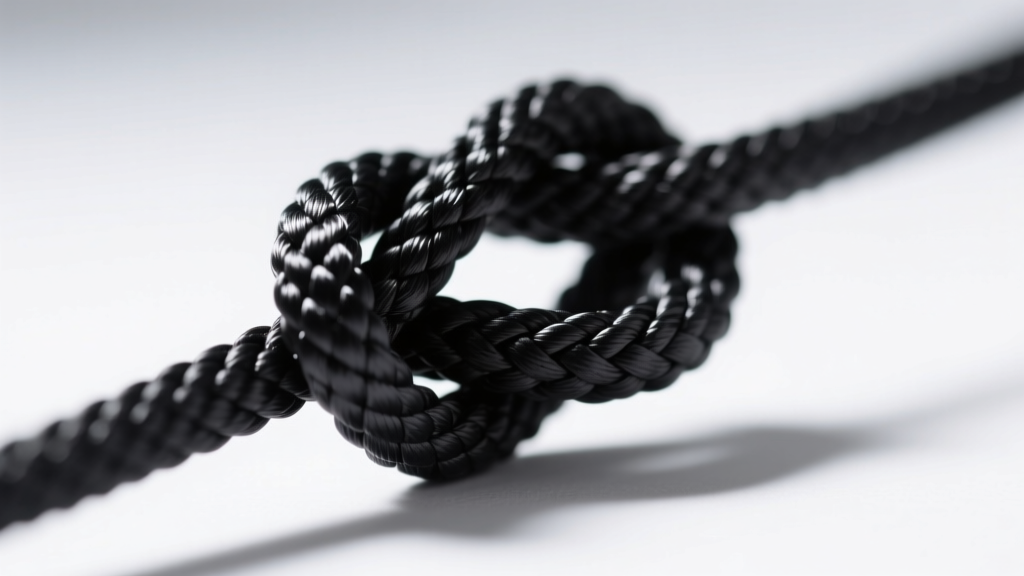
When troubleshooting a slipping necklace, you must diagnose the interaction between the cord material and the knot type. Use the matrix below to identify your failure mode and apply the correct fix.
| Cord Material | Ideal Diameter | Best Knot Type | Common Failure Mode | Expert Solution |
|---|---|---|---|---|
| Waxed Cotton | 0.8mm - 1.2mm | Macramé Sliding | Wax degrades from skin oils, causing slip. | Re-wax the cord annually with microcrystalline wax. |
| Nylon (S-Lon) | 0.5mm - 1.0mm | Snake Knot | Surface is too slick; knot loosens over time. | Use a Thread Zap to melt a micro-bead at the tail end. |
| Silk (Griffin) | 0.6mm - 0.8mm | Barrel Knot | Cord stretches under pendant weight, thinning out. | Avoid silk for heavy pendants; switch to bonded nylon. |
| Flat Leather | 2.0mm - 3.0mm | Barrel / Overhand | Leather twists and pinches, refusing to slide. | Condition leather with mink oil to maintain flexibility. |
Advanced Fixes: Heat, Glue, and Bead Stops
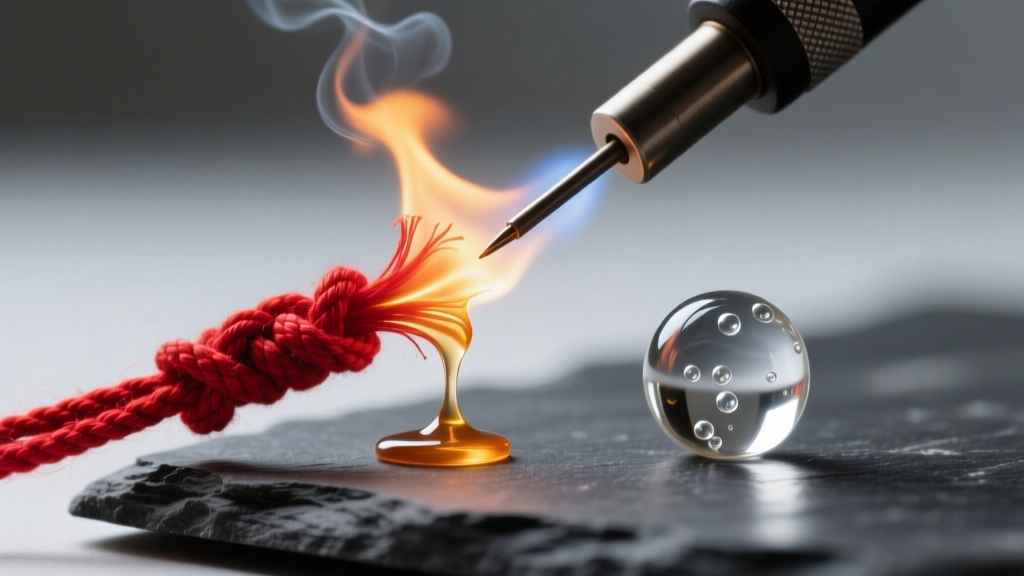
Even with the perfect knot, the tail ends of adjustable cords can fray or catch on clothing. Securing these tails requires precision. Many DIY tutorials suggest using a standard cigarette lighter to melt synthetic cord ends. Do not do this. A lighter flame burns at roughly 1,000°C (1,800°F), which scorches nylon and polyester, leaving a brittle, blackened carbide bead that will eventually snap off and ruin the cord.
Instead, invest in a Thread Zap tool. This battery-operated device uses a controlled micro-filament to melt synthetic cords at their exact thermal threshold (around 260°C for nylon), creating a clean, transparent, and flexible micro-bead that acts as a physical stopper without compromising the cord's structural integrity.
For natural fibers like cotton or hemp that cannot be melted, use G-S Hypo Cement. Unlike super glue (cyanoacrylate), which wicks into the fibers via capillary action and freezes the entire knot solid, G-S Hypo Cement is a medium-viscosity adhesive. Apply a pinpoint drop strictly to the final 2mm of the tail. For a cleaner finish, slide a 2mm metal crimp cover or a small seed bead over the glued tail before it dries, creating a professional 'bead stop' that prevents the knot from pulling apart.
Long-Term Maintenance and Re-Waxing
The longevity of knots for necklaces adjustable designs depends heavily on environmental factors. Sweat, lotions, and perfumes break down the protective coatings on jewelry cords. Waxed cotton, the most popular choice for sliding knots, relies on its wax coating for both water resistance and friction. Over time, this wax wears away, leaving the raw cotton fibers vulnerable to moisture and drastically reducing the static friction required to hold the knot in place.
'A well-made adjustable necklace should be treated like a mechanical tool. The sliding knot is a friction engine; if you don't lubricate and maintain the track, the engine will eventually stall or slip.' — Master Jeweler & Cord Specialist
To maintain your waxed cotton cords, clean them gently with a damp cloth and let them dry completely. Once a year, apply a thin layer of microcrystalline wax (often sold as conservation wax or Renaissance Wax) using a soft toothbrush. Work the wax into the fibers, then use a hairdryer on a low, warm setting to melt the wax evenly into the cord. This restores the cord's water resistance and brings back the critical friction coefficient needed to keep your sliding knots perfectly in place.
For more in-depth material specifications and supplier guides on cord types, consult the Fire Mountain Gems Cording Encyclopedia, which provides exhaustive data on tensile strengths and material compositions for jewelry making.
By matching the correct knot structure to your specific cord material and employing professional finishing techniques, you can completely eliminate the frustration of slipping adjustable necklaces, ensuring your designs remain secure, functional, and elegant for years to come.


