The Ultimate Buying Guide for a Necklace With Sideways Cross
Discover what to look for when buying a necklace with sideways cross pendants. Expert tips on materials, chain gauges, and east-west bail designs.

The Anatomy of an East-West Cross Pendant
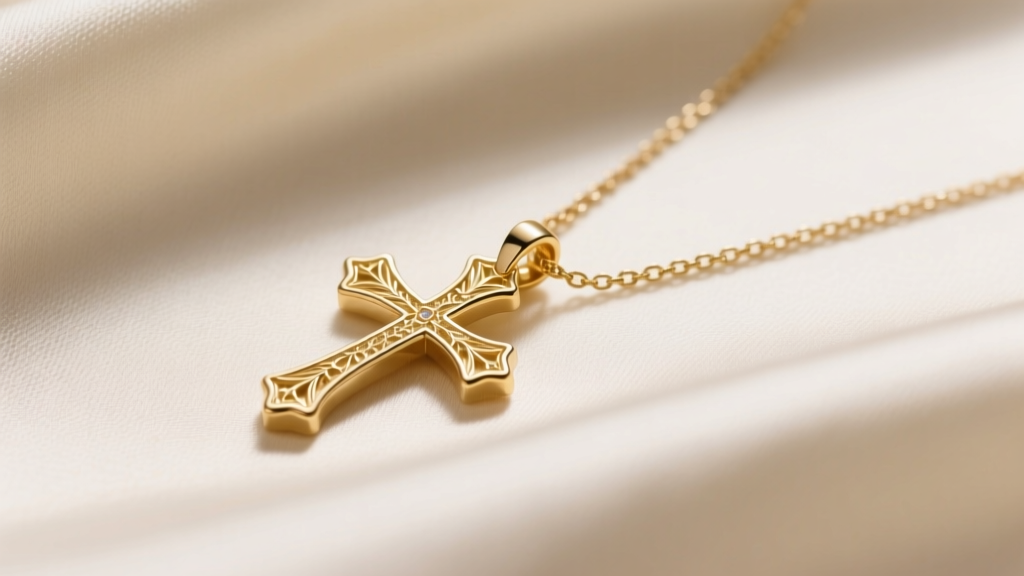
In jewelry design, a sideways cross is formally referred to as an "East-West" pendant. While the aesthetic appeal of a horizontal cross lies in its modern, minimalist disruption of traditional religious iconography, the structural engineering required to make it hang correctly is often overlooked by mass-market retailers. When buying a necklace with sideways cross pendants, the most critical point of failure is the bail—the loop that connects the pendant to the chain.
If a manufacturer simply takes a standard vertical cross and solders a bail to the side arm, the pendant will hang off-center, tilting awkwardly against the collarbone. A properly engineered East-West cross features a bail that is either centered along the top horizontal bar or seamlessly integrated into the side arm with a counter-weighted bottom bar. Always inspect the product photos or CAD designs to ensure the bail is positioned precisely at the pendant's horizontal center of gravity. This ensures the cross remains perfectly level against your chest, rather than flipping or dragging the chain to one side.
Material Grades and Longevity Matrix
The longevity of your necklace depends heavily on the metal alloy. According to the Federal Trade Commission's Jewelry Guides, precious metals must meet strict purity thresholds to carry specific hallmarks. For a piece you intend to wear daily, understanding the Vickers Hardness (HV) and tarnish resistance of your chosen metal is non-negotiable.
| Metal Alloy | Purity | Hardness (Approx) | Tarnish Risk | Best Application |
|---|---|---|---|---|
| 14k Yellow/White Gold | 58.5% | 135 HV | Very Low | Daily wear, high durability, resistant to scratching |
| 18k Yellow Gold | 75.0% | 125 HV | Low | Rich color, fine jewelry, slightly more prone to denting |
| 925 Sterling Silver | 92.5% | 60-70 HV | High | Budget-friendly, requires rhodium plating or frequent polishing |
| 950 Platinum | 95.0% | 110 HV (Work hardens) | None | Heirloom pieces, hypoallergenic, develops a natural patina |
For a sideways cross, which often features sharp, linear edges, 14k gold is generally the superior choice. Its higher alloy content (usually mixed with copper, zinc, or silver) provides the tensile strength needed to keep those sharp geometric corners from rounding off over years of friction against clothing.
Chain Selection: Gauge, Weave, and Durability
The pendant is only half the equation; the chain dictates the overall drape and survival rate of the necklace. A common mistake when buying delicate East-West pendants is pairing them with chains that are either too weak or too visually dominant.
Gauge Thickness and Tensile Strength
For lightweight sideways crosses (under 3 grams), a chain gauge between 0.9mm and 1.2mm is ideal. However, the weave matters more than the thickness. A 1.0mm box chain (composed of square, interlocking links) can support significantly more weight and resist kinking far better than a 1.0mm cable chain (simple oval links). Box chains and rolo chains distribute tension evenly, preventing the microscopic stretching that eventually leads to chain snap.
Clasp Mechanics
Avoid standard spring-ring clasps for chains thicker than 1.5mm. The internal springs in mass-produced spring rings frequently fail, leaving you with a chain that won't stay closed. Opt for a lobster clasp for secure daily wear, or a macramé slide clasp if you want an adjustable, modern finish that allows you to easily transition the necklace length from a 14-inch choker to a 20-inch matinee drop.
Proportions and Neckline Pairing
The visual impact of a horizontal cross relies entirely on its width-to-height ratio. The most aesthetically pleasing sideways crosses adhere to a modified golden ratio, typically measuring 2.5 to 3 times wider than they are tall. For example, a pendant that is 24mm wide and 9mm tall will sit beautifully across the collarbone without looking like a stubby plus sign or an elongated bar.
Styling for Specific Necklines
- Scoop and Boat Necks: A shorter 14-inch to 16-inch chain with a wider cross (30mm+) complements the horizontal line of the neckline, creating a cohesive, structured look.
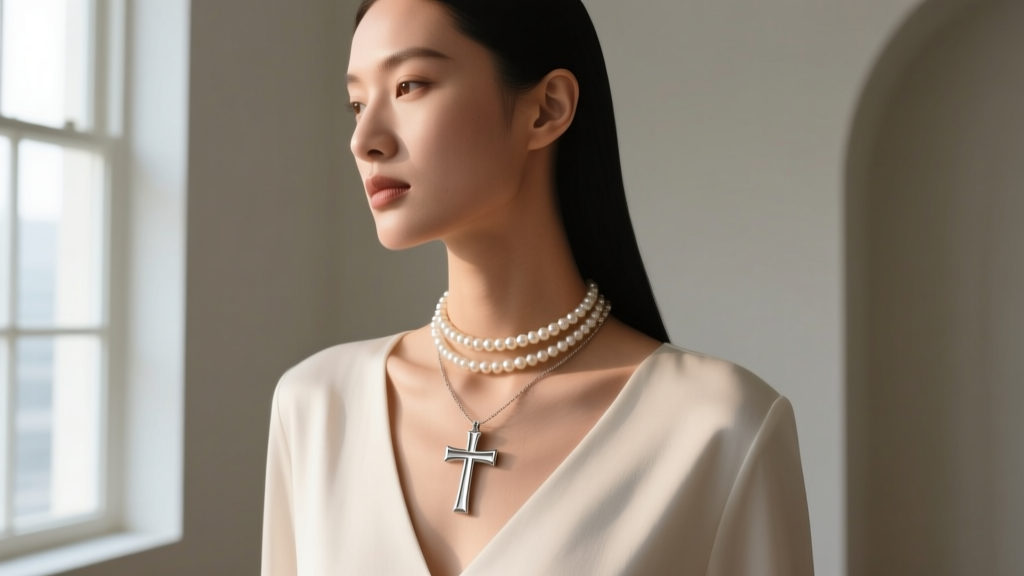
- V-Necks and Deep Plunges: Opt for an 18-inch to 20-inch chain with a narrower, more elongated horizontal cross. This allows the pendant to rest gracefully in the negative space of the V without competing with the garment's geometry.
- High Crew Necks: Layering is key here. Pair a 14-inch pearl or snake chain choker with a 16-inch sideways cross necklace to create a tiered effect that draws the eye downward.
Pavé vs. Solid Metal: Embellishment Considerations
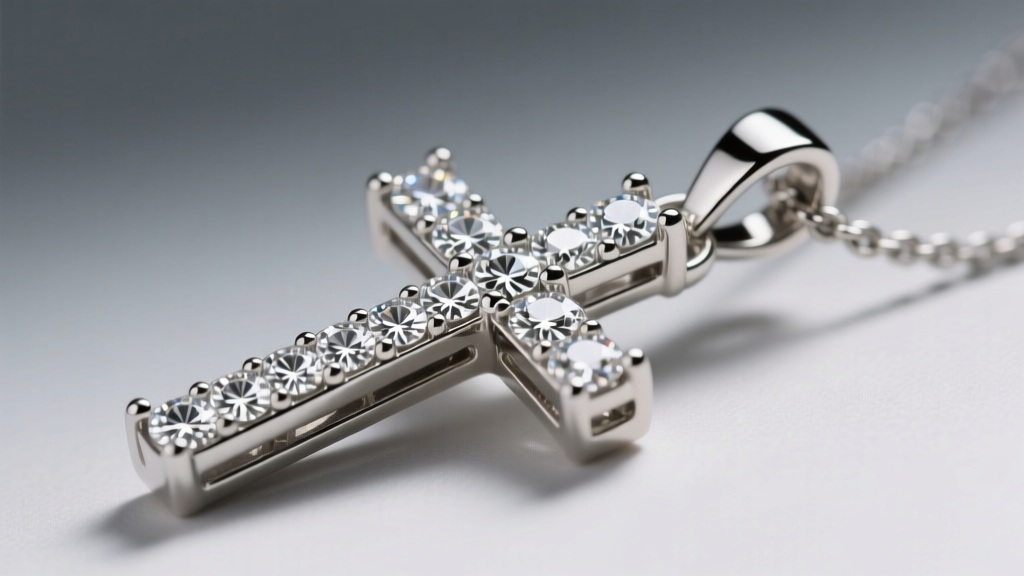
Many buyers opt for diamond-encrusted sideways crosses to add brilliance to the linear design. When evaluating gemstone embellishments, the setting style dictates the maintenance required. According to research published by the Gemological Institute of America (GIA), melee diamonds (those weighing under 0.15 carats) are typically graded in batches rather than individually, meaning clarity and color can vary wildly between brands.
If you choose a pavé sideways cross, ensure the brand uses micro-prong settings rather than bead-set or flush settings. Micro-prongs allow more light to enter the melee diamonds from the sides, maximizing brilliance. However, be aware that pavé settings on a pendant that rests against the chest will accumulate skin oils and lotion, requiring a gentle ultrasonic cleaning or a soak in warm water with mild dish soap every few weeks to maintain sparkle. For a zero-maintenance alternative, a high-polish solid metal cross with deep beveled edges can catch the light almost as effectively as diamonds without the ongoing upkeep.
Final Verdict: How to Choose Your Piece
Buying a necklace with sideways cross pendants requires looking past the initial aesthetic and evaluating the structural integrity of the jewelry. Prioritize a centered bail design to ensure the pendant hangs perfectly horizontal. Choose 14k gold for the best balance of durability and color retention, and pair it with a box or rolo chain in the 1.0mm to 1.5mm range for optimal tensile strength. By focusing on these precise specifications, you will secure a modern, meaningful piece that maintains its geometric perfection for decades.


