W Necklace Value Guide: Budget & Material Assessment
Discover the true value of a W necklace in 2026. Compare pricing tiers, material grades like 14k gold and vermeil, and find the best budget options.

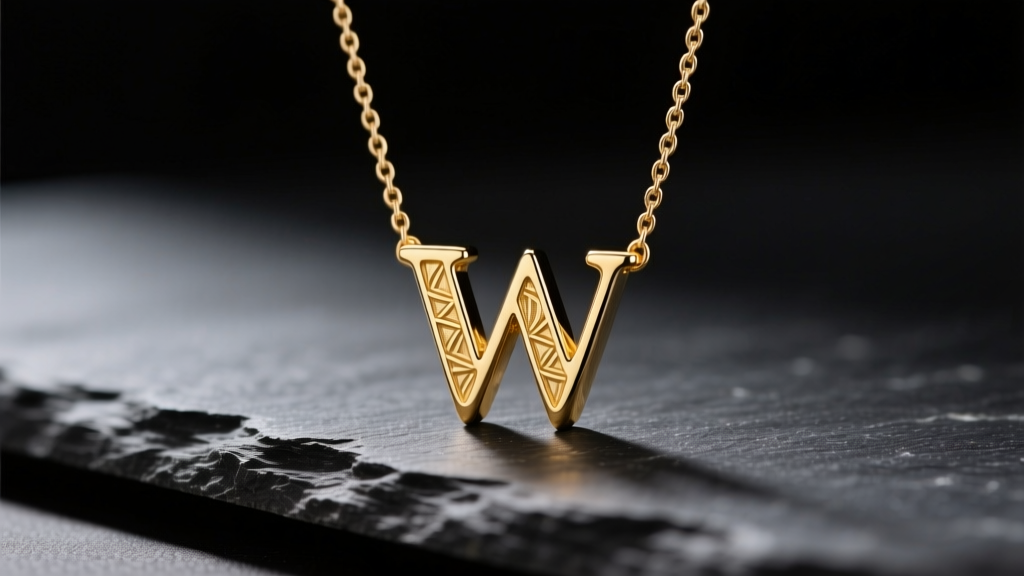
The quest for the perfect personalized pendant often leads buyers to the W necklace. Whether you are shopping for an initial pendant representing a name, or a geometric chevron "W" (often stylized as a crown or minimalist zigzag), understanding the true market value is critical in 2026. With fluctuating precious metal markets and a surge in direct-to-consumer jewelry brands, the price gap between a $30 fashion piece and a $600 solid gold heirloom can be confusing. This budget and value assessment breaks down the material science, chain mechanics, and cost-per-wear metrics to help you make an informed purchase.
The Anatomy of a W Necklace: Initial vs. Chevron
Before assessing value, we must define the design. The term "W necklace" typically refers to two distinct styles, each carrying different manufacturing costs and weight distributions.
The Script or Block Initial W
Initial pendants are either die-struck from sheet metal or cast from molten gold. A block "W" requires significantly more metal volume than an "I" or "T", meaning the raw material cost for a solid gold W initial will be noticeably higher. Script W necklaces, featuring intricate loops and tails, are prone to snagging if the casting is too thin, making structural integrity a key value metric. Furthermore, casting a "W" shape presents unique metallurgical challenges. The sharp inner angles of the letterform are prone to shrinkage porosity if the metal cools too quickly. High-value jewelers use vacuum-assisted casting and properly placed sprues to ensure the inner corners of the W are dense and free of microscopic pitting.
The Geometric Chevron W
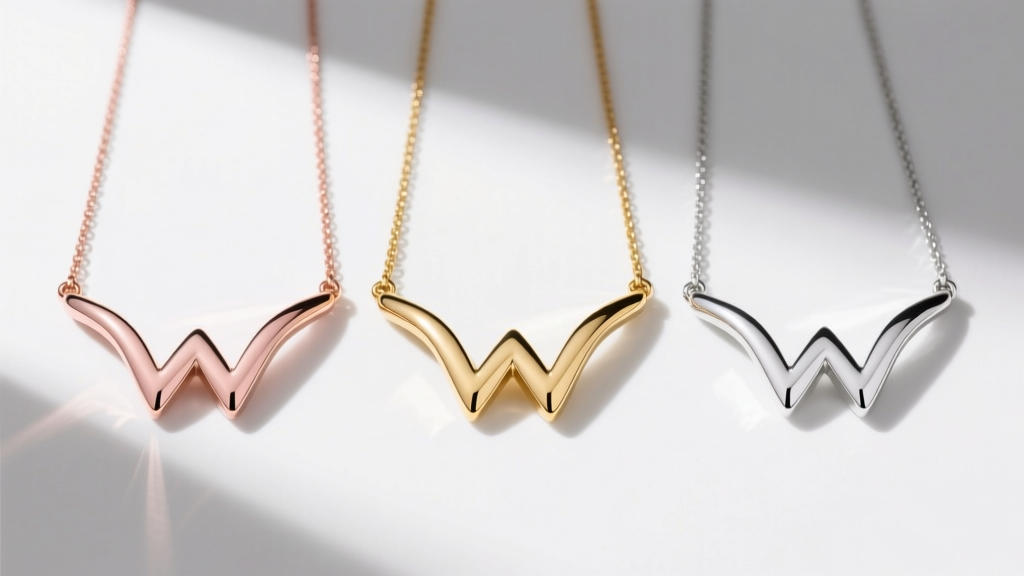
Often interpreted as a crown or a minimalist zigzag, the chevron W is a highly structural design. Because it spans horizontally across the collarbone, it requires a thicker gauge to prevent bending. A high-value chevron W should be at least 1.5mm thick; anything thinner will warp when caught on heavy winter clothing or seatbelts.
Material Grades and Pricing Tiers
The most common pitfall when buying a W necklace is misinterpreting metal terminology. According to the Federal Trade Commission (FTC) Jewelry Guides, terms like "gold filled," "vermeil," and "plated" have strict legal definitions regarding the thickness and purity of the precious metal overlay.
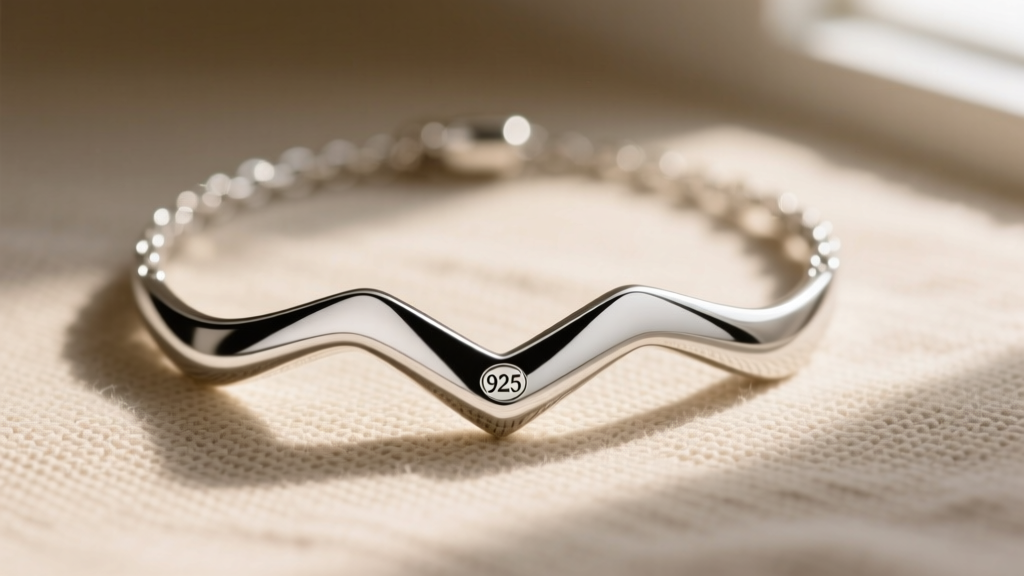
When evaluating a W pendant, the base metal is just as important as the surface finish. Brass bases are cheap but can cause green skin discoloration due to copper oxidation reacting with skin acidity. Sterling silver bases offer superior longevity and are inherently hypoallergenic. The The Silver Institute mandates that genuine sterling silver must contain 92.5% pure silver, usually stamped as "925".
| Material Category | Base Metal | Surface / Plating | Expected Lifespan | 2026 Price Range (W Pendant + Chain) |
|---|---|---|---|---|
| Fashion Plated | Brass or Steel | Flash Gold Plate (<0.1 microns) | 6 - 12 Months | $25 - $60 |
| Gold Vermeil | 925 Sterling Silver | 14k or 18k Gold (Min 2.5 microns) | 2 - 5 Years | $85 - $180 |
| Solid 10k Gold | 10k Gold Alloy | N/A (Solid throughout) | Lifetime (can scratch) | $200 - $350 |
| Solid 14k Gold | 14k Gold Alloy | N/A (Solid throughout) | Lifetime (Heirloom) | $350 - $750+ |
For buyers on a strict budget, heavy gold vermeil offers the best visual ROI. However, if you plan to wear the W necklace daily in the shower or at the gym, the 2.5-micron gold layer will eventually wear through, revealing the silver underneath. Solid 14k gold remains the ultimate value play for daily wear, as its intrinsic melt value tracks with the broader commodities market, as noted by the World Gold Council.
Chain Selection: Weight and Durability Metrics
A W pendant—especially a solid block initial or a wide chevron—carries more physical weight than standard circular or teardrop pendants. Pairing a heavy W pendant with a weak chain is a primary cause of jewelry failure and loss.
Cable vs. Box Chains for Heavy Pendants
- Standard Cable Chains (0.5mm - 0.8mm): Ideal for lightweight, die-struck script W initials. They offer a delicate, minimalist look but will snap if paired with a heavy cast chevron.
- Box Chains (1.0mm - 1.5mm): The interlocking square links distribute weight evenly, making them the superior choice for heavy block W initials. They resist kinking and can support up to 15 grams of pendant weight without stretching the individual links.
- Wheat (Spiga) Chains (1.2mm+): Featuring woven, braided links, wheat chains offer exceptional tensile strength and a premium textural contrast to smooth, high-polish W pendants.
Always check the clasp mechanism and the jump rings. A heavy W pendant requires a secure lobster clasp with a sturdy, soldered jump ring. Spring-ring clasps are inadequate for pendants exceeding 5 grams and are a red flag for poor manufacturing value. If the jump ring connecting the pendant to the chain is not laser-soldered shut, the friction from the W bail will eventually wear through the metal gap, resulting in a lost pendant.
Brand Value Assessment: Where to Spend and Save
The jewelry market is saturated with options, but not all brands price their W necklaces fairly. Here is how to navigate the retail landscape based on your budget constraints:
The Fast Fashion Tier ($20 - $50)
Brands in this tier use brass bases and ultra-thin plating. The value here is purely aesthetic and temporary. Buy from this tier only if you view the necklace as a seasonal accessory. Expect the gold finish to rub off the high-friction edges of the "W" within months, particularly on the outer points of the letterform.
The Direct-to-Consumer Mid-Tier ($90 - $200)
Brands like Mejuri, Gorjana, and Catbird dominate this space. They typically use 925 sterling silver bases with 2-micron to 3-micron gold vermeil. This is the sweet spot for budget-conscious buyers who want a premium look without the solid gold price tag. The value proposition is high, provided you remove the necklace before swimming in chlorinated water or applying acidic skincare products like vitamin C serums.
The Artisan and Fine Jewelry Tier ($400+)
Independent goldsmiths and established fine jewelers cast W pendants in solid 14k or 18k gold. While the upfront cost is steep, the cost-per-wear over a decade makes it highly economical. Furthermore, solid gold W necklaces retain resale value, whereas plated jewelry has zero secondary market value.
Maintenance and Cost-Per-Wear Analysis
To truly assess the budget impact of your purchase, calculate the cost-per-wear (CPW). If you buy a $40 plated W necklace and wear it 40 times before the plating fails, your CPW is $1.00. If you invest $500 in a solid 14k gold W necklace and wear it daily for five years (1,825 days), your CPW drops to $0.27 per day, and you still own a tangible asset.
Maintenance costs also differ vastly. Plated necklaces cannot be polished with standard jeweler's cloths without removing the microscopic gold layer. Solid gold and sterling silver can be professionally polished using rouge compounds to remove micro-scratches and restore the high-polish finish on the flat surfaces of the W. If a vermeil W necklace loses its luster, professional re-plating typically costs between $35 and $60. Re-plating a piece two or three times will quickly negate the initial savings of buying vermeil over solid gold.
The Verdict: Is a W Necklace Worth the Investment?
The value of a W necklace in 2026 depends entirely on your lifestyle and long-term intentions. For trend-driven styling or occasional evening wear, a sterling silver vermeil W pendant on a 1.0mm box chain offers the best balance of luxury aesthetics and budget preservation. However, for a daily-wear signature piece—especially an initial representing a loved one or a personal milestone—bypassing the vermeil tier to invest in solid 14k gold is the only financially sound decision. By prioritizing metal density, appropriate chain gauges, soldered jump rings, and secure clasps, you ensure your W necklace remains a valuable staple rather than a disposable trend.


