How to Clean and Polish a Delicate Necklace Gold Chain
Learn how to safely clean, polish, and store your necklace gold chain. Expert tips on removing tarnish, lotions, and oils from 14k and 18k gold.

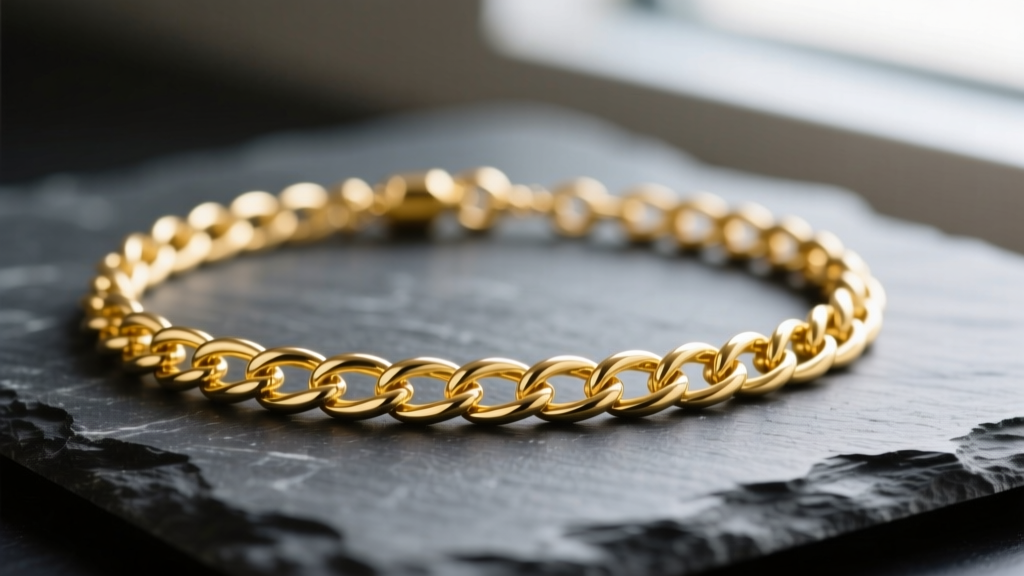
The Chemistry of Gold Tarnish and Buildup
When discussing the care of your favorite jewelry, understanding the metallurgy is the first step to preserving its luster. Pure 24-karat gold is virtually immune to tarnish and corrosion. However, pure gold is far too soft to be crafted into durable daily-wear chains. To achieve the necessary tensile strength, jewelers alloy gold with metals like copper, silver, zinc, and nickel. An 18k necklace gold chain contains 75% pure gold and 25% alloy metals, while a 14k chain contains 58.3% gold and 41.7% alloys.
It is these secondary alloy metals that are responsible for tarnish, discoloration, and structural degradation. Copper reacts with oxygen and sulfur in the environment, while silver readily binds with sulfur to form silver sulfide, which manifests as a dull, dark film on the surface of your chain. Furthermore, everyday products like lotions, perfumes, and sebum (skin oils) create a microscopic layer of grime that traps these reactive compounds against the metal, accelerating the oxidation process. According to the Gemological Institute of America (GIA), regular removal of this organic buildup is critical to maintaining the optical reflectivity of high-polish gold links.
Daily Wear vs. Deep Cleaning: A Maintenance Schedule
Maintenance should be divided into two distinct categories: daily preventative care and bi-monthly deep cleaning. Daily care involves simply wiping the chain with a clean, dry, lint-free microfiber cloth after removal. This removes acidic sweat and surface oils before they can etch into the alloy metals or dull the finish.
Deep cleaning, on the other hand, requires a controlled aqueous environment to lift trapped debris from the crevices of complex link patterns, such as rope, box, or Byzantine chains. Skipping this schedule allows grime to act as an abrasive paste, causing premature wear at the friction points where individual links connect.
Step-by-Step: The Safest DIY Cleaning Method
What You Need
- Distilled Water: Never use tap water. Municipal tap water contains chlorine and fluoride, which can leave microscopic mineral deposits and accelerate alloy degradation.
- pH-Neutral Dish Soap: A mild, phosphate-free detergent like original Dawn Ultra. Avoid soaps with added moisturizers or citrus extracts, which leave a cloudy film.
- Extra-Soft Baby Toothbrush: Standard toothbrushes have bristles that are too stiff and can cause micro-scratches on high-polish gold surfaces. A baby toothbrush ensures gentle agitation.
- Lint-Free Microfiber Cloth: Paper towels are made of wood pulp and will inflict thousands of microscopic scratches on your gold chain over time.
The Soak and Swish Technique
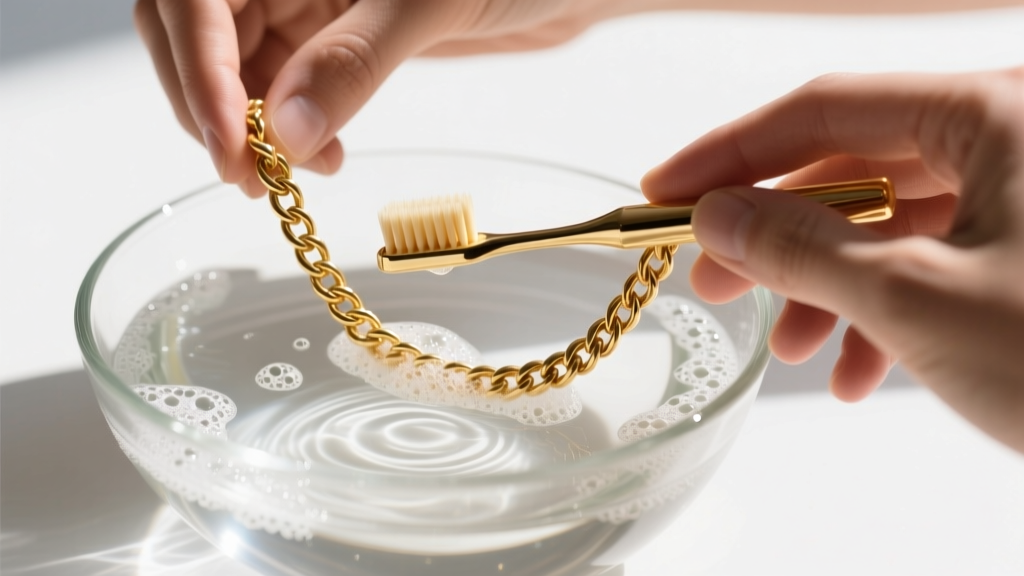
Begin by filling a small glass bowl with warm (not hot) distilled water and adding two to three drops of your pH-neutral dish soap. Submerge your necklace gold chain and let it soak for exactly 15 to 20 minutes. This dwell time allows the surfactants to break down the lipid bonds of skin oils and cosmetic residues.
After soaking, gently agitate the water. Take your extra-soft baby toothbrush and lightly brush along the length of the chain, paying special attention to the clasp mechanism and any intricate link patterns where debris accumulates. Rinse the chain thoroughly under a gentle stream of fresh distilled water to remove all soap residue. Finally, lay the chain flat on your microfiber cloth and gently pat it dry. Never rub vigorously, as trapped dust particles can act like sandpaper.
What to Avoid: Chemicals That Destroy Gold Alloys
The most common cause of catastrophic failure in gold chains is chemical exposure. Many people assume that because gold is a noble metal, it is indestructible. While the gold itself may not react, the alloys holding the chain together are highly susceptible to chemical attacks. Below is a breakdown of common chemicals and their specific failure modes on 14k and 18k gold chains.
| Chemical Agent | Common Source | Effect on Gold Alloys (14k/18k) |
|---|---|---|
| Chlorine | Swimming pools, bleach, household cleaners | Causes stress corrosion cracking at solder joints, leading to sudden chain snapping. |
| Bromine | Hot tubs, spas, some well water | Accelerates pitting and structural weakening of the alloy metals, making links brittle. |
| Sulfur | Hot springs, hard-boiled eggs, rubber bands | Reacts with silver/copper alloys to create dark, stubborn silver sulfide tarnish. |
| Mercury | Broken thermometers, certain industrial environments | Forms a gold amalgam, turning the chain grey/white and destroying its structural integrity. |
| Abrasive Silica | Toothpaste, baking soda pastes | Scratches the surface finish, permanently dulling the high-polish reflectivity of the links. |
As noted by jewelry insurance and conservation experts at Jewelers Mutual, chlorine exposure is the number one culprit for broken chains. Chlorine aggressively attacks the copper and silver alloys, specifically targeting the soldered seams of the links. Over time, this causes microscopic fractures that result in the chain snapping under its own weight.
Advanced Polishing and Professional Ultrasonic Warnings
When a necklace gold chain develops deep scratches or loses its factory luster, DIY polishing is rarely the answer. Commercial liquid gold polishes often contain harsh ammonia or mild abrasives that can strip the rhodium plating off white gold chains and round the sharp edges of intricate link designs like box or herringbone chains. If your chain requires refinishing, it should be sent to a professional bench jeweler who can use a specialized rouge and a low-RPM buffing wheel to restore the mirror finish without removing excessive metal weight.
Similarly, exercise extreme caution with ultrasonic cleaners. While ultrasonic waves are excellent for dislodging dirt from diamond settings, they are notoriously dangerous for certain chain styles. Hollow-tube chains (like some puffed mariner links), soldered chains, and delicate filigree links can be vibrated apart or crushed by the cavitation bubbles generated in an ultrasonic bath. Always stick to the manual soak-and-swish method for routine maintenance.
Troubleshooting Stubborn Tarnish and Kinks
Despite your best efforts, environmental factors can sometimes cause stubborn tarnish that a simple soap soak will not lift. If your chain has developed dark patches, particularly in the recesses of a rope or wheat chain, you may need a specialized gold cleaning dip. However, these dips are highly acidic (usually containing thiourea) and must be used with strict time limits. Never leave a chain in a chemical dip for more than 10 to 15 seconds, and rinse it immediately and thoroughly in distilled water to halt the chemical reaction. Overuse of these dips will strip the surface layer of the alloy, leaving the gold looking porous and matte.
Another common issue is kinking, especially in flat styles like herringbone or snake chains. When a herringbone chain kinks, the structural alignment of the interlocking links is compromised. Do not attempt to pull or yank the kink out, as this will snap the delicate links. Instead, lay the chain perfectly flat on a hard glass surface. Using two clean, soft-tipped tweezers or your fingertips, gently massage the kink in a circular motion, encouraging the links to lay flat again. If the kink is severe, a professional jeweler can use a specialized rolling mill to gently compress and realign the links without breaking them.
Proper Storage to Prevent Micro-Scratches and Tangling
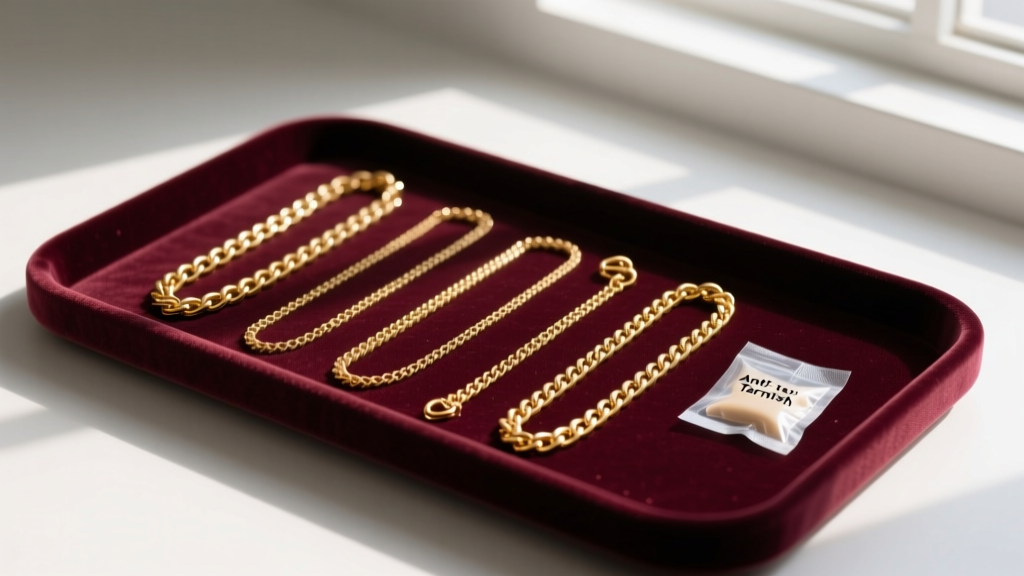
How you store your gold chain when it is not being worn is just as important as how you clean it. Gold, particularly in higher karats like 18k and 22k, is relatively soft and easily scratched by harder metals or gemstones. Never toss multiple chains into a single jewelry box compartment. The friction caused by movement will result in a tangled mess and a web of micro-scratches across the polished surfaces.
For optimal preservation, store each necklace gold chain individually in a soft, acid-free polyethylene ziplock bag or a dedicated flannel pouch. Squeeze out the excess air before sealing to limit oxygen exposure. For added protection against environmental humidity and sulfur compounds, place a small 3M anti-tarnish strip or a silica gel desiccant packet inside the storage bag. Finally, always fasten the clasp before storing; this prevents the chain from knotting upon itself, which can bend delicate links and weaken the structural integrity of the jump rings.


