The Ultimate Guide to Choosing a Pearl and Black Onyx Necklace
Discover the material properties, grading standards, and care tips for a pearl and black onyx necklace. Expert gemological insights for buyers.

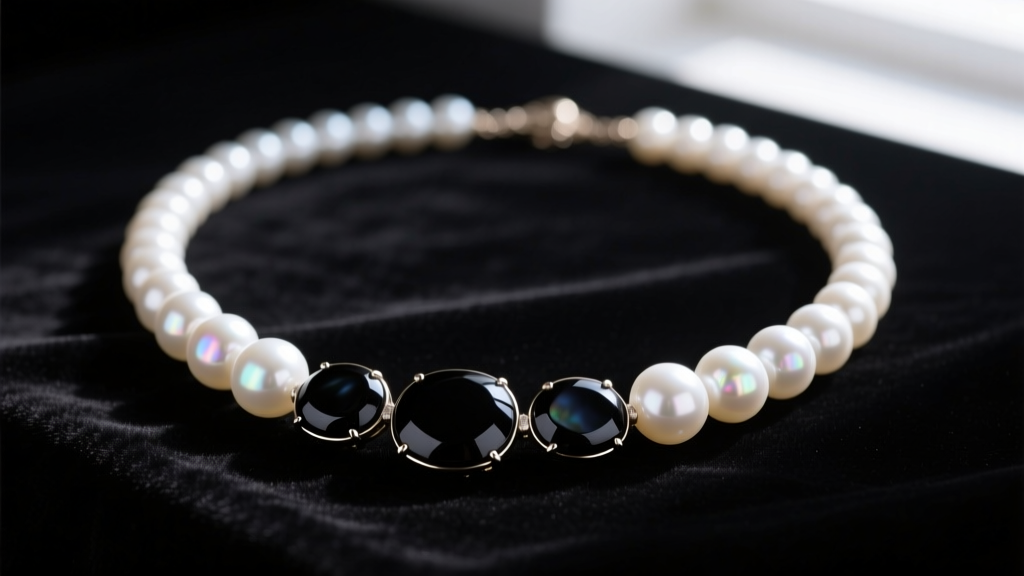
The Allure of High Contrast: Pearl and Black Onyx
When designing or purchasing a pearl and black onyx necklace, you are combining two of the most historically significant materials in gemology. The stark visual contrast between the luminous, light-scattering nacre of a pearl and the deep, light-absorbing polish of black onyx creates a timeless aesthetic. Popularized during the Art Deco movement of the 1920s, this monochrome pairing remains a staple in high jewelry and everyday layering alike. However, because these two materials possess vastly different physical and chemical properties, combining them into a single strand requires specialized stringing techniques and careful maintenance. This guide explores the exact mineralogical profiles, grading metrics, and structural considerations necessary for evaluating a pearl and black onyx necklace.
Mineralogy and Physical Properties: A Study in Extremes
To understand how to care for and wear this necklace combination, one must first understand the extreme differences in their material composition. Pearls are organic gemstones, while onyx is a cryptocrystalline mineral.
Chemical Composition and Hardness
Pearls are primarily composed of aragonite (a form of calcium carbonate, CaCO3) bound together by conchiolin, an organic protein. This structure gives pearls their signature orient and luster but leaves them highly vulnerable to acids and abrasion. Black onyx, conversely, is a variety of chalcedony (silicon dioxide, SiO2) characterized by parallel banding. It is a highly durable, dense quartz variant.
| Property | Cultured Pearl (Akoya/Tahitian) | Black Onyx (Chalcedony) |
|---|---|---|
| Mohs Hardness | 2.5 - 4.5 | 6.5 - 7.0 |
| Specific Gravity | 2.60 - 2.85 | 2.58 - 2.64 |
| Refractive Index | 1.52 - 1.66 | 1.53 - 1.54 |
| Porosity | High (Absorbs liquids/chemicals) | Low to Moderate (Depending on treatment) |
| Cleavage/Fracture | None / Splintery | None / Conchoidal |
According to the Gemological Institute of America (GIA), the organic nature of pearls means they can be dissolved by mild acids, including the lactic acid present in human sweat. Onyx, being a quartz, is entirely impervious to sweat and mild acids, creating a significant care disparity when the two are worn together.
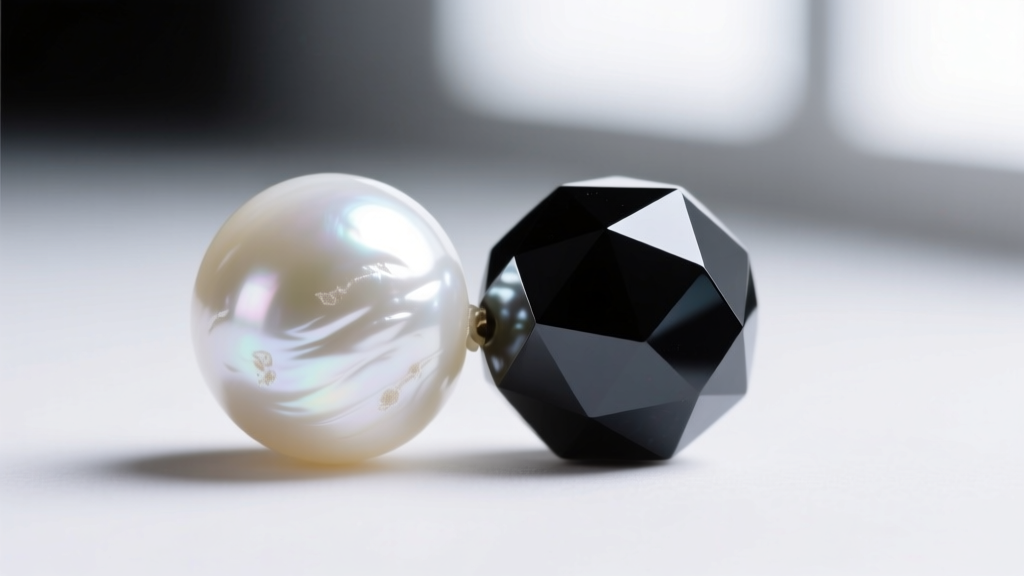
The Friction Problem: Stringing and Hardware Considerations
The most critical point of failure in any pearl and black onyx necklace is the physical interaction between the beads. Because black onyx ranks at a 7 on the Mohs scale and pearls rank between 2.5 and 4.5, the onyx acts as an abrasive file against the pearl. If the beads are strung tightly together without separation, the onyx will gradually grind away the pearl's nacre, destroying its luster and structural integrity.
Hand-Knotting Protocols
To prevent this catastrophic wear, a high-quality necklace must feature hand-knotted silk or micro-fiber thread between every single bead. The knots serve a dual purpose: they prevent the hard onyx from touching the soft pearl, and they prevent the loss of all beads if the strand breaks.
- Thread Material: 100% natural silk (such as Griffin brand) is preferred for its traditional drape, though modern nylon-polyester blends offer better resistance to stretching and moisture.
- Thread Size: For standard 7mm to 8mm Akoya pearls and matched onyx beads, a Griffin size #4 (0.30mm) or #6 (0.35mm) silk thread is optimal. The thread must pass through the drill holes smoothly without forcing, which can cause micro-fractures in the pearl nacre.
- Clasp Hardware: Always opt for 14k or 18k gold, or platinum. Sterling silver can tarnish and transfer sulfur compounds to the porous pearls over time.
Grading and Treatments: What You Are Actually Buying
When evaluating the market for these necklaces, it is vital to understand the gemological treatments applied to both materials. The GIA's comprehensive guide on Onyx outlines how almost all commercial black onyx is treated, while pearls are judged on a strict set of natural value factors.
The Reality of Black Onyx Treatments
Naturally occurring pure black onyx is exceptionally rare. The vast majority of black onyx used in jewelry is actually gray or white chalcedony that has undergone a permanent sugar-acid treatment. The stones are soaked in a sugar solution and then boiled in concentrated sulfuric acid. The acid carbonizes the sugar absorbed into the stone's microscopic pores, turning it a deep, uniform black. This treatment is universally accepted in the gem trade and does not require special disclosure on standard retail tags, but it means you are paying for treated chalcedony, not a naturally black banded agate. High-end designers sometimes use black spinel or black tourmaline as an untreated alternative to onyx for a similar visual effect.
Pearl Value Factors
Unlike onyx, pearls are graded on their natural characteristics. When paired with black onyx, jewelers typically use white Akoya pearls for maximum contrast, or Tahitian pearls for a moody, dark-on-dark aesthetic. Key grading metrics include:
- Luster: The sharpness of light reflection on the surface. High-grade Akoya pearls should have 'mirror-like' luster.
- Nacre Thickness: A minimum of 0.4mm is required for durability. Thin-nacre pearls will peel when rubbed against hard surfaces.
- Surface Blemishes: Graded from Clean to Heavily Blemished. Since onyx is usually cut to a flawless polish, pairing it with heavily blemished pearls creates an unbalanced visual weight.
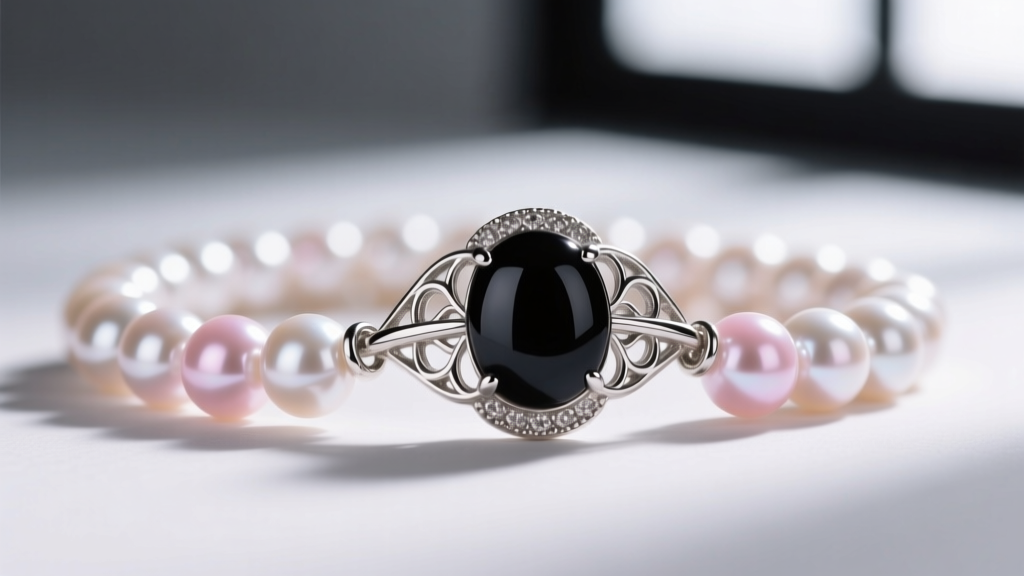
Care and Maintenance Protocols
Maintaining a pearl and black onyx necklace requires a bifurcated approach. You cannot use standard jewelry cleaners designed for hard gemstones on this piece.
- Never Use Ultrasonic Cleaners: The high-frequency vibrations will shatter the pearls and strip their nacre. Furthermore, the heat and chemicals can alter the dye stability of lower-grade black onyx.
- The 'Last On, First Off' Rule: Pearls are highly susceptible to the alcohol and chemicals found in perfumes, hairsprays, and cosmetics. Always put the necklace on after applying these products, and take it off before bathing.
- Wiping Down: After wearing, gently wipe the entire strand with a soft, damp microfiber cloth. This removes the acidic sweat and body oils that can etch the pearl surface and dull the onyx polish.
- Storage: Store the necklace flat in a soft pouch. Hanging it for long periods will stretch the silk thread, causing the knots to loosen and allowing the abrasive onyx beads to come into contact with the pearls.
Conclusion
A pearl and black onyx necklace is a masterclass in material contrast, blending the organic warmth of nacre with the cool, geometric precision of polished quartz. By understanding the severe hardness disparity between the two stones, insisting on hand-knotted silk stringing, and adhering to strict, chemical-free cleaning protocols, you can ensure that this striking piece of jewelry remains pristine for generations. Whether you are selecting an Art Deco-inspired vintage piece or a modern minimalist strand, prioritizing structural integrity and gemological quality will always yield the best long-term investment.


