Mint & Lily Dainty Solitaire Pendant Necklace: A Beginner's Guide
Discover how to choose, style, and care for your Mint & Lily dainty solitaire pendant necklace. A beginner's guide to delicate everyday jewelry.

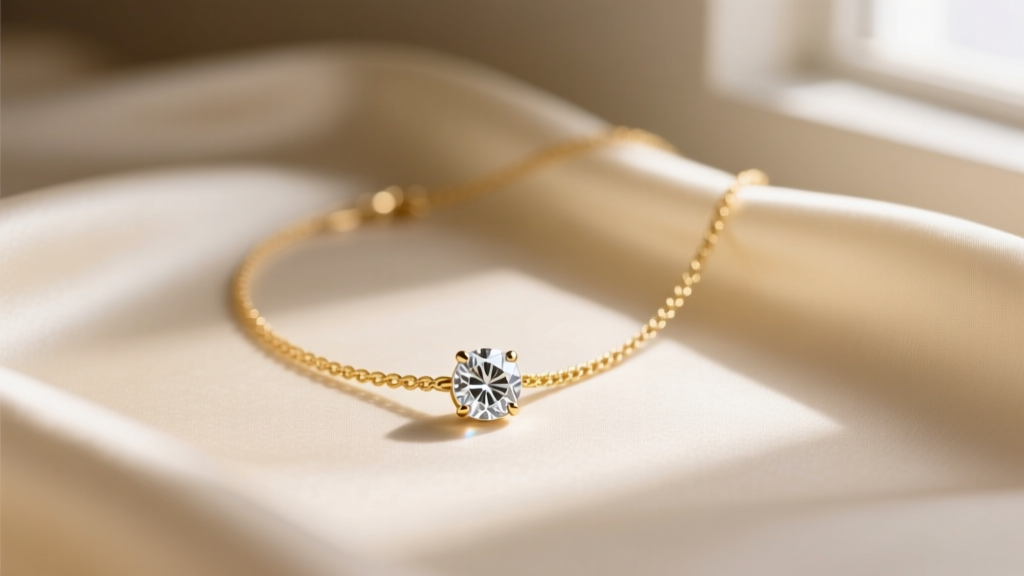
The Appeal of the Dainty Solitaire
The minimalist jewelry movement has cemented the dainty solitaire pendant as a non-negotiable wardrobe staple. Among the most sought-after styles in the boutique market is the Mint & Lily dainty solitaire pendant necklace. Known for its accessible price point—typically ranging from $30 to $60—and versatile aesthetic, this specific style bridges the gap between temporary costume jewelry and heirloom fine jewelry. However, navigating the world of delicate, plated jewelry requires a foundational understanding of metallurgy, chain mechanics, and proper maintenance. This beginner-friendly explainer will deconstruct the anatomy of these necklaces, providing you with a practical framework for selection, styling, and long-term care.
Deconstructing the Mint & Lily Dainty Solitaire Pendant Necklace
To truly appreciate and maintain your jewelry, you must look beyond the surface shine and understand the materials and engineering that hold the piece together.
Metal Bases and Plating Techniques
Unlike solid 14k or 18k gold pieces that cost upwards of $300, boutique brands like Mint & Lily typically utilize a base metal—often brass or stainless steel—finished with a gold plating. It is crucial to understand the difference between 'flash plating' and 'gold vermeil.' Flash plating involves a microscopic layer of gold (usually less than 0.5 microns) that can wear away within months of daily friction. Gold vermeil, regulated by the FTC, requires a sterling silver base and a minimum of 2.5 microns of 10k or higher gold. When shopping for a dainty solitaire pendant, always check the product specifications for the plating thickness and base metal. In 2026, stainless steel bases with PVD (Physical Vapor Deposition) gold coating are increasingly popular due to their superior tarnish resistance and hypoallergenic properties, making them an excellent choice for sensitive skin.
Gemstone Durability: CZ vs. Pearl
The 'solitaire' designation means a single focal stone. In this accessible price bracket, the stone is almost exclusively Cubic Zirconia (CZ) or a freshwater pearl. According to the Gemological Institute of America (GIA), CZ ranks at 8 to 8.5 on the Mohs hardness scale, making it highly resistant to scratching and an excellent, durable choice for everyday wear. Conversely, freshwater pearls rank at a mere 2.5 to 4.5 on the Mohs scale. A pearl solitaire pendant requires significantly more careful handling to avoid surface abrasions and chemical damage from perfumes or lotions.
Chain Profiles and Clasp Mechanics
Dainty chains typically measure between 0.8mm and 1.2mm in width. The most common profile is the 'cable chain,' characterized by uniform oval links. While visually delicate, cable chains are prone to kinking if pulled forcefully. A more durable alternative is the 'box chain,' which features square links that lay flat and resist tangling. The clasp on these necklaces is usually a 9mm or 11mm lobster clasp.
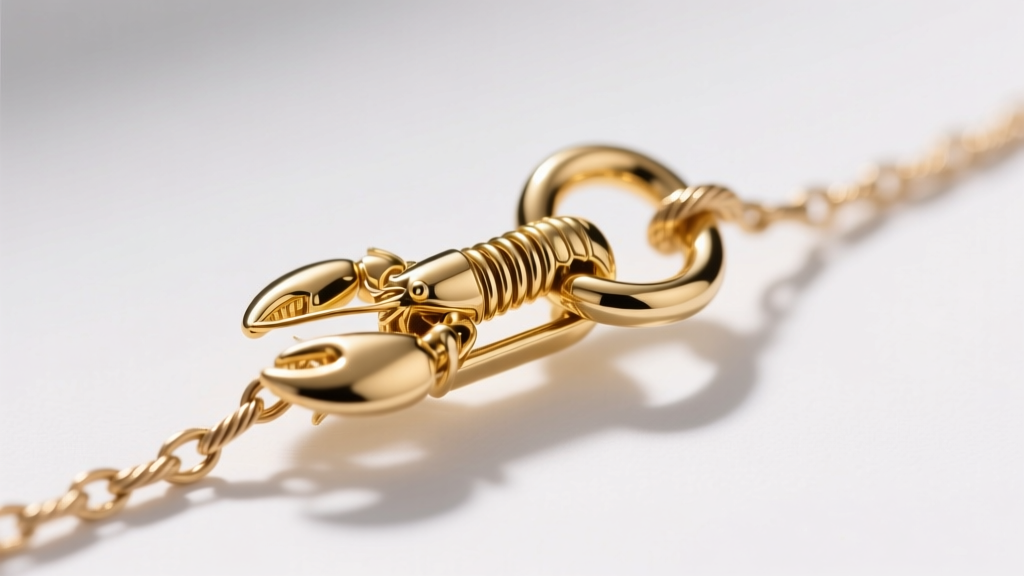
Pro Tip: Always inspect the jump ring (the small circle connecting the clasp to the chain). Ensure it is fully soldered shut. An open, unsoldered jump ring is the primary failure point for losing a pendant, as it can easily be pulled apart by a snagged sweater.
Sizing and Neckline Pairing Framework
Choosing the correct length is critical for a solitaire pendant, as the single stone acts as a visual anchor on the chest. A necklace that is too long will hide the pendant beneath clothing, while one that is too short may feel restrictive. Use the following framework to match your chain length to your wardrobe:
| Chain Length | Placement | Best Neckline Pairing | Visual Effect |
|---|---|---|---|
| 14 - 15 inches | Base of the neck (Choker) | V-necks, Scoop necks | Highlights the collarbone; creates a youthful, modern look. |
| 16 inches | Collarbone (Standard) | Crew necks, Button-downs | The most versatile length; the pendant rests perfectly in the clavicle hollow. |
| 18 inches | Below the collarbone | Turtlenecks, High boat necks | Elongates the neck; ideal for layering over thicker fabrics. |
Layering Strategies for Delicate Pendants
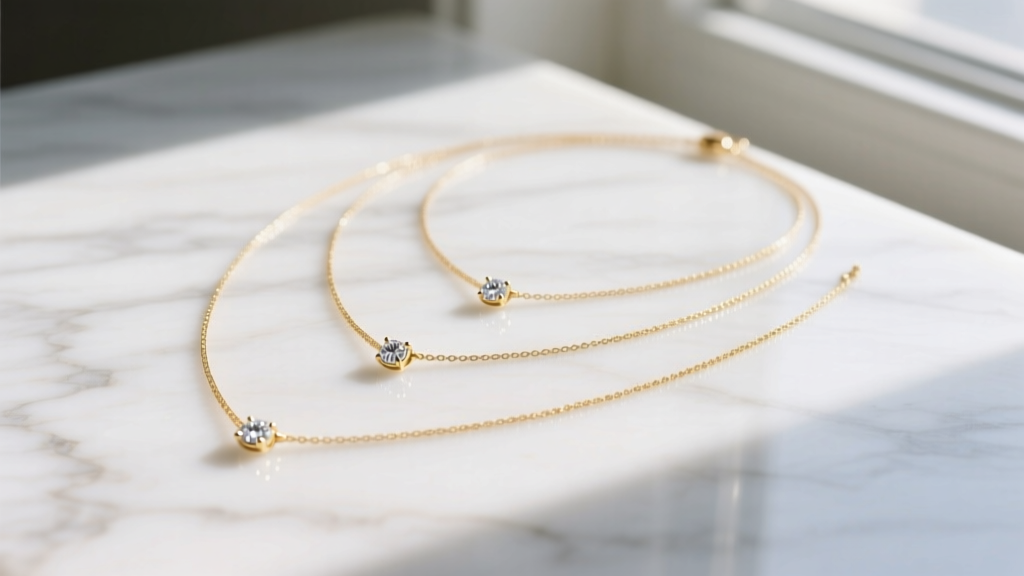
The Mint & Lily dainty solitaire pendant necklace is designed to be a team player. When layering, the golden rule is the 2-Inch Separation Rule. To prevent the delicate chains from tangling and the pendants from overlapping, ensure there is at least a two-inch difference between each necklace. For example, pair a 14-inch plain cable chain, your 16-inch solitaire pendant, and an 18-inch longer medallion or lariat necklace. This creates a cascading visual triangle that draws the eye downward, elongating the torso. Always place the solitaire pendant in the middle tier; it provides a necessary focal point between the minimalist base chain and the heavier bottom chain.
Troubleshooting Common Dainty Chain Issues
Delicate jewelry comes with specific mechanical quirks. Here is how to solve the most common frustrations:
- The Clasp Keeps Sliding to the Front: This happens when the pendant is heavier than the chain, or the chain is too long, causing the center of gravity to pull the lightweight clasp forward. Fix: Opt for a chain with a slightly thicker profile (1.2mm instead of 0.8mm) or look for necklaces that feature a 'counterweight'—a small metal tag near the clasp that balances the pendant.
- Chain Tangling in Storage: Dainty cable chains are notorious for knotting. Fix: Never toss multiple chains into a single jewelry box compartment. Store the necklace draped through a plastic drinking straw and clasped shut, or use a dedicated jewelry roll with individual snap closures to keep the chains taut.
- Pendant Flipping Upside Down: If the bail (the loop holding the pendant) is too large for the chain, the stone will constantly flip. Fix: Ensure the bail opening is snug against the 1mm chain, or take it to a local jeweler to have a smaller jump ring soldered to the bail.
Longevity and Care Protocols
Because boutique dainty necklaces rely on surface plating rather than solid gold, your daily habits will dictate the lifespan of the piece. Adopt the 'Last On, First Off' rule: your necklace should be the last thing you put on after applying lotions, perfumes, and hairspray, and the first thing you take off when you get home.
According to the Jewelers of America, plated jewelry should never be cleaned in an ultrasonic machine, as the high-frequency vibrations can strip the gold layer and fracture porous stones like pearls. Instead, use a gentle cleaning protocol: mix a few drops of mild, phosphate-free dish soap in lukewarm water. Submerge the necklace for three minutes, then gently agitate the pendant area with a soft baby toothbrush. Rinse under clean water, pat dry with a lint-free microfiber cloth, and allow it to air dry completely before storing. Avoid using silver polishing cloths on gold-plated items, as the mild abrasives in the cloth are designed to remove tarnish and will inadvertently polish the gold plating right off the base metal.
Conclusion
The Mint & Lily dainty solitaire pendant necklace represents the perfect entry point into curated, everyday jewelry styling. By understanding the metallurgical realities of gold plating, respecting the Mohs hardness of your chosen gemstone, and implementing strategic layering and storage techniques, you can maximize the lifespan and beauty of your delicate pieces. Treat your dainty solitaire not as disposable fashion jewelry, but as a delicate accessory that rewards mindful care with years of effortless elegance.


