Vintage Blue Rhinestone Necklace Buying Guide: Eras & Tips
Discover how to authenticate, evaluate, and price a vintage blue rhinestone necklace. Learn era-specific traits, construction clues, and condition tips.

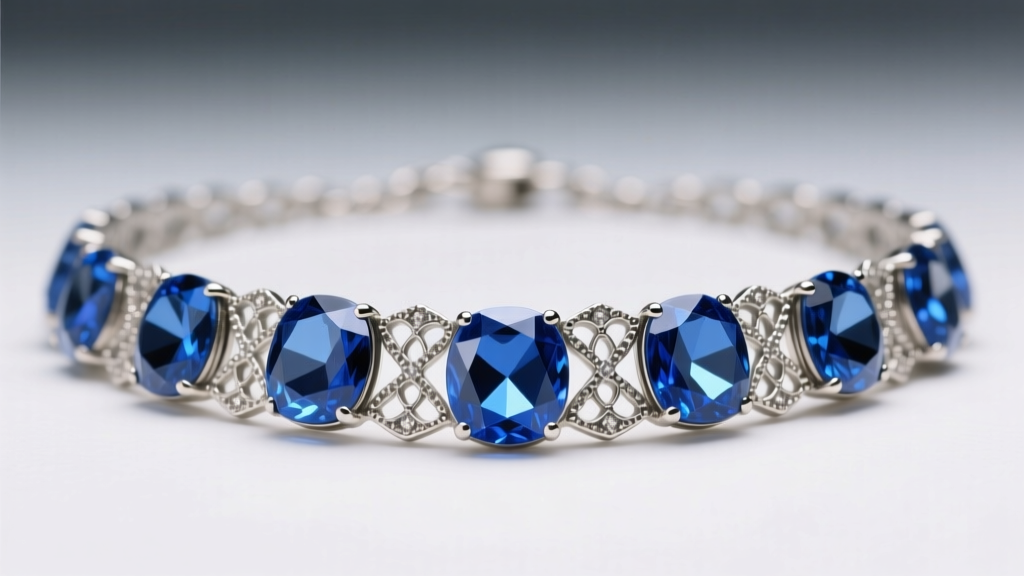
The Evolution of the Vintage Blue Rhinestone Necklace
As we navigate the 2026 estate jewelry market, the definition of "vintage" has expanded. While purists once defined vintage as items between 20 and 99 years old, the surge in Y2K and late-1990s nostalgia means that a vintage blue rhinestone necklace can now encompass pieces from the Art Deco period all the way to late 20th-century designer revival collections. However, the most highly coveted specimens remain rooted in the Mid-Century and Retro eras, where cobalt, sapphire, and aquamarine glass stones were utilized to mimic precious gemstones during times of economic constraint and wartime material rationing.
Buying vintage costume jewelry requires a forensic approach. Unlike fine jewelry, where value is dictated by melt weight and gemological grading, vintage costume pieces are valued on design rarity, maker provenance, construction integrity, and the survival of fragile components like foil backings. This guide provides a deep-dive framework for collectors and enthusiasts looking to acquire, authenticate, and preserve these wearable artifacts.
Decoding the Blue Spectrum: Sapphire, Cobalt, and Aurora Borealis
The color blue was a staple in 20th-century costume jewelry manufacturing, but the specific hue and optical treatment can immediately date a piece.
1. Sapphire and Royal Blue (1920s–1940s)
Early Czech glass manufacturers produced deep, saturated sapphire stones that were often foil-backed to increase light return. These stones exhibit a slightly softer faceting pattern compared to modern machine-cut crystals. In Art Deco pieces, these dark blue stones were frequently paired with marcasite or colorless rhinestones in sterling silver or early rhodium-plated settings.
2. Cobalt and Aquamarine (1950s–1960s)
The Mid-Century boom introduced brighter, more varied color palettes. Cobalt blue stones were heavily used by makers like Weiss and Haskell, often set in gold-tone brass. Aquamarine (a pale, icy blue) became a signature of the 1950s, frequently seen in elaborate parure sets featuring floral or starburst motifs.
3. The Aurora Borealis (AB) Revolution
In 1955, Swarovski collaborated with Christian Dior to develop the Aurora Borealis coating. By utilizing titanium vapor deposition in a vacuum chamber, manufacturers could apply a microscopic metallic layer to the surface of the glass, creating an iridescent, rainbow-shifting effect. If a vintage blue rhinestone necklace features AB stones, it definitively dates to 1955 or later. According to the Swarovski Group History archives, this innovation completely disrupted the Mid-Century costume jewelry market and remains a primary dating metric for appraisers today.
Construction Clues: Prongs, Foil, and Findings
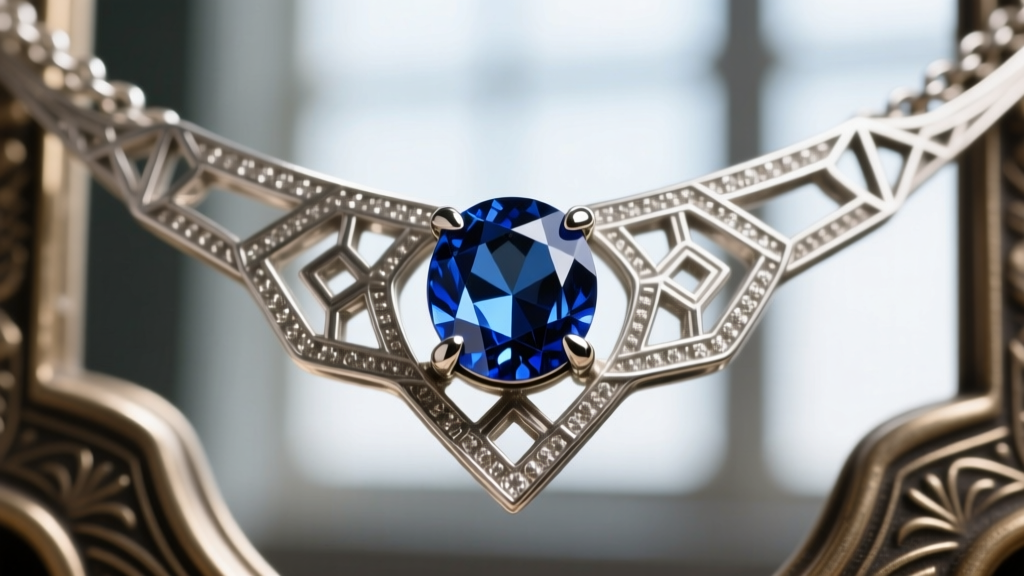
The structural anatomy of a necklace reveals its original price point and intended longevity. High-end vintage manufacturers treated glass stones with the same respect as precious gems.
- Claw Prongs vs. Glue Settings: Premium houses like Trifari, Eisenberg, and Boucher utilized hand-set claw prongs. The metal is folded over the girdle of the glass chaton, securing it mechanically. Lower-tier manufacturers relied on industrial glues. If you examine the back of the setting and see no metal prongs, or if the stone rattles slightly, it is glue-set and highly susceptible to stone loss due to adhesive desiccation over decades.
- Foil Backing Mechanics: To simulate the refractive index of a sapphire, manufacturers applied thin sheets of silver or gold-colored foil to the flat back of the glass stone before sealing it into the cup setting. This foil acts as a mirror. Over time, moisture can breach the seal, causing the foil to oxidize, turn black, or flake away—a condition known as "foil rot" or "dead stones." Once a stone loses its foil, it cannot be restored; it must be replaced.
- Clasp Typology: The clasp is a vital dating tool. Trombone (push-pull) clasps and simple C-catches without safety chains indicate pre-1950s origins. The introduction of the J-hook clasp with a figure-8 safety catch became the industry standard in the late 1950s and 1960s. Barrel clasps were common on heavier, multi-strand bead and rhinestone collars.
Glass Origins: Czech vs. Swarovski
Understanding the material science of the rhinestones is critical for evaluating brilliance and wear resistance. For decades, the vintage costume jewelry industry relied on two primary sources for glass chatons.
Czech Glass: Historically produced in the Jablonec region, Czech stones often contained lower lead oxide content (10% to 20%). They were frequently molded or pressed, resulting in slightly rounded facet junctions. While beautiful, they do not possess the same sharp, prismatic light dispersion as their Austrian counterparts. However, their softer aesthetic is highly prized by Art Deco collectors.
Swarovski (Austrian) Crystal: Swarovski pioneered full lead crystal (historically containing up to 32% lead oxide). The high lead content increases the refractive index, allowing the glass to bend blue light with exceptional brilliance. Furthermore, Swarovski utilized patented precision-cutting machinery that created razor-sharp facet intersections. A vintage blue rhinestone necklace featuring Swarovski stones will exhibit a noticeably sharper, more aggressive sparkle under direct lighting.
Condition Checklist: What to Avoid
When evaluating a potential purchase, condition dictates both wearability and resale value. The Lang Antiques University emphasizes that while patina on metal is acceptable, structural degradation of the stones or plating severely impacts a piece's market viability.
| Condition Issue | Cause / Mechanism | Impact on Value |
|---|---|---|
| Foil Rot (Dead Stones) | Moisture oxidation of the backing foil | Severe (30-50% reduction) |
| Brassing / Plate Loss | Wear of gold/rhodium wash revealing base brass | Moderate (15-25% reduction) |
| Missing Chatons | Prong failure or glue desiccation | High (Depends on stone rarity) |
| Clasp Failure | Spring mechanism fatigue or pin loss | Low (Easily repaired by a jeweler) |
| Verdigris Buildup | Copper oxidation in base metal alloys | Moderate (Can damage stones if untreated) |
Pricing Tiers in the 2026 Market
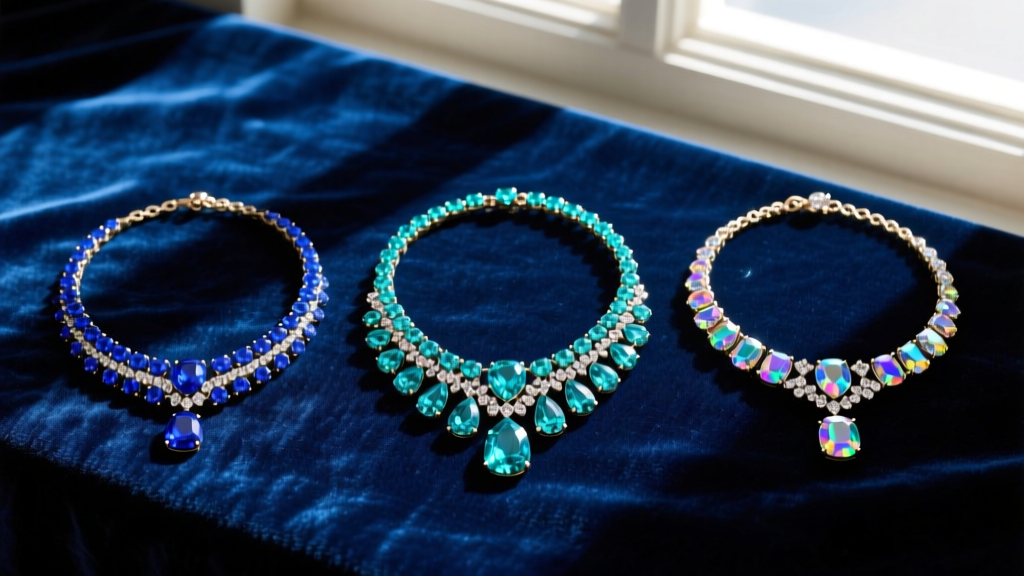
The market for vintage costume jewelry has matured, with collectors willing to pay premiums for documented, signed pieces in pristine condition. Based on recent auction data and vintage marketplace aggregators like Ruby Lane, pricing generally falls into three distinct tiers:
Tier 1: Unsigned & Mass-Market ($45 – $120)
Necklaces lacking a maker's mark, featuring glue-set stones, or showing minor brassing. These are purchased primarily for aesthetic styling rather than investment. Unsigned 1990s revival pieces also fall into this bracket.
Tier 2: Signed Mid-Century Makers ($150 – $450)
Pieces bearing recognizable stamps such as "Weiss," "Coro," "Trifari" (with crown), or "Haskell." A signed, multi-strand sapphire rhinestone collar by Weiss in excellent condition with intact foil and functioning clasps will reliably command the higher end of this spectrum.
Tier 3: Museum-Quality & Rare Art Deco ($600 – $2,500+)
Exceptional examples from the 1920s and 1930s, particularly those by Eisenberg Original, Miriam Haskell, or Schiaparelli. These pieces often feature early, unfoiled hand-cut stones, intricate sterling silver filigree, and provenance that elevates them to wearable art.
Authenticating Signatures and Maker's Marks
"Never rely solely on the hangtag. Vintage paper tags were easily swapped or lost. Always inspect the metal clasp, the back of the central pendant, or the interior of the extension chain for stamped cartouches or laser-etched signatures."
Familiarize yourself with the specific typography used by major houses. For instance, Trifari used a block letter stamp in the 1920s, transitioned to the "KTF" superimposed monogram in the 1930s, and adopted the "Trifari" script with a crown in the late 1940s. Recognizing these micro-details ensures you accurately date the vintage blue rhinestone necklace and avoid purchasing a 1980s reproduction masquerading as a Mid-Century original.
By prioritizing mechanical construction over superficial shine, understanding the chemistry of glass treatments, and rigorously inspecting the foil backings, you can confidently navigate the vintage market and secure pieces that will retain both their beauty and their historical value for decades to come.


