Choker Wire Necklace: Metallurgy, Gauge Sizing & Fit Guide
Master the choker wire necklace with our expert guide on metal alloys, gauge thickness, clasp mechanics, and hypoallergenic sizing for perfect fit.

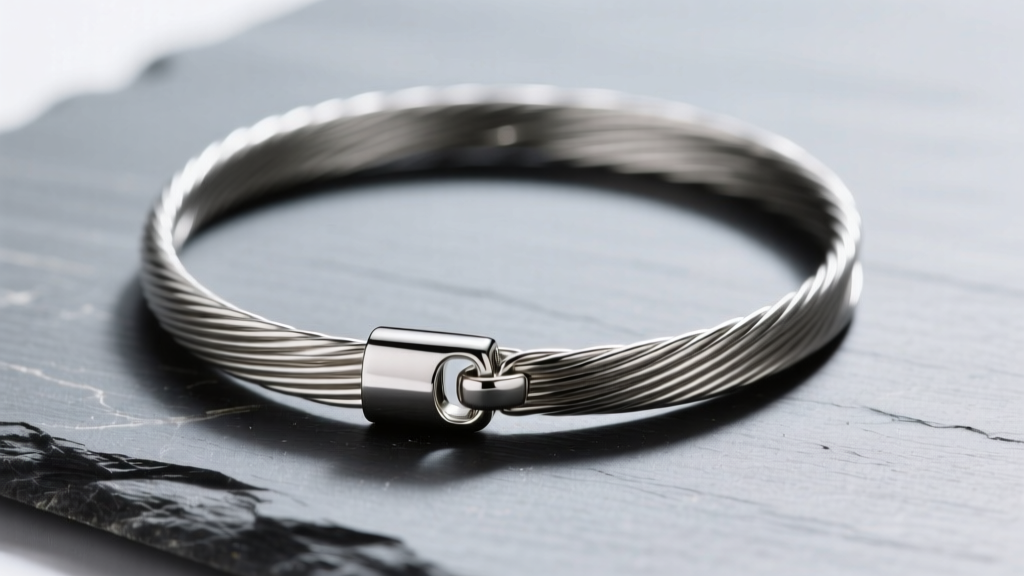
The modern choker wire necklace is a triumph of minimalist engineering, yet the market is flooded with poorly constructed pieces that compromise on skin safety, structural integrity, and ergonomic fit. As of 2026, discerning collectors and jewelers are moving away from mass-produced, mystery-alloy wires and demanding transparency in metallurgy and mechanical design. Whether you are sourcing materials for a bespoke bench project or investing in a luxury everyday piece, understanding the technical specifications of wire chokers is non-negotiable. This deep dive explores the material science, gauge physics, and failure modes of wire-based neckwear.
The Metallurgy of Wire Chokers: What Touches Your Skin
The primary point of failure in any body-adjacent jewelry is the metal-to-skin interface. A choker wire necklace sits directly over the jugular vein and thyroid cartilage, an area prone to high thermal fluctuations and perspiration. This environment accelerates galvanic corrosion and ion leaching in subpar alloys.
316L Surgical Stainless Steel vs. 304 Steel
Many commercial brands label their products simply as "surgical steel." However, the distinction between 304 and 316L stainless steel is critical. 316L contains a 2-3% addition of molybdenum, which drastically increases its resistance to chloride corrosion (sweat). While 316L is highly durable, it still contains 10-14% nickel. Under the European Nickel Directive (EN 1811), the nickel release rate must be below 0.5 µg/cm²/week. While 316L generally passes this for intact skin, micro-abrasions from a stiff wire choker can trigger contact dermatitis in sensitized individuals. For a comprehensive review of nickel allergies in jewelry, refer to dermatological research published by the National Institutes of Health (NCBI).
ASTM F136 Titanium: The Hypoallergenic Benchmark
For absolute biocompatibility, ASTM F136 Ti-6Al-4V ELI (Extra Low Interstitial) titanium is the gold standard. This is the exact alloy used in surgical implants. It contains zero nickel and possesses a high strength-to-weight ratio, allowing for thinner, lighter wire profiles that maintain their structural rigidity. A 12-gauge F136 titanium wire will weigh roughly 45% less than its 316L steel counterpart, significantly reducing the inertial drag on the clasp mechanism during movement.
Nitinol (NiTi) Memory Wire
Nitinol is a superelastic alloy of nickel and titanium. Despite containing nickel, the titanium oxide layer on its surface is so stable that it rarely causes allergic reactions. Nitinol exhibits a unique phase transformation between austenite and martensite, allowing the choker to be bent and twisted, only to snap back to its pre-programmed circular shape when exposed to body heat. This makes it the premier choice for travel-friendly, crush-proof wire chokers.
Decoding Wire Gauges: Thickness, Tension, and Drape
The stiffness and drape of a choker wire necklace are dictated by its cross-sectional area, measured in American Wire Gauge (AWG) or millimeters. Selecting the wrong gauge results in either a flimsy wire that kinks under pressure or a rigid torque that feels like a medical brace.
| AWG Size | Diameter (mm) | Flexibility Profile | Ideal Use Case |
|---|---|---|---|
| 10 AWG | 2.58 mm | Extremely Rigid | Statement torque necklaces; requires custom bench forming and heavy-duty bayonet clasps. |
| 12 AWG | 2.05 mm | High Tension | Luxury everyday chokers; holds a perfect circle, ideal for magnetic or tension-lock clasps. |
| 14 AWG | 1.62 mm | Moderate Flex | Versatile daily wear; slight give for comfort, compatible with standard lobster clasps if looped. |
| 16 AWG | 1.29 mm | High Flexibility | Delicate layering pieces; requires reinforced soldered loops to prevent shear failure at the clasp. |

Clasp Mechanics and Failure Modes
The clasp is the most vulnerable component of any wire choker. The transition from a rigid wire to a flexible jump ring or clasp creates a stress concentration point. Understanding how these connections fail is key to evaluating a piece's longevity.
The Epoxy Degradation Problem
In mass-market memory wire chokers, the end loops are often secured using industrial epoxy rather than mechanical crimps or soldering. Human sebum, cosmetics, and UV exposure break down the chemical bonds of standard jeweler's epoxy within 12 to 18 months. When the epoxy degrades, the wire slips out of the end-cap, resulting in sudden catastrophic failure. Always inspect the end-caps of a wire choker; if you see a visible resin gap, avoid the piece.
Soldered Loops vs. Mechanical Crimps
For precious metal wire chokers (14k or 18k gold), the wire ends should be drawn down, looped, and laser-welded or torch-soldered. This creates a continuous grain structure that resists shear stress. For titanium and steel, which are difficult to solder without specialized argon-arc equipment, mechanical swaging (using a hydraulic press to deform a metal sleeve around the wire) is the preferred, high-strength alternative.
Tension and Bayonet Clasps
For 10 AWG and 12 AWG rigid chokers, standard lobster clasps are mechanically insufficient. Bayonet clasps (which lock via a push-and-twist internal spring mechanism) or magnetic tension clasps with neodymium N52 cores provide the necessary sheer strength to withstand the outward torque of a rigid wire resting against the sternocleidomastoid muscle.
Sizing Framework: Calculating the Perfect Choker Drop
A choker wire necklace must sit precisely at the base of the neck. Unlike chain necklaces, wire cannot drape or fold; it must follow the topography of the wearer's clavicle and cervical spine. The traditional "two-finger" measuring rule is entirely inadequate for rigid wire.
Expert Sizing Protocol: Use a flexible fiberglass tailor's tape to measure the exact circumference of the neck at the desired resting point. For a rigid 12 AWG wire, add exactly 15mm to 20mm (0.6 to 0.8 inches) to the raw measurement to account for the thickness of the wire itself and the necessary articulation gap for swallowing and head rotation. For flexible Nitinol memory wire, subtract 5mm from the raw measurement to allow the superelastic tension to grip the neck securely without choking.
When purchasing bespoke or high-end wire chokers, look for brands that offer micro-adjustable extender chains (usually 10mm to 15mm in length) attached to the primary clasp. This accounts for natural fluctuations in neck circumference due to hydration, temperature, and posture.
Maintenance, Metal Fatigue, and Annealing
Even the highest quality choker wire necklace is subject to the laws of metallurgy. Repeated bending, taking the necklace on and off by pulling the wire apart, and general wear lead to a phenomenon known as work hardening.
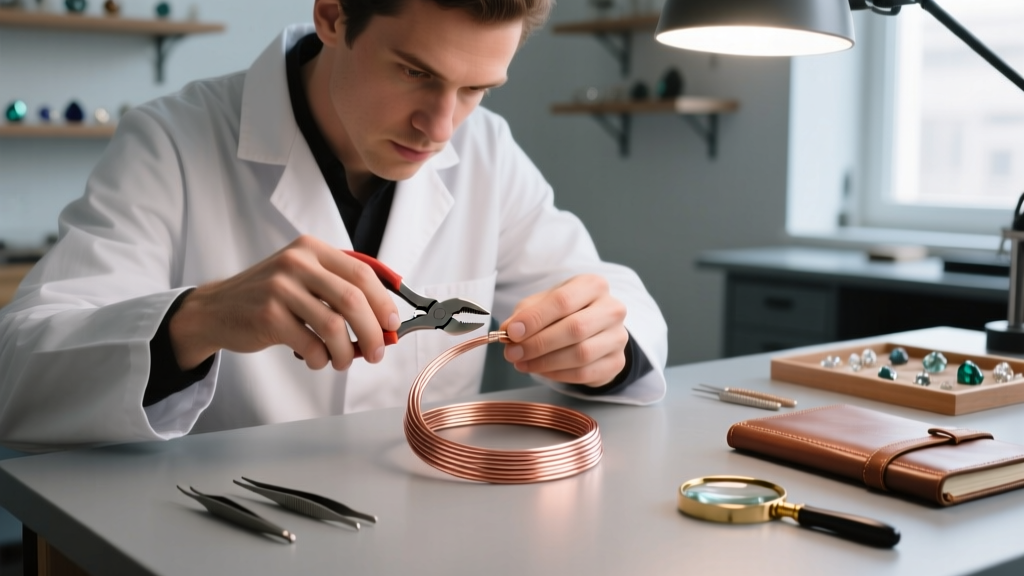
Combating Work Hardening
As wire is bent, its crystalline lattice structure becomes dislocated and tangled, making the metal harder but significantly more brittle. If you habitually pull a 14k gold or sterling silver wire choker apart to remove it, it will eventually snap at the stress point near the clasp. Always unfasten the clasp completely before removing the piece. If a silver or gold wire choker loses its shape and feels stiff, it requires annealing—a process where a jeweler heats the metal to a specific critical temperature and quenches it, resetting the crystal lattice and restoring its malleability.
Surface Polishing and Passivation
Micro-scratches on a wire choker are not just cosmetic flaws; they are potential sites for localized corrosion. For titanium and steel wire chokers, periodic passivation is recommended. This involves submerging the piece in a mild citric acid bath, which strips free iron from the surface and encourages the formation of a thick, protective chromium/titanium oxide layer. According to the material testing standards outlined by ASTM International, proper passivation can extend the functional lifespan of surgical-grade jewelry by decades.
By prioritizing verified metallurgy, precise gauge selection, and robust mechanical clasps, you elevate the choker wire necklace from a fleeting fashion accessory to a permanent, engineered fixture of your jewelry wardrobe. Demand transparency from manufacturers, measure with calipers and tape, and respect the physical limits of the alloys you wear.


