How to Choose and Style the Perfect Amethyst Heart Necklace
Learn how to authenticate, grade, and layer an amethyst heart necklace. Expert tips on color zoning, chain pairings, and setting durability.

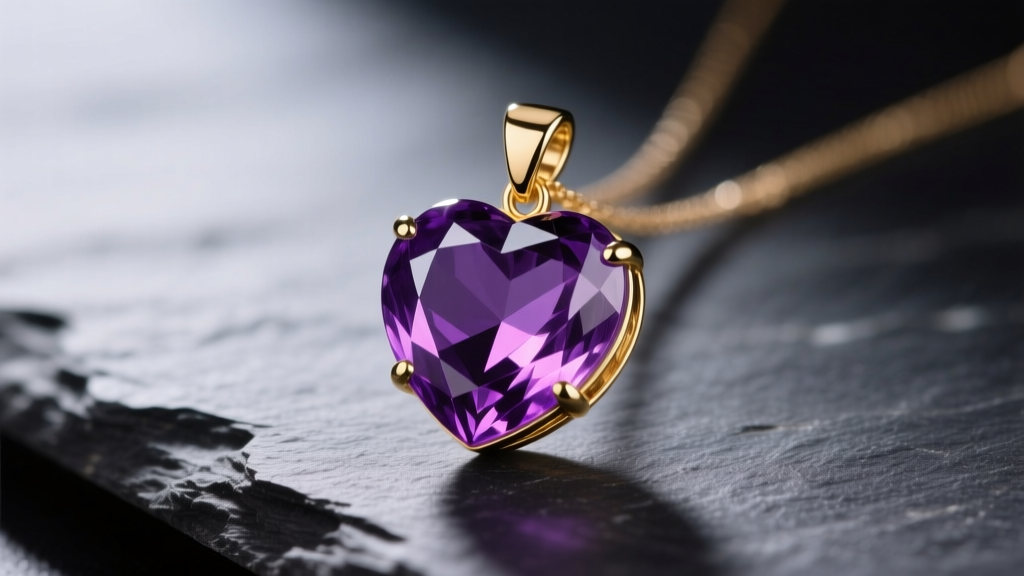
The Anatomy of a High-Quality Amethyst Heart Pendant
The amethyst heart necklace remains a staple in romantic and personalized jewelry collections. However, navigating the 2026 gemstone market requires a keen eye for mineralogy and lapidary craftsmanship. Amethyst, a purple variety of quartz, ranks at a 7 on the Mohs hardness scale. While durable enough for everyday wear, the heart cut introduces structural vulnerabilities that buyers must carefully evaluate.
Color Grading: From Rose de France to Siberian
Not all purple quartz is created equal. According to the Gemological Institute of America (GIA), the most prized amethyst exhibits a strong reddish-purple hue without visible color zoning. When selecting your pendant, categorize the stone into one of three commercial tiers:
- Rose de France: Pale lilac to light lavender. Often mass-produced and priced between $20 and $50 for sterling silver settings. These stones are frequently heat-treated to lighten naturally dark, muddy material.
- Uruguayan: Deep, saturated purple with a high carat weight. Prices range from $150 to $400 when set in 14k gold. This is the ideal mid-range choice for a striking heart pendant.
- Siberian: The pinnacle of amethyst grading. Featuring 75-80% purple with 15-20% secondary red and blue flashes under incandescent light. Unheated Siberian heart pendants command $500 to $1,200+ in the current market.
Cut and Symmetry: Protecting the Heart's Cleft
The heart brilliant cut is notoriously difficult to execute. The cleft (the inward dip at the top) and the bottom point are highly susceptible to chipping if struck against hard surfaces. Always inspect the cleft under a 10x jeweler's loupe; it should be smooth and rounded, never sharp or V-shaped, which creates a natural fault line in the quartz crystal lattice.
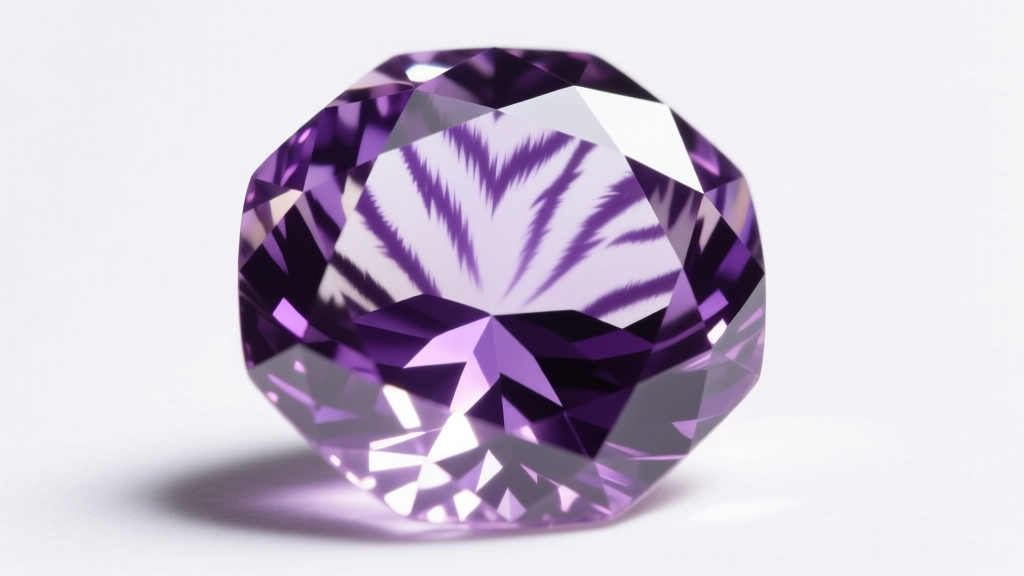
Step-by-Step Guide to Authenticating Your Stone
With synthetic hydrothermal quartz flooding e-commerce platforms, verifying the origin of your amethyst heart necklace is critical. Follow this three-step authentication protocol:
- Inspect for 'Tiger Stripe' Inclusions: Natural amethyst often contains microscopic hematite platelets or 'tiger stripes' near the color zones. Synthetic stones are typically flawless or contain breadcrumb-like inclusions from the autoclave growth process.
- Check for Dichroism: Amethyst is weakly dichroic. If you view the stone through a dichroscope (or simply rotate it slowly under a polarized light source), you should see a subtle shift between bluish-purple and reddish-purple. Glass imitations will remain completely static in color.
- The Thermal Conductivity Test: Quartz has a distinct thermal profile. When pressed against the cheek or lips, natural amethyst will feel noticeably colder than glass or cubic zirconia and will take longer to absorb your body heat. For definitive proof, consult the Mindat.org mineralogy database to understand specific gravity and refractive index benchmarks (1.544 - 1.553).
Chain Selection and Setting Durability
A heavy heart pendant requires a chain that can support its weight without kinking or snapping. The bail (the loop connecting the stone to the chain) must glide freely to prevent metal fatigue. Below is a structural comparison of chain types best suited for amethyst pendants weighing between 3 and 8 carats.
| Chain Type | Recommended Width | Durability Rating | Best For |
|---|---|---|---|
| Box Chain | 1.0mm - 1.5mm | High | Heavy Uruguayan/Siberian hearts; resists kinking. |
| Cable Chain | 1.2mm - 1.8mm | Medium | Classic looks; requires thicker gauge to support weight. |
| Wheat Chain | 0.9mm - 1.2mm | Very High | Intricate styling; woven links distribute tension evenly. |
| Snake Chain | 1.5mm+ | Low | Avoid for heavy pendants; prone to permanent bending. |
Setting Advice: Insist on a bezel setting or a V-prong setting that specifically caps the bottom point of the heart. Standard four-prong settings leave the cleft and point exposed, drastically increasing the risk of a catastrophic fracture if the necklace is snagged on clothing.
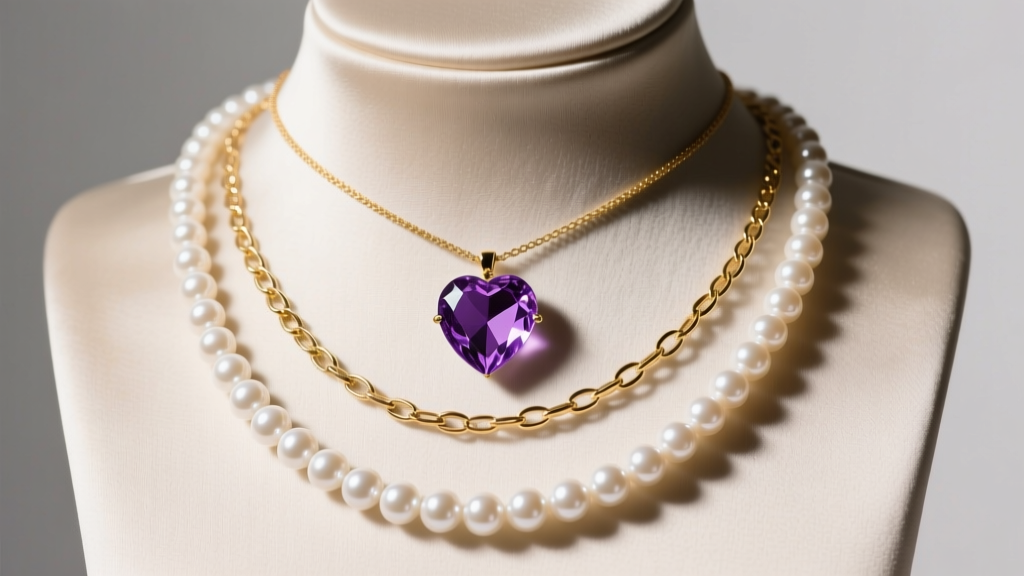
How to Layer an Amethyst Heart Necklace: A 3-Step Framework
Layering requires mathematical precision regarding chain lengths to avoid tangling and visual clutter. Use this framework to build a balanced stack around your amethyst focal point.
Step 1: Establish the Base (14 to 16 Inches)
Start with a lightweight, non-pendant chain or a strand of small freshwater pearls. A 16-inch 14k gold paperclip chain (approx. 2.5mm links) provides a modern, textural base that sits flush against the collarbone, framing the face without competing with the amethyst.
Step 2: Position the Focal Point (18 to 20 Inches)
Your amethyst heart necklace should sit exactly 2 to 4 inches below the base chain. An 18-inch length is universally flattering for most necklines, allowing the heart to rest on the upper sternum. Ensure the pendant bail is wide enough to accommodate a slightly thicker chain if you are using a wheat or box chain for structural integrity.
Step 3: Add the Anchor (22 to 24 Inches)
Complete the stack with a longer, minimalist element. A 22-inch gold lariat or a simple geometric bar pendant draws the eye downward, elongating the neck. Keep this final piece under 5 grams to prevent the stack from feeling heavy or unbalanced.
Care and Maintenance: Preventing Color Fade
Amethyst is photosensitive. Prolonged exposure to direct ultraviolet (UV) light can cause the iron impurities responsible for the purple color to oxidize and fade, sometimes turning the stone a muddy brown or yellowish-green over several years.
Expert Maintenance Rule: Never store your amethyst heart necklace on a sunny windowsill or in a display case exposed to halogen lighting. Always return it to a lined jewelry box or an opaque pouch when not in use.
When cleaning, avoid ultrasonic cleaners if your stone has visible surface-reaching fractures or heavy 'zebra stripe' inclusions, as the high-frequency vibrations can cause internal shattering. Instead, use a soft-bristled baby toothbrush, warm distilled water, and a drop of mild, phosphate-free dish soap. Rinse thoroughly and dry with a microfiber cloth to prevent water spots from dulling the table facet of the heart cut.


