How to Choose the Perfect Mens Diamond Cross Pendant Necklace
Discover how to choose a mens diamond cross pendant necklace. Learn about carat weights, chain pairings, and metal grades in our beginner-friendly guide.

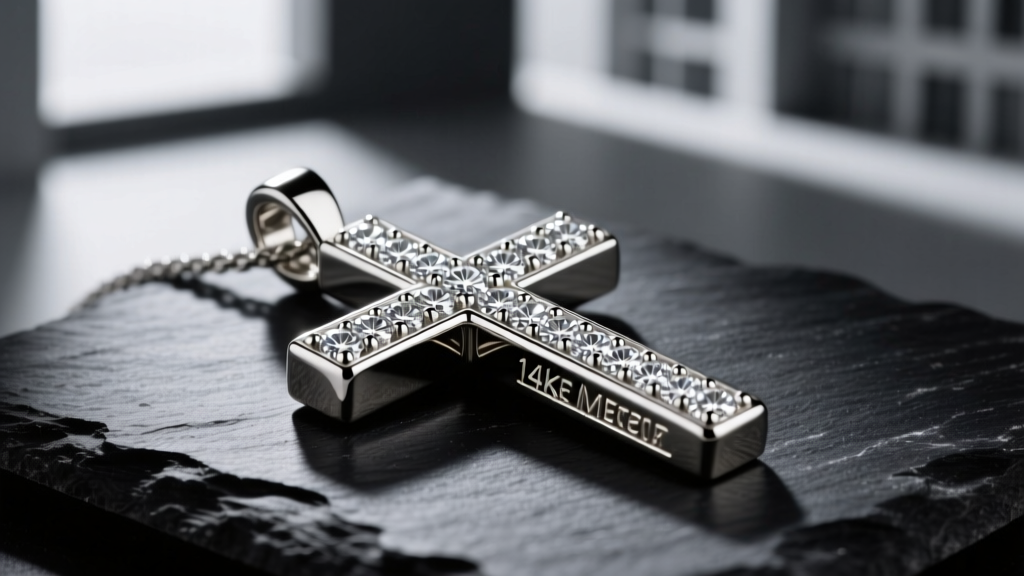
Introduction to the Men's Diamond Cross
A mens diamond cross pendant necklace is more than just a piece of jewelry; it is a staple of personal expression that bridges streetwear, luxury, and timeless faith-based styling. However, the men's jewelry market is flooded with misleading terminology, inflated carat weights, and fragile settings that fail within months. For a beginner, navigating the intersection of diamond grading, metal durability, and chain mechanics can feel overwhelming.
This guide strips away the marketing fluff. We will break down exactly what to look for when buying a men's diamond cross, focusing on structural integrity, realistic diamond expectations, and the precise mechanics of pairing your pendant with the right chain. Whether you are spending $500 or $5,000, understanding these fundamentals will ensure your investment lasts a lifetime.
Decoding the Diamonds: What Actually Matters for Men
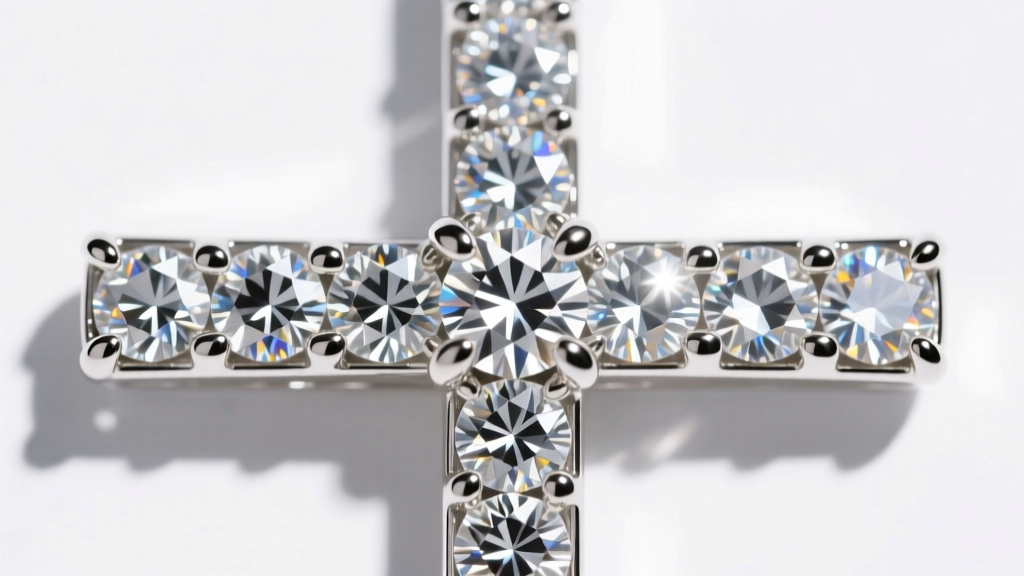
When shopping for a diamond cross, you will frequently encounter terms like 'Total Carat Weight' (CTW) and 'Pave Setting.' Unlike engagement rings, where a single solitaire diamond is graded meticulously on the 4Cs, men's crosses typically utilize dozens of tiny diamonds known as melee (ranging from 0.01 to 0.05 carats each).
The 'Spread' vs. Carat Weight Illusion
Many entry-level men's crosses use an 'illusion setting.' This is a technique where the white gold or platinum surrounding the tiny diamond is carved and polished to reflect light, making a 0.02-carat diamond look like a 0.10-carat stone. While this offers maximum visual 'spread' for a lower price, it is crucial to know what you are actually paying for.
- Clarity: For melee diamonds, SI1 to I1 clarity is perfectly acceptable. Inclusions are invisible to the naked eye at this scale. Paying for VVS clarity in a pave cross is a waste of budget.
- Color: Aim for G-J color grades. Anything lower (K-M) will look noticeably yellow against white gold, creating a muddy appearance.
- Lab-Grown Melee: In 2026, lab-grown melee diamonds are the industry standard for mid-tier crosses. They offer identical optical properties to mined stones but can reduce the overall price of a 1.00 CTW pendant by 30% to 40%.
For a deeper understanding of how tiny diamonds are graded, refer to the GIA Diamond Clarity Scale, which explains why inclusions in melee stones rarely impact structural integrity.
Metal Matters: Choosing the Right Foundation
The metal holding your diamonds is just as important as the stones themselves. Men tend to be harder on their jewelry—snagging chains on shirts, lifting weights, or sleeping in them. Therefore, metal hardness and prong durability are critical.
| Metal Type | Durability & Weight | Maintenance Needs | Best For |
|---|---|---|---|
| 14k White Gold | High durability, medium weight | Requires rhodium replating every 1-2 years | Everyday wear, crisp diamond contrast |
| 18k Yellow Gold | Softer, heavier, rich color | Low maintenance, scratches easily | Vintage aesthetics, warm skin tones |
| Platinum (950) | Extremely dense, heavy, durable | Develops a patina, no replating needed | Luxury buyers, heirloom pieces |
| Sterling Silver | Soft, lightweight, prone to tarnish | High maintenance, prongs bend easily | Budget buyers, occasional wear only |
Expert Warning: Avoid sterling silver for heavy, diamond-encrusted crosses. Silver prongs are too soft to securely hold diamonds during daily wear, leading to stone loss. Always opt for 14k gold or platinum for pave settings. For comprehensive care instructions on precious metals, consult the Jewelers of America Care Guide.
Chain Pairing: Matching the Pendant to the Chain
A common beginner mistake is buying a heavy diamond cross and a thick chain, only to realize the chain cannot physically pass through the pendant's bail (the loop at the top).
Understanding Bail Mechanics and Chain Widths
The inner diameter of a standard men's cross bail ranges from 4mm to 6mm. If you purchase a 6mm Cuban link chain, it will not fit through a 5mm bail. Always check the bail dimensions before buying a chain. Here is how different chains interact with cross pendants:
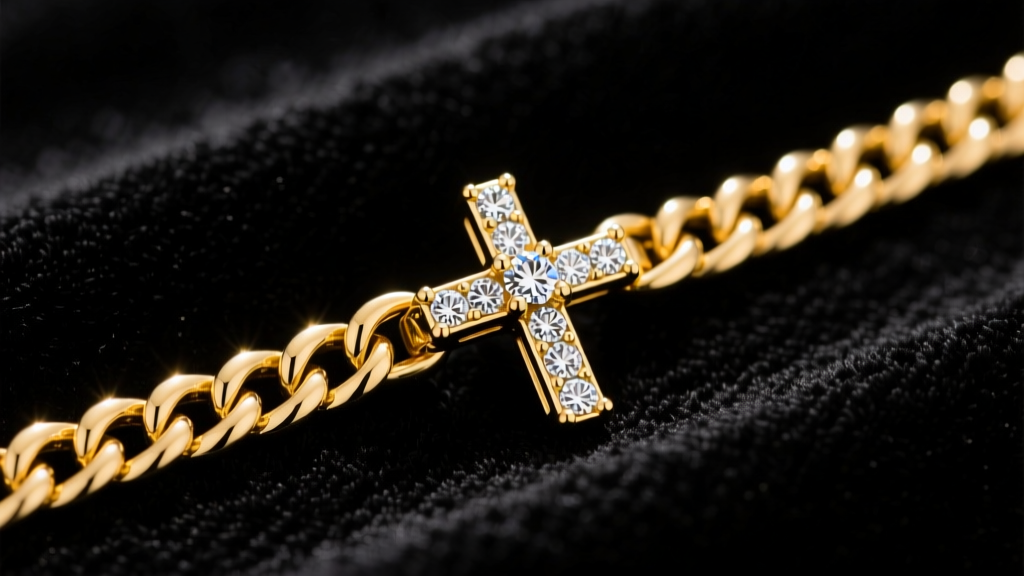
- Cuban Link (3mm - 5mm): The undisputed king of men's chains. The flat, interlocking links lay flush against the chest, allowing the cross to sit perfectly flat without flipping upside down.
- Figaro (3mm - 4mm): Offers a classic, slightly more intricate look. The alternating link pattern adds texture but can sometimes cause lighter pendants to slide off-center.
- Rope Chain (2mm - 4mm): Excellent for smaller, more subtle crosses. The twisted links catch the light beautifully, complementing the sparkle of the diamonds without overpowering the pendant.
- Box Chain (2mm - 3mm): Highly durable and resistant to kinking, but lacks the 'streetwear' aesthetic of a Cuban. Best suited for minimalist, modern crosses.
Sizing and Proportions: Avoiding the 'Action Figure' Look
Proportion is everything. A cross that is too large will look like a costume piece, while one that is too small will get lost in the chest hair or fabric folds. Use this sizing framework based on your build and styling preference:
- The Subtle Everyday (15mm - 20mm height): Ideal for wearing under a t-shirt or with business casual attire. Usually features 0.25 to 0.50 CTW.
- The Standard Statement (25mm - 35mm height): The most versatile size. Sits perfectly on the collarbone or upper chest. Typically carries 0.75 to 1.50 CTW.
- The Bold Iced-Out (40mm+ height): Reserved for streetwear and statement layering. These pieces often exceed 2.00 CTW and require heavy chains (5mm+) to support their physical weight.
Real-World Pricing and Where to Buy
Understanding market pricing prevents you from overpaying at mall jewelers or falling for scams online. Here is a realistic breakdown of what you should expect to pay in the current market:
- $300 - $800: 10k or 14k white gold, 0.25 - 0.50 CTW (I1-I2 clarity, lab-grown or promotional natural melee).
- $1,000 - $2,500: 14k gold, 0.75 - 1.50 CTW (SI1-SI2 clarity, G-H color, quality pave work).
- $3,000 - $8,000+: 18k gold or Platinum, 2.00+ CTW (VS clarity, custom CAD designs, VVS melee).
Always buy from jewelers who provide a clear breakdown of the metal weight and total carat weight. Avoid listings that simply say 'Diamond Cross' without specifying if the stones are natural, lab-grown, or color-enhanced.
Care, Maintenance, and Prong Checks
Pave settings require specific maintenance. Because the diamonds are held in place by microscopic beads or shared prongs of metal, everyday friction can wear these prongs down.
Pro Tip: Once a year, take your necklace to a local jeweler for a 'prong check.' They will use a loupe to inspect the setting and tap down any lifted prongs for a nominal fee (often under $30). This simple step prevents the loss of hundreds of dollars worth of diamonds.
When cleaning at home, avoid ultrasonic cleaners if your cross features fracture-filled diamonds or fragile illusion settings. Instead, use a soft-bristled toothbrush, warm water, and a few drops of mild dish soap. Gently brush the back of the pendant (the gallery) where skin oils and lotion accumulate, blocking the light from entering the diamonds and dulling their sparkle.
Final Thoughts
Choosing the right mens diamond cross pendant necklace comes down to balancing visual impact with structural reality. By prioritizing 14k gold over silver, understanding the mechanics of the bail and chain pairing, and setting realistic expectations for melee diamond grading, you can secure a piece that looks incredible and withstands the rigors of daily wear. Take your time, measure your chains, and invest in quality craftsmanship over inflated carat claims.


