Step-by-Step Guide to Cleaning an Opal Gold Necklace
Learn how to safely clean, maintain, and store your opal gold necklace. Step-by-step guide covering Ethiopian vs. Australian opals and gold care.

Why Your Opal Gold Necklace Requires Specialized Care
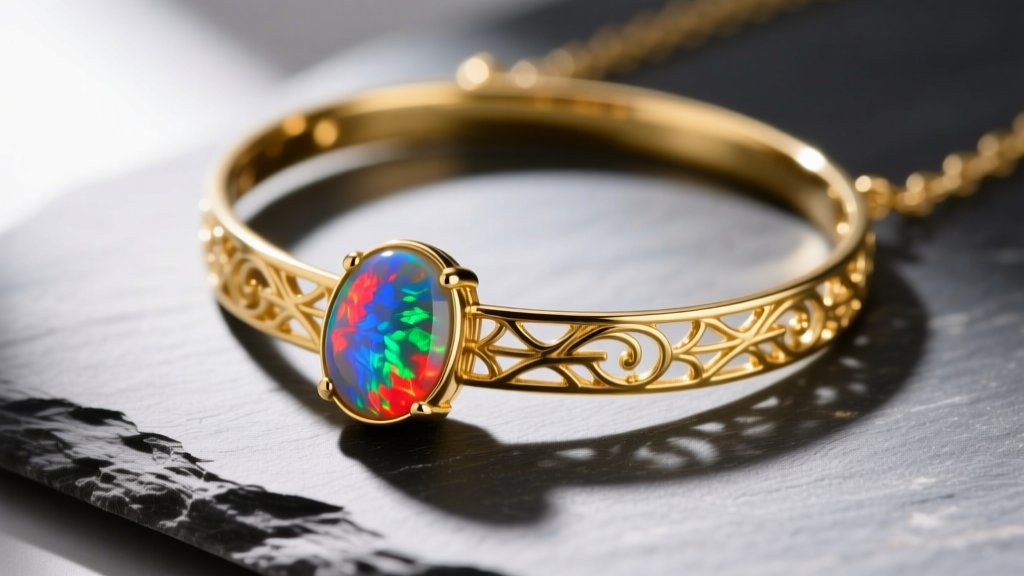
An opal gold necklace is a stunning investment, combining the warm, enduring luster of gold with the mesmerizing, fiery play-of-color found in opals. However, this pairing also marries two materials with vastly different physical properties and vulnerabilities. While gold is a noble metal resistant to tarnish and corrosion, opal is a delicate, amorphous form of hydrated silica. Ranking between 5.5 and 6.5 on the Mohs hardness scale, opals are significantly softer than diamonds or sapphires and contain anywhere from 3% to 21% water by weight.
Because of this unique chemical structure, standard jewelry cleaning methods—such as ultrasonic baths, steam cleaning, or harsh chemical dips—can cause catastrophic failure in an opal. Thermal shock can lead to "crazing" (a network of fine internal cracks), while harsh chemicals can strip the stone's natural moisture or etch the gold setting. According to the Gemological Institute of America (GIA), improper cleaning is the leading cause of irreversible damage to opal jewelry. This step-by-step guide will teach you how to safely clean, polish, and maintain your opal gold necklace without compromising its structural integrity or optical brilliance.
Step 1: Identify Your Opal Type (Crucial First Step)
Before introducing any moisture to your necklace, you must identify the origin of your opal. The cleaning protocol changes drastically depending on whether your stone is sedimentary or hydrophane.
| Opal Type | Origin | Porosity | Water Exposure Rule | Failure Mode Risk |
|---|---|---|---|---|
| Australian (Sedimentary) | Australia | Non-porous / Low | Brief damp wiping is safe; no soaking. | Crazing from thermal shock. |
| Ethiopian (Hydrophane) | Ethiopia (Welo) | Highly Porous | Strictly avoid water and oils. | Absorbs liquids, loses color, cracks. |
| Mexican (Fire Opal) | Mexico | Low to Medium | Minimal damp wiping only. | Surface scratching, dehydration. |
Expert Insight: If you own an Ethiopian Welo opal, it is hydrophane, meaning it acts like a microscopic sponge. If it absorbs dirty water, lotions, or even tap water with high mineral content, it can turn temporarily transparent, lose its play-of-color, or develop permanent cloudy inclusions. For hydrophane opals, the "dry cleaning" method outlined in Step 3 is your only safe option.
Step 2: Prepare Your Cleaning Station and Tools
Gather the correct materials to ensure you do not accidentally introduce abrasives or harsh chemicals to the gold or the opal.
- Distilled Water: Never use tap water, which contains chlorine and dissolved minerals that can leave microscopic deposits on the opal's surface or within its pores.
- pH-Neutral Dish Soap: A mild, lotion-free, pH-neutral liquid dish soap (like original Dawn) is safe for the gold setting. Avoid soaps with moisturizers or citrus degreasers.
- Microfiber Cloths: Use two clean, lint-free optical microfiber cloths. Avoid paper towels or tissues, as wood pulp fibers can cause micro-scratches on the opal's polished surface.
- Soft-Bristled Baby Toothbrush: A brand-new, extra-soft baby toothbrush is ideal for gently dislodging debris from the gold prongs or bezel without scratching the stone.
Step 3: The Targeted Cleaning Process
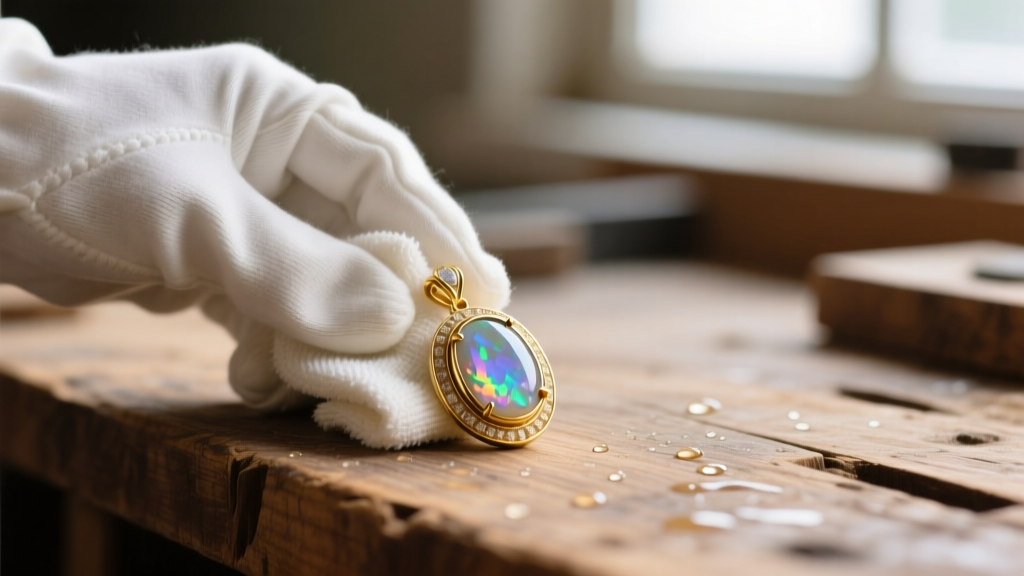
For Australian and Mexican Opals (The Damp Method)
- Mix the Solution: In a small glass bowl, mix one cup of room-temperature distilled water with a single drop of pH-neutral dish soap. Ensure the water is exactly room temperature (around 70°F/21°C) to prevent thermal shock.
- Dampen, Don't Soak: Dip the soft baby toothbrush into the solution and gently tap it against the side of the bowl to remove excess liquid. The brush should be damp, not dripping.
- Clean the Gold Setting First: Gently brush the gold chain, bail, and the back of the setting (the gallery) where skin oils and dead cells accumulate. Avoid brushing the opal itself with the bristles.
- Wipe the Opal: Take your microfiber cloth, dip a corner into the distilled water, wring it out completely until it is barely damp, and gently wipe the surface of the opal to remove surface oils.
- Dry Immediately: Use the second, completely dry microfiber cloth to immediately buff the gold and gently pat the opal dry. Air-drying can leave water spots on the gold.
For Ethiopian Hydrophane Opals (The Dry Method)
Do not use any liquid. Simply use a clean, dry optical microfiber cloth to gently buff the gold chain. For the opal itself, use a clean, soft makeup brush (like a kabuki brush) to lightly sweep away dust and skin oils from the stone's surface and the gold bezel. If the gold is heavily tarnished, take it to a professional jeweler who can polish the gold using a localized laser or specialized dry cloth without exposing the hydrophane opal to moisture.
Step 4: Inspecting the Gold Setting and Prongs
Cleaning is only half the maintenance battle; inspection is the other. Gold, particularly 18k and 22k variants, is a relatively soft metal. Over time, the friction of clothing and daily wear can wear down the gold holding your opal in place. According to the GIA's guide on precious metals, higher karat gold is more susceptible to abrasion and deformation.
After cleaning, use a 10x jeweler's loupe to inspect the setting:
- Prong Settings: Check that the tips of the gold prongs are resting flush against the opal's crown. If a prong is lifted even a fraction of a millimeter, it can catch on a sweater and pull the stone out.
- Bezel Settings: Ensure the gold rim wrapping the opal has not thinned or warped. A warped bezel can exert uneven pressure on the opal, leading to stress fractures.
- Chain Links and Clasp: Inspect the jump ring connecting the pendant to the chain. This is a high-stress failure point. If the gap in the jump ring is visible, it needs to be soldered shut by a professional.
Dangerous Cleaning Methods to Avoid at All Costs
Warning: Never assume that a cleaner labeled "Safe for Gold" is safe for the gemstones set within it. Commercial gold dips are highly toxic to opals.
To protect your opal gold necklace, strictly avoid the following common jewelry cleaning methods:
- Ultrasonic Cleaners: These machines use high-frequency sound waves to create microscopic cavitation bubbles in a liquid. The intense vibrations will shatter an opal or exacerbate existing internal fractures.
- Steam Cleaners: The sudden blast of high-temperature steam causes rapid thermal expansion. Because opal is a poor conductor of heat, the outside of the stone expands faster than the inside, resulting in immediate and irreversible crazing.
- Ammonia and Bleach: Ammonia-based glass cleaners or chlorine bleach will chemically etch the surface of the opal, leaving it permanently dull and pitted. Chlorine also attacks the alloys in 14k and 18k gold, causing stress corrosion cracking in the prongs.
- Toothpaste: Toothpaste contains silica abrasives (like hydrated silica or calcium carbonate) designed to scrub enamel. These abrasives are harder than the opal itself and will leave a web of permanent micro-scratches across the stone's polished dome.
Step 5: Proper Storage and Hydration Management
How you store your opal gold necklace when it is not being worn is just as critical as how you clean it. The primary enemy of an opal in storage is extreme dehydration, which causes the silica spheres to shrink and the stone to crack.
The Storage Protocol
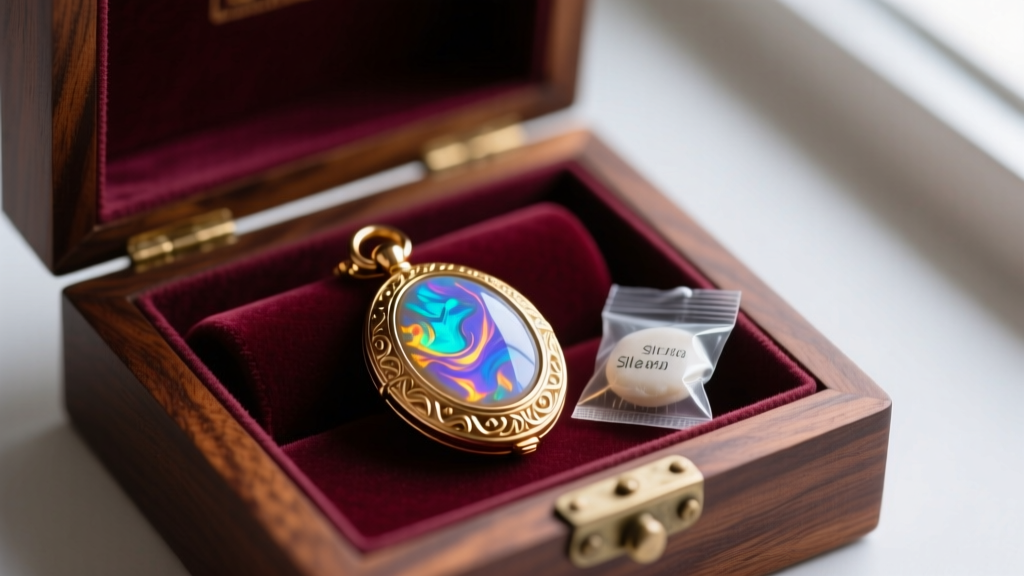
- Isolate the Necklace: Store the necklace in a soft, individual flannel or velvet pouch. Because opals are easily scratched by harder gems (like diamonds or sapphires) and the gold chain can tangle and scratch the opal's surface, isolation is mandatory.
- Control the Environment: Keep the jewelry box in a climate-controlled room. Avoid storing the necklace in a bathroom (where humidity and temperature fluctuate wildly due to showers) or near a heating vent.
- The Damp Cotton Trick (For Dry Climates): If you live in an arid climate or use central heating during the winter, place a slightly damp (not wet) cotton ball in a small, perforated plastic capsule inside the jewelry box. This maintains a stable ambient humidity of around 40-50%, preventing the opal from losing its structural water content. Note: Do not let the damp cotton touch the gold, as prolonged moisture exposure can tarnish the copper alloys in lower-karat gold.
Final Thoughts on Long-Term Maintenance
Maintaining an opal gold necklace requires a shift in mindset from "deep cleaning" to "gentle preservation." By understanding the specific geological nature of your opal and the metallurgical properties of your gold setting, you can ensure the piece remains vibrant and secure for generations. When in doubt, or if the gold setting requires heavy polishing to remove deep scratches, always defer to a certified bench jeweler who has documented experience working with hydrated gemstones.