How to Clean and Restore a Vintage Eisenberg Necklace
Discover expert techniques to clean, restore, and store your vintage Eisenberg necklace without damaging its fragile rhinestones or rhodium plating.

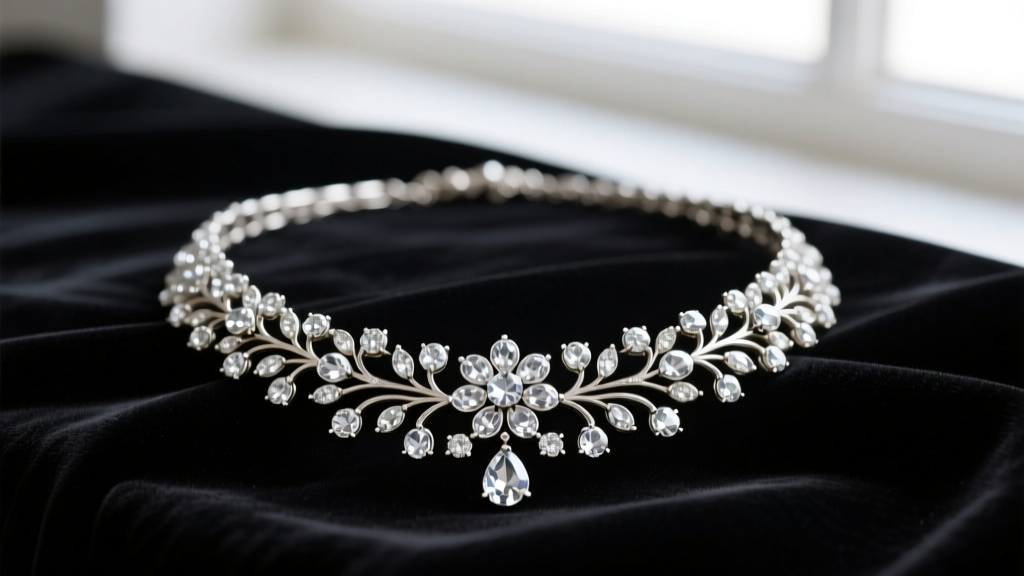
In the current 2026 vintage jewelry market, few names command as much respect and command as high a premium as Eisenberg & Sons. Originally a high-end dressmaker in the 1920s, the company transitioned to jewelry in the 1940s, creating pieces so exquisite that they were often sold separately from the garments they adorned. Today, an authentic Eisenberg necklace—particularly those bearing the coveted "Eisenberg Ice" or "Eisenberg Original" hallmarks—is not just a fashion accessory; it is a wearable piece of mid-century art. However, the very materials that give these pieces their legendary brilliance also make them incredibly vulnerable to improper care.
Unlike fine jewelry crafted from solid gold or platinum, vintage costume jewelry requires a highly specialized, conservative approach to maintenance. The heavy rhodium electroplating, intricate pot-metal castings, and foil-backed Swarovski chatons used by Eisenberg demand a deep understanding of material science. In this comprehensive guide, we will explore the exact protocols used by museum conservators and master jewelers to clean, restore, and preserve your vintage Eisenberg necklace for generations to come.
The Anatomy of an Authentic Eisenberg Necklace
To clean an Eisenberg necklace properly, you must first understand its construction. According to the Eisenberg company history, the brand refused to compromise on materials, even when categorized as "costume" jewelry. Most vintage pieces from the 1940s through the 1960s feature a base metal alloy (often a zinc and copper blend known as pot metal or white metal) that was heavily electroplated with rhodium or 14k gold. Rhodium, a platinum-group metal, provides a brilliant, tarnish-resistant white finish that mimics platinum.
The stones used were predominantly high-leaded glass rhinestones sourced from Swarovski or custom-cut by specialized European lapidaries. These stones were not merely glued in; they were meticulously set into metal collets (cups) with hand-tensioned prongs. Understanding this delicate marriage of base metal, thin electroplating, glass, and organic adhesives is the foundation of safe maintenance.
The Cardinal Rule: Why Submersion is Fatal
If you take only one piece of advice from this guide, let it be this: never submerge a vintage Eisenberg necklace in water or any liquid solution. The primary reason for this strict prohibition lies in the anatomy of the rhinestones themselves.
Understanding Foil-Backed Rhinestones and "Foil Rot"
Before the advent of modern vacuum-deposited mirror coatings, vintage rhinestones achieved their signature sparkle through a delicate metallic foil applied to the pavilion (the bottom facet) of the glass. This foil acts as a mirror, reflecting light back through the crown of the stone. When a necklace is submerged in water, capillary action draws the liquid into the microscopic gap between the glass stone and the metal collet.
"Once moisture becomes trapped beneath a foil-backed stone, it initiates an irreversible oxidation process. The silver or lead-based foil turns black, flakes away, and the stone becomes 'dead'—losing up to 80% of its refractive brilliance."
Furthermore, prolonged exposure to moisture can degrade the vintage jeweler's epoxy and natural resins used to secure the stones, leading to catastrophic stone loss. For a deeper understanding of how light interacts with these vintage glass compositions, the GIA Gem Encyclopedia offers excellent foundational knowledge on historical glass simulants and their vulnerabilities.
Step-by-Step Dry Cleaning Protocol
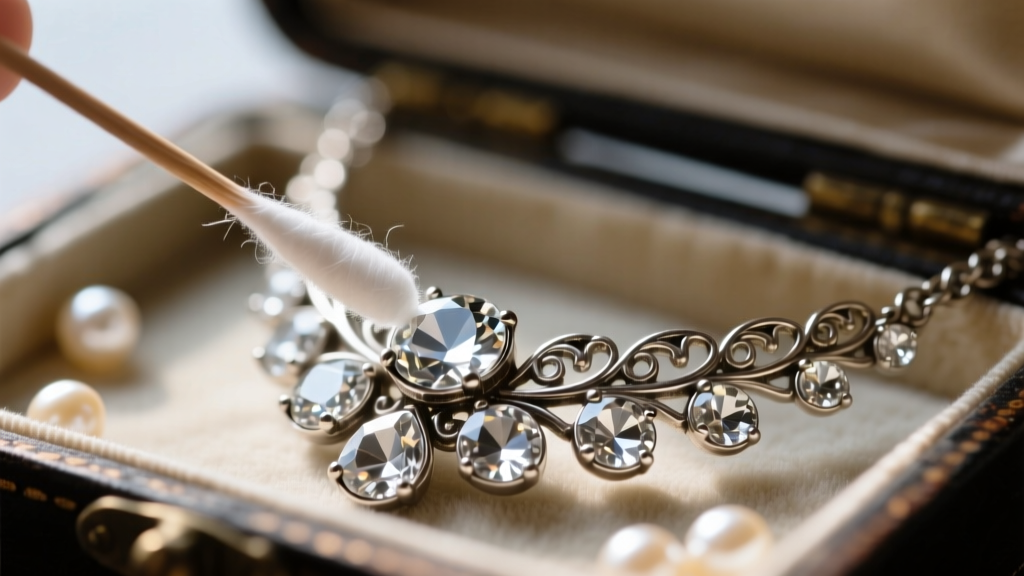
Cleaning your Eisenberg necklace should be a methodical, dry-first process. Gather the following tools before beginning: a soft goat-hair makeup brush, bamboo skewers or wooden toothpicks, high-grade microfiber cloths, and 99% isopropyl alcohol (to be used with extreme caution).
- Initial Inspection: Use a jeweler's loupe (10x magnification) to inspect every prong. If you notice a lifted prong or a loose stone, stop immediately. Cleaning a loose stone will inevitably dislodge it. Take the piece to a professional who specializes in vintage costume jewelry for prong re-tensioning.
- Dry Dusting: Gently sweep the entire necklace with the goat-hair brush. Goat hair is naturally anti-static and soft enough that it will not scratch the rhodium plating or catch on the delicate prongs. This removes microscopic skin cells, cosmetic powders, and environmental dust.
- Targeted Grime Removal: For stubborn buildup in the metal crevices (never on the stones), use a wooden toothpick. Wood is softer than rhodium and will scrape away calcified lotion or hairspray without scratching the metal. Avoid metal needles or safety pins, which will permanently gouge the plating.
- Solvent Application (Metal Only): If the metal requires degreasing, dip a cotton swab in 99% isopropyl alcohol and squeeze it out until it is barely damp. Carefully swab the metal settings, maintaining a strict 2-millimeter buffer zone around the base of every rhinestone to prevent the alcohol from dissolving the vintage glue.
Restoring Sparkle to "Eisenberg Ice"
Over decades of wear, the crowns of rhinestones accumulate a microscopic film of skin oils and lotions, creating a cloudy appearance. To restore the "Eisenberg Ice" fire without risking the foil backing, you must clean the glass tops using a controlled, localized method.
Spray a high-quality, ammonia-free glass cleaner onto a microfiber cloth—never spray it directly onto the jewelry. Fold the cloth over your index finger and gently buff the top facet of each individual stone. If your necklace features Aurora Borealis (AB) stones, which have a vacuum-deposited iridescent metallic oxide coating on the glass, you must be exceptionally gentle. Abrasive polishing cloths (like those treated with rouge or silver polish) will strip the AB coating right off the glass, leaving a dull, clear stone.
Clasp and Hardware Maintenance
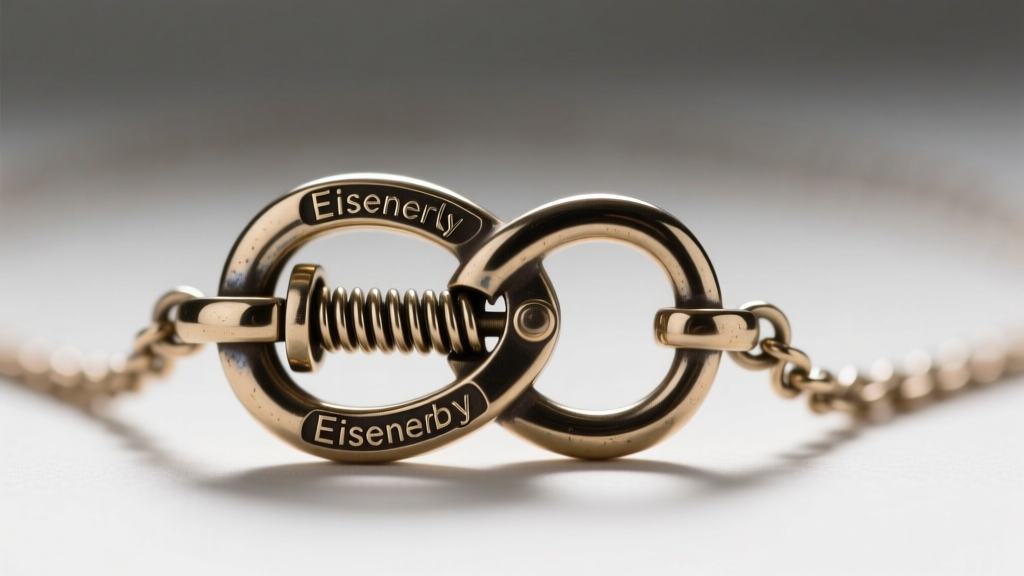
Eisenberg necklaces frequently utilize intricate box clasps equipped with figure-eight safety catches. These mechanical components are prone to accumulating lint and skin debris, which can cause the internal tension spring to fail or the tongue to slip out of the box.
To service the clasp, use a fine sewing pin to gently pick out any debris from the internal cavity of the box clasp. If the hinge on the figure-eight safety feels stiff, do not use liquid lubricants like WD-40 or sewing machine oil. Liquid oils will attract dust and eventually gum up the mechanism, and they can migrate onto the rhodium plating, causing discoloration. Instead, use a mechanical pencil to apply a microscopic amount of dry graphite powder directly to the hinge pin. Graphite provides excellent, dry lubrication that will not degrade the surrounding metals or adhesives.
Troubleshooting Common Eisenberg Issues
Even with meticulous care, vintage jewelry can develop specific issues over time. Use the diagnostic table below to identify and address common problems associated with vintage Eisenberg necklaces.
| Issue Identified | Underlying Cause | Expert Conservation Fix |
|---|---|---|
| Cloudy or "Dead" Stones | Foil backing oxidation due to moisture intrusion or natural degradation over 70+ years. | Irreversible via cleaning. A master jeweler must carefully un-prong the stone, clean or replace the foil, and re-seat it. Do not attempt DIY re-foiling. |
| Dark, Crusty Pitting on Metal | "Bronze disease" or galvanic corrosion where the rhodium plating has worn thin, exposing the pot metal to sweat chlorides. | Gently scrape the crust with a wooden toothpick. Seal the exposed area with a micro-crystalline wax (like Renaissance Wax) to halt further oxidation. |
| Stones Falling Out | Dessication and embrittlement of the original 1950s organic resin glue. | Collect the fallen stones in a micro-ziplock bag. Take the piece to a professional to have the stones re-set using modern, archival-grade jeweler's epoxy. |
| Yellowing of Rhodium Plating | Accumulation of nicotine, heavy cosmetics, or the underlying gold alloy bleeding through worn rhodium. | Clean with the dry protocol above. If the yellowing is actual plating wear, the piece must be professionally re-rhodium plated by a specialist familiar with vintage pot-metal outgassing. |
Archival Storage for 2026 and Beyond
How you store your Eisenberg necklace is just as critical as how you clean it. The enemy of vintage costume jewelry is humidity, PVC off-gassing, and friction. Never store your necklace in the plastic ziplock bags commonly used in retail; polyvinyl chloride (PVC) emits sulfur gases as it degrades, which will rapidly tarnish the base metals and degrade the stone adhesives.
Instead, invest in acid-free, unbuffered archival tissue paper to wrap the necklace, preventing the metal links from scratching the rhinestones. Place the wrapped piece inside a breathable cotton jewelry pouch. For ultimate protection, include a strip of 3M Anti-Tarnish paper or store the pouch inside a Pacific Silvercloth-lined box. These materials actively absorb airborne sulfur and moisture, creating a stable microclimate that will preserve the structural integrity and blinding sparkle of your Eisenberg necklace for decades to come.
By treating your vintage Eisenberg necklace not merely as an accessory, but as a fragile historical artifact, you ensure that its legendary "Ice" will continue to captivate and shine in the modern era.


