Why Your Necklace Turns Neck Green and How to Fix It
Discover why your necklace turns neck green, the science behind copper oxidation, and expert cleaning tips to protect your skin and jewelry.

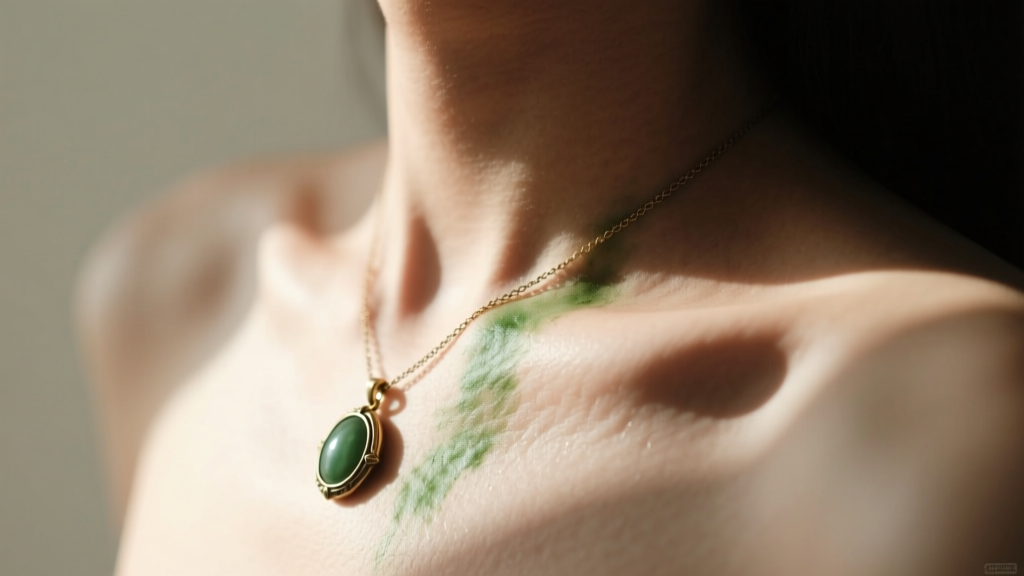
There are few things more frustrating in jewelry care than taking off your favorite pendant at the end of the day, only to discover a stubborn, dark ring around your collarbone. If you have ever experienced a moment where your favorite necklace turns neck green, you are not alone. This phenomenon is incredibly common, yet it is widely misunderstood. Many consumers mistakenly believe that a green stain is a sign of a severe metal allergy or an indicator of "fake" jewelry. In reality, it is a simple, predictable chemical reaction. As we move through 2026, advancements in jewelry plating and alloy compositions have made it easier than ever to prevent this issue, but understanding the root cause remains essential for proper care and maintenance.
The Chemistry: Why Your Necklace Turns Neck Green
To effectively clean and prevent the issue, we must first understand the chemistry at play. The green stain is not a sign of infection or an allergic reaction; it is the result of oxidation. According to research highlighted by the American Chemical Society, when copper or copper-heavy alloys come into contact with the natural acids on your skin, a chemical reaction occurs. Human sweat contains water, salts, urea, and lactic acid. The skin's natural pH typically ranges between 4.5 and 5.5, making it slightly acidic.
When the acidic environment of your skin meets the copper in your jewelry, it breaks down the metal at a microscopic level, forming copper chelates and copper chloride. These compounds are inherently green or blue-green. Because they are water-soluble, they easily transfer from the surface of the metal chain or pendant onto the stratum corneum (the outermost layer of your skin), leaving a distinct, smudgy green mark. The intensity of the stain often correlates with how much you sweat, the specific pH of your skin, and the humidity in your environment.
Metal Breakdown: Which Alloys Cause the Stain?
Not all metals will cause this reaction. Pure gold and pure silver are relatively stable and do not oxidize in this manner. However, because pure precious metals are too soft for daily wear, they are almost always alloyed with harder base metals. It is these base metals—specifically copper, zinc, and nickel—that are the culprits behind the staining.
| Metal Type | Typical Composition | Green Stain Risk | Primary Tarnish Type |
|---|---|---|---|
| Brass | 60-70% Copper, 30-40% Zinc | Very High | Green/Black Oxidation |
| Bronze | 88% Copper, 12% Tin | High | Green Patina |
| Sterling Silver | 92.5% Silver, 7.5% Copper | Low to Moderate | Black Sulfide Tarnish |
| 10k Gold | 41.7% Gold, 58.3% Alloy (often Copper) | Moderate | Green/Dark Oxidation |
| 14k Gold | 58.3% Gold, 41.7% Alloy | Low | Minimal Tarnish |
| Surgical Steel | Iron, Chromium, Nickel, Molybdenum | None | Rust (if damaged) |
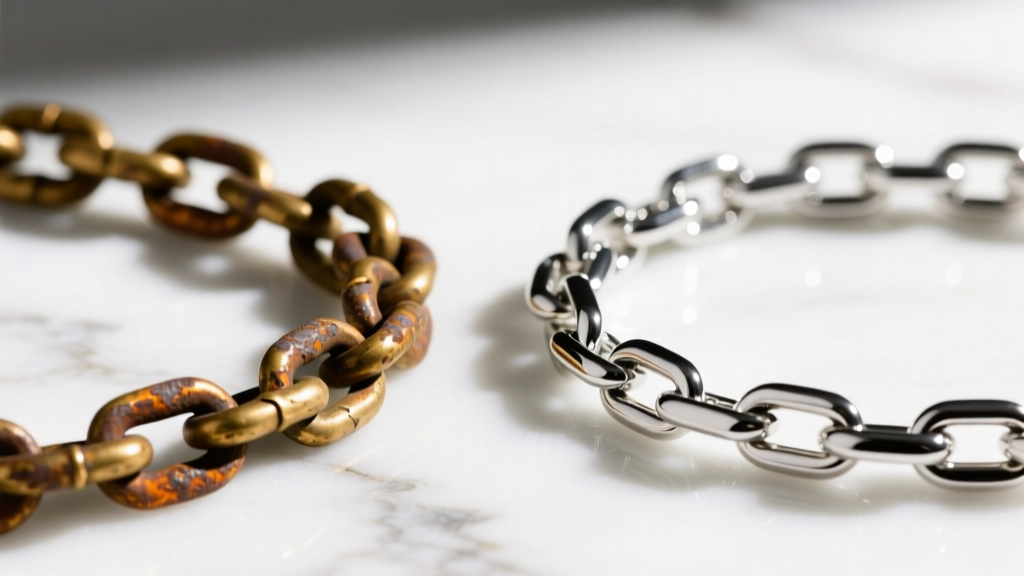
As noted by the Gemological Institute of America (GIA), sterling silver is generally safe for most, but the 7.5% copper content can occasionally react with highly acidic skin, though it more commonly results in black tarnish rather than a green stain. Brass and bronze, heavily favored in fashion jewelry and artisan pieces, are the most frequent offenders.
The Myth of the Clear Nail Polish Hack
A pervasive piece of internet advice suggests painting the inside of your jewelry or the chain with clear nail polish to create a barrier. While this might work for a single evening event, it is a poor long-term maintenance strategy. Nail polish degrades rapidly when exposed to the friction of a moving chain, body heat, and the oils in your skin. Once it micro-chips, moisture gets trapped between the polish and the metal, actually accelerating localized corrosion and making the jewelry much harder to clean. Professional jewelers strongly advise against this hack.
Preventative Care and Barrier Methods
If you own brass, bronze, or copper jewelry that you love and want to wear without the green stain, you need a reliable barrier. The most effective professional solution is rhodium plating. Rhodium is a precious metal in the platinum family that is highly resistant to tarnish and oxidation. Having a local jeweler apply a 0.75 to 1.0-micron layer of rhodium over your copper-based jewelry will completely seal the metal, preventing any interaction with your skin.
For at-home care, consider using a specialized jewelry shield spray. These polymer-based sprays are formulated to flex with the metal and resist degradation from skin oils much better than cosmetic enamels. Additionally, always remove your jewelry before applying lotions, perfumes, or sunscreens. The chemicals in these cosmetics often contain chlorides and alcohols that strip the metal's natural patina and accelerate the oxidation process.
How to Safely Remove the Green Stain from Skin
When the stain does occur, do not panic and avoid harsh scrubbing, which can cause contact dermatitis. The American Academy of Dermatology emphasizes gentle care when dealing with skin reactions and external staining. The green mark is simply a surface-level mineral deposit and can be dissolved easily with mild acids or solvents.
- Isopropyl Alcohol: Soak a cotton pad in 70% isopropyl alcohol and gently wipe the area. The alcohol breaks down the copper chelates and lifts them from the skin's surface without harsh abrasion.
- Micellar Water or Oil Cleanser: If your skin is sensitive or dry, an oil-based makeup remover or micellar water will gently dissolve the metallic salts. Follow up with a mild, pH-balanced facial cleanser.
- Lemon Juice or White Vinegar: For stubborn stains, the natural citric or acetic acid will neutralize the copper compounds. Apply with a cotton swab, let it sit for ten seconds, and rinse thoroughly with warm water. Always follow with a moisturizer to restore the skin's acid mantle.
Restoring and Cleaning the Jewelry
Once your skin is clear, you must address the jewelry itself. If the metal is actively oxidizing, it will continue to stain until the corrosive layer is removed. Avoid commercial "dip" cleaners on porous gemstones like turquoise, opal, or pearl, as the harsh chemicals will ruin the stone's finish.
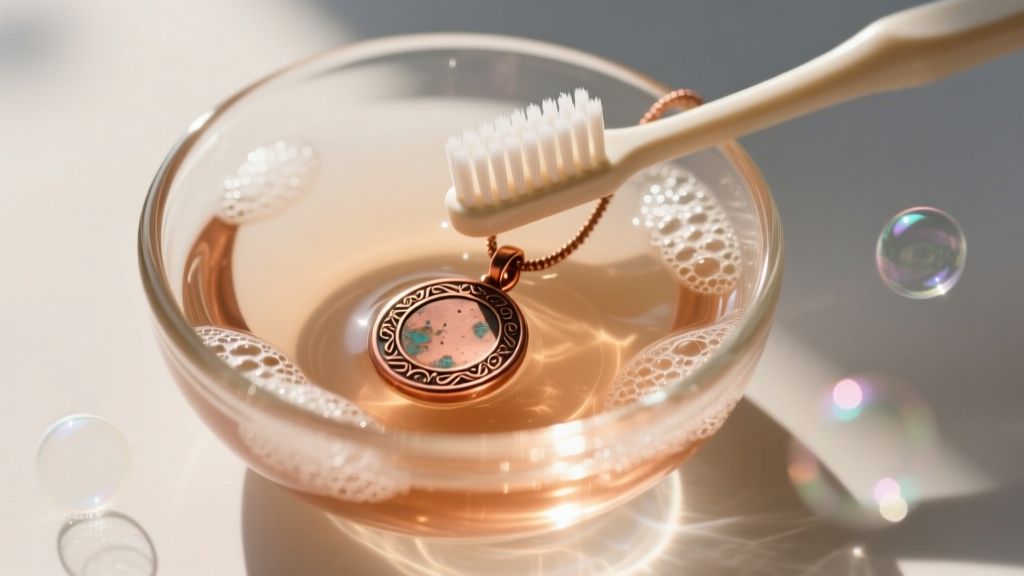
For durable pieces without delicate stones, create a cleaning solution using warm distilled water and a few drops of mild dish soap (such as Dawn). Use a soft-bristled baby toothbrush to gently agitate the chain links and the bail of the pendant. Rinse thoroughly under distilled water—tap water contains chlorine and minerals that can leave water spots or trigger further oxidation. Dry the piece immediately and completely with a microfiber cloth. Leaving the jewelry to air-dry can result in water spots that trap moisture against the metal.
Long-Term Solutions: Hypoallergenic Upgrades
If you are tired of the maintenance routine required to keep copper alloys in check, it may be time to upgrade your collection to inherently stable metals. When shopping for new pendants and chains, look for materials that are entirely free of copper and nickel.
"Investing in solid 18k gold, platinum, or grade 23 titanium ensures that the jewelry will remain entirely inert against the skin, completely eliminating the risk of oxidation stains while providing a lifetime of wear."
Titanium and niobium are exceptional choices for everyday chains. They are lightweight, incredibly strong, and completely immune to the acidic environment of human skin. By understanding the chemistry of your jewelry and adopting a proactive cleaning routine, you can confidently wear your favorite pieces without ever worrying about the green stain again.


