Chrome Hearts Necklace Cross Pendant: Silver vs Gold
Compare materials for your Chrome Hearts necklace cross pendant. We analyze sterling silver oxidation, gold karats, and patina aging for 2026 buyers.


When collectors and streetwear enthusiasts hunt for the ultimate statement piece, the chrome hearts necklace cross pendant consistently sits at the apex of luxury gothic jewelry. Founded by Richard Stark in 1988, Chrome Hearts has built an empire on heavy, uncompromising metallurgy and dark, romantic motifs. However, beneath the iconic Floral, Dagger, and Keepers Cross designs lies a complex world of material science. Understanding the specific alloys, oxidation techniques, and karat variations is crucial for anyone looking to invest in, maintain, or authenticate these heavy-hitting pendants. In this comprehensive material guide, we break down the exact properties that give Chrome Hearts its signature weight, luster, and legendary patina.
The Metallurgy of Rebellion: Decoding Chrome Hearts Sterling Silver
The backbone of the brand’s jewelry division is its proprietary approach to .925 sterling silver. Standard sterling silver consists of 92.5% pure silver and 7.5% copper. The copper is necessary for structural integrity, as pure silver is too soft for daily wear. However, Chrome Hearts elevates this standard alloy through meticulous lost-wax casting and intensive hand-finishing. Unlike mass-market jewelry that is stamped or machine-milled, each cross pendant is cast, filed, and soldered by artisans in their Hollywood, California workshop.
The defining characteristic of a Chrome Hearts silver cross is its intentional oxidation. Artisans apply a chemical bath—typically a liver of sulfur solution—which reacts with the copper in the alloy to create a dark, blackened layer. This oxidation is then carefully polished off the high-relief areas (like the edges of a Cemetary Cross or the tips of a Floral Cross), leaving the deep recesses permanently darkened. This creates a stark, three-dimensional contrast that highlights the intricate gothic typography and floral carvings. According to the Gemological Institute of America (GIA), this deliberate sulfide tarnishing not only provides aesthetic depth but can actually act as a mild protective barrier against further environmental corrosion in the recessed areas.
Gold and Platinum Variants: The Ultra-Rare Alternatives
While sterling silver dominates the market, Chrome Hearts occasionally releases cross pendants in precious yellow and white metals. These are often produced as limited runs, private commissions, or exclusive regional drops, making them highly sought after by serious archivists.
18k vs. 22k Yellow Gold
When Chrome Hearts crafts a cross in gold, they typically utilize 18-karat (75% pure gold) or 22-karat (91.6% pure gold) alloys. An 18k gold Floral Cross offers a Vickers Hardness (HV) of around 120-150, making it highly resistant to scratching and deformation. Conversely, the rarer 22k gold variants possess a deeper, richer orange-yellow luster but are significantly softer (around 70-90 HV). A 22k gold Dagger Cross will accumulate micro-scratches and develop a soft, matte patina much faster than its 18k counterpart, a trait that many collectors embrace as a record of the piece's history.
950 Platinum
Platinum runs are the holy grail of Chrome Hearts cross pendants. Weighing nearly 60% more than an identical silver piece, a platinum Keepers Cross offers unparalleled density. Platinum is a naturally white metal that does not oxidize or tarnish like silver. Instead of losing metal when scratched, platinum merely displaces, developing a satiny finish over time. The GIA notes that platinum's extreme durability makes it ideal for securing the rare pavé diamonds occasionally set into the brand's premium cross tiers.
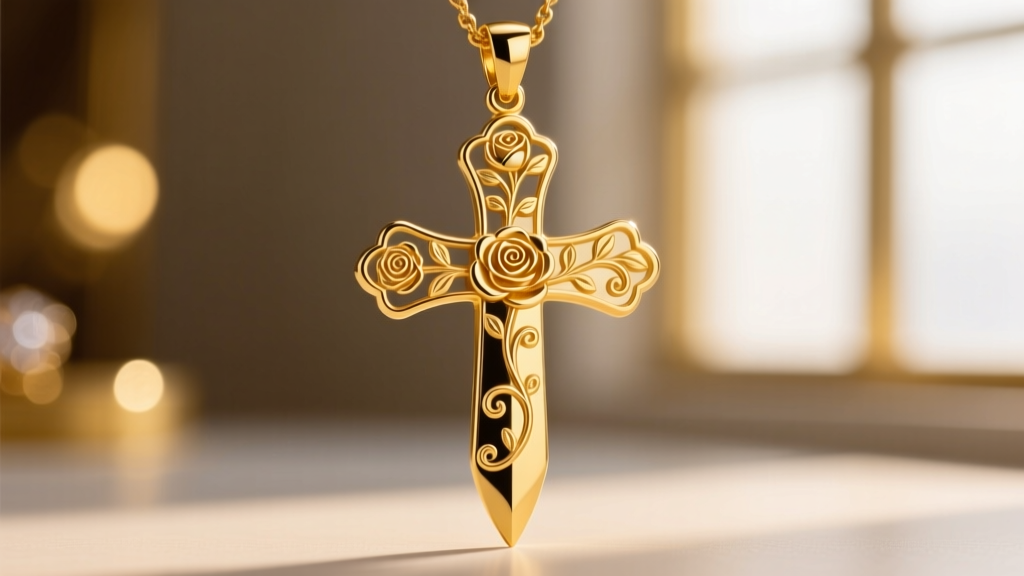
Material Comparison Chart: Silver vs. Gold vs. Platinum
To help buyers understand the physical and financial differences between the materials used in a standard Medium Floral Cross pendant, we have compiled the following metallurgical and market data table based on 2026 secondary market averages.
| Material | Purity / Alloy | Avg. Weight (Med. Floral) | Vickers Hardness (HV) | Oxidation Rate | 2026 Market Price Range |
|---|---|---|---|---|---|
| Sterling Silver | .925 (92.5% Ag) | 38 - 42 grams | 60 - 120 HV | High (Intentional) | $1,800 - $2,600 |
| 18k Yellow Gold | 75% Au / 25% Alloy | 55 - 60 grams | 125 - 150 HV | None | $12,000 - $16,000 |
| 22k Yellow Gold | 91.6% Au / 8.4% Alloy | 62 - 68 grams | 70 - 90 HV | None | $18,000 - $24,000 |
| 950 Platinum | 95% Pt / 5% Ru or Ir | 75 - 82 grams | 110 - 130 HV | None (Patina only) | $22,000 - $35,000+ |
The Patina Process: Managing Your Cross Over Time
The way a chrome hearts necklace cross pendant ages is a core part of its appeal. Sterling silver is a reactive metal. The sulfur in the air, the chlorine in tap water, and the natural oils and acidity of your skin will continuously interact with the copper alloy. Over months of daily wear, the high-polish edges will soften, and the piece will take on a lived-in, vintage aesthetic.
Maintenance and Cleaning Protocols
If you wish to maintain the factory contrast of your pendant, you must avoid liquid silver dips and ultrasonic cleaners. Liquid dips contain harsh thiourea chemicals that strip away all oxidation instantly, leaving the cross looking flat, overly bright, and devoid of its signature three-dimensional depth. Instead, use a dry, impregnated jeweler's polishing cloth (such as a Sunshine Cloth). Gently buff only the raised, high-relief areas of the cross. This removes skin oils and environmental tarnish from the bright spots while leaving the factory-applied blackening in the recesses completely intact.

Chain Pairing: Matching Pendant Metallurgy to Chain Links
A heavy cross pendant requires a structurally sound chain. The brand's iconic Large Paperclip and Cuban Link chains are engineered to support the substantial weight of their pendants. When pairing metals, galvanic corrosion and friction wear are critical factors to consider.
- Gauge and Thickness: A Medium or Large Floral Cross should be paired with a chain no thinner than 4.5mm. The heavy bail (the loop at the top of the cross) will quickly wear through a delicate 2mm chain due to friction.
- Metal-on-Metal Wear: Pairing an 18k gold cross with a sterling silver chain is generally discouraged for daily wear. Because gold is significantly harder and denser than silver, the gold bail will act like a file against the softer silver links, eventually wearing a groove into the chain's jump ring or center link.
- The Titanium Alternative: Some collectors opt for aftermarket Grade 5 Titanium chains to reduce neck strain. While titanium is incredibly strong and lightweight, its dark grey aesthetic drastically alters the luxury gothic vibe of the Chrome Hearts cross, and the extreme hardness of titanium can accelerate wear on the silver bail.
Authenticity Markers: Spotting Fake Alloys
Because of the brand's immense cultural cachet, the secondary market is flooded with counterfeit cross pendants. Authenticating the metallurgy goes beyond simply looking for a logo. Genuine Chrome Hearts silver crosses feature specific, deeply engraved hallmarks. Look for the .925 stamp, the CH Plus trademark (a cross inside a circle with the brand name), and often a copyright symbol (©).
Counterfeiters often use brass or zinc alloys plated with a thin layer of silver. These fakes lack the specific gravity and thermal conductivity of true .925 silver. According to guidelines from the Assay Office, a legitimate precious metal hallmark must be struck or laser-engraved with precise depth and clarity. If the hallmarks on a cross pendant look shallow, blurry, or are merely cast into the mold rather than stamped post-casting, the piece is almost certainly a fake. For ultimate certainty, a professional jeweler can perform an X-ray fluorescence (XRF) test to verify the exact elemental breakdown of the alloy without damaging the piece's valuable patina.


