Chunky Cross Necklace Buying Guide: What to Look For in 2026
Discover how to choose the perfect chunky cross necklace in 2026. Expert advice on metal grades, chain pairings, dimensions, and authentic sourcing.

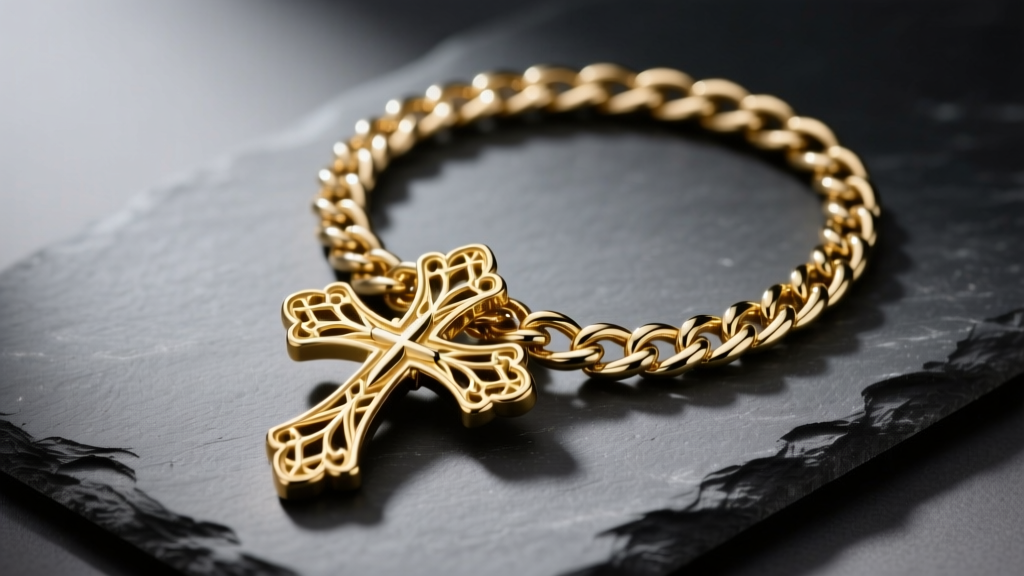
The chunky cross necklace has transcended its 1980s hip-hop and 1990s grunge roots to become a cornerstone of 2026’s avant-garde and luxury streetwear aesthetics. However, buying a substantial piece of jewelry requires more than just picking a design you like; it demands an understanding of metallurgy, structural integrity, and proportional styling. A poorly made heavy pendant will warp, tarnish, or snap its chain within months. This comprehensive buying guide breaks down exactly what to look for when investing in a high-quality chunky cross pendant and chain combination.
Decoding Dimensions: What Qualifies as "Chunky"?
In the jewelry industry, "chunky" is not just a subjective descriptor; it refers to specific volumetric and weight thresholds. When browsing for a chunky cross necklace, you should look for the following baseline specifications:
- Height: 45mm to 75mm (1.75 to 3 inches). Anything smaller reads as a standard or delicate pendant.
- Width: 30mm to 55mm (1.2 to 2.1 inches). The horizontal arms must have enough surface area to balance the vertical drop.
- Thickness (Depth): 4mm to 12mm. A true chunky cross has a pronounced 3D profile, often featuring beveled edges or deep relief carving.
- Weight: 20 grams to 60 grams for the pendant alone. Pendants under 15 grams are considered "mid-weight" and lack the kinetic drape of a truly heavy piece.
Expert Pro-Tip: Always check the bail (the loop connecting the pendant to the chain). For a 40g+ pendant, the bail must have an inner diameter of at least 6mm to accommodate thicker chains without causing stress fractures at the solder point.
Material Grades & Durability Matrix
The material dictates the longevity, skin reactivity, and ultimate value of your necklace. According to the Gemological Institute of America (GIA), understanding alloy compositions is critical when purchasing precious metals. Below is a comparative matrix of the most common materials used for chunky crosses in 2026.
| Material | Pros | Cons | Price Range (Pendant) |
|---|---|---|---|
| 316L Surgical Steel | Hypoallergenic, highly tarnish-resistant, excellent weight-to-cost ratio | Cannot be resized or easily soldered, lacks precious metal prestige | $40 - $150 |
| 925 Sterling Silver | Classic luster, easily polished, holds intricate gothic or Celtic details | Prone to sulfide tarnishing, softer metal (prone to surface scratches) | $120 - $450 |
| 14k Solid Gold | Lifetime durability, retains intrinsic value, completely skin-safe | High upfront cost, very heavy if cast solid rather than hollowed | $800 - $3,500+ |
| Cast Bronze/Brass | Unique patina development, ideal for raw brutalist aesthetics | Can cause skin discoloration (greening), requires regular sealing | $80 - $250 |
For those leaning toward silver, consult the GIA's guide on silver quality factors to understand why some 925 pieces are plated with rhodium to delay tarnishing, while others are left raw for an oxidized, vintage look.
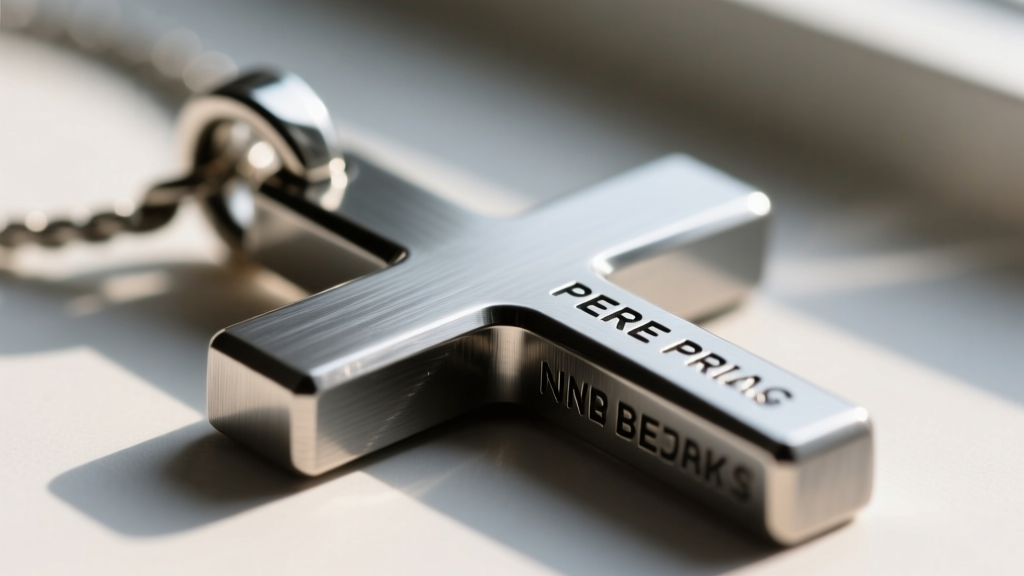
Chain Pairing: Engineering the Perfect Drape
A 50-gram chunky cross will snap a delicate 2mm cable chain within weeks due to kinetic friction and tensile stress at the bail. The chain must be engineered to support the pendant's dead weight and the dynamic forces of daily movement.
Recommended Chain Styles for Heavy Pendants
- Cuban Link (5mm - 8mm): The undisputed king of heavy pendants. The interlocking, flat-surfaced links distribute weight evenly and resist kinking. A 6mm solid Cuban link can comfortably support up to 80 grams of pendant weight.
- Figaro (4mm - 6mm): Offers a vintage Italian aesthetic. Ensure the links are soldered (closed seams) rather than open. Unsoldered Figaro links will inevitably pull apart under the leverage of a heavy cross.
- Rope Chain (4mm - 7mm): Excellent light reflection and tensile strength, but significantly harder to repair if a link snaps due to the twisted geometry.
The Clasp Factor
Never use a standard spring-ring clasp for a chain supporting a chunky cross. The thin wire of a spring-ring will warp under the pendulum effect of a heavy cross. Opt for a heavy-duty lobster clasp or, ideally, a custom box clasp with a secondary safety latch.
Design Motifs & Engraving Details
The silhouette of the cross drastically changes the styling potential of the necklace. In 2026, three distinct motifs dominate the high-end market:
- Gothic & Ornate: Features fleur-de-lis ends, trefoil accents, and deep relief carving. Best executed in oxidized sterling silver or blackened steel to highlight the shadows in the crevices.
- Brutalist & Minimalist: Characterized by raw, unpolished edges, hammer marks, and geometric blocks. Best suited for bronze or matte-finished gold, appealing to the avant-garde streetwear crowd.
- Celtic & Maltese: Intricate knotwork or broad, V-shaped arms. This style requires high-precision lost-wax casting to maintain the sharpness of the detail at a chunky scale.

Sizing & Neckline Pairing Framework
The chain length determines where the heavy pendant rests on your sternum, which in turn dictates what clothing it pairs with. Use this framework to select your length:
- 18-Inch Chain (Choker/Collarbone): Best for crewnecks, turtlenecks, and high-collared jackets. Keeps the heavy pendant from swinging wildly and hitting the chest.
- 22-Inch Chain (Mid-Chest): The sweet spot for chunky crosses. Allows the piece to rest perfectly over the top button of an unbuttoned Oxford shirt or a lightweight hoodie.
- 26-Inch Chain (Lower Chest): Ideal for layering over heavy outerwear or streetwear jackets. However, this length risks looking disproportionate if the pendant width is under 35mm.
Authenticity & Sourcing: Avoiding Counterfeits
The secondary market and fast-fashion retailers are flooded with gold-plated brass masquerading as solid gold. When investing in a premium chunky cross necklace, employ these verification tactics:
The Density Test: Gold is exceptionally dense (19.32 g/cm³). A solid 14k gold cross measuring 50mm x 35mm x 6mm will weigh significantly more than a brass or silver replica of the exact same dimensions. If a "solid gold" piece feels suspiciously light, it is likely hollowed out or gold-plated tungsten.
- Check the Hallmark: Look for "14K", "585" (14k European standard), or "750" (18k). "925" means sterling silver. If you see "HGE" (Heavy Gold Electroplate) or "GP", it is not solid.
- The Magnet Test: Solid gold and silver are non-magnetic. If your chunky cross sticks to a neodymium magnet, it has a ferrous (iron/steel) core beneath the plating.
- Acid Testing: For high-value purchases, use a jeweler's touchstone and nitric acid kit to test the metal purity on a discreet area of the bail.
By prioritizing structural integrity, precise dimensions, and verified metallurgy, you ensure your chunky cross necklace is not just a fleeting trend, but a durable, heirloom-quality anchor for your wardrobe.


