The Citrine Gold Necklace Trend: 2026 Style & Color Guide
Discover 2026 citrine gold necklace trends, from Madeira color grading to raw stone settings. Expert styling tips for layering and neckline pairing.

The 2026 Shift: From Pale Yellow to Deep Madeira
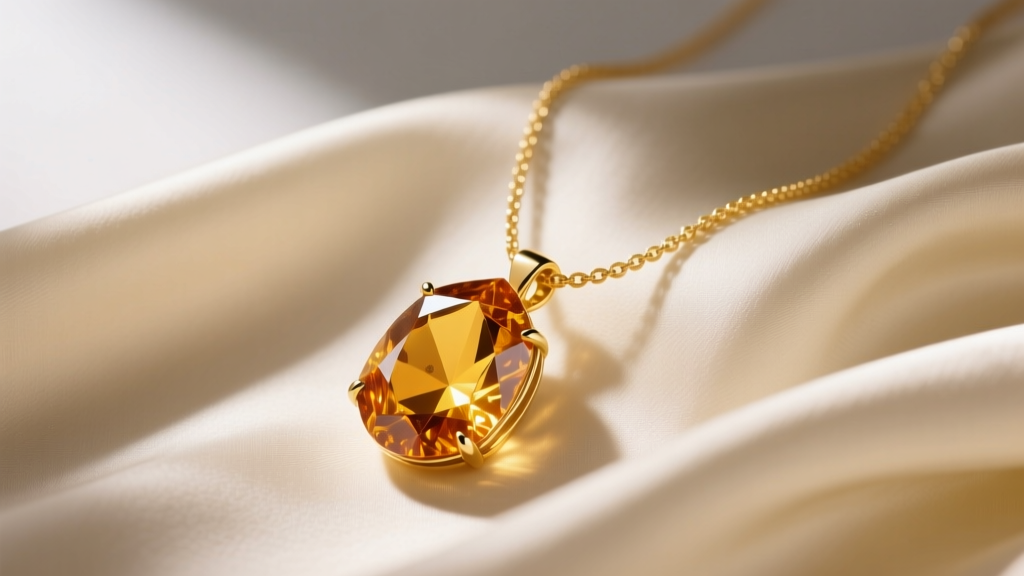
The fine jewelry landscape of 2026 has decisively moved away from the mass-produced, uniformly faceted pale yellow gemstones that dominated the early 2010s. Today, the modern citrine gold necklace is defined by artisanal cuts, unpolished raw textures, and a fierce preference for deeply saturated hues. Collectors and style connoisseurs are now prioritizing stones with high color density, specifically shifting their focus toward Madeira and Fire citrine grades. This evolution reflects a broader consumer demand for organic luxury and gemstones that possess a unique, earthy fingerprint rather than a sterile, machine-cut perfection.
According to the Gemological Institute of America (GIA), natural citrine is relatively rare in the earth's crust, meaning the market is heavily saturated with heat-treated amethyst. However, the 2026 trend cycle heavily penalizes the flat, reddish-orange tint typical of poorly treated stones, rewarding instead the natural, vibrant golden-orange hues found in premium Brazilian and Zambian deposits. Understanding the color matrix is the first step in acquiring a piece that holds both aesthetic and residual market value.
Citrine Color Grading & Market Value Matrix
| Color Grade | Hue Description | 14k Gold Pendant Price Range | Market Rarity |
|---|---|---|---|
| Madeira | Deep reddish-orange, wine-like saturation | $450 - $1,200+ | High (Top 5%) |
| Fire | Vibrant orange-yellow, high brilliance | $250 - $600 | Medium (15%) |
| Palmeira | Bright golden yellow, clear and luminous | $150 - $350 | Common (40%) |
| Pale/Lemon | Light, pastel yellow with low saturation | $80 - $200 | Abundant (40%) |
Metallurgy: Why 14k and 18k Gold Dominate the Settings
When investing in a citrine gold necklace, the karat weight and alloy composition of the gold fundamentally alter the visual impact of the stone. In 2026, jewelers are leveraging specific gold alloys to either contrast or complement the gemstone's internal fire.
18k Yellow Gold (75% Pure Gold): The high pure gold content yields a rich, buttery yellow tone. When paired with Palmeira or Fire citrine, 18k yellow gold creates a monochromatic, sun-drenched aesthetic. However, because 18k gold is softer (rating roughly 2.5 to 3 on the Mohs hardness scale), it requires thicker bezel settings or reinforced prongs to protect the stone during daily wear.
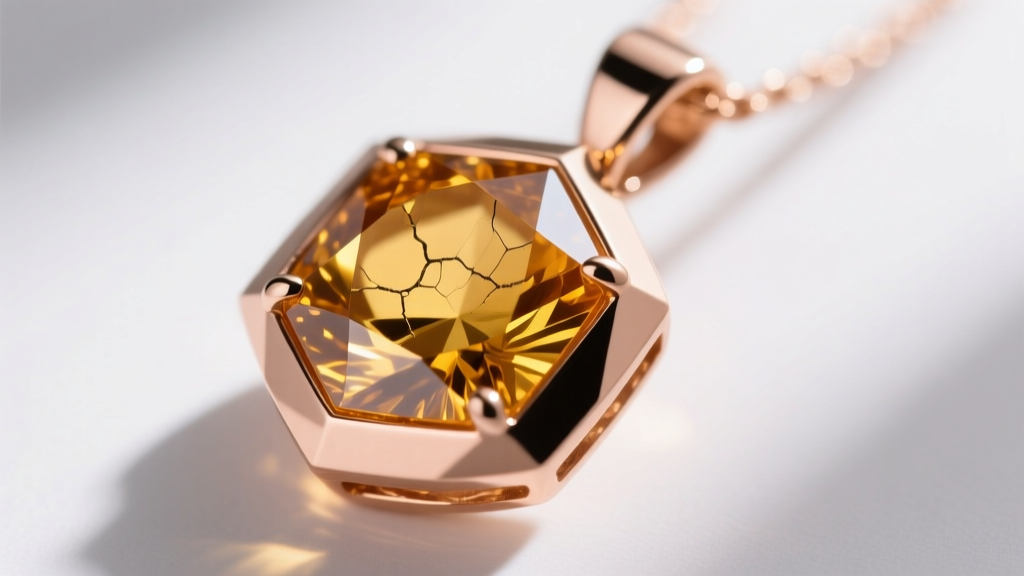
14k Rose Gold (58.5% Pure Gold, High Copper): The copper alloy in rose gold introduces a pinkish-red undertone that dramatically amplifies the red flashes hidden within Madeira citrine. This pairing has become the undisputed favorite for evening wear and winter styling, offering a warm, vintage-inspired contrast that flatters olive and deep skin tones.

Setting Trends: Raw, Geometric, and Bezel
The era of the delicate four-prong setting for citrine is fading. Citrine registers a 7 on the Mohs hardness scale, making it durable enough for everyday jewelry but susceptible to chipping if subjected to hard, direct impacts. Furthermore, citrine possesses indistinct cleavage and fair toughness, meaning a sharp blow to the girdle (the stone's widest edge) can cause catastrophic fracturing.
The Rise of the Heavy Bezel
To mitigate these failure modes, 2026's leading designers are utilizing heavy, polished bezel settings. A bezel encases the entire circumference of the gemstone in a continuous metal rim, completely shielding the vulnerable girdle from lateral impacts. This setting style also complements the trending "rough-cut" or "geometric step-cut" citrine stones, which feature asymmetric facets that catch light in unpredictable, architectural ways.
Thermal Shock and Cleaning Protocols
A critical maintenance insight often overlooked by consumers is citrine's vulnerability to thermal shock. Because many citrines on the market are heat-treated amethyst, exposing them to the extreme, rapid temperature changes of ultrasonic or steam cleaners can cause internal stress fractures or revert the stone's color to a muddy purple-brown. The only safe cleaning protocol for a citrine gold necklace is a gentle soak in lukewarm water with a mild, phosphate-free dish soap, followed by a soft brushing with a baby-hair toothbrush.
Styling & Layering Frameworks for 2026
Layering remains a dominant styling technique, but the haphazard stacking of previous years has been replaced by structured, intentional frameworks. A citrine gold necklace acts as the perfect "anchor" piece in a layered stack due to its warm color profile and varied textural possibilities.
- The V-Neck Anchor (18-inch Princess): For deep V-necklines or unbuttoned silk blouses, position an 18-inch 14k gold paperclip chain holding a mid-sized (3-5 carat) faceted citrine pendant directly in the center of the chest. Flank it with a 16-inch solid gold herringbone choker and a 20-inch delicate satellite chain to create a cascading metallic effect.
- The Winter Matinee (24-inch): When styling over heavy knits, turtlenecks, or wool blazers, opt for a 24-inch matinee-length rope chain featuring a large, raw-cut Madeira citrine drop. The length ensures the stone rests against the fabric rather than tangling in the collar, while the dark fabric provides maximum contrast to the stone's fiery inclusions.
- The Asymmetrical Stack: Mix metal textures rather than just lengths. Pair a smooth 18k gold box chain holding a geometric citrine pendant with a heavily textured 14k gold Figaro chain of the exact same length. The visual friction between the chain links elevates the overall aesthetic.
Sourcing Authentic Citrine: Avoiding Synthetics
As the demand for high-grade Madeira citrine surges, the market has seen an influx of synthetic quartz and glass imitations. When evaluating a citrine gold necklace, look for natural inclusions. Genuine citrine often contains microscopic tiger-stripe inclusions, negative crystals, or color zoning (uneven distribution of color). Glass imitations will instead feature perfectly spherical gas bubbles and swirl marks from the molding process.
Furthermore, be wary of stones that exhibit a stark, unnatural red rim with a completely colorless center; this is a hallmark of poorly executed heat treatment on amethyst. Reputable jewelers will provide documentation detailing whether the stone is natural, earth-mined citrine or heat-treated quartz. For comprehensive verification standards and identification protocols, buyers should consult the identification guidelines published by The International Gem Society. By prioritizing transparent sourcing and understanding the intricate relationship between gold alloys and gemstone saturation, you can secure a citrine piece that is not only a current trend but a lasting element of your fine jewelry wardrobe.


