White Necklace Mens Guide: Silver, Platinum & Ceramic
Discover the ultimate white necklace mens material guide. Compare platinum, white gold, silver, and ceramic properties, gauges, and pricing.


The Definitive White Necklace Mens Material Guide
When selecting a white necklace, mens jewelry buyers are no longer limited to traditional yellow gold or basic stainless steel. The modern market offers a sophisticated spectrum of white metals and advanced ceramics, each with distinct metallurgical properties, weight profiles, and failure modes. Whether you are looking for a subtle 2mm chain for the office or a heavy 5mm statement piece, understanding the material science behind your jewelry is critical for long-term wearability and value retention.
This guide breaks down the exact compositions, hardness ratings, and maintenance protocols for the most popular white materials used in men's necklaces today, helping you make an informed, expertise-driven purchase.
The Material Matrix: Comparing White Metals and Ceramics
Before diving into individual materials, it is essential to understand how they compare across critical metrics like hardness, density, and reactivity. The table below provides a baseline comparison for a standard 20-inch, 3mm wide men's chain.
| Material | Composition / Grade | Mohs Hardness | Tarnish Resistance | Avg. Price (20" 3mm) | Maintenance Level |
|---|---|---|---|---|---|
| Platinum | 950 Pt / 50 Ru | 4.0 - 4.5 | Excellent | $900 - $1,400 | Low (Polishing) |
| White Gold | 14k (58.5% Au) + Pd/Ni | 2.5 - 3.0 | Poor (Rhodium wears) | $450 - $750 | High (Re-plating) |
| Sterling Silver | 925 Ag / 7.5% Cu | 2.5 | Poor (Sulfide tarnish) | $60 - $120 | High (Polishing) |
| Argentium Silver | 935 Ag / Ge alloy | 2.5 | Very Good | $90 - $160 | Medium |
| White Ceramic | ZrO2 (Zirconium Dioxide) | 8.5 - 9.0 | Perfect | $150 - $300 | Very Low |
| White Titanium | Grade 23 Ti-6Al-4V ELI | 6.0 | Perfect | $80 - $150 | Very Low |
Precious White Metals: Platinum, White Gold, and Silver
Platinum 950: The Heavyweight Champion
Platinum is the undisputed king of white precious metals. Unlike white gold, platinum is naturally white and does not require rhodium plating. The standard grade for men's jewelry is 950 Platinum, typically alloyed with 5% Ruthenium (Ru) for casting or Cobalt (Co) for machining. According to the World Platinum Investment Council, platinum's extreme density (21.45 g/cm³) gives it a substantial, luxurious heft that men often prefer in thicker chain styles like the Cuban or Figaro.
Failure Mode & Wear: Platinum does not lose metal when scratched; instead, the metal displaces, forming a soft, matte finish known as a 'patina.' While some collectors prize this vintage look, those who prefer a high-polish mirror finish will need professional buffing every 12 to 18 months.
White Gold: The Rhodium Reality
White gold is an alloy of pure yellow gold mixed with white metals like palladium, nickel, or silver. To achieve the bright, reflective 'chrome' look associated with white gold, manufacturers electroplate the surface with rhodium. A standard rhodium flash is only 0.1 to 0.2 microns thick.
The Nickel Problem: Historically, nickel was the primary whitening agent, but it causes severe contact dermatitis in roughly 15% of the population. When buying a white gold necklace, mens buyers should specifically seek out palladium-alloyed white gold, which is hypoallergenic and possesses a naturally grayer, more stable base color before plating. Expect to pay $35 to $75 to have the chain re-dipped in rhodium every 1 to 2 years as the plating wears away at the friction points of the links.
Sterling Silver vs. Argentium Silver
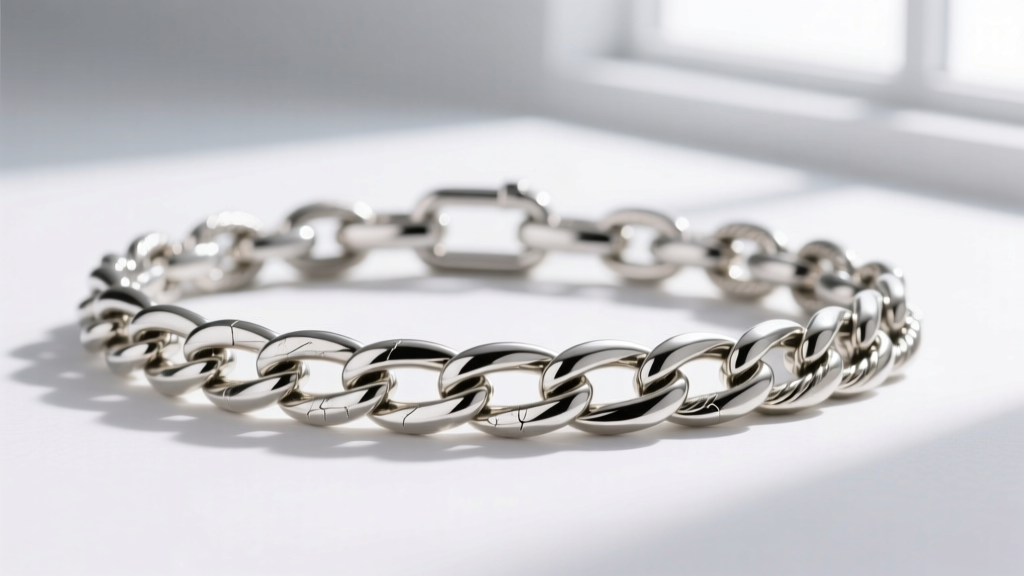
Standard 925 Sterling Silver is highly accessible but notoriously prone to tarnishing when exposed to hydrogen sulfide in the air and sulfur compounds in sweat. For a superior alternative, look for Argentium Silver (935 grade). By replacing a small portion of the copper alloy with germanium, Argentium forms a transparent, self-healing germanium oxide layer that drastically slows tarnish. According to The Silver Institute, silver remains the most malleable of precious metals, meaning thinner silver chains (under 2mm) are prone to stretching and snapping under heavy pendants.
Modern Alternatives: High-Tech Ceramic and Titanium
High-Tech White Ceramic (ZrO2)
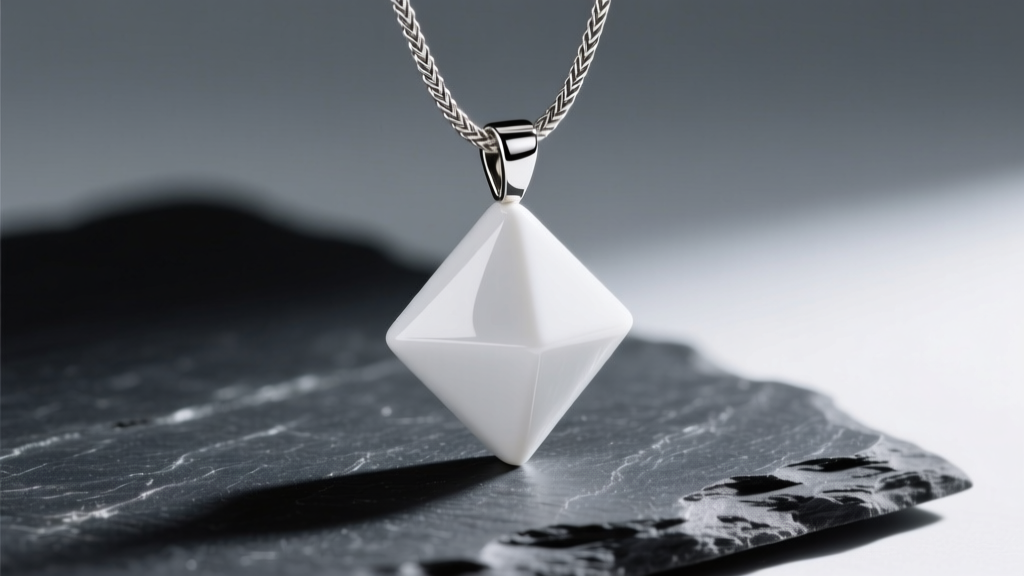
White ceramic has surged in popularity for men's pendants and hybrid chain links. High-tech ceramic is primarily composed of Zirconium Dioxide (ZrO2) stabilized with yttrium oxide. It is sintered at extreme temperatures, resulting in a material with a Mohs hardness of 8.5 to 9.0—second only to diamonds and moissanite.
Pros: It is completely impervious to tarnish, sweat, salt water, and UV fading. The white color is intrinsic, meaning it will never fade or require plating.
Cons & Failure Modes: Ceramic possesses high compressive strength but low tensile strength. It is brittle. If a solid ceramic pendant is dropped onto a tile floor or struck with blunt force against a hard edge, it can suffer a cleavage fracture and shatter. It is best used for pendants or inlaid accents rather than load-bearing chain links.
Aerospace-Grade White Titanium
While titanium is naturally a dark, gunmetal gray, it can be anodized or coated to achieve a bright white finish. However, Grade 23 Titanium (Ti-6Al-4V ELI) is prized for its incredible strength-to-weight ratio. A 5mm thick titanium chain will weigh roughly 45% less than an identically sized stainless steel chain, making it ideal for men who want a bold, chunky silhouette without the neck fatigue associated with heavy metals.
Chain Widths, Gauges, and Clasp Engineering
Selecting the right material is only half the battle; the physical dimensions and hardware dictate the necklace's daily functionality.
- 2.0mm - 2.5mm (Subtle/Minimalist): Best for wearing under unbuttoned dress shirts or layering. Requires a lightweight pendant (under 5 grams).
- 3.0mm - 4.0mm (Standard Everyday): The most versatile gauge for men. Thick enough to be visible over a t-shirt, but refined enough for a smart-casual blazer. Can support medium pendants (10-15 grams).
- 5.0mm - 7.0mm (Statement/Heavy): Ideal for Cuban links or thick rope chains. Due to the weight, these require robust clasps and are generally worn as standalone pieces without pendants.
The Clasp: The Weakest Link
For any men's chain over 3mm, standard spring-ring clasps are a critical failure point. You must insist on a Box Clasp with a Figure-8 Safety Latch or a heavy-duty Lobster Claw with a reinforced soldered jump ring. In heavy platinum or gold chains, the tension of the metal's weight can slowly bend the internal spring mechanism of cheaper clasps, leading to catastrophic loss.
Maintenance Protocols and Care
Proper maintenance extends the life of your white necklace and preserves its optical properties.
- Ultrasonic Cleaning Warnings: While platinum, white gold, and silver can safely be cleaned in an ultrasonic jewelry bath, never place white ceramic or tension-set stones in an ultrasonic cleaner. The high-frequency acoustic cavitation can induce micro-fractures in ceramic and shatter it.
- Chemical Exposure: Chlorine (in pools and hot tubs) is the enemy of white gold and silver. It attacks the copper and zinc alloys, causing structural weakening and a phenomenon known as 'stress corrosion cracking' at the solder points of the links.
- Storage: Store silver and white gold necklaces in anti-tarnish cloth pouches containing activated charcoal or silver sulfide scavengers. Keep ceramic and titanium pieces in separate soft compartments to prevent the harder ceramic from scratching the softer precious metals.
Final Verdict: Which Material is Right for You?
If budget allows and you desire a generational heirloom with substantial weight, 950 Platinum is the ultimate choice for a men's white chain. For those seeking a modern, scratch-proof, and hypoallergenic option for active lifestyles, a White Zirconium Ceramic pendant on a titanium or platinum cord offers unparalleled durability. Avoid nickel-alloyed white gold and standard 925 silver if you live in humid climates or have sensitive skin, opting instead for palladium white gold or Argentium silver to ensure your jewelry remains as resilient as your lifestyle.


