How to Restore a Tarnished Personalized Birthstone Necklace
Learn how to troubleshoot cloudy gems, fix tarnished metal, and tighten loose prongs on your personalized birthstone necklace with expert gemology tips.

A personalized birthstone necklace is more than just an accessory; it is a wearable archive of family history, relationships, and personal milestones. However, custom multi-stone settings introduce unique structural and chemical vulnerabilities that standard jewelry care guides often overlook. When you combine varying gemstone hardness levels, porous organic gems, and intricate metalwork, the risk of tarnish, clouding, and mechanical failure multiplies.
If your custom family necklace has lost its luster, developed a grimy film, or started snagging on your clothing, do not panic. As a gemology and jewelry troubleshooting expert, I have compiled a comprehensive diagnostic and restoration framework to bring your sentimental piece back to life without causing irreversible damage to delicate stones.
Diagnosing the Damage: Why Your Birthstones Look Cloudy
When a multi-stone piece loses its sparkle, the immediate assumption is that the stones are scratched. In 90% of troubleshooting cases I evaluate, the issue is actually pavilion buildup or chemical etching. The pavilion is the bottom, pointed half of the gemstone. In personalized necklaces featuring cluster or flush settings, the back of the stones are often enclosed or sit flush against the skin, trapping dead skin cells, lotions, and sebum.
Before applying any cleaning solution, you must identify the specific birthstones in your necklace, as their position on the Mohs Hardness Scale dictates their vulnerability to chemical and ultrasonic damage.
| Month | Common Birthstone | Mohs Hardness | Porosity & Vulnerability | Ultrasonic Safe? |
|---|---|---|---|---|
| April | Diamond | 10 | Non-porous, highly durable | Yes |
| July | Ruby | 9 | Non-porous, heat sensitive if fractured | Usually Yes |
| October | Opal | 5.5 - 6.5 | Highly porous, contains water, cracks easily | No |
| June | Pearl | 2.5 - 4.5 | Organic, dissolves in mild acids | No |
| December | Turquoise | 5 - 6 | Porous, absorbs oils and chemicals | No |
The Pavilion Buildup Solution
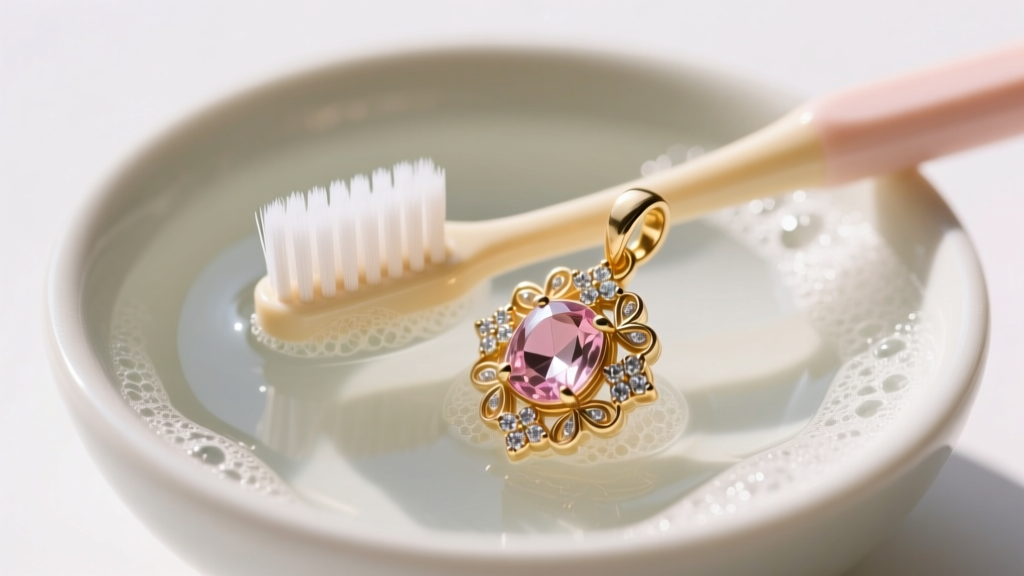
For durable stones like diamonds, sapphires, and rubies, cloudiness is almost always caused by a film of hardened lotion on the pavilion. To troubleshoot this, mix a few drops of ammonia-free dish soap (like Dawn) into a bowl of lukewarm water. Submerge the necklace for 15 minutes. Then, using a soft-bristled baby toothbrush, gently scrub the back of the stones, not just the top. Rinse with distilled water to prevent hard water spots and pat dry with a lint-free microfiber cloth.
The Tarnish Troubleshooting Guide for Custom Settings
Personalized necklaces are frequently crafted in 925 Sterling Silver or Gold Vermeil due to the high cost of casting multiple custom settings in solid 14k or 18k gold. Sterling silver contains 7.5% copper, which reacts with sulfur and moisture in the air (and on your skin) to create silver sulfide—the black tarnish you see in the crevices of your necklace.
Custom multi-stone settings have significantly more solder joints, bezel walls, and prong crevices than a simple solitaire pendant. These micro-crevices act as traps for sulfur and moisture, causing localized tarnishing that is difficult to reach with a standard polishing cloth.
Safe Tarnish Removal for Mixed-Stone Necklaces
You may have seen the popular "aluminum foil, baking soda, and boiling water" trick for silver tarnish. Do not use this method on a personalized birthstone necklace. The electrochemical reaction and high heat will permanently destroy porous stones like opals, turquoise, and pearls, and can loosen the adhesive used in some custom bezel settings.
Instead, use a targeted approach:
- For Silver Settings with Durable Stones: Use a specialized silver dip (like Tarn-X) applied only to the metal using a cotton swab. Avoid touching the stones. Rinse immediately and thoroughly.
- For Gold Vermeil: True gold vermeil must have a minimum of 2.5 microns of gold plating over sterling silver, according to FTC guidelines. If your vermeil is tarnishing, the gold layer has worn thin, exposing the silver beneath. Polish gently with a dry, untreated jeweler's cloth. Avoid liquid dips, which can strip the remaining gold micron layer.
Mechanical Failures: Loose Prongs and Bezel Gaps
When jewelers design a personalized birthstone necklace featuring three, four, or even five stones in a row, they often utilize "shared prong" settings to keep the profile sleek. While beautiful, shared prongs mean that if one prong bends back, two stones are at risk of falling out.
The Wooden Skewer "Tap Test"
Once a month, you should perform a mechanical integrity check on your custom necklace. Do not use a metal needle or pin, as this can scratch the metal or chip the gemstone girdle. Instead, use a wooden toothpick or skewer.
- Place the necklace on a soft, well-lit surface.
- Gently tap the table (the flat top) of each birthstone with the wooden tip.
- Listen closely. A secure stone will produce a dull, solid "thud."
- If you hear a faint "click" or rattling sound, the stone is loose in its setting.
Troubleshooting a Loose Stone: If a stone rattles, stop wearing the necklace immediately. Do not attempt to bend the prongs back yourself with household pliers; custom cast prongs are often thinner than standard commercial prongs and will snap if work-hardened by improper bending. Take it to a professional jeweler for a 5-minute prong-tightening service, which typically costs between $15 and $30 per stone.
Untangling Multi-Drop Family Necklaces
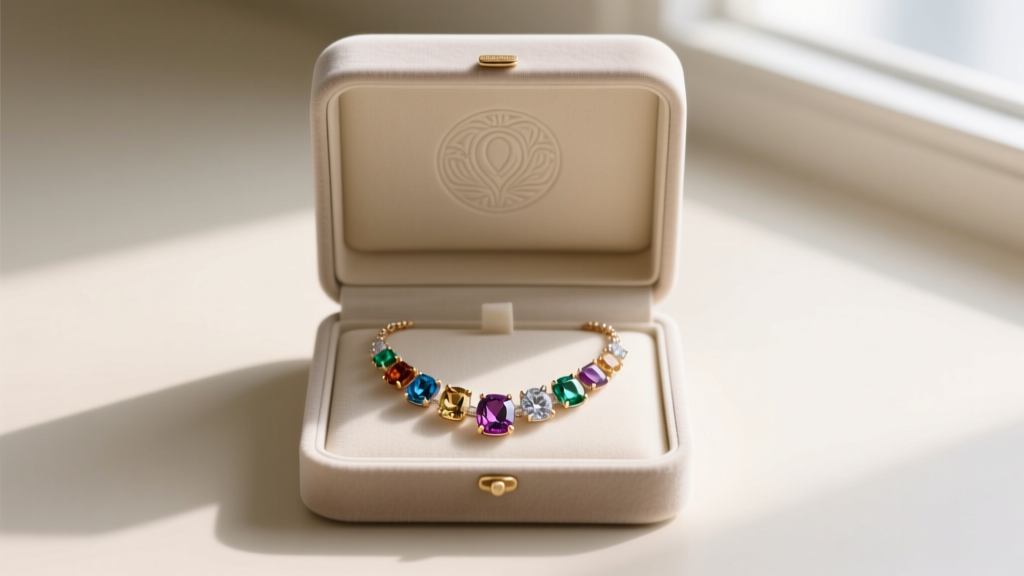
Family necklaces featuring multiple dangling birthstone drops are notoriously prone to severe knotting, especially when stored improperly. The chains weave through the jump rings of the drops, creating complex friction knots that tighten when pulled.
The Pin and Oil Method:
Lay the tangled necklace flat on a smooth, hard surface. Apply a single drop of baby oil or mineral oil directly to the center of the knot to lubricate the chain links. Take two fine sewing pins and insert them into the center of the knot. Gently wiggle the pins outward to create slack. Never pull the ends of the chain, as this will only tighten the friction lock. Once the knot is loosened, wipe the chain with a microfiber cloth to remove the oil, which would otherwise attract dirt and accelerate tarnishing.
Preventative Maintenance Framework
Troubleshooting is necessary, but prevention is the hallmark of fine jewelry ownership. To protect the structural integrity and optical brilliance of your personalized birthstone necklace, adopt the following maintenance framework:
The "Last On, First Off" Rule: Your necklace should be the very last thing you put on after applying makeup, perfume, and hairspray, and the very first thing you take off when you get home. The aerosolized chemicals in cosmetics are highly corrosive to both gold vermeil and porous organic gems.
Furthermore, storage is critical. Never toss a multi-stone necklace into a communal jewelry box where diamonds (Mohs 10) can scratch opals (Mohs 5.5) or silver chains can wrap around delicate prongs. Store your personalized piece in an individual, anti-tarnish flannel pouch, or a ziplock bag with a silica gel packet to control ambient moisture. For more detailed care instructions on specific gems, consult the Gemological Institute of America's Opal Care Guide or the GIA Diamond Care Guidelines. Additionally, the Jewelers of America offers excellent baseline protocols for maintaining custom precious metal settings.
By understanding the specific material science behind your custom piece, you can troubleshoot common issues confidently, ensuring your personalized birthstone necklace remains a brilliant, intact heirloom for decades to come.