Heart Clock Necklace Guide: Metals, Movements & Care
Discover how to choose the perfect heart clock necklace. Our buying guide covers movements, metal grades, chain lengths, and daily care tips.

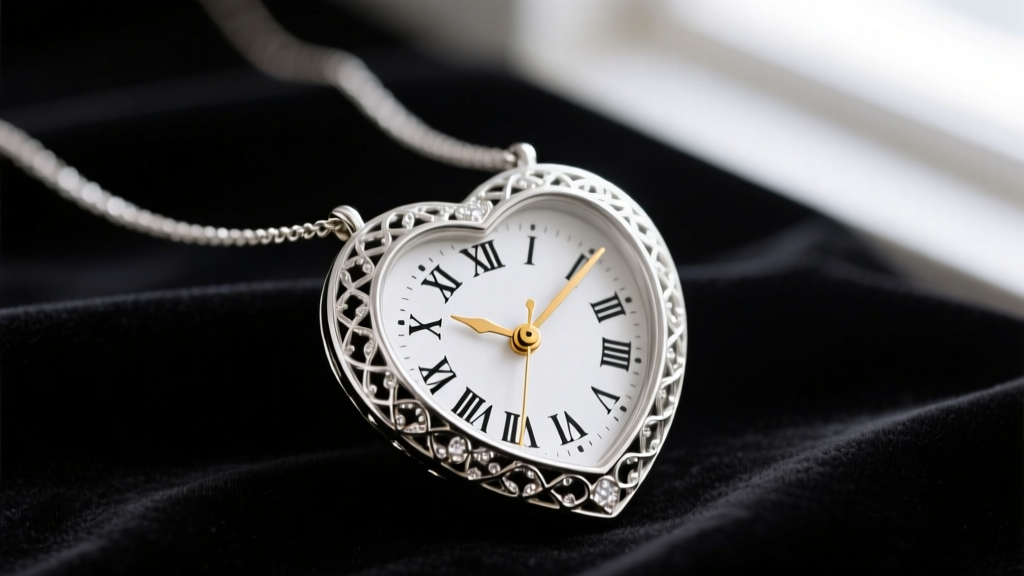
The heart clock necklace—often referred to as a heart fob watch or pendant watch—bridges the gap between romantic vintage aesthetics and functional horology. Whether you are shopping for a Victorian-inspired hunter case piece or a modern minimalist quartz pendant, understanding the mechanical and metallurgical nuances of these accessories is critical. This comprehensive buying guide breaks down exactly what to look for when investing in a heart clock necklace, ensuring you select a piece that offers both enduring style and reliable timekeeping.
Anatomy of a Heart Clock Necklace
Before evaluating materials, it is essential to understand the structural components unique to pendant clocks. Unlike standard jewelry pendants, a heart clock necklace houses a delicate micro-engine. The primary components include:
- The Case: The outer shell, typically shaped like a heart, which protects the internal movement. Cases can be 'open-face' (exposed glass) or 'hunter-case' (featuring a spring-loaded metal lid that pops open via a crown button).
- The Bow: The loop at the top of the pendant where the chain attaches. On high-quality pieces, the bow is soldered securely and features a small jump ring to prevent chain friction.
- The Crown: The ribbed knob at the top used for winding mechanical movements or setting the time on quartz models.
- The Crystal: The transparent cover protecting the dial from dust and moisture.
Movement Types: The Engine Inside the Heart
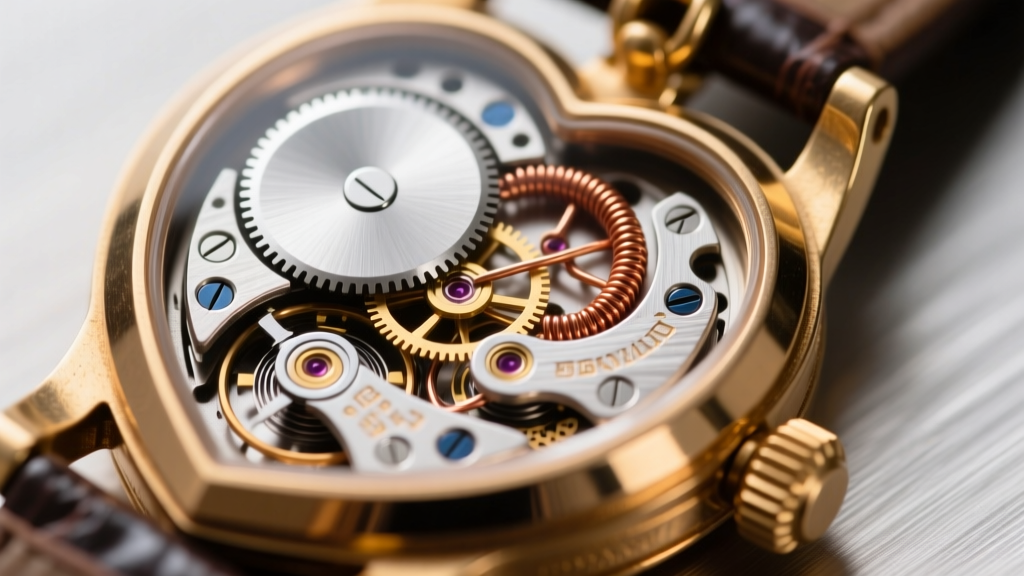
The movement dictates the price, maintenance requirements, and lifespan of your necklace. When browsing, product descriptions will usually specify the movement type. Here is how the three main categories compare in real-world use.
| Movement Type | Accuracy | Maintenance | Price Range | Lifespan |
|---|---|---|---|---|
| Quartz (Battery) | High (+/- 15 sec/month) | Battery swap every 2-3 years | $40 - $150 | 10-20 years |
| Mechanical (Wind-up) | Low (+/- 60 sec/day) | Daily winding, 3-year servicing | $150 - $800+ | Lifetime (if serviced) |
| Decorative (Non-Function) | N/A | None | $15 - $35 | N/A (Costume jewelry) |
Quartz vs. Mechanical: Which Should You Choose?
For daily wear, a Japanese quartz movement (often manufactured by Miyota or Epson) is the most practical choice. These movements typically utilize an SR626SW (377) silver oxide battery, which is inexpensive and widely available. Conversely, a mechanical wind-up movement appeals to purists and vintage collectors. If you choose a mechanical heart clock, you must wind the crown gently—usually 15 to 20 half-turns—until you feel slight resistance. Over-winding will snap the mainspring, a common failure mode in antique and reproduction fob watches.
Metal Grades and Case Materials
The exterior metal of a heart clock necklace must withstand skin oils, friction, and environmental exposure. According to guidelines from the Jewelers of America, always look for stamped hallmarks to verify metal purity. Avoid unmarked 'base metal' or 'Tibetan silver,' which are often nickel-heavy alloys that cause contact dermatitis and tarnish rapidly.
1. Brass and Zinc Alloys (Budget Tier)
Priced between $20 and $50, these pieces are usually plated with a thin flash of gold or silver. Once the plating wears off (typically within 6 to 12 months of daily wear), the underlying brass will oxidize and turn your skin green. These are acceptable for occasional costume wear but poor for long-term investment.
2. 925 Sterling Silver (Mid-Tier)
The sweet spot for quality and affordability. A solid 925 sterling silver heart clock case will last a lifetime. Look for the '925' stamp on the back of the case or the bow. Sterling silver will naturally tarnish when exposed to sulfur in the air, but it is easily polished back to a high shine. Expect to pay between $80 and $200 for a silver-cased quartz pendant.
3. Gold Vermeil and Solid Gold (Premium Tier)
Gold vermeil requires a base of 925 sterling silver plated with at least 2.5 microns of 10k, 14k, or 18k gold. The Gemological Institute of America (GIA) notes that proper vermeil thickness is crucial for durability. Solid 14k gold heart clock necklaces are rare and usually house high-end Swiss mechanical movements, pushing the price well past the $1,500 mark.
Chain Selection and Length Guidelines
A heart clock pendant is significantly heavier than a standard gemstone or stamped metal charm. A delicate cable chain will inevitably snap under the dynamic weight of a swinging fob watch. You must match the chain's tensile strength to the pendant's mass.
- Box Chains: The strongest option for heavy pendants. The interlocking square links distribute weight evenly and resist kinking. Recommended for pendants weighing over 25 grams.
- Rope Chains: Offer excellent strength and a vintage aesthetic that complements Victorian-style heart clocks. Ensure the links are soldered (closed) rather than hollow.
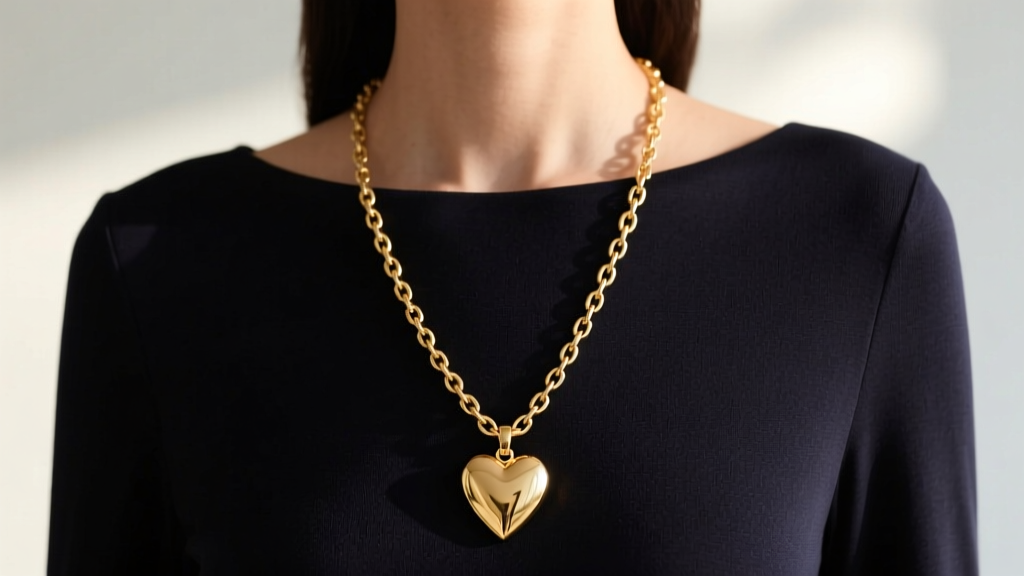
- Length Considerations: Standard pendant lengths (18 to 20 inches) keep the heart clock resting at the collarbone. However, traditional fob watches are designed to hang lower, mimicking the drop of a pocket watch chain. For a true fob aesthetic, opt for a 28 to 32-inch chain, allowing the pendant to rest at the sternum or waist.
Crystal Types and Dial Legibility
The crystal protecting the clock face is just as important as the metal case. There are three primary materials used in heart clock necklaces:
- Acrylic (Plastic): Found in budget pieces. It scratches easily but is shatter-resistant. Scratches can be buffed out with polywatch paste.
- Mineral Glass: The industry standard for mid-range pendant watches. It offers decent scratch resistance and optical clarity but can shatter if dropped on a hard surface.
- Sapphire Crystal: Virtually scratch-proof (rating a 9 on the Mohs scale). Usually reserved for luxury solid-gold mechanical heart clocks. It provides the best legibility but is brittle upon high-impact drops.
Pro Tip: If you frequently wear dark clothing, look for a heart clock with a white or cream enamel dial and high-contrast black Roman numerals or Breguet-style hands. Tone-on-tone dials (e.g., gold hands on a gold dial) look elegant in the display case but are nearly impossible to read in low light.
Maintenance and Troubleshooting Framework
Because heart clock necklaces are worn close to the body, they are subjected to unique environmental stressors. Implement this care framework to maximize the lifespan of your timepiece.
Moisture and Water Resistance
Assume your heart clock necklace is not water-resistant. Unlike modern wristwatches that feature screw-down crowns and rubber gaskets, pendant watches rely on friction-fitted case backs and open crowns. Sweat, perfume, and rain can easily penetrate the case and rust the steel gears or short-circuit the quartz board. Always remove the necklace before showering, exercising, or applying aerosol fragrances.
Battery Replacement Protocol
When a quartz heart clock stops ticking, do not leave the dead battery inside. A depleted silver oxide battery can leak potassium hydroxide, which will permanently corrode the copper wiring and destroy the movement. Have a professional jeweler replace the battery using a case-back press tool; attempting to pry open a friction-fit case back with a household knife will mar the metal and compromise the seal.
Storage Best Practices
When not wearing your heart clock necklace, store it in an anti-tarnish flannel pouch. If the piece is mechanical, let it wind down completely before storing. Keeping a mechanical movement under constant tension for months while in a drawer can cause the mainspring to take a 'set,' reducing its power reserve and accuracy.


