Vintage Chinese Necklace Guide: Jade, Silver & Enamel
Discover how to identify, authenticate, and style a vintage Chinese necklace. Learn about jade grades, silver hallmarks, and cloisonné enamel care.

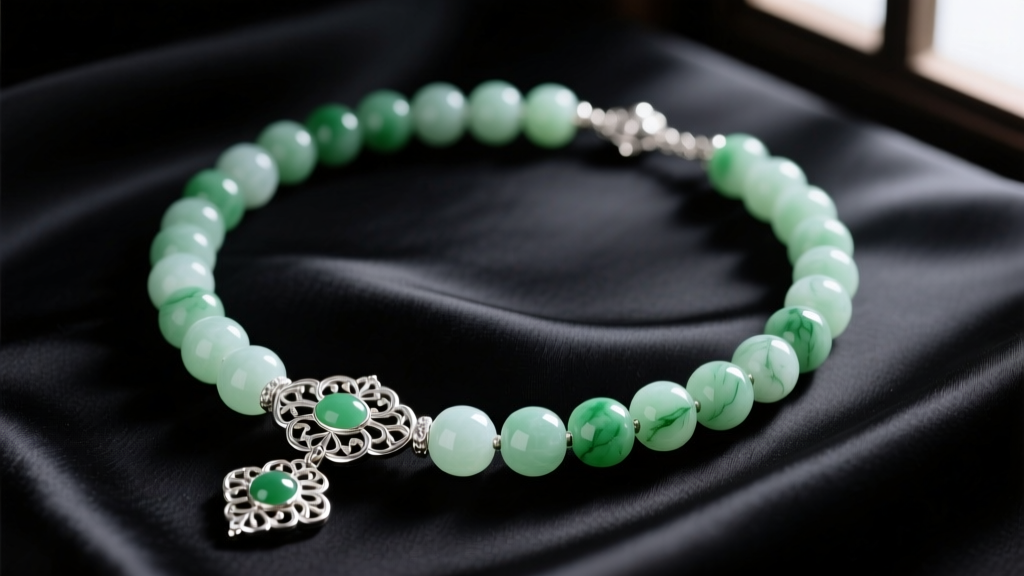
Introduction: The Allure of Antique Eastern Adornment
The market for heritage jewelry has seen a massive resurgence, and the vintage Chinese necklace sits at the pinnacle of this trend. For beginners, navigating the intersection of Republic-era (1912–1949) craftsmanship and mid-century export pieces (1950s–1980s) can be daunting. Unlike Western jewelry, which often prioritizes faceted gemstones and precious metal karatage, traditional Chinese adornment focuses on symbolic carving, intricate metalwork, and the spiritual resonance of materials like jade and enamel. This guide will equip you with the gemological and historical frameworks needed to authenticate, evaluate, and style these remarkable pieces.
Decoding Materials: What Defines a Vintage Chinese Necklace?
Jade (Fei Cui and Nephrite): The Imperial Stone
Jade is the cornerstone of Chinese jewelry. However, not all jade is created equal. When evaluating a vintage Chinese necklace, you must distinguish between Nephrite (Hetian jade), which is softer and historically revered, and Jadeite (Fei Cui), which is harder, more translucent, and highly prized in the modern era. According to the Gemological Institute of America (GIA), jade is categorized into three treatment grades. Grade A is completely untreated. Grade B is acid-bleached and polymer-impregnated to remove brown spots. Grade C is artificially dyed. A true vintage piece from the 1970s will almost always be Grade A, whereas modern "antiqued" reproductions frequently use B+C jade to mimic the look of aged imperial stone.
Cloisonné Enamel: Fire and Wire
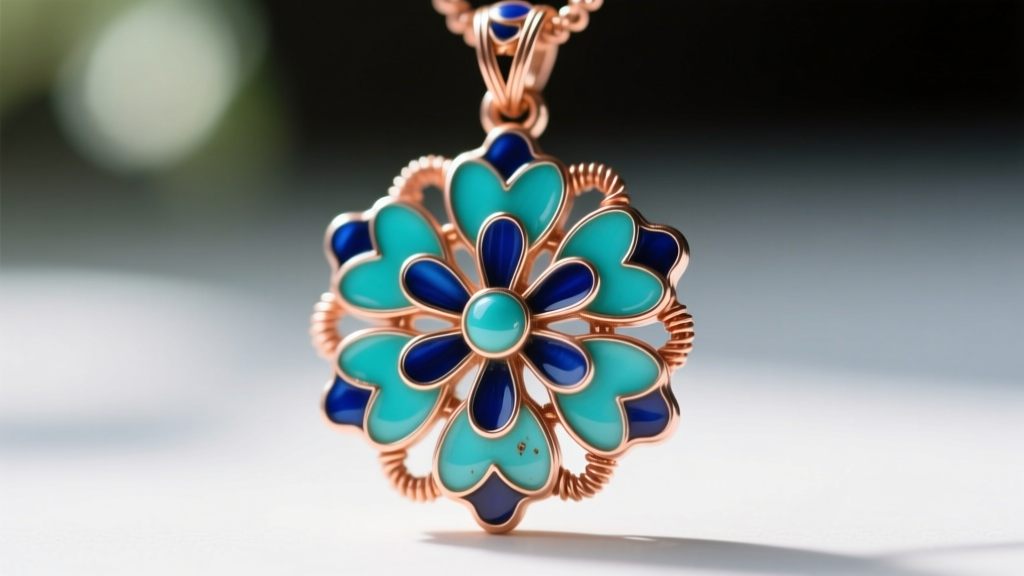
Cloisonné (Jingtailan) involves soldering microscopic copper wires to a copper base to form cells, which are then filled with glass enamel paste and fired. Mid-century export necklaces often feature heavy cloisonné pendants depicting lotus flowers or dragons. Authentic vintage enamel will exhibit micro-pitting (tiny bubbles from the firing process) and slight unevenness in the copper wire height. Fakes, conversely, are often made of stamped brass filled with cold epoxy resin, lacking the vitreous luster and thermal conductivity of true glass enamel.
Silver Filigree and the "Tibetan Silver" Trap
Traditional Han Chinese silverwork utilizes painstaking filigree techniques, twisting silver threads into elaborate lattices. Authentic vintage pieces will bear hallmarks such as "足银" (Zu Yin, meaning pure silver) or "纹银" (Wen Yin, standard silver). Beginners must be highly cautious of modern "Tibetan Silver" or "Nepalese Silver" necklaces sold as vintage. These are rarely silver; they are typically copper-nickel-zinc alloys that can contain dangerous levels of lead and arsenic. Always demand an XRF (X-ray fluorescence) test or use a neodymium magnet—authentic silver is paramagnetic and will not stick to a magnet.
Authentication Framework: Spotting Reproductions vs. Authentic Pieces
To systematically evaluate a vintage Chinese necklace, use the following diagnostic matrix. This framework moves beyond subjective "feel" and relies on observable material science.
| Material | Authentic Vintage Traits | Red Flags (Fakes) | Estimated Market Value (USD) |
|---|---|---|---|
| Jadeite (Grade A) | Dense specific gravity (3.30-3.38), natural inclusions, cold thermal conductivity | Dye concentration in surface cracks, plastic acoustic resonance | $300 - $5,000+ |
| Cloisonné Enamel | Copper base, visible wire ends, micro-pitting in glass, heavy weight | Resin fill, stamped "cells", lightweight brass or pot metal base | $80 - $450 |
| Silver Filigree | Hand-soldered joints, Wen Yin/Zu Yin stamps, slight oxidation in crevices | Cast seams, "Tibetan Silver" markings, magnetic attraction | $150 - $800 |
Sizing, Cords, and Knots: The Anatomy of the Strand
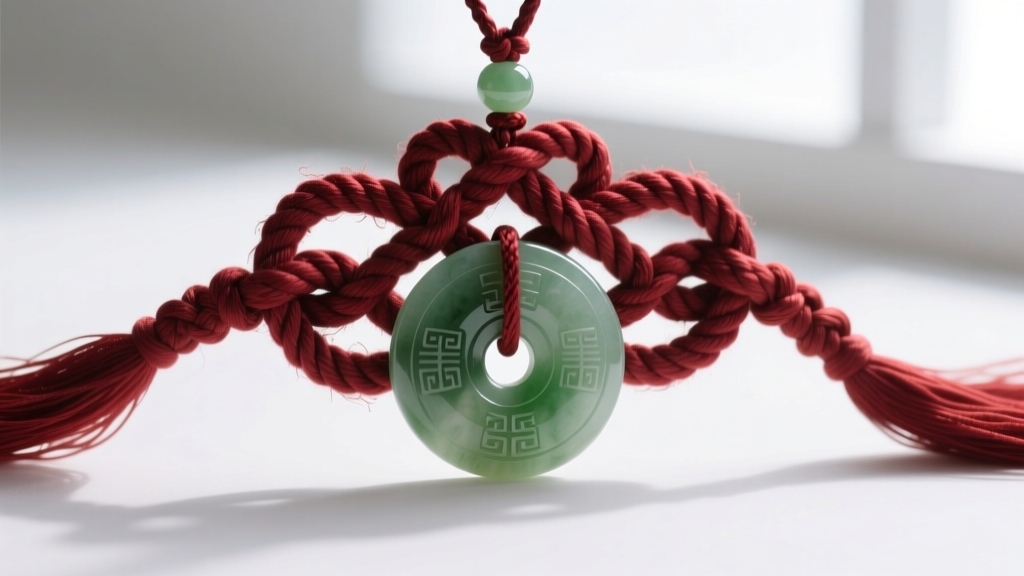
Unlike Western chains, vintage Chinese necklaces are predominantly strung on silk or cotton cords using traditional macramé techniques. The Metropolitan Museum of Art highlights how the structural integrity of these knots is as important as the beads themselves. The "Pan Chang" (endless) knot and the sliding macrame slip knot are hallmarks of authentic assembly.
When examining the beads themselves, pay attention to the drill holes. Authentic vintage jade and hardstone beads were often drilled from both sides using traditional bow drills, resulting in a slight hourglass shape or a minor misalignment where the two holes meet in the center. Modern laser-drilled reproductions feature perfectly cylindrical, uniform holes with sharp edges.
However, original mid-century silk degrades, accumulating sweat and cosmetic oils, which leads to dry rot and catastrophic strand failure. When buying vintage, expect to re-string the necklace. Do not use wire, which can drill through softer stones like nephrite or turquoise over time. Instead, use high-tenacity nylon beading cord (0.8mm to 1.0mm gauge) and preserve the aesthetic by finishing with traditional hand-tied slip knots rather than metal lobster clasps.
Styling and Preservation: Wearing History in 2026
Integrating a vintage Chinese necklace into a contemporary wardrobe requires balancing proportion and material contrast. A 28-inch strand of 8mm carved jadeite beads serves as an exceptional layering anchor. Pair it with a 16-inch modern 14k gold paperclip chain and a 20-inch delicate pearl choker to create a multi-textural, asymmetrical silhouette that bridges East and West.
True vintage styling isn't about wearing a costume; it's about allowing a singular historical piece to dictate the mood of a modern, minimalist silhouette.
Crucial Care Protocols
- Never use ultrasonic cleaners: The high-frequency vibrations can shatter internal fracture lines in vintage jade and dislodge fragile glass enamel in cloisonné pendants.
- Avoid chemical dips: Silver dips will strip the antique patina (oxidation) that gives filigree its three-dimensional depth. Clean silver gently with a damp microfiber cloth and a drop of pH-neutral dish soap.
- Hydration for Nephrite: If you live in a dry climate, occasionally wipe nephrite beads with a microscopic amount of mineral oil to prevent the stone from drying out and developing surface crazing.
Conclusion
Acquiring a vintage Chinese necklace is an exercise in cultural appreciation and material detective work. By understanding the gemological realities of jade, the metallurgical truths of silver, and the structural nuances of traditional knotting, beginners can confidently navigate the market. Armed with this knowledge, you are no longer just buying jewelry; you are preserving a tangible piece of artisanal history.


