Dyadema 925 Italy Necklace: 2026 Trend Analysis & Styling Guide
Explore the 2026 trend analysis of the Dyadema 925 Italy necklace. Discover styling frameworks, material science, and authentication tips.

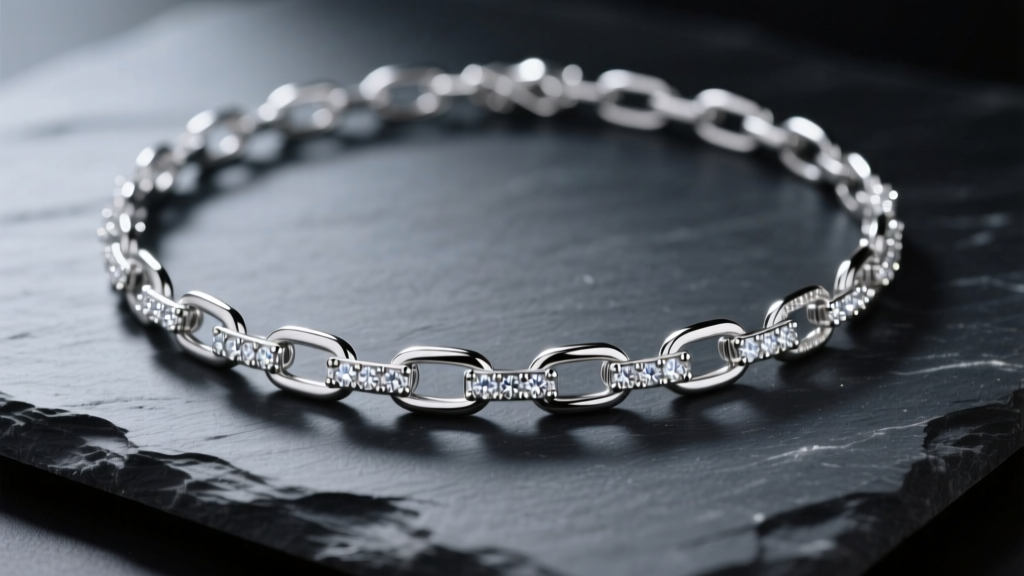
The Resurgence of Italian Sterling Silver in 2026
The jewelry landscape in 2026 has decisively pivoted away from the hyper-minimalism of the early 2020s, embracing what industry analysts now call "tactile luxury." At the forefront of this movement is the dyadema 925 italy necklace, a category that bridges the gap between accessible pricing and high-end artisanal craftsmanship. Unlike mass-produced fast-fashion silver, authentic Italian sterling silver is experiencing a massive resurgence, driven by a consumer base that demands longevity, intricate link architecture, and superior metallurgical standards.
Historically, Italian silver manufacturing hubs like Vicenza and Arezzo have set the global benchmark for chain making. Today, the Dyadema aesthetic—characterized by fluid paperclip links, micro-pavé diamond accents, and seamless clasp integration—represents the pinnacle of this heritage. As consumers become more educated about alloy compositions and plating thicknesses, the dyadema 925 italy necklace has transitioned from a niche luxury item to a cornerstone of the modern everyday jewelry wardrobe.
Deconstructing the Dyadema Aesthetic
What exactly defines the Dyadema style? It is not merely a brand name; it has evolved into a recognized design language within the jewelry community. The hallmark of this aesthetic is the juxtaposition of industrial chain geometry with delicate, light-catching pavé settings. In 2026, the most sought-after iterations feature elongated, hollow-core paperclip links that provide substantial visual weight without the prohibitive cost and heaviness of solid gold equivalents.
The pavé work on a genuine dyadema 925 italy necklace utilizes micro-prong settings rather than glued bezels, ensuring that cubic zirconia or lab-grown diamond melee remains secure under daily wear conditions. Furthermore, the finishing process involves high-polish tumbling followed by meticulous hand-inspection, resulting in a mirror-like reflectivity that mimics white gold or platinum. This specific visual signature is what separates premium Italian silver from lower-tier alternatives that often suffer from a dull, grayish cast after minimal use.
Material Science: What Makes "925 Italy" Superior?
To understand the premium commanded by a dyadema 925 italy necklace, one must examine the metallurgy. Standard sterling silver is an alloy composed of 92.5% pure silver and 7.5% copper. While copper provides necessary tensile strength, it is also the culprit behind oxidation and tarnishing. High-end Italian manufacturers have begun altering this 7.5% alloy fraction, substituting copper with zinc, germanium, or even trace amounts of platinum to create "anti-tarnish" silver variants that resist sulfur-induced blackening.
According to the Gemological Institute of America (GIA), pure silver is too soft for functional jewelry, making the alloying process critical. However, the true secret of Italian silver lies in the surface treatment. Premium pieces undergo a multi-step electroplating process. First, a strike layer of copper or nickel (in hypoallergenic formulas, a palladium strike is used) is applied to smooth microscopic surface imperfections. This is followed by a thick layer of rhodium—typically between 0.1 and 0.3 microns. Finally, a 2026 industry-standard electrophoretic lacquer (e-coating) is applied to seal the rhodium, extending the necklace's brilliant white luster by up to five years without requiring re-plating.
Comparative Analysis: Fast-Fashion vs. Premium Italian 925
| Feature | Fast-Fashion Silver | Premium Dyadema 925 Italy |
|---|---|---|
| Alloy Composition | 92.5% Silver / 7.5% Copper | 92.5% Silver / Zinc or Germanium blend |
| Surface Plating | Flash rhodium (0.01 - 0.05 microns) | Thick rhodium (0.1 - 0.3 microns) + E-coat |
| Link Construction | Machine-stamped, soldered joints visible | Laser-welded, seamless hollow-core links |
| Clasp Mechanism | Standard spring-ring | Custom-matched lobster or magnetic toggle |
| Average Price Point | $25 - $60 | $140 - $380 |
Styling Frameworks: Integrating the Dyadema Necklace
Styling a dyadema 925 italy necklace requires an understanding of visual weight and neckline geometry. The inherent reflectivity of the rhodium-plated Italian silver makes it a powerful focal point, meaning it should be deployed strategically rather than haphazardly layered with competing textures.

The Rule of Thirds in Layering
When building a necklace stack around a Dyadema piece, adhere to the rule of thirds to prevent tangling and visual clutter. If your focal piece is an 18-inch princess-length paperclip chain (approx. 3.5mm width), your secondary chain should be 15 inches (choker length, 1.5mm width), and your tertiary piece should be 22 inches (matinee length, featuring a small solitaire pendant). This creates distinct visual tiers that complement rather than cannibalize each other.
Neckline Pairing Matrix
- Deep V-Neck: Pair with a 20-inch or 22-inch Dyadema pendant necklace. The elongated chain mirrors the neckline, drawing the eye downward and elongating the neck. Avoid chokers, which visually truncate the neck against a V-cut.
- Crew Neck / T-Shirt: Opt for a 16-inch choker or a bold, 5mm-wide 18-inch collar. The high neckline provides a fabric backdrop that allows the intricate silver links to pop without competing for attention.
- Off-the-Shoulder / Boat Neck: This is the ideal canvas for a multi-strand Dyadema bib necklace or a tightly layered stack of 14", 15", and 16" chains. The exposed collarbone area acts as a natural display shelf for Italian silver craftsmanship.
- Button-Down Shirt: Wear a single 18-inch Dyadema chain tucked slightly beneath the unbuttoned collar. The mix of crisp cotton and fluid, high-polish silver embodies the 2026 "effortless corporate" aesthetic.
Authentication and Pricing Tiers
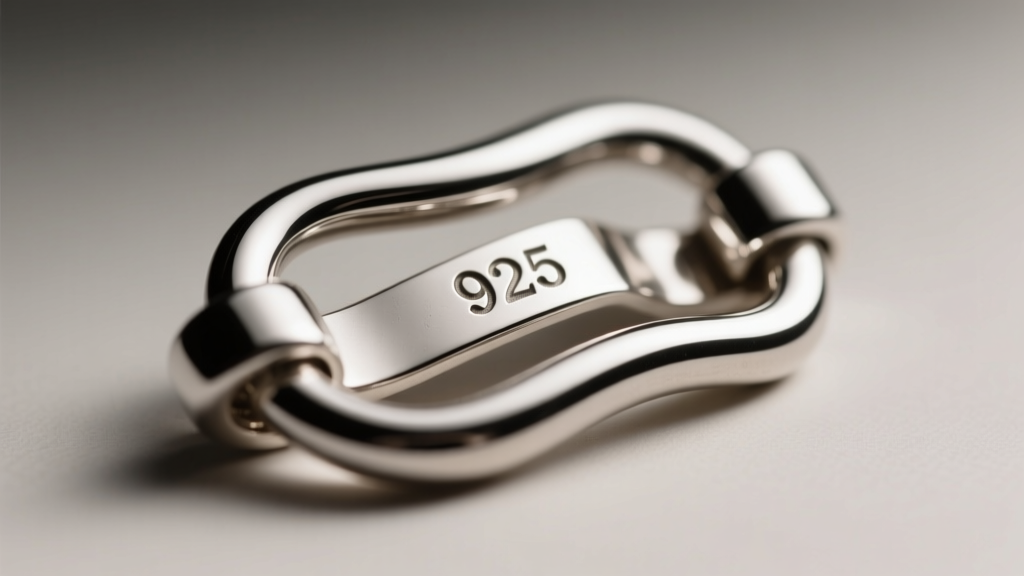
As the demand for the dyadema 925 italy necklace has surged, so too has the market saturation of counterfeit pieces. Authenticating Italian silver requires looking beyond the superficial shine. The Federal Trade Commission (FTC) Jewelry Guides mandate that any piece stamped with a quality mark like "925" must also bear the registered trademark or maker's mark of the manufacturer. If your necklace has a "925" stamp but lacks a corresponding maker's mark, its origin is highly suspect.
Furthermore, examine the clasp and jump rings. Authentic Italian manufacturing utilizes laser-welded jump rings that are completely seamless. If you can see a visible slit or gap where the jump ring connects to the clasp, the piece was likely mass-produced in a region with lower quality-control standards. Pricing is another reliable indicator; due to the rising spot price of silver and the labor-intensive nature of Italian chain-making, a genuine Dyadema-style paperclip chain with pavé accents will rarely retail below $120. Offers in the $30-$50 range almost guarantee a brass or copper core with a microscopic silver wash.
Care and Maintenance Protocols
Even with advanced e-coating technology, a dyadema 925 italy necklace requires specific care to maintain its structural and aesthetic integrity. The most common failure mode for sterling silver is not physical breakage, but chemical degradation of the rhodium layer caused by improper cleaning agents.
Never use silver dip solutions or abrasive polishing cloths on rhodium-plated Italian silver. Silver dips contain thiourea, a toxic chemical that strips rhodium and leaves the underlying silver porous and prone to rapid re-tarnishing. Instead, utilize a solution of warm distilled water and a few drops of pH-neutral dish soap. Soak the necklace for exactly three minutes, gently agitate with a soft-bristled baby toothbrush to remove sebum and cosmetic buildup from the pavé settings, and dry immediately with a microfiber cloth. Store the piece in an anti-tarnish flannel pouch infused with activated carbon to absorb ambient sulfur compounds, ensuring your investment retains its 2026 runway-ready brilliance for years to come.


