Heart of Ocean Necklace: Complete Value & Budget Guide
Discover the true value of a Heart of Ocean necklace. Compare pricing tiers, sapphire grades, and metals to find the perfect Titanic replica.

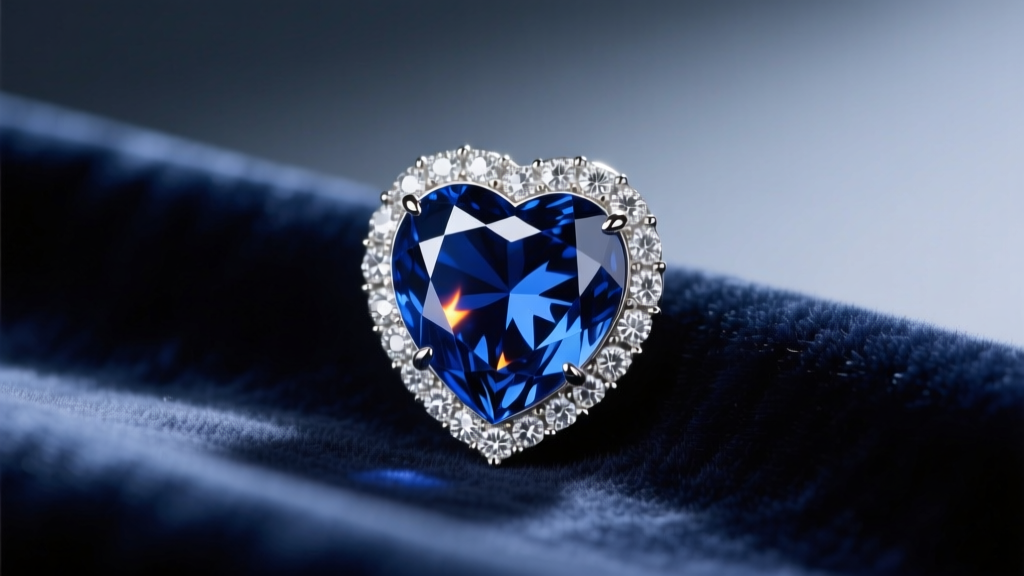
Since its cinematic debut in 1997, the Heart of Ocean necklace has remained one of the most iconic and sought-after pieces of jewelry in pop culture history. While the original movie prop was a masterclass in costume design, the real-world demand for high-quality replicas has spawned a massive market. However, navigating this market in 2026 requires a sharp eye for gemology and metalwork. Whether you are looking for a $50 costume piece for a themed event or a $15,000 custom fine jewelry commission, understanding the true value of a Heart of Ocean necklace is critical to avoiding overpriced novelties and underwhelming quality.
The Cinematic Prop vs. The Asprey & Garrard Original
To assess value, we must first separate Hollywood magic from horological reality. The necklace worn by Kate Winslet on screen was not actually a sapphire. Due to budget constraints and the need for specific light refraction on camera, the primary close-up prop was a heart-cut blue zircon, while stunt pieces were made of cubic zirconia and painted resin. The true 'Heart of the Ocean' was a 177-carat Ceylon sapphire surrounded by 103 diamonds, crafted by the prestigious British jeweler Asprey & Garrard. This piece was famously worn by Celine Dion at the 1998 Academy Awards and later sold at auction for over $2 million. Understanding this provenance helps contextualize why modern replicas vary so wildly in price and material composition.
Market Pricing Matrix: What Should You Pay?
The market for Heart of Ocean replicas is heavily fragmented. Below is a realistic 2026 pricing framework based on material grades, stone origins, and metal purity. Use this matrix to benchmark any piece you are considering purchasing.
| Tier | Center Stone | Halo / Accent Stones | Metal Base | Estimated Price Range |
|---|---|---|---|---|
| Costume / Fashion | Blue Glass, Resin, or CZ | Cubic Zirconia or Acrylic | Zinc Alloy, Brass, or Plated Base | $25 - $85 |
| Fine Replica | Lab-Created Sapphire or Tanzanite | Moissanite or High-Grade CZ | Sterling Silver (925) or 10k Gold | $150 - $650 |
| Premium Custom | Natural Ceylon Sapphire (2ct - 5ct) | Natural Melee Diamonds (VS/G-H) | 14k or 18k White Gold | $3,500 - $12,000 |
| Investment Grade | Natural Unheated Sapphire (10ct+) | Natural Diamonds (VVS/E-F) | Platinum (950) | $25,000 - $100,000+ |
Gemological Deep Dive: Evaluating the Center Stone
The soul of the Heart of Ocean necklace is its massive, deep-blue heart-shaped center stone. When evaluating replicas in the 'Fine' to 'Premium' tiers, the choice of sapphire dictates the bulk of the value.
Lab-Created vs. Natural Sapphires
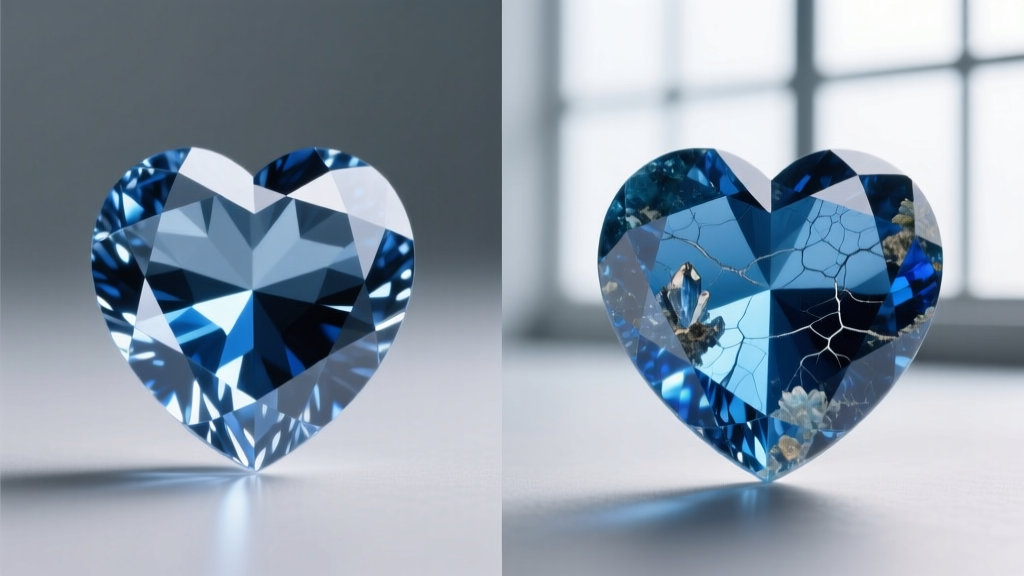
For 90% of buyers, a lab-created sapphire offers the best value proposition. According to the Gemological Institute of America (GIA), lab-grown sapphires share the exact same chemical composition (Al2O3) and physical properties (Mohs hardness of 9) as natural stones. However, the growth method matters. Avoid 'flame fusion' (Verneuil) lab sapphires, which often exhibit curved striae and an overly perfect, inky-blue appearance that looks artificial. Instead, seek out 'flux-grown' or 'Czochralski' lab sapphires, which take longer to grow and more accurately mimic the color zoning and light return of natural Ceylon sapphires.
The Tanzanite Trap
Many mid-tier jewelers substitute sapphires with tanzanite to achieve a deep blue-violet hue. While tanzanite is a beautiful gemstone, it ranks only 6 to 7 on the Mohs scale. Because the Heart of Ocean pendant is a heavy, statement piece that swings against the chest and collarbone, a tanzanite center stone is highly susceptible to chipping and abrasion over time. Always verify that the stone is a true sapphire (corundum) for long-term durability.
Metalwork: Chains, Halos, and Hallmarks
A heavy center stone requires a robust chain and a secure bail. The structural integrity of the metalwork is where many budget replicas fail.
- Sterling Silver (925): The most common choice for fine replicas. Ensure the silver is heavily rhodium-plated to prevent tarnishing and to mimic the bright white luster of platinum. Check the clasp; a standard spring-ring is insufficient for a heavy pendant. Demand a lobster clasp or a secure box clasp with a safety figure-eight catch.
- White Gold (14k/18k): Ideal for premium custom pieces. 14k white gold offers superior durability and prong strength for holding the diamond halo, while 18k offers a richer alloy but requires more frequent rhodium dipping.
- The Halo Setting: In premium tiers, the diamond halo should be micro-pavé or bead-set. If you are buying a 'fine replica' tier, ensure the cubic zirconia or moissanite melee stones are prong-set rather than glued. Glued stones will inevitably cloud and fall out when exposed to skin oils and lotions.
Sourcing Red Flags and Buyer Protections
The secondary market and online storefronts are saturated with deceptive listings. Protect your budget by watching for these critical red flags:
Beware the 'Movie Exact Replica' Claim: Any seller advertising a piece as the 'exact replica used in the film' for under $10,000 is selling a novelty item. The studio props were never mass-produced, and authentic screen-used pieces are locked in private archives or museums.
Furthermore, always request a macro video of the hallmark stamp. Authentic fine jewelry will feature a crisp '925', '14K', or '18K' stamp, often accompanied by the maker's mark. If the listing features stock photos with no close-ups of the bail or clasp hallmarks, assume the metal is base alloy plated with a microscopic layer of silver.
Final Verdict: Maximizing Your Investment
The true value of a Heart of Ocean necklace lies in its emotional resonance and its execution as a piece of wearable art. For everyday wear and special occasions, the sweet spot for budget and value is the 'Fine Replica' tier: a flux-grown lab sapphire set in rhodium-plated sterling silver with a moissanite halo, typically costing between $250 and $450. This configuration provides the optical brilliance and physical durability of high jewelry without the $15,000 premium of natural earth-mined stones. By prioritizing stone hardness, secure micro-pavé settings, and proper metal hallmarks, you can secure a breathtaking homage to cinema history that will last a lifetime.


