Ultimate Care Guide for Your Turquoise Lariat Necklace
Learn how to properly clean, store, and maintain your turquoise lariat necklace to prevent damage, discoloration, and chain tarnishing.

The Unique Vulnerability of Turquoise Lariat Necklaces
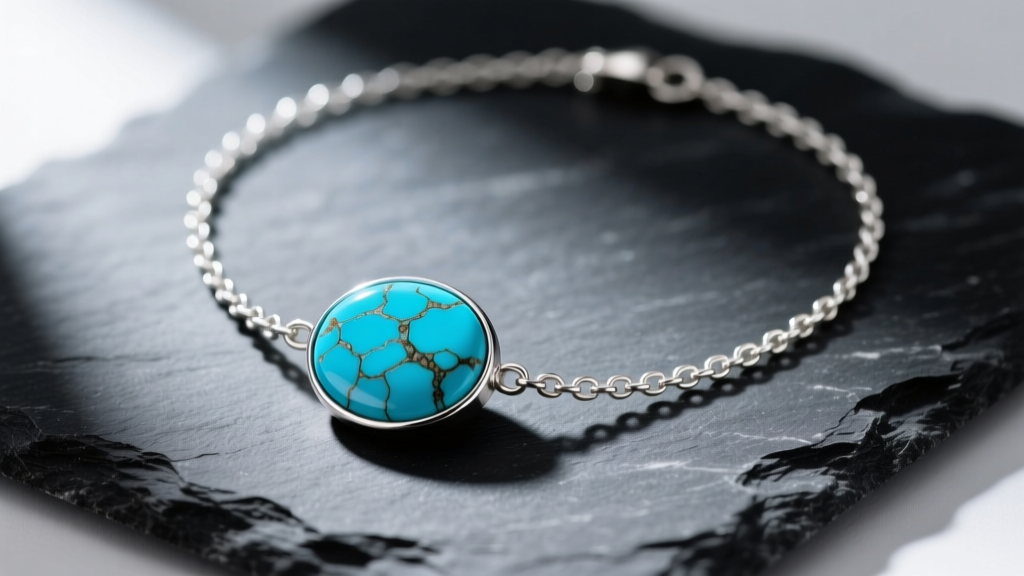
A turquoise lariat necklace is a striking statement piece, combining the rich, historical allure of one of the world's oldest gemstones with the fluid, modern drape of a Y-shaped or drop-chain design. However, this specific combination of materials and structural design creates a high-maintenance piece of jewelry. Turquoise is a hydrous phosphate of copper and aluminum, ranking between 5 and 6 on the Mohs hardness scale. More importantly, it is inherently porous. When paired with a lariat chain—which typically features delicate, easily kinked links ranging from 0.8mm to 1.5mm in thickness to maintain a graceful drape—the need for a meticulous care regimen becomes critical.
Unlike solid gold hoop earrings or diamond solitaire pendants, you cannot simply toss a turquoise lariat into an ultrasonic cleaner or wear it through a rigorous daily routine without consequence. The stone acts like a microscopic sponge, absorbing oils, cosmetics, and environmental pollutants, while the slender chain is highly susceptible to tangling, kinking, and chemical tarnishing. In this comprehensive guide, we break down the exact protocols required to preserve the vibrant matrix of your turquoise and the structural integrity of your lariat chain.
Anatomy of Your Necklace: Stone and Chain
Before applying any cleaning agents, it is vital to understand the specific materials you are working with. The care protocol differs slightly depending on whether your turquoise is natural or stabilized, and whether your chain is sterling silver or gold vermeil.
Natural vs. Stabilized Turquoise
Natural turquoise is untreated and highly porous. It will naturally change color over time as it absorbs the oils from your skin, often shifting from a bright sky blue to a deeper, greener hue. Stabilized turquoise, on the other hand, has been subjected to a pressurized resin or polymer treatment to harden the stone and lock in its color. While stabilized stones are more resistant to oil absorption, the resin can be severely damaged by heat, acetone, and harsh chemical solvents. According to the Gemological Institute of America (GIA), heat and harsh chemicals can also damage the surface of treated turquoise, making gentle, non-chemical cleaning the only safe route.
Lariat Chain Gauges and Metals
Lariat necklaces rely on fluid movement, meaning jewelers typically utilize fine cable, rope, or box chains between 0.8mm and 1.2mm in diameter. If your chain is sterling silver, it is prone to sulfur-induced tarnishing. If it is gold vermeil (a thick layer of gold, usually at least 2.5 microns, over a sterling silver base), aggressive polishing will strip the gold layer right off, exposing the silver beneath.
The Step-by-Step Cleaning Protocol
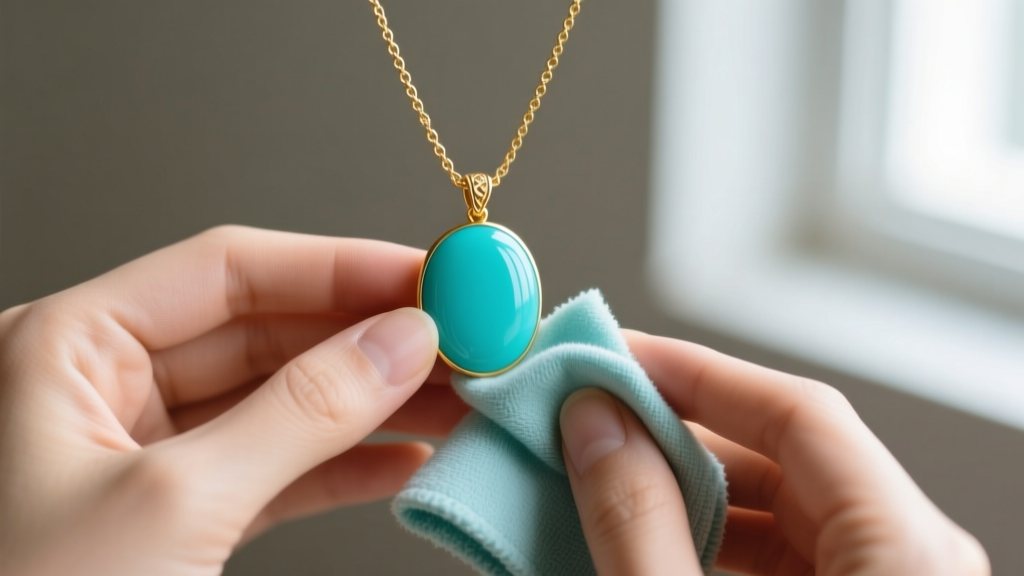
Never submerge a turquoise lariat necklace in water, and absolutely never use ultrasonic or steam cleaners. The high-frequency vibrations of an ultrasonic bath can easily shatter a turquoise cabochon or rattle it loose from its bezel or prong setting. Instead, follow this targeted, two-part cleaning process.
Step 1: Cleaning the Turquoise Stone
- Dry Dusting: Use a clean, dry, lint-free microfiber cloth to gently wipe the surface of the turquoise. This removes superficial dust and skin oils without pushing them deeper into the stone's pores.
- Targeted Damp Wiping: If the stone is visibly soiled, slightly dampen a corner of the microfiber cloth with distilled water. Distilled water is preferred over tap water, as tap water contains chlorine and minerals that can leave microscopic deposits on the stone.
- The Toothpick Method: Dirt and cosmetic residue often accumulate in the crevices where the turquoise meets the metal bezel. Do not use metal tools or stiff brushes. Instead, use a wooden toothpick to gently scrape out debris from the setting's edge without scratching the silver or gold.
- Immediate Drying: Immediately dry the stone with the dry portion of your cloth. Never let water air-dry on the surface of the stone.
Step 2: Cleaning the Lariat Chain
The chain must be cleaned separately and carefully to avoid kinking. For sterling silver chains, use a dedicated silver polishing cloth that contains micro-abrasives and anti-tarnish agents. Gently pinch the chain between the cloth and pull it through, section by section. Do not rub aggressively near the clasp or the jump ring holding the turquoise drop, as these are structural weak points. For gold vermeil chains, skip the silver polishing cloth entirely, as the abrasives will strip the gold. Instead, use a plain, clean microfiber cloth to gently buff away oils.
Storage and Tangle Prevention for Lariat Styles
The defining feature of a lariat necklace—its long, unclasped drop or Y-shaped junction—makes it a magnet for tangles. Storing it improperly will lead to severe kinking in fine chains, which is often impossible to repair without replacing the chain entirely.
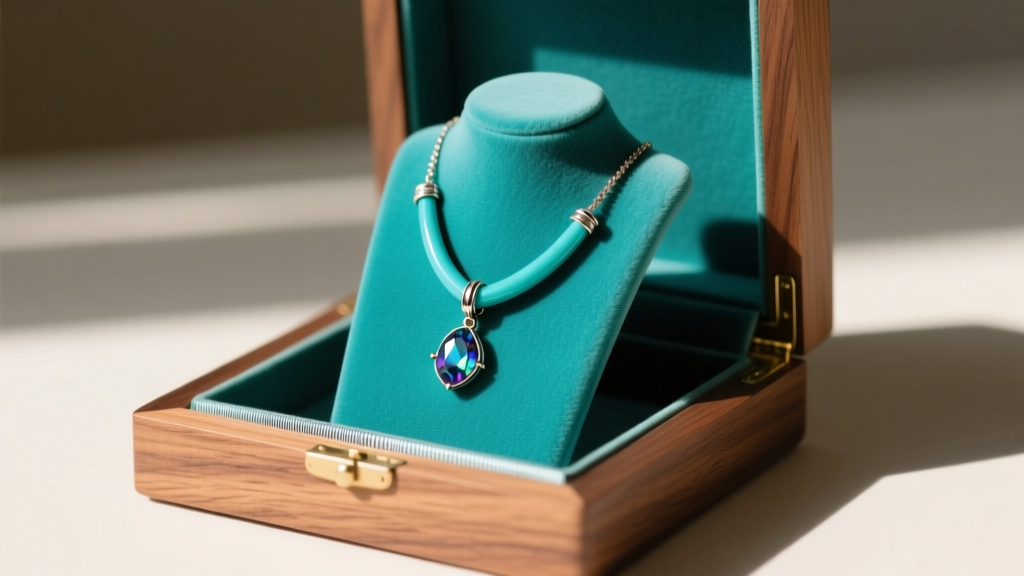
- Vertical Hanging: The absolute best way to store a lariat necklace is by hanging it vertically on a jewelry stand. This allows gravity to keep the delicate chain straight and prevents the drop section from wrapping around the main loop.
- Anti-Tarnish Environments: If you must store it in a drawer or box, use a sealed anti-tarnish pouch. Include a 3M anti-tarnish strip inside the pouch. These strips absorb sulfur compounds and moisture from the air, significantly slowing down the oxidation process of sterling silver components.
- The Straw Trick for Travel: When packing for travel, thread the delicate tail of the lariat chain through a clean plastic drinking straw and clasp it. This rigid casing prevents the chain from bending, kinking, or tangling with other jewelry in your suitcase.
Environmental Hazards & Daily Wear Rules
Turquoise is notoriously sensitive to its environment. To maximize the lifespan of your necklace, you must adhere to strict wearing protocols. The Jewelers of America consistently advises that porous gemstones should be the last thing you put on when getting dressed and the first thing you take off when returning home.
| Environmental Hazard | Effect on Turquoise Stone | Effect on Lariat Chain |
|---|---|---|
| Chlorine (Pools/Spas) | Causes severe, irreversible discoloration and structural weakening of the stone matrix. | Rapidly oxidizes sterling silver and strips gold vermeil layers. |
| Perfumes & Hairspray | Alcohol and chemicals dry out the stone, leading to micro-cracking and dullness. | Leaves a sticky residue that attracts dust and accelerates tarnishing. |
| Skin Acids & Sweat | Accelerates the color shift in natural turquoise; can degrade stabilization resins. | Corrodes the delicate jump rings and clasp mechanisms over time. |
| Direct Heat/Sunlight | Can cause the moisture inside the hydrous stone to evaporate, leading to cracking. | Minimal direct effect, but heat accelerates chemical tarnishing reactions. |
When to Seek Professional Restoration
Despite your best efforts, wear and tear on a delicate lariat necklace is inevitable. You should take your piece to a professional bench jeweler under the following circumstances:
- Chain Kinking: If your fine chain develops a sharp kink, do not attempt to pull it straight with pliers. A jeweler has specialized mandrels and techniques to gently massage the metal back into shape without snapping the links.
- Stone Discoloration: If your natural turquoise has absorbed oils and darkened unevenly, a professional can sometimes safely polish the surface or re-stabilize the stone, though this is a highly specialized process.
- Bezel Loosening: If you notice the metal rim (bezel) around the turquoise lifting or catching on your clothing, stop wearing the necklace immediately. A jeweler can use a bezel pusher to securely burnish the metal back against the stone, preventing it from falling out and shattering.
By treating your turquoise lariat necklace with the respect its delicate materials demand, you ensure that both the vibrant stone and the fluid chain remain pristine for decades, allowing the piece to be passed down as a cherished heirloom rather than a damaged relic.


