How to Style a Chunky Gold Layered Necklace: Beginner Guide
Learn how to build and style a chunky gold layered necklace with our beginner guide. Discover ideal lengths, chain types, and clasp tips.

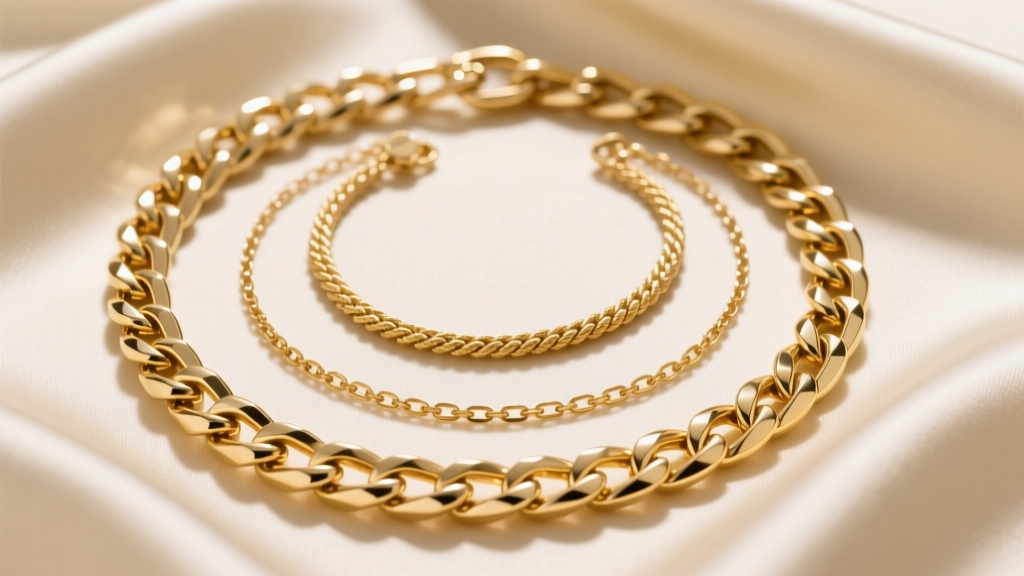
The Anatomy of a Perfect Chunky Gold Layered Necklace
The chunky gold layered necklace has evolved from a fleeting streetwear trend into a permanent staple of modern jewelry wardrobes. However, building a stack that looks intentional rather than chaotic requires an understanding of proportion, weight, and metal mechanics. For beginners, the term 'chunky' generally refers to chain widths ranging from 4mm to 10mm. When layering these heavier pieces, the goal is to create a cascading visual hierarchy without overwhelming your neckline or causing physical discomfort.
A successful stack relies on three distinct roles: the anchor chain, the bridging chain, and the accent chain. The anchor is your thickest, heaviest piece (typically 5mm to 8mm) that sits closest to the base of the neck or rests on the collarbone. The bridging chain (2mm to 4mm) provides textural contrast, while the accent chain introduces pendants or elongates the silhouette. Understanding this anatomy is the first step toward mastering the art of the heavy metal stack.
Chain Styles That Actually Work for Heavy Layering
Not all chain links are created equal. When dealing with the substantial weight of chunky gold, the structural integrity of the link pattern dictates how the necklace drapes, reflects light, and interacts with other layers. Smooth, flat chains will slide against each other and tangle, while highly textured chains will catch and pull.
| Chain Style | Ideal Width (mm) | Drape & Weight Profile | Best Layer Position |
|---|---|---|---|
| Cuban Link | 5mm - 8mm | Heavy, rigid, lays flat against the skin | Anchor (Bottom Layer) |
| Figaro | 3mm - 5mm | Medium weight, patterned light reflection | Bridging (Middle Layer) |
| Rope | 2mm - 4mm | Flexible, spirals light, high tensile strength | Accent or Bridging |
| Paperclip | 3mm - 6mm | Lightweight, modern, elongated links | Anchor or Pendant Base |
According to master jewelers, pairing a flat Cuban link with a highly textured Rope chain is the ultimate anti-tangle strategy. The differing surface frictions prevent the links from slipping into one another, keeping your stack perfectly aligned throughout the day.
The Golden Rule of Lengths and Proportions
The most common mistake beginners make when building a chunky gold layered necklace is ignoring the 'two-inch rule.' If your layers are spaced less than two inches apart, the heavier chains will inevitably bunch up at the center of gravity, creating a tangled knot at the base of your throat.
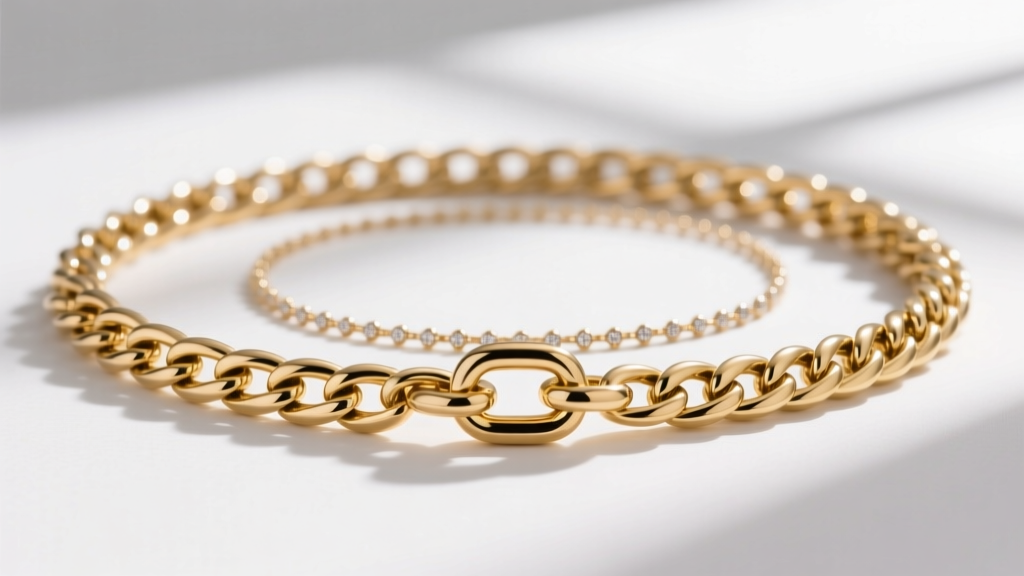
The Blueprint for a 3-Layer Stack
- Layer 1 (The Choker): 15 to 16 inches. This should be your thickest chain (e.g., a 6mm Cuban). It frames the face and anchors the entire look.
- Layer 2 (The Collarbone): 18 inches. A medium-width Figaro or Rope chain (3mm to 4mm). This bridges the gap between the neck and the chest.
- Layer 3 (The Plunge): 22 to 24 inches. A lighter, longer chain that can hold a substantial pendant, such as a gold signet or a textured medallion. This draws the eye downward and elongates the torso.
If you have a shorter torso or prefer a higher neckline, adjust these measurements down by one inch across the board (e.g., 14", 16", 20"), but always maintain that minimum two-inch variance to preserve the structural integrity of the layering effect.
Material Grades: Solid Gold vs. Vermeil vs. Plated
Because chunky chains require significantly more raw material than delicate pendants, the cost of solid gold can be prohibitive. Understanding material grades is crucial for balancing your budget with longevity.
Solid 14k vs. 18k Gold: Pure 24k gold is too soft for heavy, interlocking chain links that endure daily friction and pulling. The Gemological Institute of America (GIA) notes that alloying gold with metals like copper, zinc, and silver increases durability. 14k gold (58.5% pure) offers a slightly paler yellow hue but exceptional scratch resistance, making it ideal for heavy Cuban links. 18k gold (75% pure) provides that rich, buttery yellow tone but is softer and more prone to micro-scratches on wide, flat surfaces.
Gold Vermeil (The Smart Alternative): If solid gold is out of reach, gold vermeil is your best option. The Federal Trade Commission (FTC) strictly defines vermeil as a sterling silver base plated with a minimum of 2.5 microns of gold (usually 14k or 18k). This thick plating can withstand years of wear, whereas standard gold-plated brass (often less than 0.5 microns) will oxidize and turn your skin green within months of heavy friction.
Pro Tip: Never sleep in gold vermeil or plated chunky chains. The sheer weight of the links pressing against your skin and the cotton friction from your pillows will strip the gold micron layer from the high-contact points (like the back of the neck) in a matter of weeks.
Troubleshooting Common Layering Fails
Even with the perfect lengths and chain styles, heavy layering presents unique mechanical challenges. Here is how to solve the most frequent issues encountered by beginners.
1. The Sliding Clasp Problem
Heavy chains (over 20 grams) create a pendulum effect that pulls the clasp from the back of the neck to the front. The Fix: Ditch the standard spring-ring clasp. Upgrade to a 12mm or 15mm lobster clasp, which has a stronger internal spring and a larger surface area. Alternatively, add a small silicone necklace stopper bead to the back of the chain to act as a physical anchor against your clothing.
2. Neck Strain and Fatigue
A solid 14k gold 8mm Cuban chain at 20 inches can weigh upwards of 65 grams. Wearing three of these will cause genuine cervical strain. The Fix: Mix solid and hollow-core chains. Many reputable jewelers offer 'puffed' or hollow-core Cuban and Paperclip links that offer the exact same visual footprint and width but weigh 70% less. Reserve solid, heavy links for your shortest 16-inch layer, and use hollow-core links for the longer 20-inch and 24-inch drops.
3. The 'Tangle Zone' at the Nape
When multiple chains share the same thickness, they braid themselves together at the back of the neck. The Fix: Introduce a 'spacer chain.' Use a delicate 1.5mm bead chain or satellite chain as your middle layer. The tiny, rigid beads create enough friction to keep the heavier chains above and below it separated, effectively acting as a ball-bearing system for your jewelry.
Neckline Pairings for Maximum Impact
A chunky gold layered necklace is a statement piece, and its impact is heavily dictated by the canvas it rests upon. The interplay between the metal and your clothing can either elevate the look or cause visual clutter.

- The Deep V-Neck: This is the ultimate canvas for a 3-layer stack. The V-shape naturally mirrors the cascading lengths of a 16", 18", and 22" layering setup, drawing the eye down the chains and elongating the neck. Avoid high-collared shirts with long layers, as the fabric will swallow the bottom chains.
- The Classic Crewneck: A tight cotton crewneck provides a matte, casual backdrop that makes polished gold pop. For this neckline, keep the stack tighter to the neck (e.g., 14" and 16"). A chunky 6mm chain resting just above the ribbed collar of a white t-shirt is a masterclass in effortless, off-duty styling.
- Off-the-Shoulder & Square Necks: These necklines expose the collarbone and upper chest, creating a wide horizontal canvas. Opt for wider, shorter layers that sit squarely on the collarbones rather than long plunging chains, which can look disconnected from the architectural lines of the garment.
Building the perfect chunky gold layered necklace is less about following rigid fashion rules and more about understanding the physical properties of the jewelry you are wearing. By respecting the two-inch length rule, choosing complementary link textures, and investing in the correct material grades for your lifestyle, you can create a heavy metal stack that looks intentional, feels comfortable, and stands the test of time.


