Value Guide: Choosing a Rosary Worn as Necklace on a Budget
Discover the true value of a rosary worn as necklace. Compare materials, price tiers, and durability to make a smart, budget-friendly jewelry investment.

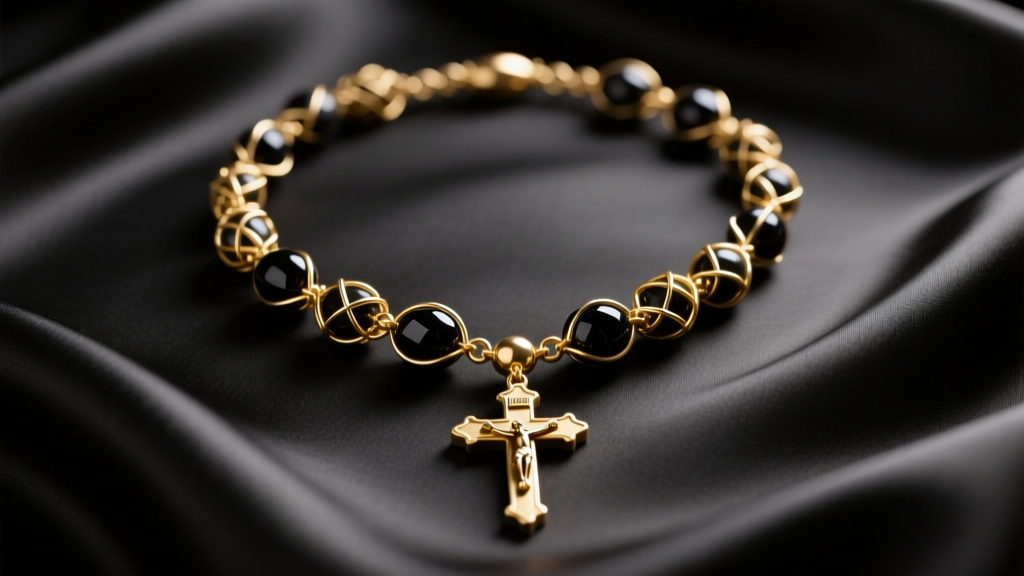
The cultural crossover of sacred jewelry into everyday fashion has cemented the rosary worn as necklace as a staple in modern wardrobes. Whether layered over a vintage graphic tee or resting against a minimalist silk blouse, this piece bridges heritage and contemporary streetwear. However, as demand has surged, the market has been flooded with fast-fashion imitations that tarnish, snap, and degrade within weeks. For the budget-conscious consumer, the challenge is no longer finding a rosary necklace—it is determining which pieces offer genuine structural integrity and long-term value.
In this comprehensive value assessment, we dissect the anatomy of rosary necklaces, evaluating metal grades, wire gauges, bead compositions, and hardware to help you separate heirloom-quality investments from disposable accessories.
Material Breakdown: Where Does Your Money Actually Go?
The base metal dictates 60% of a rosary's retail price and 90% of its lifespan. When assessing a rosary worn as necklace for daily use, skin contact and friction are the primary enemies of cheap plating.
The Fast-Fashion Trap: Zinc Alloys and Flash Plating
Rosaries priced between $10 and $25 are typically cast from zinc alloy or brass and finished with a microscopic "flash" plating of silver or gold. According to jewelry manufacturing standards, flash plating is often less than 0.5 microns thick. With daily wear, the acids in human sweat will corrode this layer in 3 to 6 months, leaving a green or black residue on the skin and exposing the brittle base metal to snapping.
The Sweet Spot: 14/20 Gold-Filled and .925 Sterling Silver
For buyers seeking the highest return on investment, 14/20 gold-filled wire and solid .925 sterling silver are the gold standards. The Federal Trade Commission (FTC) strictly regulates the term "gold-filled," requiring that at least 1/20th (5%) of the total weight of the item must be 14k gold mechanically bonded to a brass core. This results in a durable outer layer that will not flake or tarnish for decades, making a $75 gold-filled rosary significantly more valuable over time than a $20 plated piece that requires annual replacement.
The Structural Core: Wire Gauge and Link Integrity
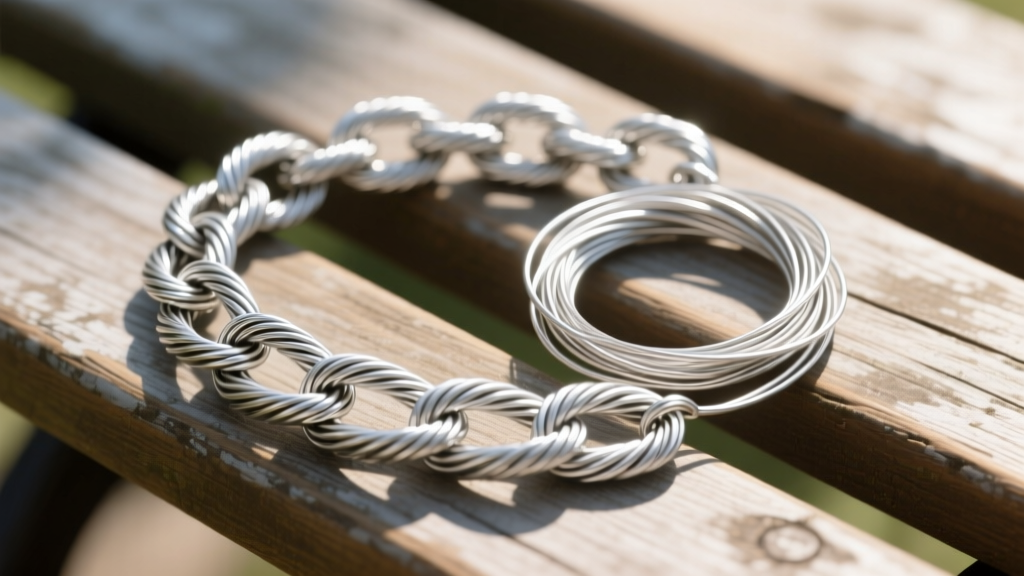
A rosary is only as strong as its weakest link. Unlike standard cable chains stamped by machines, traditional and high-end artisan rosaries rely on wire-wrapped links. The thickness of this wire—measured in gauge—is a critical indicator of value.
- 26-Gauge to 28-Gauge (0.40mm - 0.32mm): Common in cheap, mass-produced rosaries. This wire is easily bent by hand and will snap if the necklace catches on clothing.
- 24-Gauge (0.51mm): The minimum acceptable standard for lightweight gemstone beads. It offers a delicate drape but requires careful handling.
- 20-Gauge to 22-Gauge (0.81mm - 0.64mm): The hallmark of premium, artisan-crafted rosaries. As noted by precious metal suppliers like Rio Grande, 20-gauge wire provides the necessary tensile strength to support heavy glass or stone beads without warping, ensuring the piece can be worn daily without anxiety.
When evaluating a rosary worn as necklace, gently squeeze the wire loops above and below the beads. If the wire yields or feels spongy, it is under-gauged and represents poor value, regardless of the metal purity.
The Price-to-Durability Matrix
To visualize the true cost-per-wear (CPW) of different rosary tiers, we have mapped current 2026 market pricing against expected lifespans and material compositions.
| Tier | Price Range | Primary Materials | Wire Gauge | Expected Lifespan | Value Rating |
|---|---|---|---|---|---|
| Fast Fashion | $12 - $25 | Zinc alloy, acrylic beads, flash plated | 26g - 28g | 3 - 8 Months | Poor |
| Mid-Tier Artisan | $55 - $95 | 14/20 Gold-filled, Czech glass beads | 22g - 24g | 5 - 10 Years | Excellent |
| Fine Jewelry | $150 - $350+ | Solid 14k Gold, natural gemstones | 20g - 22g | Multi-generational | High (Heirloom) |
Assessing Bead Quality: Glass vs. Gemstone vs. Resin
The beads on a rosary necklace serve as both a tactile element and a visual anchor. Budget assessment requires looking past the initial sparkle and evaluating material hardness and light refraction.
Czech Fire-Polished Glass
For mid-tier budgets, Czech fire-polished glass is the undisputed champion of value. These beads are cut with faceting wheels and then heated to smooth the edges, creating a brilliant sparkle that mimics precious gems. They rank around 5.5 on the Mohs hardness scale, meaning they will not scratch easily when stored with other jewelry.
Dyed Resin and Acrylic
Often marketed deceptively as "jade" or "turquoise," dyed resin beads are a red flag for value seekers. According to gemological identification guidelines from the Gemological Institute of America (GIA), organic plastics and resins will absorb skin oils, perfume, and UV light, causing them to yellow, cloud, and become brittle within a few years. Always inspect beads for a perfectly uniform, plastic-like sheen and an unnaturally light weight.
The Crucifix and Centerpiece: Weight and Casting
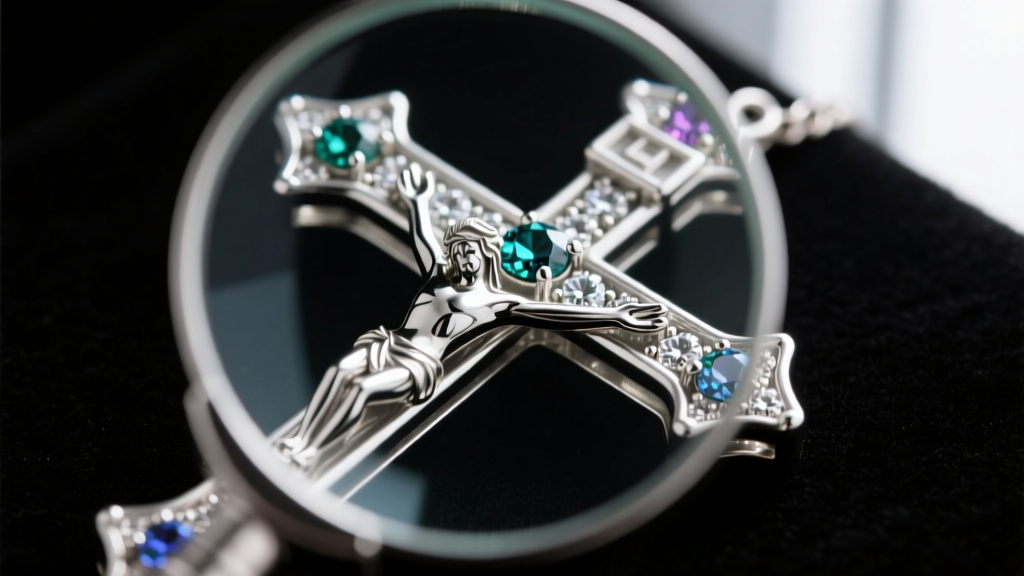
The crucifix and the centerpiece (the medal where the five decades meet) bear the most mechanical stress on a rosary worn as necklace.
Cheap rosaries utilize hollow, die-stamped metal for these components. While they look large and impressive from a distance, they dent easily and the jump rings attached to them are often soldered poorly, leading to catastrophic failure. High-value rosaries feature solid cast crucifixes. While smaller in physical dimensions, a solid cast .925 silver crucifix weighing 3 to 5 grams provides a satisfying drape and ensures that the structural loops will never pull apart under the weight of the chain.
Hidden Costs: Hardware and Repairability
A true budget assessment must factor in the inevitability of repairs. A necklace is a poor investment if it cannot be fixed when a link inevitably opens.
- Jump Rings: Examine the jump rings connecting the clasp. High-value pieces use 18-gauge or 20-gauge jump rings that are either soldered shut or feature a split-ring design. Thin, 24-gauge jump rings will pull open with a simple tug.
- Clasps: Avoid spring-ring clasps on heavy rosaries; their internal springs fail frequently. A well-proportioned lobster clasp or a secure magnetic neodymium clasp adds $5 to $10 to the manufacturing cost but saves the piece from being lost.
- Wire-Wrapped vs. Stringing: Never purchase a high-value rosary where the beads are strung on nylon thread or beading wire. Thread degrades, stretches, and snaps. True value lies in individual wire-wrapped links, which isolate the tension to a single bead if an accident occurs, preventing the entire necklace from shattering on the floor.
Final Verdict: How to Spot a High-Value Rosary
When shopping for a rosary worn as necklace, bypass the aesthetic allure of oversized, heavily plated pieces. Instead, apply this rapid value-assessment checklist:
- Verify the metal stamp (look for "14/20 GF" or ".925").
- Test the wire gauge (it should resist bending when gently pinched).
- Inspect the crucifix (it should feel dense and solid, not hollow or tinny).
- Check the beads for coldness to the touch (glass and stone feel cold; resin and plastic feel room temperature).
By prioritizing structural integrity and regulated metal standards over fast-fashion trends, you can secure a rosary necklace that not only elevates your personal style but stands the test of time as a genuine, cost-effective jewelry investment.


