Best Materials for a DIY Necklace Hanger to Prevent Tarnish
Discover the best materials for a DIY necklace hanger to prevent tarnish. Compare wood, metal, and acrylic properties for safe jewelry storage.

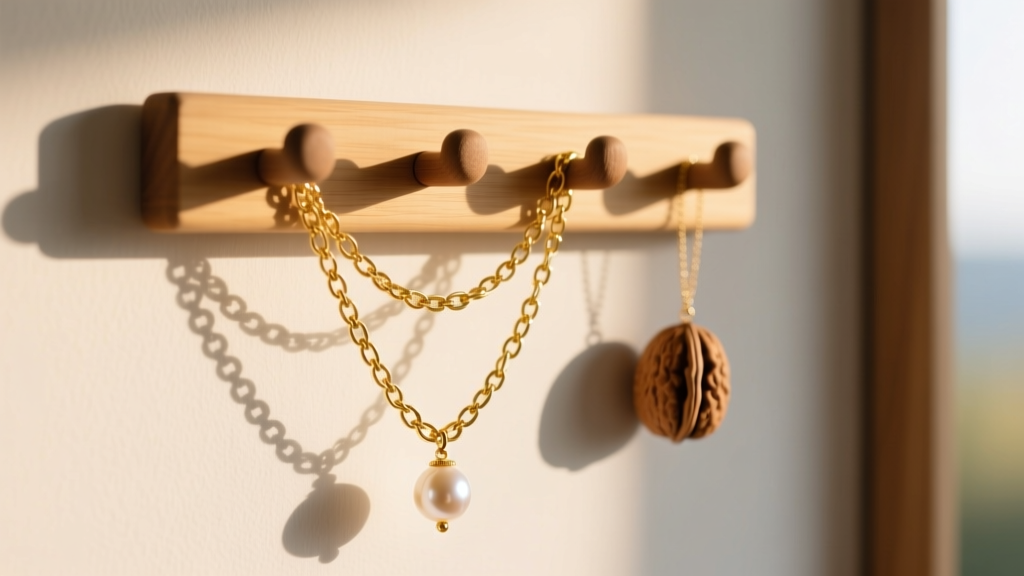
Building a custom jewelry display is a rewarding weekend project, but most DIYers overlook a critical factor: the chemical interaction between the hanger materials and the jewelry itself. A poorly planned DIY necklace hanger can do more than just tangle your chains; it can actively accelerate tarnishing, cause galvanic corrosion, and scratch delicate gemstones. As of 2026, museum-grade conservation standards have become highly accessible to home collectors, allowing you to build a display that is both aesthetically stunning and chemically inert.
In this comprehensive guide, we break down the material properties of wood, metal, and acrylics, providing you with the exact specifications needed to build a safe, long-lasting necklace hanger.
The Hidden Danger: Off-Gassing and Micro-Climates
Before selecting your base material, it is vital to understand how jewelry degrades. Silver tarnishes when exposed to sulfur compounds and high humidity. Copper and brass develop a patina when exposed to oxygen and acidic vapors. According to the American Institute for Conservation (AIC), many common household and craft materials emit volatile organic compounds (VOCs) that create destructive micro-climates around stored metals.
When you enclose or hang jewelry in a poorly ventilated space using reactive materials, you trap these gases. A DIY necklace hanger built from raw, unsealed craft wood or certain cheap plastics will continuously bathe your precious metals in acidic vapors, leading to rapid, irreversible pitting and discoloration.
Wood: The Acidic Off-Gassing Threat
Wood is the most popular choice for a DIY necklace hanger due to its workability and warmth. However, woods like oak, cedar, and pine naturally emit acetic acid and formic acid. If you hang a sterling silver chain on raw oak, you will likely notice yellowish-black tarnish spots within a few weeks.
Safe Wood Selection and Sealing
If you prefer the look of wood, opt for low-acid hardwoods like walnut, maple, or cherry. More importantly, you must seal the wood to trap any residual VOCs.
- Avoid: Oil-based polyurethanes and linseed oil, which can take months to fully cure and continue to off-gas solvents that harm pearls and opals.
- Use: Water-based polyurethane (allow a full 30-day cure time before hanging jewelry) or museum-grade microcrystalline wax, such as Renaissance Wax. Renaissance Wax provides a chemically stable, non-yellowing barrier that is entirely safe for all gemstones and metals.
Metals: Galvanic Corrosion and Rust
Using metal pipes or rods for an industrial-style DIY necklace hanger is a popular trend, but bare metals pose a severe risk. Iron and low-carbon steel will rust in humid environments (like a bedroom or bathroom), transferring iron oxide stains directly to porous gems like turquoise and malachite.
Choosing the Right Metal Grade
To prevent rust and galvanic corrosion, your hanger's structural rods and hooks must be chemically inert.
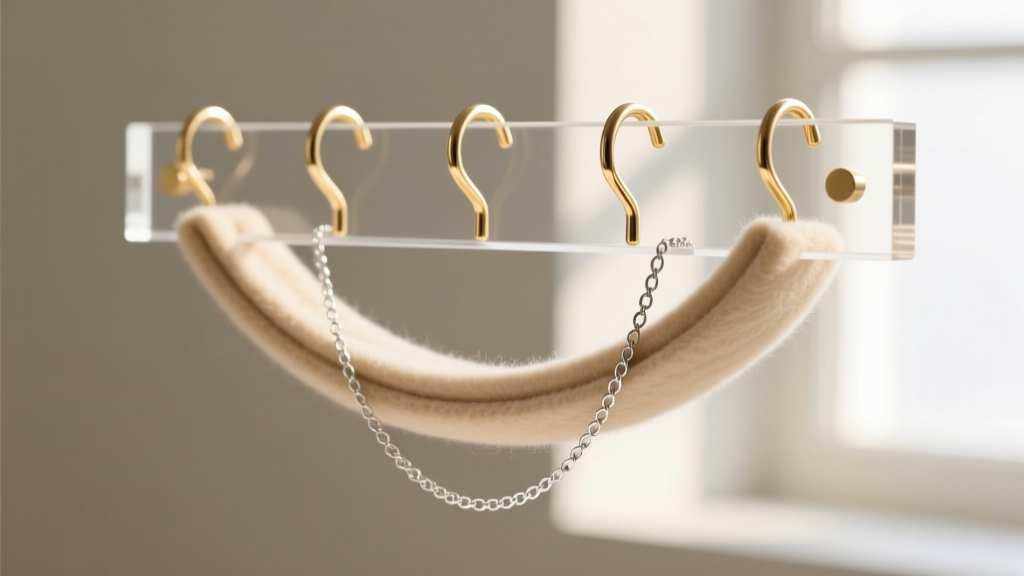
- 304 Stainless Steel: Excellent for indoor, climate-controlled environments. It resists rust and will not react with gold or silver chains.
- 316 Marine-Grade Stainless Steel: Mandatory if your DIY necklace hanger will be placed in a bathroom or a coastal home where salt air and high humidity are present.
- Anodized Aluminum: Lightweight and completely rust-proof. The anodization process seals the aluminum, preventing it from leaving gray marks on light-colored pearls or silk cords.
Expert Warning: Never use bare copper or brass rods if you plan to hang sterling silver chains. In the presence of ambient moisture, dissimilar metals can trigger galvanic corrosion, permanently damaging the silver links.
Acrylic and Plastics: The Static and Plasticizer Problem
Acrylic displays look modern and keep jewelry highly visible, but not all plastics are created equal.
PVC vs. Cast Acrylic vs. PETG
Avoid PVC (polyvinyl chloride) at all costs. As PVC ages, it degrades and releases hydrogen chloride gas, which is highly corrosive to metals and can cause organic gems (like coral and amber) to become brittle. Instead, source cast acrylic or PETG sheets for your DIY necklace hanger base. These materials are chemically stable and do not off-gas harmful acids.
One property unique to acrylics is their tendency to generate static electricity. Static attracts household dust, which often contains microscopic quartz particles (hardness 7 on the Mohs scale). This dust can scratch softer metals and gemstones. To mitigate this, treat your acrylic hanger with an anti-static polymer spray designed for electronics or museum displays.
Comparative Data: Choosing Your Base Material
| Material | Off-Gassing Risk | Scratch Risk | Load Capacity | Required Treatment |
|---|---|---|---|---|
| Raw Oak / Pine | High (Acetic Acid) | Low | High | Must seal with water-based poly or wax |
| Sealed Walnut | None (If sealed) | Low | High | Renaissance Wax coating |
| 304 Stainless Steel | None | Medium | Very High | None (keep dry) |
| Bare Iron / Steel | Low | Medium | High | Powder coating required |
| Cast Acrylic | None | High (Static dust) | Medium | Anti-static spray |
| PVC | High (Chlorine gas) | Low | Low | Do not use for jewelry |
Hardware Specifics: Hooks, Knobs, and Wire Gauges
The structural integrity of your DIY necklace hanger relies heavily on the hardware you choose to hold the weight of the jewelry. A heavy gemstone pendant—such as a solid agate slice or a multi-strand pearl choker—can easily weigh between 40 and 80 grams. Over time, this constant downward force will bend cheap, thin wire hooks.
Wire Gauge and Hook Geometry
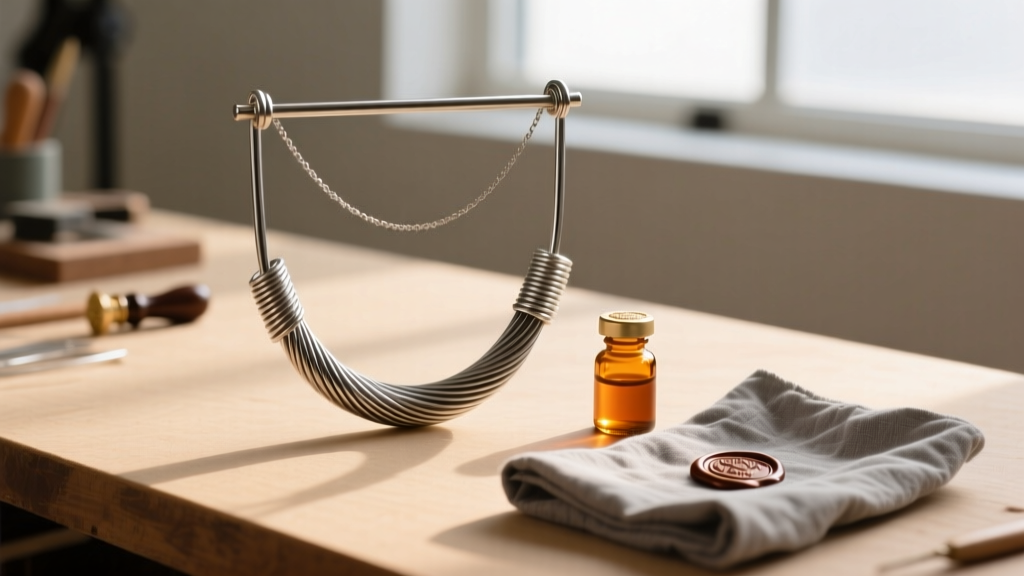
When bending your own hooks from wire spools, pay strict attention to the gauge (thickness) of the metal:
- 18 to 20-Gauge: Too weak for anything heavier than a delicate, single-strand gold chain. Will deform under the weight of a standard pendant.
- 14 to 16-Gauge: Ideal for standard everyday necklaces and lockets. Provides enough rigidity to hold shape while remaining visually unobtrusive.
- 10 to 12-Gauge: Mandatory for heavy statement pieces, multi-strand chains, and large geode pendants.
Furthermore, the geometry of the hook matters. Avoid sharp, 90-degree bends which create stress fractures in the metal. Instead, use a mandrel or a rounded dowel to create a smooth, sweeping curve that distributes the weight of the necklace chain evenly, preventing kinking in delicate box or rope chains.
Linings and Sealing: The Final Protective Barrier
If you are building a DIY necklace hanger with a flat shelf or a jewelry box base attached to the wall, the lining material is your last line of defense against tarnish.
According to the Gemological Institute of America (GIA), proper storage environments are essential for maintaining the luster of precious metals. Never use standard craft felt, as it often contains synthetic glues and dyes that trap moisture and promote tarnish. Avoid rubber bands or elastic tie-downs, as rubber contains sulfur, which will instantly blacken sterling silver.
The Gold Standard: Line the resting areas of your hanger with Pacific Silvercloth or 100% untreated cotton flannel. Pacific Silvercloth is embedded with microscopic silver particles that act as a sacrificial anode—they tarnish first, absorbing sulfur and toxins from the air before those compounds can reach your actual jewelry. For hanging hooks, slip small pieces of silicone tubing or heat-shrink tubing over the metal to provide a soft, scratch-free resting place for delicate chains.
Conclusion
Designing the perfect DIY necklace hanger requires balancing aesthetic vision with material science. By avoiding acidic woods, selecting marine-grade or stainless metals, steering clear of PVC plastics, and utilizing proper gauges and linings, you create more than just a storage solution. You build a chemically stable, museum-quality display that keeps your necklaces untangled, scratch-free, and brilliantly untarnished for decades to come.


